

If you're sitting there, wondering whether an online ADHD assessment is the right move for you, you're in good company. Let's walk through what the modern, psychiatrist-led approach to diagnosis in the UK actually looks like, and how it offers a much-needed path to clarity for your mental health. At its core, a good online assessment has all the clinical weight of an in-person appointment—just without the travel and waiting rooms.
Understanding the UK's Adult ADHD Diagnosis Gap
For so many adults across the UK, day-to-day life feels like a constant battle with disorganisation, a wandering focus, and emotions that are hard to manage. It's a reality many live with for years, often picking up related mental health diagnoses like anxiety or depression along the way, never realising the root cause could be Attention Deficit Hyperactivity Disorder (ADHD) or even co-occurring autism.
The journey to finding out often starts with a dawning realisation, but it usually hits a major hurdle almost immediately: getting access to a specialist. This has created a huge gap between the number of people who are likely living with neurodevelopmental conditions like ADHD and those who actually have a formal diagnosis.
The Scale of Underdiagnosis
The numbers really bring this into focus. An analysis of 9 million GP records in the UK found that only a tiny 0.32% of adults had an ADHD diagnosis on file. That means roughly 1 in 9 people with the condition have been formally diagnosed, which points to a massive, nationwide problem of underdiagnosis affecting overall mental health.
This is made so much worse by the strain on NHS services, where waiting lists for an adult ADHD or autism assessment can be years long. This long wait in limbo leaves people feeling stuck, unable to get the support, medication, or workplace adjustments that could genuinely change their lives. The emotional cost of this waiting game is huge, often feeding into feelings of frustration and self-doubt. You might find reading a personal perspective on navigating ADHD assessments helpful for understanding this journey.
For many, an online ADHD assessment isn't just about convenience; it's about reclaiming time and taking a proactive step towards mental wellbeing when traditional pathways are inaccessible.
Why Timely Assessment Matters
Finding out if you have ADHD isn’t just about getting a label; it’s about finally getting a framework that makes sense of your experiences. A diagnosis can be the key to unlocking self-compassion and giving you access to strategies and treatments that actually work for your mental health. It’s the first step towards building a life that works with your brain, not against it.
A regulated and credible online adhd assessment offers a vital alternative. The main advantages are clear:
- Accessibility: You can speak with a specialist psychiatrist no matter where you live, breaking down the geographical lottery of healthcare.
- Timeliness: Private services drastically cut down the wait, with assessments often available within weeks instead of years.
- Comfort: Being in your own familiar space can lower the anxiety of the assessment, helping you have a more open and genuine conversation with the clinician.
This modern approach is a lifeline, empowering adults to skip the queues and get the answers they need to finally move forward. You can learn more about how the process works by exploring the steps involved in our professional adult ADHD assessment.
What a Consultant-Led Online Assessment Really Involves
When you hear “online ADHD assessment,” it’s easy to picture a simple quiz or a series of multiple-choice questions. The reality of a high-quality, consultant-led process is much more thorough. This isn’t a personality test; it's a comprehensive clinical evaluation designed to get a complete picture of your life, including your challenges, your strengths, and your overall mental health.
Crucially, this entire process is managed by a GMC-registered psychiatrist and carries the same medico-legal weight as an assessment done face-to-face.
The journey doesn't start with a diagnosis. It begins with a detailed screening phase where you'll provide a significant amount of background information. This involves filling out in-depth questionnaires about your symptoms, your personal history, and how these challenges show up in different parts of your life—at work, in relationships, or just managing things at home.
This initial groundwork is vital. It gives the psychiatrist a solid understanding of your situation before you even have your first conversation, making your time together as focused and productive as possible.
The Structured Clinical Interview
At the heart of the assessment is the structured clinical interview, held over a secure video call. This is far more than a casual chat. It's a systematic evaluation where the psychiatrist uses internationally recognised diagnostic criteria, like the DSM-5 (Diagnostic and Statistical Manual of Mental Disorders, 5th Edition), to explore your experiences in detail.
The psychiatrist will guide you through targeted questions about your childhood, school years, and adult life. What they’re looking for are consistent, long-term patterns of behaviour that match the criteria for ADHD. It’s very much a two-way conversation, all aimed at building an accurate and complete picture of your neurodevelopmental profile, including any potential signs of co-occurring conditions like autism.
This process streamlines the journey from first noticing symptoms to getting a formal diagnosis.
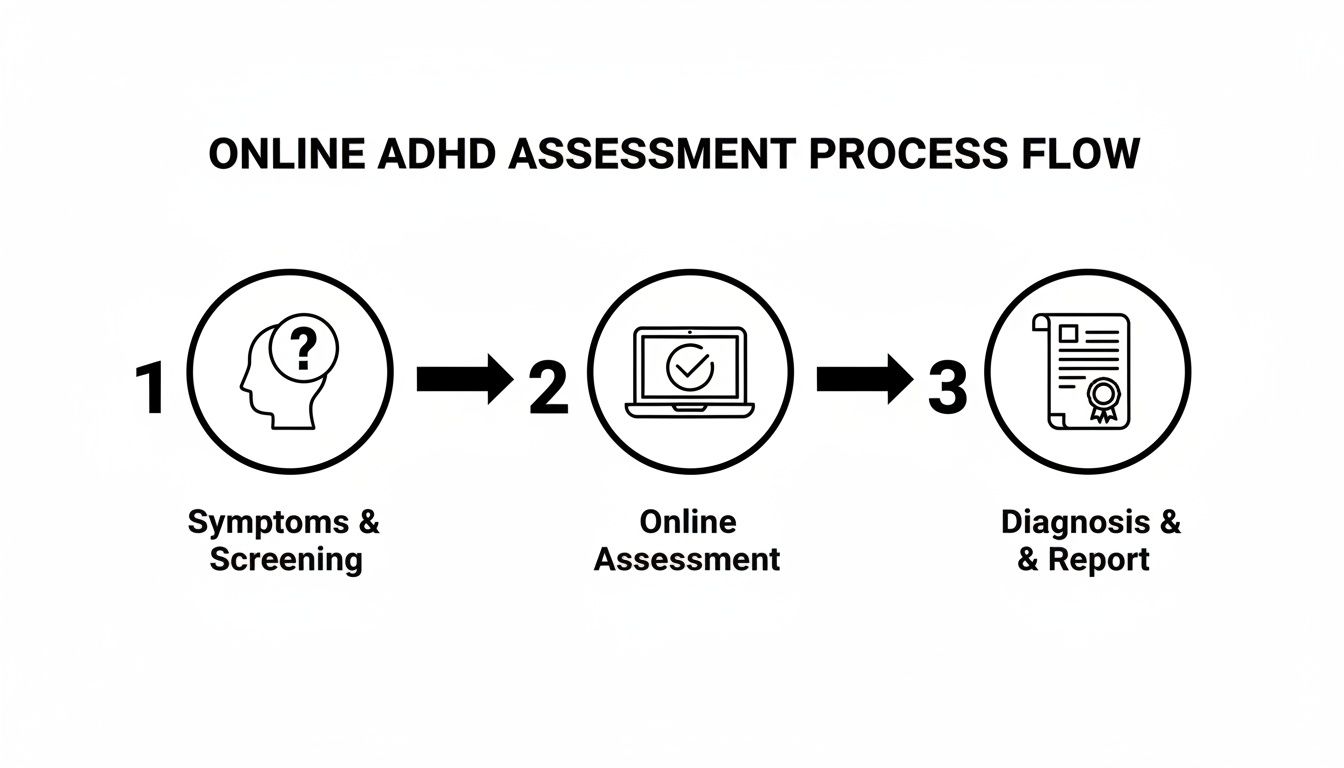
The flow shows just how clear and efficient a modern, high-quality online assessment can be.
The Importance of a Multi-Faceted Approach
A reliable diagnosis rarely comes from a single perspective. That's why the psychiatrist looks for evidence from different areas and times in your life. Gathering supporting information isn't just helpful; it can be essential for an accurate outcome.
Valuable information that can strengthen your assessment includes:
- Childhood School Reports: Old comments from teachers about being inattentive, restless, or impulsive can provide powerful historical evidence.
- Input from a Loved One: Sometimes a partner, parent, or close friend can offer insights into how your traits impact daily life, often noticing patterns you might not see yourself.
- Previous Medical Records: Details about other conditions like anxiety or depression are important, as they help the psychiatrist untangle any overlapping symptoms.
Collecting this data ensures the final diagnosis is built on a robust, holistic understanding of who you are. It helps differentiate ADHD from other conditions that can look similar on the surface, such as anxiety, mood disorders, or autism.
The goal of a comprehensive assessment isn't just to identify ADHD. It's to understand you as a whole person, including how ADHD may interact with other aspects of your mental health, like co-occurring autism traits.
Medico-Legal Validity and Professional Standards
It’s vital to understand that a diagnosis from a properly regulated, consultant-led service is every bit as legitimate as one from a traditional clinic. Providers regulated by the Care Quality Commission (CQC) and staffed by psychiatrists on the GMC Specialist Register are held to the highest clinical standards.
This ensures your diagnostic report is a valid medico-legal document. You can use it as the foundation for starting treatment, requesting workplace accommodations, and setting up shared care agreements with your GP for medication. You can find out more about how these evaluations are structured in our guide on what a psychiatric assessment is. This professional rigour gives you the confidence that you’re receiving a credible, recognised clinical diagnosis—providing the clarity you need to move forward.
Why NHS Wait Times Drive the Turn to Private Care
For countless adults across the UK who think they might have ADHD, the journey to a diagnosis usually starts at their GP's surgery. The NHS is, of course, a cornerstone of our healthcare, but when it comes to specialist services for conditions like ADHD and autism, the system is under immense strain. The result? Long, frustrating delays that can have a real impact on people's lives and overall mental health.
The heart of the issue is a simple case of supply and demand. Public awareness of adult ADHD and autism has exploded in recent years, which is fantastic. More people are finally seeking answers for lifelong struggles. But this surge in demand has completely overwhelmed the limited resources available within the NHS.
This has created staggering waiting lists, with many people told they could be waiting not just for months, but for several years. For someone grappling with the daily challenges of untreated ADHD or autism, this isn't just an inconvenience—it can feel like their entire life is stuck in limbo.
The Human Cost of Waiting
The fallout from these delays runs much deeper than simple frustration. While waiting, adults are trying to navigate their careers, relationships, and personal lives without any real understanding of why they find certain things so difficult. This can easily lead to feelings of failure, anxiety, and even depression.
The symptoms don't just pause while you're on a waiting list. People are left to cope with challenges that touch every part of their existence:
- Workplace Difficulties: Missing deadlines, struggling with organisation, or finding it impossible to focus can result in poor performance reviews or even job loss.
- Relationship Strain: The forgetfulness, impulsivity, and emotional ups and downs that can come with ADHD often create friction with partners, friends, and family.
- Mental Health Decline: It's very common for ADHD to go hand-in-hand with anxiety and depression, which can get much worse when the root cause isn't being addressed.
This long, uncertain wait forces a difficult decision. For a balanced view, it's worth reading a detailed private healthcare vs NHS comparison.
For many, choosing a private online ADHD assessment isn't about impatiently skipping a queue. It’s a practical decision to avoid the heavy emotional and real-world costs of waiting indefinitely for care they desperately need for their mental health.
The Data Behind the Delays
This isn't just based on stories we hear; the numbers paint a stark picture. Across NHS England, the demand for adult ADHD assessments has skyrocketed, creating a backlog that has reached crisis levels in many areas.
A report from the University of York really highlights the scale of the problem. One assessment centre saw its monthly referrals leap from 50 to between 200-400 after the pandemic. Another site that used to handle 800 referrals a year was suddenly dealing with over 2,000, and at one point received 700 referrals in a single month.
The data confirms what so many people are experiencing first-hand: the public system simply can't keep up with the current demand.
Private Assessment as a Practical Alternative
Against this backdrop, private online services have emerged as a vital and pragmatic alternative. They offer a much more direct path to a consultant psychiatrist, cutting the waiting time from years down to a matter of weeks. This speed doesn't mean cutting corners on quality; it's about giving people efficient access to the same level of clinical expertise.
By opting for a private assessment, you can get the clarity of a diagnosis, start treatment if needed, and finally get the validation that helps you move forward. If you're curious about what this looks like, our guide on how long it takes to diagnose ADHD can shed some light on the process. While it's true this path requires a financial investment, for a growing number of people, the cost of not getting help is far, far greater.
Preparing for a Successful Online Assessment

Heading into your assessment feeling prepared can make a world of difference. It helps turn any natural anxiety into a feeling of confidence, allowing you to clearly articulate your experiences. Think of an online ADHD assessment as a collaborative discussion; the more information you can bring to the table, the clearer the picture becomes for the psychiatrist. The goal is simply to build a rich, detailed history that helps them see the patterns you’ve lived with.
First things first, it’s worth noting who these assessments are for. Reputable UK providers generally focus on adults aged 18 and over. This specialisation is important because the clinical process needs to be adapted to the realities of adult life, where potential ADHD or autism symptoms often get tangled up with work pressures, relationships, and other mental health conditions like anxiety.
Gathering Your Evidence
You're essentially becoming a detective of your own life story. The psychiatrist needs to see evidence of your traits not just as they are now, but also stretching right back to your childhood. This is because neurodevelopmental conditions like ADHD and autism are, by definition, lifelong. A detailed file of evidence helps ensure the outcome is as accurate and helpful as possible.
Start by digging out any old documents you can get your hands on. These bits of paper can be surprisingly powerful, offering an objective glimpse into your past before you even started seeking answers.
Here’s what to look for:
- Old School Reports: These are gold dust. Look for comments from teachers about being "daydreamy," "disruptive," "unable to sit still," or "not working to their full potential." These are classic, tell-tale signs.
- Past Medical Records: If you have records of seeing a doctor for anxiety, depression, or other mental health issues, bring them along. They help the clinician understand the bigger picture of your health journey.
- Performance Reviews from Work: Feedback from managers about missed deadlines, organisational difficulties, or struggling with complex projects can paint a vivid picture of how your traits show up in the workplace.
A well-prepared history helps the psychiatrist connect the dots between your childhood experiences and your current adult challenges. This ensures the diagnosis is based on a consistent, lifelong pattern, not just a snapshot of your current struggles.
Documenting Your Present-Day Challenges
While looking back is vital, your current experiences are just as important. It’s surprisingly easy for your mind to go blank when you're asked for examples on the spot. That’s why writing things down beforehand is such a game-changer. Be specific.
Instead of just saying, "I'm disorganised," try to recall a concrete example: "Last week, I missed a major client meeting because I completely forgot to add it to my calendar, which caused a huge headache for my team."
Think about these key areas of your life:
- Work or Study: Jot down specific times you've struggled with procrastination, zoned out during meetings, or found it impossible to finish long-term projects.
- Home and Daily Life: What about challenges with keeping on top of chores, managing money, forgetting appointments, or living in what feels like a constant state of clutter?
- Relationships: Reflect on how things like impulsivity, intense emotional reactions, or just seeming distracted might impact how you interact with your partner, family, and friends.
The Value of Another Perspective
Finally, don't underestimate the power of an outside view. Consider asking someone who knows you really well—like a parent, partner, or a friend you've had for years—to contribute. The traits associated with ADHD and autism can be so deeply woven into our personalities that we don't even see them as unusual.
Asking them to write down a few of their own observations can add another crucial layer to your story. This collaborative approach ensures you’re presenting the fullest, most accurate version of yourself, setting the stage for a truly productive and insightful consultation.
Understanding Costs, Timelines, and Life After Diagnosis

Taking the step to get a private online ADHD assessment naturally brings up some practical questions. It’s completely normal to wonder about the financial side of things, how long it all takes, and what happens after you get a diagnosis. Being clear on these details is key to making a confident, informed decision about your mental health journey.
One of the biggest differences you’ll notice compared to public healthcare is the speed. Where NHS waiting lists can stretch on for years, the private route is much faster. It's often possible to go from your first enquiry to having a full diagnostic report in your hands within just a few weeks. For many, this quicker path is a major reason for choosing a private service.
Breaking Down the Costs
Investing in a private assessment is an investment in your well-being, so it's vital to know exactly what you're paying for. A good provider will be completely transparent about their pricing, with no hidden surprises down the line.
The costs are generally broken down into a few clear stages:
- The Initial Assessment: This is the core fee, covering the in-depth clinical interview with your consultant psychiatrist, all the pre-assessment screening, and the creation of your detailed diagnostic report.
- Follow-Up Consultations: After the diagnosis, you’ll usually have a follow-up appointment to talk through the report’s findings and discuss the next steps, including any treatment options.
- Medication Titration: If you and your psychiatrist agree that medication is the right path for you, there will be costs for the titration period. This is the crucial, specialist-led process of carefully finding the right type of medication and the most effective dose for you.
For a more detailed look at the numbers, feel free to explore our guide on private ADHD assessment costs.
A diagnosis isn't an endpoint; it's a starting point. The post-assessment pathway is designed to provide ongoing support, ensuring you have the tools and treatment needed to move forward confidently.
Life After Diagnosis: Medication and Shared Care
For many people, finally getting an ADHD diagnosis is a huge relief. It can feel incredibly validating, offering a new framework for understanding past challenges and providing a clear way forward. It can also shed light on other mental health struggles, like anxiety, which often go hand-in-hand with untreated ADHD.
If medication is part of your agreed treatment plan, the journey begins with titration. Think of this as a fine-tuning process. Your psychiatrist will work very closely with you, making small, careful adjustments to your medication and dosage. The goal is simple: find what works best for you with the fewest possible side effects. This expert oversight is absolutely essential for a safe and positive outcome.
Once your treatment is stable and working well, the aim is to smoothly hand over the reins to your regular GP. This is done using a Shared Care Agreement.
What Is a Shared Care Agreement?
A Shared Care Agreement is basically a formal partnership between your private psychiatrist and your NHS GP. It’s a document that allows your GP to take over the day-to-day prescribing of your ADHD medication, which makes your long-term care much more convenient and affordable.
This collaborative model ensures you get continuous care, neatly integrating your specialist ADHD treatment into your overall healthcare. A reputable clinic will manage all the communication and paperwork to get this agreement set up, making the transition as seamless as possible for you.
This joined-up approach is more important than ever. An estimated 2.5 million people in England have ADHD, yet only 0.32% of GP records show a diagnosis, meaning the vast majority are going without support. It's this gap that has led to over 1 in 5 people seeking private prescriptions. A well-managed Shared Care Agreement is a practical, effective way to help bridge that gap. The NHS itself has published reports acknowledging this growing need and the importance of integrated care.
Your Questions About Online Assessments Answered
Taking that first step towards an online ADHD assessment is a big deal, and it's completely normal to have a list of questions. To help you feel more confident and clear on the process, we've pulled together answers to some of the most common queries we hear. We’ll cover everything from how an online diagnosis holds up to what happens if you think you might also have autism.
Is an Online ADHD Diagnosis as Valid as an In-Person One?
Yes, absolutely. There’s a common myth that an online assessment is somehow a ‘lighter’ or less robust version of the real thing, but that couldn’t be further from the truth—provided you choose a reputable clinic.
What really matters is the quality and regulation behind the service.
When your assessment is carried out by a CQC-regulated clinic and led by a GMC-registered consultant psychiatrist, it follows the exact same clinical standards as a face-to-face appointment. The consultant uses the same established diagnostic tools, like the NICE guidelines and DSM-5 criteria, to make sure the process is thorough and clinically sound.
The diagnosis you receive is a legally recognised medical document. You can share it with your GP to build a treatment plan and set up a Shared Care Agreement for medication. The delivery method might be different, but the clinical integrity—and the validity of the result—are identical.
What if I Also Suspect I Have Autism?
This is a fantastic and very important question. ADHD and Autism Spectrum Condition (ASC) are both neurodevelopmental conditions, and we know they often go hand-in-hand. It's not at all unusual for someone who relates to ADHD traits to also recognise signs of autism in themselves, like challenges with social cues, sensory sensitivities, or a passion for deep, specific interests.
A good, comprehensive psychiatric assessment isn’t just a hunt for one specific condition. An experienced consultant is trained to look at the whole picture of your neurodevelopmental profile.
If, during your online ADHD assessment, the psychiatrist spots traits that suggest you might also be autistic, they’ll talk this through with you openly. They can point out what those signs are and discuss what your options are for exploring it further. Some specialist services, like ours, even offer combined ADHD and autism assessments. This can be a much more efficient and insightful way to get a complete diagnostic picture in one integrated process.
Understanding how ADHD and potential autism overlap is so important. A skilled psychiatrist can help you untangle the traits, leading to a much clearer and more accurate understanding of how your brain works. That clarity is the key to finding the right support.
What Happens if I Am Diagnosed with ADHD?
Getting a diagnosis is often a huge moment of validation, but it’s really the starting line, not the finish. It’s the first step on a new path towards understanding yourself better and getting the right tools to help you thrive.
After your assessment, the psychiatrist will book a follow-up session to go through the results with you in detail. They’ll explain their findings and work with you to create a personalised treatment plan. This isn’t a one-size-fits-all approach; it’s built around your specific needs and goals.
Your post-diagnosis plan might include a mix of these elements:
- Medication: If you and your psychiatrist agree it’s a good option, you’ll start a carefully managed 'titration' period to find the right medication and dosage for you.
- Therapeutic Support: They might recommend therapies like Cognitive Behavioural Therapy (CBT) that’s been adapted for ADHD, which is great for building practical coping skills.
- Practical Strategies: You’ll also talk about non-medical ways to manage symptoms in daily life, from organisational techniques to new ways of handling emotional dysregulation.
The clinic will then work to set up a 'Shared Care Agreement' with your GP. This is crucial for making sure your long-term care, especially for ongoing prescriptions, is handled smoothly within the UK healthcare system.
Can I Use My Private Health Insurance for the Assessment?
That’s a very practical question, and the answer comes down to your individual insurance policy. Many private health insurance providers in the UK do cover psychiatric assessments, including evaluations for ADHD and autism. However, the level of cover can vary wildly from one policy to another.
The most important thing you can do is contact your insurance provider before you book an assessment. You need to ask them some direct questions to make sure you don’t get hit with any unexpected costs.
Here’s a checklist of what to confirm with them:
- Does my policy cover psychiatric assessments for neurodevelopmental conditions like ADHD?
- What is the total amount of cover available?
- Is there an excess I’ll need to pay myself?
- Do I need a pre-authorisation code from you before booking my appointment?
Good clinics are used to dealing with insurers and can give you all the information you need to support your claim. Getting this sorted out beforehand makes the whole financial side of things much less stressful.
At Insight Diagnostics Global, we’re committed to providing clear, credible, and compassionate psychiatric care. Our CQC-regulated online assessments offer a timely and accessible path to the answers and support you deserve.
Learn more about our psychiatrist-led services and book your consultation today