

When you suspect you have ADHD or Autism, staring down a multi-year NHS waiting list can feel utterly demoralising. A private diagnosis offers a much faster route to getting the clarity and support you need, often cutting the wait time from years down to just a matter of weeks. It’s a formal clinical process that provides a definitive answer, unlocking treatment options and, most importantly, helping you finally understand your mental health.
Why a Private Diagnosis Can Be a Turning Point
For so many adults in the UK, the path to understanding their own mental health is paved with frustration and long, disheartening delays. When you suspect a neurodevelopmental condition like ADHD or Autism, the standard NHS pathway—while incredibly valuable—is often completely overwhelmed. This bottleneck leaves countless people feeling stuck in limbo, unable to get the help that could genuinely reshape their lives.
This is exactly why looking into a private ADHD diagnosis, often alongside an Autism assessment, has become such an essential alternative. It isn't just about skipping a queue; it’s about taking an active, decisive step towards reclaiming your well-being. Getting that formal diagnosis can be the first domino to fall, setting off a chain reaction of positive changes for your mental health.
The Impact of Uncertainty on Mental Health
Living with undiagnosed ADHD or Autism often means navigating a lifetime of challenges you can't quite explain. You might be grappling with persistent feelings of failure, anxiety, or a battered sense of self-esteem, never fully understanding why certain everyday tasks feel monumentally difficult. The emotional weight of that uncertainty is immense. You can explore this further in our guide on the connection between ADHD and emotions.
A proper assessment gives you a framework to understand these experiences. It’s not about slapping a label on yourself, but about gaining the clinical insight and language to make sense of your mental health. For many, that validation is the most powerful outcome of all.
Recent polls show that for 84% of people, a confirmed diagnosis brings a profound sense of self-understanding and acceptance. It validates years of struggle and offers a clear, evidence-based path forward for managing your life and well-being.
The Underdiagnosis Crisis in the UK
The need for accessible diagnostic services becomes crystal clear when you look at the numbers. In the UK, a huge analysis of 9 million GP records revealed a shocking statistic: as of January 2025, only 0.32% of adults had a recorded ADHD diagnosis. That means just 1 in 9 people with the condition have actually been formally diagnosed.
This massive gap exists because, while population surveys estimate the true prevalence of ADHD at around 2.8%, NHS capacity simply can't keep up. The result? Over 2 million adults are left struggling without any support. The situation for Autism diagnosis is similarly strained. This isn’t just a statistic; it’s a public health issue. Without a diagnosis, adults miss out on vital help, from medication that can manage core symptoms to simple workplace adjustments that level the playing field. Understanding the difference timely help can make is crucial, a topic covered well by resources discussing The Power of Early Diagnosis. Choosing to pursue a private diagnosis is a direct response to this systemic problem, empowering you to get the answers you need to start thriving.
Your Private ADHD Assessment Journey Explained
The idea of a private assessment can feel a bit daunting, but it's really just a well-structured, supportive process designed to bring you some much-needed clarity on your mental health. Knowing what to expect at each stage can take the mystery out of it, helping you feel more prepared and in control. The whole pathway is designed to build a complete picture of your life, both past and present.
It all kicks off when you first get in touch. After your initial enquiry, the clinic will usually send you a set of pre-assessment screening forms. These aren't a test; think of them as the first step in a conversation, gathering some essential background on your symptoms, mental health history, and the challenges you face every day. This initial information helps the clinical team see if a full assessment for ADHD, and potentially Autism, is the right path for you.
The Core Clinical Interview
The real heart of your private ADHD diagnosis is the detailed clinical interview. This is a proper, in-depth conversation with a specialist consultant psychiatrist, an expert in adult ADHD and often in related conditions like Autism. It typically lasts a couple of hours.
This isn't just a quick chat. It's a deep dive into your life story, guided by the specialist who will ask about:
- Childhood and Schooling: They’ll want to know about your behaviour, how you did in school, and what your friendships were like. This is crucial, as evidence of ADHD symptoms needs to be present before the age of 12 for a diagnosis.
- Adult Life: The conversation will move on to how possible neurodivergent traits have shown up in your career, relationships, and day-to-day life.
- Mental Health: Your psychiatrist will also check in on your overall mental wellbeing, looking out for common co-occurring conditions like anxiety or depression, which often walk hand-in-hand with both ADHD and Autism.
To get the fullest picture, clinicians often find it helpful to look at other bits of information. This could be anything from old school reports and work reviews to having a chat with a parent or partner who can share their perspective.
This infographic shows just how different the timelines can be when comparing the NHS and private routes.
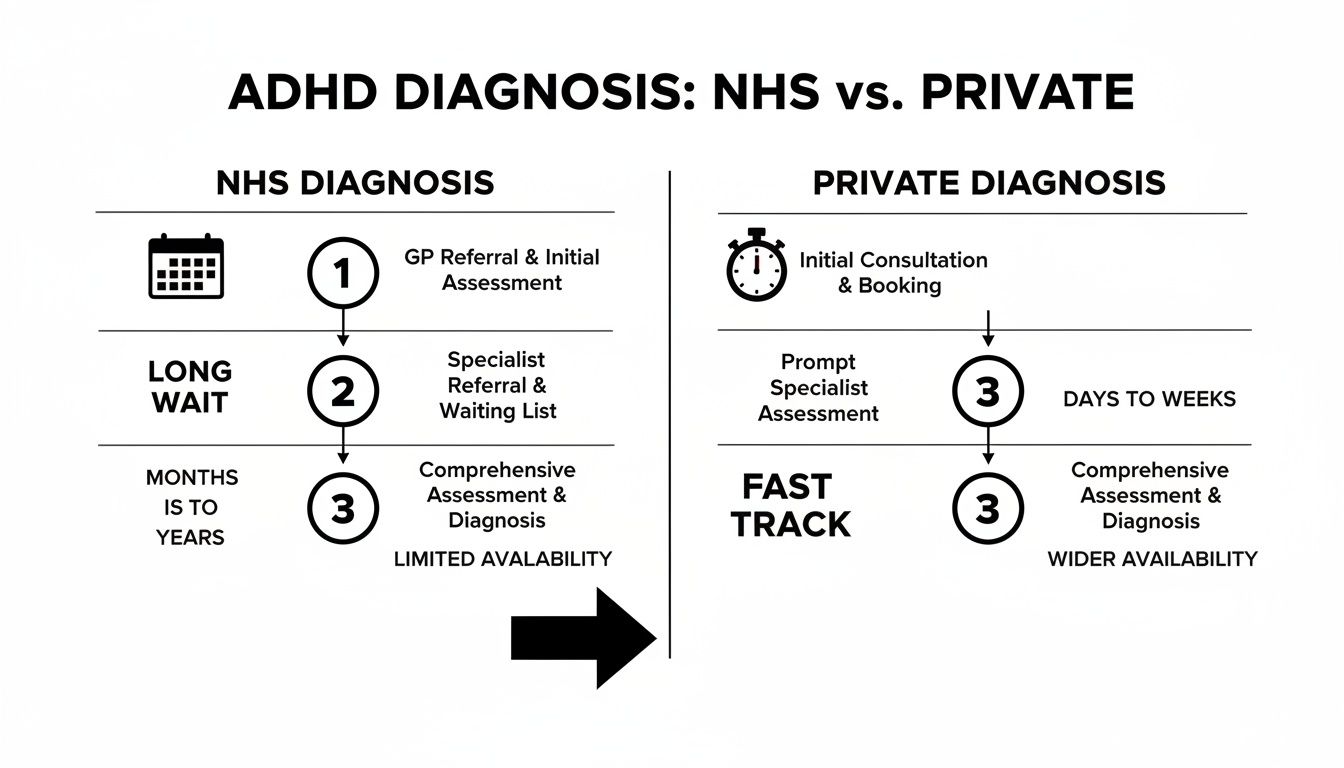
As you can see, the main draw of going private is cutting down that waiting time, getting you in front of an expert and on the path to support much, much faster.
Gathering a Complete Diagnostic Picture
A reliable diagnosis never comes from a single questionnaire. It’s all about piecing together information from different sources to see if your experiences match up with the official diagnostic criteria, like those in the DSM-5.
The goal of a thorough assessment is to build a detailed, multi-faceted profile. It’s about connecting the dots between your childhood struggles and your current difficulties to see if a consistent pattern of ADHD or Autism emerges, while also considering other potential explanations for your symptoms.
Your psychiatrist is an expert at telling the difference between ADHD and other conditions with similar symptoms, like anxiety disorders or Autism. This expertise ensures the final conclusion is accurate and truly reflects your overall mental health profile. For a closer look at the specific tools and methods involved, you can learn more about how ADHD is tested in our guide.
Once the interview is done, the specialist takes all the evidence—your forms, the interview notes, and any supporting documents—and puts it all together. They compile a comprehensive report that doesn't just give a diagnosis, but also provides personalised recommendations for treatment and support. It’s a clear, actionable roadmap for your next steps.
So, What Are the Real Benefits of a Private ADHD Diagnosis?
Of course, the biggest reason people look into private ADHD assessments is to avoid the agonisingly long NHS waits. But honestly, the true value goes much, much deeper than just getting seen sooner. Think of it as an investment in your mental health – a way to finally get a concrete answer after years, maybe even a lifetime, of feeling uncertain and questioning yourself. For so many people, that clarity alone is life-changing.
Going private is about taking back control. Instead of feeling powerless on a waiting list, you're actively seeking solutions and laying the groundwork for real, tangible support. It’s about finally getting an evidence-based explanation for how your brain is wired, which shifts you from a place of confusion to one of genuine empowerment.
Getting Clarity and a Clear Path Forward
One of the most powerful things you'll walk away with is your diagnostic report. This isn't just a one-page letter saying "You have ADHD." It's a comprehensive, personalised document written by a consultant psychiatrist that finally connects the dots between all the things you've struggled with over the years.
This report is your roadmap. It will typically include:
- A Definitive Diagnostic Conclusion: A clear statement confirming whether you meet the clinical criteria for ADHD, and it will often look at other overlapping conditions like Autism or anxiety.
- Personalised Recommendations: Practical, actionable advice designed just for you, covering everything from therapy and coaching to simple coping strategies for daily life.
- Workplace and Education Adjustments: Official recommendations for reasonable adjustments you can take to your employer or university to help you succeed.
Suddenly, you have a tool. This document gives you the official validation you need to ask for support that might have been impossible to get before. It helps you explain your needs clearly to your boss, your tutors, and even your family.
The Power of Consistent, Specialist Care
A huge advantage of the private route is having direct, consistent access to a single consultant psychiatrist. This continuity of care is absolutely crucial, especially when you start exploring treatment options. For instance, if you decide to try medication, you'll work with that same specialist throughout the entire titration process.
What is titration? It’s the carefully managed medical process of finding the exact right type and dose of medication for your unique brain chemistry. Having one specialist who knows your history and tracks your response is vital for doing this safely and effectively.
This kind of one-to-one relationship gives you a level of personalised care that's incredibly difficult to find in an overstretched public system. You can build a rapport, ask questions freely, and trust that your treatment is being handled by an expert who genuinely knows your case and understands the full picture of your mental health.
The current pressure on the NHS really puts this into perspective. NHS waiting lists for ADHD assessments in England are projected to hit over 500,000 people by mid-2025. Worse still, more than a quarter of those people will have been waiting for over two years. This incredible demand, highlighted in the NHS England independent ADHD Taskforce's 2024 report, has made private diagnosis a vital lifeline. If you'd like to dig deeper into this, you can read the full report on the future of ADHD services.
Understanding the Costs of a Private Assessment
Let’s talk about money. When you’re considering private healthcare, financial transparency is absolutely crucial. The decision to get a private ADHD diagnosis is a big investment in your well-being, and having a clear picture of the costs from the start helps you plan properly and avoid any nasty surprises down the line.

It's best not to think of this as a single, one-off payment. The total cost is almost always broken down into the different stages of your diagnostic and treatment journey. Think of it more like a series of connected services, each with its own specific purpose and price tag. This way, you know exactly what you’re paying for at every step.
What a Standard Diagnostic Package Includes
Most reputable clinics offer a core diagnostic package that covers all the essential steps to figure out if you meet the criteria for ADHD. This is the foundational investment – the part that gives you a definitive clinical answer and a clear road map for what to do next.
So, what does that initial assessment fee usually get you? It typically covers a handful of vital services:
- Initial Triage and Screening: This is where the clinical team reviews your initial forms and background info to make sure a full assessment is the right path for you.
- Comprehensive Clinical Interview: The main event. This is the in-depth, one-to-one session with a consultant psychiatrist, which can often last a couple of hours.
- Evidence Review: The clinician needs time to go through any supporting documents you’ve provided, like old school reports or feedback from a partner or parent.
- Formal Diagnostic Report: This is the creation of your detailed clinical report, which clearly outlines the findings, the diagnostic conclusion, and a set of personalised recommendations for support.
- Feedback Session: A follow-up chat to walk you through the report, answer all your questions, and discuss the recommended next steps.
This structured process is incredibly valuable, especially for people who might be exploring co-occurring conditions like Autism at the same time. For a more detailed look at the numbers, you can explore our full guide on the private ADHD assessment cost.
Potential Additional Costs to Consider
Beyond that initial diagnostic fee, there are other costs that might crop up. This is particularly true if you and your clinician decide that medication is a good treatment option for you. It’s so important to be aware of these from the get-go so you can budget properly.
The most common extra cost is for medication titration. This is the careful, specialist-led process of finding the right type of medication and the perfect dosage for you. It’s not a one-and-done thing; it requires several follow-up appointments and private prescription fees until your treatment is stable and effective.
The titration process is a separate service because it is highly personalised and can take several months. The fees cover the psychiatrist's time for ongoing monitoring, adjustments, and ensuring the medication is both safe and effective for your specific needs.
Once your medication is stabilised, you’ll also need to factor in the cost of ongoing care. This usually means annual reviews with your psychiatrist to check on your progress and, if you have a Shared Care Agreement, get your prescription renewed with your GP.
Example Private ADHD Service Packages and Inclusions
To make it easier to understand the investment, clinics often bundle their services into different packages. This helps you see exactly what your money covers, from the first assessment right through to longer-term care.
The table below gives you an idea of what different service tiers might look like.
| Service Component | Standard Diagnostic Package | Comprehensive Treatment Package |
|---|---|---|
| Initial Assessment | ✔️ Included | ✔️ Included |
| Comprehensive Diagnostic Report | ✔️ Included | ✔️ Included |
| Feedback Session | ✔️ Included | ✔️ Included |
| Medication Titration Service | ❌ Not Included (available as a separate add-on) | ✔️ Included |
| Private Prescription Fees | ❌ Not Included | ✔️ Included (for the duration of titration) |
| First Annual Medication Review | ❌ Not Included | ✔️ Included |
As you can see, a standard package gets you the diagnosis and report, while a more comprehensive one is designed for those who know they want to explore medication and includes the titration process and follow-up care from the start. Always ask a potential provider for a clear, itemised breakdown so you know exactly what to expect.
What Happens After Your ADHD Diagnosis
Getting your diagnosis is a huge moment. For so many people, it's this incredible wave of relief and validation that finally makes sense of years of struggle. But it's important to remember this isn't the finish line. It’s actually the starting line for a new, more informed chapter of your life, where the focus shifts to creating real, positive change.
The very first thing you’ll get your hands on is your diagnostic report. This isn’t just a one-page letter; a proper report is a comprehensive document that essentially becomes your personal user manual. It details exactly how ADHD, and sometimes other co-occurring conditions like Autism, shows up in you. It does this by mapping your life experiences and symptoms directly onto the official clinical criteria, like those in the DSM-5, giving you a rock-solid, evidence-based foundation.
Your Diagnostic Report and Recommendations
Think of this report as your key to unlocking support. It will meticulously break down all the evidence from your assessment—from the questionnaires you filled out to the clinical interview—and clearly explain how the diagnostic conclusion was reached. Most importantly, it will give you a clear set of recommendations to act on.
These suggestions are built around your specific situation and can cover things like:
- Treatment Options: A clear outline of potential treatments, explaining the pros and cons of medication.
- Therapeutic Support: Pointers towards therapies known to help with ADHD and Autism, such as Cognitive Behavioural Therapy (CBT).
- Practical Strategies: Real-world advice on coaching, lifestyle changes, and organisational tools that can make daily life easier to manage.
- Official Adjustments: Formal recommendations for the reasonable adjustments you’re entitled to at work or in your place of education.
This document is powerful. It’s the official proof you often need to get access to support systems, giving you an expert-backed plan to start moving forward with confidence.
The Medication Titration Process
If you and your psychiatrist decide that medication is a good option for you, the next stage is a process called titration. It’s not as simple as just being handed a prescription and sent on your way. Instead, it’s a careful and collaborative period where your psychiatrist works with you to find the precise medication and dosage that works best for your unique brain chemistry.
This can take anywhere from a few weeks to a couple of months. You’ll typically start on a very low dose, and then you and your clinician will monitor the effects and any side effects. The dose is then gradually adjusted until you hit that sweet spot—the optimal level where your symptoms are managed effectively with minimal downsides. This tailored approach is crucial for making sure your treatment is both safe and effective, and it's where having direct access to your specialist really pays off. You can get more detail on how prescriptions are handled by reading up on UK private prescriptions.
A successful titration process is a partnership between you and your clinician. It requires open communication about how you're feeling, allowing for precise adjustments that fine-tune your treatment plan for the best possible outcome.
Securing a Shared Care Agreement with Your GP
Once your medication and dosage are stable, the aim is usually to set up a Shared Care Agreement (SCA) with your NHS GP. This is a formal arrangement where your private consultant hands over the routine task of writing repeat prescriptions to your GP. The specialist still stays in the picture, remaining responsible for your annual reviews.
An SCA makes your ongoing treatment much more affordable and straightforward, as you can get your medication through a standard NHS prescription. While most GPs are happy to enter into these agreements—especially when the diagnosis comes from a reputable, CQC-regulated provider—it’s not a given. It’s always a good idea to have a chat with your GP early in the process to help make this transition as smooth as possible, ensuring your long-term care is both manageable and sustainable.
Choosing a Reputable and Regulated Provider
With private mental health services becoming more common, it's crucial to remember that not all clinics are created equal. Finding a provider you can trust, one that genuinely puts your well-being first, is absolutely vital. After all, the whole point of getting a private ADHD diagnosis is to receive a credible, accurate outcome that other professionals, like your own GP, will respect.
This means you’ll need to do your homework and learn how to spot the difference between high-quality, empathetic care and services that might be cutting corners. A good provider will guide you through a supportive, evidence-based assessment that gives you a clear and reliable picture of your mental health, whether that ends in an ADHD diagnosis or points towards other needs like Autism or anxiety.

Non-Negotiables for a Trustworthy Clinic
As you start looking at different providers, there are a few absolute must-haves that signal quality and safety. Think of this as your essential checklist—if a clinic doesn't tick these boxes, it’s a good idea to keep searching.
Your chosen clinic must be:
- Regulated by the Care Quality Commission (CQC): The CQC is the independent watchdog for health and social care in England. If a clinic is CQC-registered, it means they are inspected regularly and have to meet strict standards for safety and quality.
- Led by Consultant Psychiatrists: A formal ADHD or Autism diagnosis has to be made by a specialist doctor. Make sure your assessment will be carried out by a consultant psychiatrist who is listed on the General Medical Council's (GMC) Specialist Register.
- Adherent to NICE Guidelines: The National Institute for Health and Care Excellence (NICE) sets the gold standard for clinical practice in the UK. Any reputable clinic should make it clear that their assessment and treatment processes follow these evidence-based guidelines.
Red Flags to Watch Out For
Knowing what to look for is only half the battle; you also need to know what to avoid. Unreliable services often have tell-tale signs that should set alarm bells ringing. Be especially wary of any provider offering a 'quick fix' or relying on methods that seem too simple.
You should steer well clear of any service that:
- Offers a diagnosis based only on a short online quiz or questionnaire.
- Uses clinicians who aren't specialist psychiatrists or other suitably qualified and experienced mental health professionals.
- Guarantees you’ll get a diagnosis before you’ve even had a proper clinical assessment.
- Is not transparent about their CQC registration or the GMC credentials of their clinical team.
A credible ADHD diagnosis isn’t a tick-box exercise. It's a careful, detailed clinical process that involves taking a deep dive into your entire developmental history and current life struggles. Any service promising a shortcut is almost certainly cutting corners on your safety and the quality of your care.
Ultimately, taking the time to check a clinic’s credentials is about protecting yourself. It ensures the diagnosis you receive is accurate, respected by the wider medical community, and genuinely helpful for your future.
Your Questions About Private Diagnosis Answered
Thinking about a private ADHD assessment naturally brings up a lot of questions. Let's walk through some of the most common ones to give you the clarity you need to take the next step.
Can I Be Assessed for Autism and ADHD at the Same Time?
Absolutely, and it's often a very good idea. Many specialist clinics, including ourselves, offer combined assessments. This is because ADHD and Autism Spectrum Disorder (ASD) often go hand-in-hand, and their traits can look very similar from the outside.
Getting a comprehensive evaluation that looks at both possibilities is key to getting the full picture of your mental health. It ensures your support plan is built around your unique profile of strengths and challenges, rather than just one piece of the puzzle. This way, nothing gets missed.
Will the NHS Recognise a Private ADHD Diagnosis?
For the most part, yes. As long as your diagnosis comes from a reputable, CQC-regulated clinic that follows the official NICE guidelines, the NHS generally accepts it. The key thing to remember, though, is that it's up to your individual GP whether they'll agree to a Shared Care Agreement for your medication.
It’s always a good idea to have a chat with your GP before you start the private assessment process. Letting them know why you're choosing this route and that you're using a well-regarded clinic can pave the way for a much smoother partnership later on.
Your strongest tool is a thorough, evidence-based diagnostic report from a credible private specialist. This gives your GP all the clinical detail they need to confidently take over your ongoing care.
What Happens if I'm Not Diagnosed With ADHD?
Even if the assessment concludes that you don't have ADHD, the process is still incredibly valuable. A proper psychiatric evaluation is all about getting to the root of the difficulties you're facing, whatever the cause might be.
If ADHD isn't the final answer, the specialist will give you a detailed report explaining what they did find. This could point towards other conditions like Autism, anxiety, depression, or a mood disorder. Either way, you'll walk away with a much clearer understanding of your mental health and a set of professional recommendations for the right kind of support.
At Insight Diagnostics Global, we provide CQC-regulated, consultant-led assessments for ADHD, Autism, and a range of mental health conditions, giving you the clarity and expert guidance you need. To learn more about our process or to start your journey, visit us at https://insightdiagnostics.co.uk.