
Finding the best ADHD medication for adults isn't a simple case of picking a top-rated pill. It's a highly personal journey to find a treatment that fits your unique brain chemistry, symptoms, and any co-occurring conditions like Autism Spectrum Disorder (ASD) or anxiety.
The most effective medication is always the one that’s been carefully selected and fine-tuned for your whole mental health profile.
How to Find the Right ADHD Medication
Navigating ADHD treatment can feel daunting, especially when things like anxiety or autism are part of the picture. The real goal isn't just to get a prescription; it's to build a personalised treatment plan that considers your entire mental health profile. This is always a collaborative process between you and an experienced clinician.
A specialist's first move is to get a clear picture of your specific challenges. Is your main struggle with inattention and executive function, or are hyperactivity and impulsivity the bigger issues? They’ll also check for co-existing conditions, which are incredibly common. For instance, the sensory sensitivities often seen in autistic individuals can really change how someone responds to certain medications. Similarly, managing anxiety or depression alongside ADHD requires careful medication selection to avoid making one condition worse while treating the other.
This initial deep-dive is crucial for deciding where to start. Your clinician will carefully weigh the pros and cons of the two main medication classes available here in the UK.
The Two Main Medication Pathways
Getting to grips with the fundamental differences between stimulants and non-stimulants is the first step toward making a confident decision. Each class works on the brain in a different way and is better suited for different needs, especially when considering the full spectrum of mental health.
- Stimulants: These are usually the first-line treatment for a good reason – they work very well and very quickly. They boost the levels of key brain chemicals like dopamine and norepinephrine, which directly helps improve focus and calm impulsivity.
- Non-Stimulants: These are often the go-to choice if stimulants cause difficult side effects, if there's a history of substance misuse, or if co-occurring conditions like severe anxiety or autism make stimulant use more complex. They take longer to work but provide a more steady, around-the-clock level of symptom management.
Quick Overview of UK ADHD Medication Classes
To make things clearer, here’s a straightforward breakdown of the primary medication types used for adult ADHD treatment in the UK. This table gives you a snapshot of how each class functions.
| Medication Class | Primary Mechanism | Common Examples | Onset of Action |
|---|---|---|---|
| Stimulants | Increases dopamine and norepinephrine levels | Methylphenidate, Elvanse | Rapid (30-60 mins) |
| Non-Stimulants | Primarily increases norepinephrine levels | Atomoxetine, Guanfacine | Gradual (Weeks) |
Think of this table as your starting point for understanding the main options on the table.
The journey to finding the right medication is a process of careful titration and monitoring. A successful outcome relies on open communication with your clinician, ensuring the chosen path aligns with both your health needs and life goals.
While medication is a cornerstone of treatment, some people explore a more holistic approach. This might involve looking into things like supplements for energy and focus as a complementary strategy alongside prescribed treatments.
Ultimately, the key is working with a specialist who can guide you through these choices. To get a better sense of the assessment and treatment-planning process, it helps to understand what’s involved in finding the right psychiatrist for ADHD and how they personalise your care.
Comparing Stimulant Medications for Adult ADHD
When we start to treat adult ADHD, stimulant medications are almost always the first port of call here in the UK. There's a simple reason for this: they're incredibly effective for most people and they get to work fast. But "stimulant" isn't a single entity; it's a category covering two distinct families of medication. They both aim for the same outcome, but they take slightly different routes to get there, and understanding that difference is fundamental to a successful treatment plan, especially when managing complex mental health needs.
The two main players are Methylphenidate-based medications (you might know them as Concerta XL or Ritalin) and Amphetamine-based medications (like Elvanse). Both work by increasing the levels of key brain chemicals—dopamine and norepinephrine—which helps sharpen focus, dial down impulsivity, and generally improve executive function.
This flowchart illustrates the typical starting point in the decision-making process, showing that initial choice between the stimulant and non-stimulant pathways.
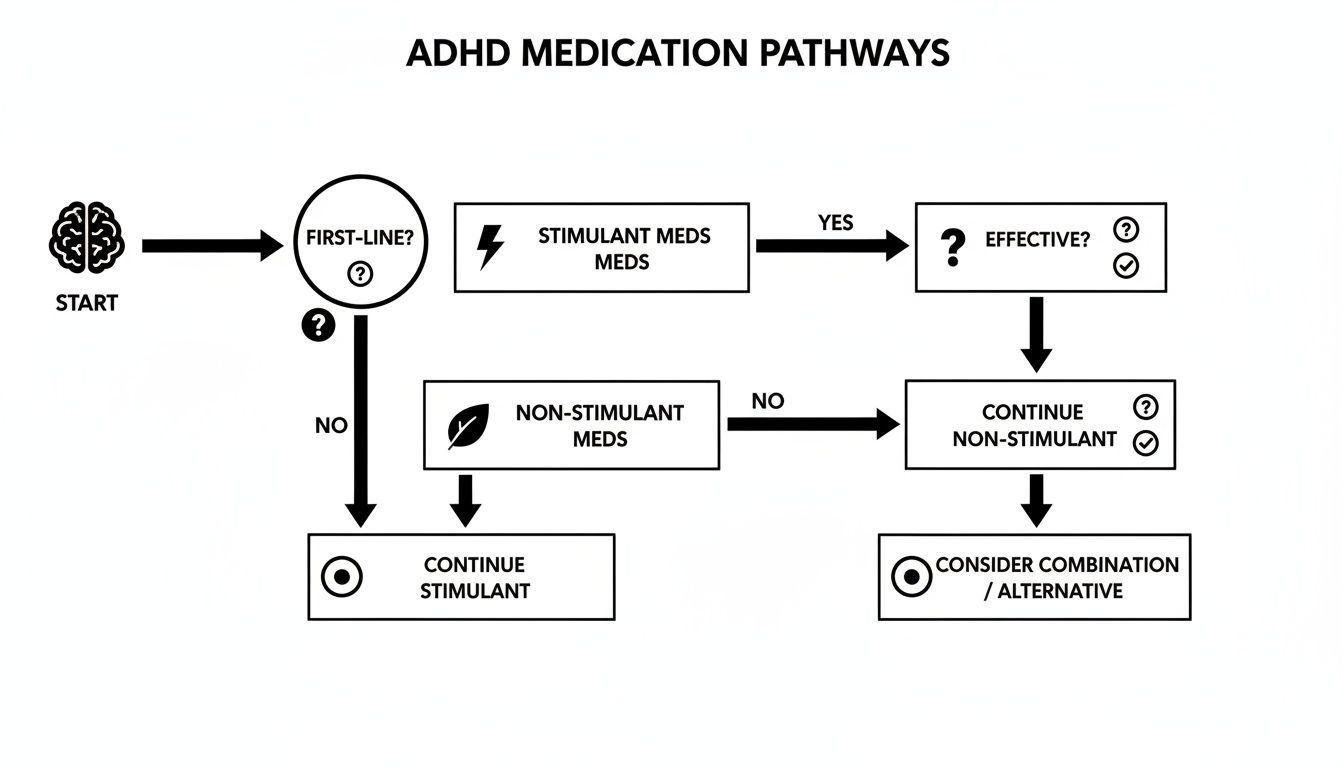
As you can see, the journey often begins with this fundamental choice. For many adults, stimulants represent the most direct route to managing the core symptoms of ADHD.
Methylphenidate: How It Works and Who It Helps
Methylphenidate acts primarily as a reuptake inhibitor for dopamine and norepinephrine. The easiest way to think about it is as a sort of gatekeeper. It stops the brain’s natural clean-up crew from removing these crucial neurotransmitters too quickly, leaving more of them available to help nerve cells communicate effectively. This is what helps sharpen focus.
Many people describe this mechanism as feeling "smoother" or more subtle. It can provide a clean boost in concentration without feeling like a sudden jolt. In the UK, methylphenidate remains the most prescribed ADHD medication for adults, which speaks volumes about its long track record of efficacy and its well-understood safety profile. In fact, prescribing data shows it accounted for 19 items per 1,000 people in England, cementing its place as the primary treatment option.
A clinician might suggest a methylphenidate-based option if you:
- Are starting ADHD medication for the first time and want a well-established, first-line treatment.
- Also experience anxiety, as its more subtle action is often less likely to cause jitteriness.
- Are autistic and potentially sensitive to the more "activating" effects of other stimulants.
Amphetamine: A Different Approach to Neurotransmitter Action
Amphetamine-based medications, such as Elvanse (lisdexamfetamine), work a little differently. They don't just block the reuptake of dopamine and norepinephrine; they also encourage the nerve cells to release more of these chemicals in the first place. This dual action often produces a more potent and noticeable effect on things like motivation and alertness.
For some, this increased release feels more "activating." It can provide that stronger push needed to get started on tasks. This can be a game-changer for people who struggle with significant executive dysfunction or a sense of lethargy alongside their inattentive symptoms.
One of the key differentiators is the subjective experience. While one person might find methylphenidate provides the perfect level of quiet focus, another may feel that amphetamine offers the necessary 'drive' to overcome procrastination and initiate tasks.
A specialist might consider an amphetamine-based medication when:
- An individual hasn't had the response they hoped for with methylphenidate.
- Profound problems with motivation and task initiation are the main challenge.
- There are no major concerns about anxiety, sensory overload, or cardiovascular health that could be made worse by a more potent stimulant.
Short-Acting vs. Long-Acting Formulations
Beyond the choice between methylphenidate and amphetamine, the next critical decision is about the medication's release mechanism. This simply determines how long the effects last, and it's a choice driven entirely by your daily routine and needs.
Short-Acting (Immediate Release)
- Duration: Lasts around 3-5 hours.
- Use Case: Perfect for managing symptoms over a specific, defined period—like a university lecture, an important work meeting, or a project you need to finish in the evening. This gives you flexibility.
- Example Scenario: A freelance writer needs four hours of intense focus in the morning to hit a deadline but prefers not to be medicated for the rest of the day.
Long-Acting (Extended Release)
- Duration: Provides coverage for 8-12 hours.
- Use Case: Designed for all-day symptom management. It gives you a steady effect throughout the workday and into the evening, avoiding the "peaks and troughs" of taking multiple short-acting doses.
- Example Scenario: An office worker needs consistent focus from their morning commute right through to finishing reports late in the afternoon, and also wants support for managing household tasks in the evening. For autistic individuals, this smooth coverage can be crucial for preventing the jarring sensory shifts that can come when a short-acting dose wears off.
Choosing the right formulation is a strategic conversation you'll have with your clinician. It’s all about tailoring the treatment to fit your life, not making your life fit the treatment. For a deeper dive into all the options available, you might find our comprehensive guide on ADHD medication for adults in the UK helpful. Remember, finding the right fit is a collaborative process of careful trial and adjustment.
When to Consider Non-Stimulant Medications
While stimulants are often the first port of call for adult ADHD, they aren't the only option—and for many, they aren't the best one. A significant number of adults find that non-stimulant medications are a much better fit, especially when other mental health factors like autism or anxiety are in the mix. These alternatives work differently to balance brain chemistry, and for the right person, they can be a complete game-changer.
Unlike stimulants, which give a fairly rapid boost to dopamine and norepinephrine, non-stimulants like Atomoxetine (Strattera) and Guanfacine (Intuniv) offer a more gradual, sustained effect. The result is smoother, 24-hour coverage that avoids the noticeable "peaks and troughs" some people experience with stimulants. This makes them a crucial part of the toolkit when trying to find the best ADHD medication for adults with complex profiles.
Situations Where Non-Stimulants Excel
Choosing a non-stimulant isn't a random decision; it's a strategic one, carefully based on a person’s entire health profile. Certain scenarios and co-occurring conditions make these medications a particularly smart choice.
One of the most common reasons to go this route is a co-existing anxiety disorder. Stimulants can sometimes dial up feelings of jitteriness or increase heart rate, which can easily make anxiety symptoms feel worse. Non-stimulants, however, can ease ADHD symptoms without that "activating" effect, making them a far more comfortable option for someone trying to manage both conditions at once.
They are also often the go-to choice in these situations:
- Intolerable Stimulant Side Effects: If you've tried stimulants and had to deal with severe insomnia, a complete loss of appetite, or feeling emotionally flat, a non-stimulant provides a different path to getting your symptoms under control.
- History of Substance Misuse: Because non-stimulants have no abuse or dependency potential, they are a much safer first-line treatment for anyone with a past or current history of substance use disorders.
- Autism and Sensory Sensitivities: For many autistic adults, the gentle, gradual onset of non-stimulants is far less disruptive to their sensory system than the sudden "kick" of a stimulant.
- Need for 24/7 Coverage: The steady, continuous effect of non-stimulants helps manage ADHD symptoms around the clock. This can be a huge help for regulating sleep patterns and tackling executive function challenges that pop up outside of a typical 9-to-5 workday.
Understanding the Trade-Offs
Opting for a non-stimulant means setting different expectations compared to stimulants. The biggest difference is how long they take to work. While you can feel a stimulant’s effects within an hour, non-stimulants need time to build up in your system.
It's crucial to understand that non-stimulants are not a "quick fix." They can take anywhere from four to eight weeks to reach their full therapeutic effect. This requires patience and a real commitment to the titration process, working closely with your clinician to find the optimal dose.
This slower start is the trade-off for the smooth, continuous coverage they provide once they've kicked in. A key study confirmed that both stimulants and atomoxetine have a clear, evidence-based impact on core ADHD symptoms in adults. However, it also noted that for some people, atomoxetine's side effects were harder to tolerate than those from stimulants.
This really highlights how personal medication choice is; what works brilliantly for one person might be a complete non-starter for someone else.
A Look at Atomoxetine and Guanfacine
Atomoxetine (Strattera) is a selective norepinephrine reuptake inhibitor (SNRI). It works by increasing the levels of norepinephrine—a vital neurotransmitter for attention and impulse control—in the brain. It was the first non-stimulant to be approved specifically for adult ADHD and is still a widely used option today.
Guanfacine (Intuniv), on the other hand, is an alpha-2 adrenergic agonist. It's thought to work by strengthening the connections in the prefrontal cortex, which is the brain's command centre for focus, emotional regulation, and impulse control. It’s often especially helpful for people who struggle with emotional dysregulation and rejection sensitivity alongside their ADHD.
Some people also explore alternative or complementary approaches to managing their ADHD through natural substances. A definitive guide to Mucuna Pruriens (L-Dopa) can provide deep insights into its potential benefits and use, but it's absolutely vital to discuss any supplements like this with your doctor first.
Ultimately, non-stimulants are an effective and essential treatment pathway, opening up possibilities for adults who need a different approach. They play a particularly critical role for those with complex mental health profiles, like the intersection of ADHD and autism, where managing overstimulation and anxiety is paramount.
Tailoring Treatment for Co-Occurring Conditions
Finding the right ADHD medication is rarely a simple case of matching a symptom to a pill. The reality is that ADHD seldom travels alone. Many adults I see are also navigating conditions like autism, anxiety, or depression, and this overlap changes everything. A truly effective treatment plan has to look at the whole person—your entire neurodevelopmental and mental health profile—not just a single diagnosis.
Personalising medication in this context is a delicate balancing act. We're aiming to find something that eases ADHD symptoms without accidentally making another condition worse. It's a clinical puzzle where every detail, from your sensory profile to your emotional regulation patterns, becomes a crucial piece of the picture.
The Interplay of Autism and ADHD Medication
The connection between ADHD and Autism Spectrum Disorder (ASD) is a big one, as they so often appear together. An autistic person’s unique sensory world can dramatically change how they react to medication.
For instance, many autistic people live with heightened sensory sensitivity. For them, a standard dose of a stimulant might feel less like focus and more like a full-blown sensory assault, triggering anxiety or overload.
A clinician who understands this dynamic will approach treatment differently. They might:
- Start low and go slow: I mean, really low. Begin with a tiny dose of a stimulant and increase it cautiously over a much longer period than usual.
- Consider non-stimulants first: Their more gradual, subtle action is often much better tolerated and less likely to cause jarring side effects or sensory disruption.
- Prioritise long-acting formulas: These provide a smoother, more consistent effect, helping to avoid the sudden "jolt" that an immediate-release tablet can sometimes deliver, which can be very dysregulating.
A psychiatrist's primary goal when treating co-occurring ADHD and autism is to enhance executive function without disrupting the individual's established sensory and emotional equilibrium. The choice of medication is guided by a principle of "gentle support" rather than aggressive symptom management.
Navigating Anxiety and Depression
Anxiety and depression are also common companions to ADHD. Choosing a medication here requires some careful strategic thinking, because some treatments can unintentionally turn up the volume on mood-related symptoms. Stimulants, for example, can sometimes increase that feeling of being on edge or physically anxious in people who are already prone to it.
If anxiety is a major part of your daily life, a non-stimulant like Atomoxetine might be a much better starting point. It can manage ADHD symptoms well while having a neutral, or sometimes even a slightly positive, effect on anxiety. Likewise, if depression is the primary concern, we might look at certain antidepressants that also happen to help with attention.
The presence of a mood disorder also brings other factors to the forefront, such as:
- Sleep Patterns: Poor sleep is fuel for both ADHD and mood disorders. A medication that causes insomnia could easily do more harm than good.
- Appetite: Significant appetite suppression from a stimulant can be a real problem for someone already dealing with the low energy that comes with depression.
- Emotional Regulation: The "rebound" effect, where ADHD symptoms rush back as a stimulant wears off, can feel like a severe mood crash for some. A clinician needs to watch this closely to make sure it doesn't destabilise your mood.
The intricate relationship between past negative experiences and current mental health is also a critical piece of the puzzle. To understand this better, you can explore our detailed article on the links between trauma and ADHD and how it shapes the way we approach treatment.
A Holistic View of Your Health
Any responsible clinician will build a complete picture of your health before even thinking about a prescription. This includes a thorough review of your cardiac health, because stimulant medications can increase heart rate and blood pressure. Any pre-existing heart conditions or a family history of cardiac issues will heavily influence the decision-making process.
To help your psychiatrist make the most informed choice, it helps to track how different factors impact your symptoms. The table below gives a clearer idea of how various patient factors can point towards one class of medication over another.
Decision Factors in ADHD Medication Selection
This table breaks down how specific patient factors guide the clinical decision between stimulants and non-stimulants. It's not about rigid rules, but about weighing the nuances of an individual's profile to find the most supportive treatment path.
| Patient Factor | Consideration for Stimulants | Consideration for Non-Stimulants | Clinical Rationale |
|---|---|---|---|
| Co-occurring Anxiety | Use with caution; may increase jitteriness. A lower dose or smoother long-acting formula is often preferred. | Often a first-line choice. Less likely to exacerbate anxiety and provides stable, 24-hour coverage. | To avoid amplifying physical or mental symptoms of anxiety while still treating core ADHD symptoms effectively. |
| Sensory Sensitivity (e.g. in Autism) | Start with a very low dose. The activating effect can feel overwhelming or overstimulating. | Generally better tolerated. The gradual onset and steady state are less disruptive to sensory systems. | To prevent sensory overload and ensure the medication experience is supportive, not distressing. |
| History of Substance Misuse | Prescribed cautiously due to potential for misuse, though this risk is low with long-acting formulas. | Preferred first-line treatment as they have no potential for abuse or dependency. | To provide safe and effective ADHD treatment while safeguarding against potential substance misuse risks. |
| Sleep Difficulties | May cause or worsen insomnia, especially if taken too late in the day. Short-acting forms can offer more control. | Can be neutral or even improve sleep regulation for some individuals once the body adjusts. | To ensure the treatment plan supports, rather than disrupts, healthy sleep hygiene, which is vital for mental health. |
Ultimately, this illustrates why a one-size-fits-all approach to ADHD medication simply doesn't work. The best choice is always the one that is carefully tailored to your unique health landscape.
The Medication Titration and Monitoring Process
Getting that first prescription for ADHD medication isn’t the finish line; it’s actually the start of a crucial phase called titration. Think of it as a careful, collaborative process where you and your clinician work together to find your "therapeutic window"—that sweet spot where the medication gives you the most benefit with the fewest side effects. It’s all about fine-tuning, and it’s absolutely essential for long-term success, especially when managing complex mental health needs like autism and ADHD.
The whole idea is to "start low and go slow." You'll begin with a very small dose of your prescribed medication, which is then increased bit by bit over several weeks. This gentle approach gives your body time to get used to the medication and helps keep any initial side effects to a minimum.

You're not left to figure this out alone. Throughout the titration phase, structured and regulated monitoring is built into the process to ensure everything is both safe and effective.
What to Expect During Titration
During this period, you can expect regular check-ins with your psychiatrist. These appointments are absolutely vital for tracking how you're getting on and making sure any adjustments to your treatment are based on solid feedback.
Your clinician will be keeping a close eye on several key things:
- Symptom Changes: They'll want to know how your core ADHD symptoms are responding. Are you finding it easier to focus? Is impulsivity less of an issue? Is the internal restlessness settling down?
- Vital Signs: Your blood pressure and heart rate will be checked at each appointment. This is standard practice to make sure the medication isn’t causing any unwanted cardiovascular effects.
- Side Effects: It's so important to be open about any side effects you're experiencing, no matter how small they seem. This feedback is what allows your clinician to step in and manage them effectively.
Titration is a dynamic process of observation and adjustment. It is not about finding the highest tolerable dose, but the lowest effective dose that helps you achieve your personal treatment goals.
Honestly, this part of the journey requires patience. Finding the right fit is a marathon, not a sprint. You need to give each dosage level enough time to really see how your body responds before deciding on the next step.
Communicating Effectively With Your Clinician
Frank and clear communication is your most powerful tool during titration. Your psychiatrist is relying entirely on what you tell them to make the best decisions for your care. A great tip is to keep a simple daily log to jot down your experiences—the good and the bad.
When you chat with your doctor, be ready to talk about:
- Positive Effects: What's better? Are tasks easier to start? Is your mind quieter? Be specific.
- Negative Effects: Are you dealing with any headaches, changes in appetite, or trouble sleeping? For autistic individuals, it's also important to note any changes in sensory sensitivity or social battery.
- Overall Feeling: How do you feel in yourself? The goal is to feel like you, but with the volume turned down on your ADHD symptoms—not to feel "drugged" or emotionally numb.
Adjustments are a totally normal and expected part of this. If one medication isn't quite right or the side effects are proving difficult, it’s not a failure. It's just valuable information. It helps your clinician decide whether to tweak the dose, change the timing you take it, or perhaps try a different medication altogether. To get a better idea of what to look out for, you can learn more about common ADHD medication side effects and how they are typically managed.
Remember, finding the best ADHD medication for you is a process of partnership and refinement.
Got Questions About Adult ADHD Medication? You’re Not Alone.
Starting ADHD medication can feel like a big step, and it’s natural to have a lot of questions. Getting straight, practical answers can demystify the process and help you feel more in control as you start working on a treatment plan with your doctor. Let's walk through some of the most common queries we hear from adults at this stage.
How Long Will I Be on This Medication?
For most people, ADHD is a lifelong condition, so it’s helpful to think of medication as a long-term strategy for managing symptoms, not a short-term fix. The whole point is to provide consistent support for your executive functions so you can thrive.
How long you take it, though, is entirely personal and something you’ll constantly review with your clinician. Many adults find that staying on medication for years provides the stability they need at work and home. Others might work with their doctor to plan medication-free periods to reassess their symptoms. There's no one-size-fits-all answer; it’s all about what helps you live your best life.
Will ADHD Medication Change My Personality?
This is a huge, and completely valid, concern. The goal of medication is to help you shine through, not to change who you are at your core. Think of it as turning down the volume on the static of ADHD symptoms—the constant distraction, the restlessness, the impulsivity—so that your true personality can come forward more easily.
If you ever feel emotionally numb, "zombie-like," or just not like yourself, that’s a red flag. It’s a clear sign that the dose or the specific medication isn't the right fit. You should tell your psychiatrist straight away, as an adjustment is definitely needed. The aim is to feel like yourself, just with a better handle on things. For autistic individuals, the right medication can actually lead to less masking and feeling more authentically themselves.
When the dose is right, ADHD medication doesn’t create a new personality; it removes the obstacles that were getting in your way. It’s about letting you follow through on the intentions and ideas that were there all along.
What’s the Difference Between Brand-Name and Generic Drugs?
By law, generic medications must contain the exact same active ingredient as the brand-name version. For instance, both Concerta XL and its generic equivalents are based on methylphenidate. From a purely medical standpoint, they do the same primary job.
The difference, however, often lies in the release mechanism—the technology that controls how the medication is delivered into your system throughout the day. Because of this, some people find a brand-name drug offers a smoother, more predictable experience, while others get on perfectly well with a generic. It's a small detail that can make a big difference, and it's something your clinician will monitor closely as you find the right dose.
Should I Take My Medication on Weekends and Holidays?
This is a classic "it depends" situation, and the answer is something you’ll figure out with your clinician. There are good reasons for both taking it daily and for taking planned breaks.
- Staying Consistent: Many people realise their ADHD doesn't take a day off. It affects home life, parenting, socialising, and managing chores just as much as it affects work or studying. For them, daily medication provides crucial stability across all parts of their life. For autistic individuals, this consistency can be key to maintaining routines and managing sensory and emotional regulation.
- Taking a Break: On the other hand, some people like to take "medication holidays" on weekends. This might be to give their body a rest, especially if they struggle with side effects like a suppressed appetite.
Ultimately, the best approach is whatever supports your overall well-being. A frank discussion with your doctor will help you decide on a routine that works for you.
Finding the right ADHD medication is a careful, collaborative journey. At Insight Diagnostics Global, our consultant-led team is dedicated to providing thorough assessments and personalised medication management that respects your unique profile, including co-occurring conditions like autism and anxiety. Start your journey towards clarity and control with us today.