If you’re wondering, “How long does an adult autism diagnosis take?”, you’re asking a question with a frustratingly complex answer. Officially, the guidelines say the process should take no more than 13 weeks from your referral. The reality for most adults in the UK, however, is a much longer and more daunting wait—often stretching from many months into several years.
The Reality of UK Autism Diagnosis Timelines
This massive gap between the official NICE guidelines and what people actually experience is a huge source of stress and anxiety. It can feel like your journey to self-understanding is stuck in limbo before it's even started, especially if you're also dealing with co-occurring conditions like ADHD or other mental health challenges that add another layer of complexity. The long wait often exacerbates anxiety and depression, making daily life even harder while you wait for answers.
Our goal here is to cut through that confusion. We’ll break down the real-world differences between going through the NHS versus a private service, look at why these long delays happen in the first place, and give you some practical advice for getting through the wait. This is your roadmap to what really lies ahead.
Understanding the Wait
Recent data paints a pretty stark picture of the crisis in diagnostic services. The median wait time in England just to get a first appointment after being referred for suspected autism has shot up. Between October and December 2023, that wait was over nine months—a massive jump from just over four months back in 2019.
This means half of the people referred are waiting longer than the recommended three-month entire diagnosis period just to get their assessment started. If you want to see the numbers for yourself, you can explore the growing waitlist data for autism and ADHD assessments to grasp the scale of the problem.
This timeline really helps to visualise the difference between the official guidelines and the current reality for so many people.
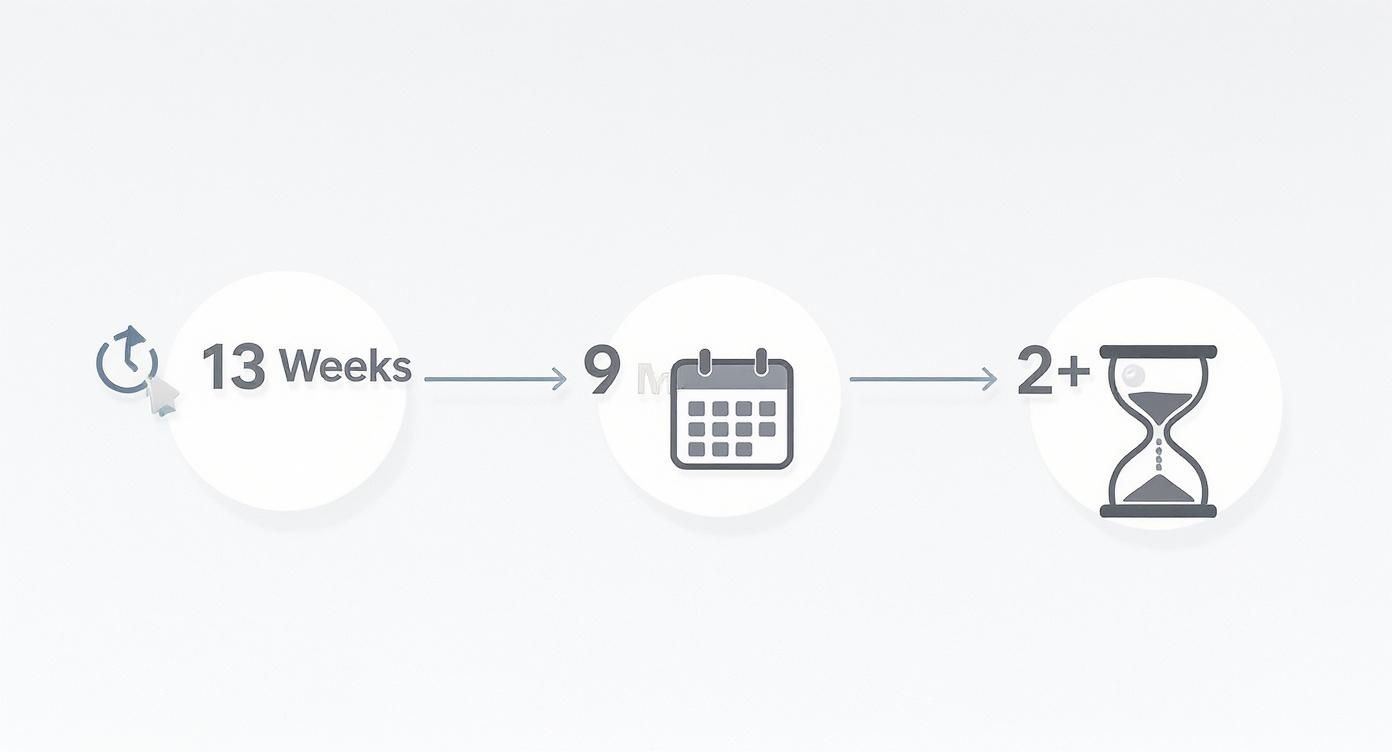
As you can see, the journey often extends far beyond what anyone expects, quickly turning a matter of weeks into months, and for many, even years.
To give you a clearer idea, here’s a quick summary of what to expect from different routes.
UK Autism Diagnosis Timelines at a Glance
| Pathway | Guideline Wait Time (NICE) | Average Realistic Wait Time | Best-Case Scenario |
|---|---|---|---|
| NHS England | 13 weeks (referral to diagnosis) | 18 months to 3+ years | 6-12 months (rare) |
| Private Clinic | N/A | 3-9 months | 4-12 weeks |
| Insight Diagnostics | N/A | ~4 weeks (referral to report) | ~4 weeks |
These numbers show just how stark the difference can be. While the NHS is the only free option, the trade-off is often a wait that can feel endless, whereas private options, including specialised online services, can significantly shorten that time.
Navigating the NHS Pathway for Diagnosis
Starting the journey towards an adult autism diagnosis on the NHS is a well-defined process, but it’s one that often requires a great deal of patience. The whole thing kicks off with a single, crucial step: booking an appointment with your GP to ask for a referral to a specialist neurodevelopmental service.
This first chat with your doctor is incredibly important. To get the most out of it, it’s a good idea to go in prepared. Try to pull together some real-life examples that made you first consider you might be autistic or have ADHD. Think about social challenges, sensory issues, how much you rely on routine, or any deep, passionate interests you have. The more clearly you can explain your experiences, the better your GP will understand why a referral is necessary.

The Referral and Waiting Period
Once your GP makes the referral, your name is added to a waiting list for your local assessment service. Honestly, this is where the biggest delay usually happens. When people ask how long an autism diagnosis takes, the answer is almost always dictated by the length of this queue, which can vary wildly depending on where you live.
These delays aren’t just minor inconveniences; they’ve become a massive issue across the country. The latest NHS data for England reveals that over 212,964 people are currently on the waiting list for an autism assessment. And while NICE guidelines recommend a maximum wait of 13 weeks, the stark reality is that 90% of those on the list have already been waiting much longer than that.
An autism assessment isn’t just about getting a label; it's about gaining a framework to understand your own mind. The long wait can feel like a barrier to self-acceptance and accessing the right support for your mental health, particularly if you're struggling with anxiety, depression, or the executive dysfunction associated with ADHD.
The Assessment Process Itself
When your turn finally comes, the formal assessment can begin. It’s a multi-stage evaluation, designed to be comprehensive and build a complete picture of you as a person.
Here’s what you can generally expect the process to involve:
- Initial Questionnaires: You’ll be sent forms to complete, asking about your personal history, traits, and day-to-day challenges.
- Clinical Interviews: A specialist will sit down with you for in-depth conversations, exploring everything from your childhood right up to the present. They often find it helpful to speak with a parent or someone who knew you well as a child, if possible.
- Co-occurring Conditions: A thorough assessment also looks for any other conditions. It's common for autistic adults to also have ADHD, anxiety, or depression, and a good clinician will explore how these might interact.
Getting this full picture is vital, as co-occurring conditions like ADHD can change how autism presents. If you want to understand the nuts and bolts of the evaluation, you can learn more about the methods for diagnosing autism in adults in the UK. This detailed approach is what makes sure the final report is accurate, insightful, and genuinely useful for you moving forward.
Exploring the Private Assessment Alternative
When you’re staring down an NHS waiting list that stretches for years, it’s only natural to wonder if there’s another way. For those who have the means, going private can dramatically shorten the journey to getting an autism diagnosis, often cutting the wait from several years down to just a few months. That speed is, without a doubt, the number one reason people choose to invest in a private assessment.
It's important to understand that a faster process doesn't mean a less thorough one. A reputable private clinic will follow the same rigorous, comprehensive standards you'd expect from an NHS assessment, including screening for conditions like ADHD. The real difference comes down to capacity. Private services simply don't face the same overwhelming demand and public funding constraints, which means they can see you much, much sooner.
Of course, this speed comes at a price. A private autism assessment, particularly if it includes screening for other conditions like ADHD, can easily cost a few thousand pounds. This financial barrier puts the private route out of reach for many, creating a tough dilemma between a long, often agonising, wait that impacts mental health and a substantial financial hit.
Doing Your Homework on Private Providers
If you’re considering this path, it's absolutely vital to do your research. You need to be sure you're investing in a credible diagnosis that will be recognised and respected. After all, a poorly conducted assessment is a waste of your time, money, and emotional energy.
Before committing, make sure you can tick these boxes for any provider you're looking at:
- Proper Qualifications: Is the assessment led by a fully qualified professional? Look for a consultant psychiatrist or a clinical psychologist who specialises in adult neurodevelopmental conditions like autism and ADHD.
- Adherence to NICE Guidelines: The assessment must be compliant with the standards set by the National Institute for Health and Care Excellence (NICE). This is the gold standard in the UK and ensures the entire process is robust.
- Multi-Disciplinary Input: The best assessments often involve a multi-disciplinary team. This might include input from speech and language therapists or occupational therapists, giving a more complete picture.
A proper diagnosis is a key—one that should unlock self-understanding, support, and accommodations. Choosing a provider that sticks to established clinical standards means your final report will hold weight with your employer, university, and other healthcare professionals.
Comparing NHS vs Private Autism Diagnosis
Choosing between the NHS and the private route is a personal decision that depends on your finances, your urgency, and the impact the waiting is having on your mental health. For many, the clarity that comes with a diagnosis is worth the financial cost, just to end the draining period of uncertainty.
To help you weigh everything up, here's a look at how the two pathways compare side-by-side.
| Feature | NHS Pathway | Private Pathway |
|---|---|---|
| Cost | Free at the point of service | £1,500 – £3,000+ |
| Wait Time | 18 months – 3+ years | 4 weeks – 9 months |
| Choice of Clinician | Limited to local service availability | Greater choice of specialists |
| Recognition | Universally recognised | Recognised if NICE-compliant |
Ultimately, whether you stick with the NHS or look into a private autism assessment in the UK, the goal is the same: to get the answers you need to move forward.
What Affects How Long You’ll Wait?
You’ve probably heard stories of someone getting an assessment in six months, while the next person is looking at a three-year wait. It can feel confusing and unfair, and the reason often boils down to a complex mix of factors, creating what many call a ‘postcode lottery’ for autism and ADHD services here in the UK.
Let's break down why how long an autism diagnosis takes can be so wildly different from one person to the next.
The biggest single reason is the gap between demand in your local area and the funding your NHS trust actually has. Some trusts are simply better resourced, with more diagnostic clinics and more qualified staff. If you live in a densely populated area with historically underfunded mental health services, the waiting list will almost certainly be longer than in a neighbouring region with a smaller population or better funding.
Complex Cases and a Shortage of Specialists
It’s not just about where you live, though. Your own unique situation plays a huge part. If you’re exploring an autism diagnosis but also have or suspect other conditions like ADHD, anxiety, or depression, the whole process becomes more intricate. Clinicians need to carefully unravel which traits belong to which condition to get the diagnosis right, which can mean more appointments and a longer timeline.
This problem is made worse by a real shortage of clinicians who specialise in certain presentations of autism and ADHD. There's a well-known lack of experts in adult diagnosis, especially when it comes to women and AFAB (assigned female at birth) individuals. Their autistic traits often look different and may have been 'masked' for a lifetime, requiring a specialist eye that is in short supply. This creates a bottleneck, with a small pool of experts facing a growing list of complex referrals.
The waiting game isn't just a personal frustration; it’s a symptom of the immense pressure on our mental health services. Every person on that list is a unique human being needing specialist time that is becoming harder and harder to find.
The strain is particularly acute for children and young people. In England, children often face the longest waits, with the median time for a neurodevelopmental diagnosis now sitting at a staggering 2 years and 3 months. Even more shockingly, 17% are left waiting for over four years. To see the full picture, you can find more data on the rapidly growing waiting lists for autism and ADHD assessments, which shows the true scale of the delays impacting families across the country.
How to Proactively Prepare for Your Assessment
The time spent waiting for an assessment doesn't have to be passive. Instead of just watching the calendar, you can use this period to get ready. It's a chance to empower yourself and ensure the assessment runs smoothly, giving the clinician the clearest possible picture of your life.
Think of it as transforming a waiting game into a productive phase of self-discovery. You'll be gathering practical information and, just as importantly, doing some structured self-reflection.
Gathering Your Personal History
Your developmental history is one of the cornerstones of an autism assessment. Clinicians are looking to understand your traits and behaviours right from early childhood through to today. You can give yourself a head start by digging out any relevant documents.
Here’s what to look for:
- Old School Reports: These can be absolute gold. You might find comments from teachers about your social skills, concentration levels, or particular interests that stood out.
- Medical Records: Any notes from paediatricians or other specialists could mention developmental milestones or early concerns that were raised.
- Family Input: If it feels right for you, chat with your parents, older siblings, or any relatives who remember you as a young child. Ask them what they recall about your early communication, how you used to play, or any specific routines and sensitivities you had.
This kind of evidence provides a solid, objective foundation that backs up your own memories and experiences.
The Power of Self-Reflection and Journaling
While historical documents are useful, your own lived experience is the most important part of the puzzle. The big challenge for many adults is trying to articulate a lifetime of subtle feelings and complex experiences on the spot, especially if co-occurring ADHD is also in the mix.
Self-reflection during the waiting period is not just preparation for an appointment; it is an act of self-discovery. It helps you connect the dots of your own life, providing the language to explain your internal world with clarity and confidence.
Start a journal or even just a note on your phone. The aim is to capture specific, real-world examples of things as they happen. Don't just write "social situations are hard." Go deeper and detail why they feel hard. For a more detailed look at the process, you can explore our guide on how to get tested for autism.
Try to jot down examples that fall into these key areas:
- Social Interactions: Note any misunderstandings, struggles with small talk, or that feeling of being completely drained after socialising.
- Sensory Sensitivities: Record moments when certain sounds, lights, textures, or smells felt overwhelming or genuinely distressing.
- Routines and Change: Describe how you feel about your routines and what happens inside when they get disrupted without warning.
- Intense Interests: Write about your special interests – the depth of your knowledge, and the pure joy they bring you.
- Attention & Focus: Make a note of times you struggle with executive function—procrastination, organisation, or maintaining focus on tasks that aren't highly stimulating.
This collection of real-life examples will become your most powerful tool when you finally have your assessment.
Life After Diagnosis and Finding Support
Getting an autism diagnosis as an adult is often just the beginning of a new journey, not the end of the road. For many, it's a deeply validating moment. It's that sudden click of understanding that finally provides a framework for a lifetime of experiences, bringing with it a huge sense of relief.
This new self-awareness is a powerful tool. The diagnostic report you get is more than just a piece of paper; it's your personal roadmap. It highlights your unique strengths and challenges, giving you a fresh lens to look at past difficulties and build more effective coping strategies for the future.
Building Your Support Network
So, you have your diagnosis. What's next? The long wait for an assessment might be over, but now the real work of finding your community and building a supportive environment begins. Support can come from all sorts of places, and it’s about finding what works for you.
Here are a few places to start looking for post-diagnostic support:
- NHS Services: Your local NHS trust might offer post-diagnostic services, though it’s worth knowing that availability can be a bit of a postcode lottery. This could include therapy or support for managing ADHD medication if applicable.
- Third-Sector Organisations: Charities like the National Autistic Society are brilliant. They provide everything from online forums and local support groups to practical advice on employment and relationships.
- Peer Support: There is something incredibly affirming about connecting with other autistic and AuDHD adults. Finding people who just get it can massively reduce feelings of isolation and help you feel like you belong.
A diagnosis isn't just a clinical label; it's the start of a new chapter. It’s an opportunity to re-evaluate what you need to thrive and to build a life that is more authentic and supportive of your neurotype.
A diagnosis can also be a crucial step for families. It’s common for families to seek out specialized care for children with autism to better navigate daily challenges, and this same principle of finding tailored support applies at any age.
If you’re just starting to explore what this all means, learning more about what autism spectrum disorder is in adults is a great first step. This knowledge helps turn the diagnosis from a simple label into a practical guide for your future.
Your Questions, Answered
Taking the first steps toward a diagnosis often brings up a lot of questions. It's completely normal to feel a bit overwhelmed by the process. Here, I'll walk you through some of the most common things people ask when they're thinking about an autism or ADHD assessment in the UK.
What if My GP Won't Refer Me?
It can be a real setback, but yes, a GP can decide against a referral if they don’t feel there’s enough evidence to suggest autism or another neurodevelopmental condition. The key thing to remember is that they must explain their clinical reasoning for making that call.
If you don't agree with their assessment—and you know your own experiences best—you are well within your rights to ask for a second opinion. You can do this with another doctor at the same surgery or move to a different practice entirely. My best advice? Go into your appointment prepared. A detailed list of your traits, backed up with real, specific examples from your life that you feel map onto the diagnostic criteria for autism and/or ADHD, can make all the difference.
Will the NHS Accept a Private Diagnosis?
For the most part, yes. A private diagnosis should be recognised by the NHS, but there’s an important condition: it must be carried out by a fully qualified clinician (like a consultant psychiatrist or a clinical psychologist) and follow the official NICE guidelines to the letter.
Where it can get a little tricky is when you're trying to access specific NHS support services, like ADHD medication prescribing, as acceptance can sometimes depend on the policies of your local NHS trust. However, for things like getting reasonable adjustments at work or university, a professionally conducted private diagnosis is almost always accepted.
A good assessment, whether you go through the NHS or a private service, is all about getting a true understanding of yourself. The report you receive should be a key that unlocks support, not another closed door.
How Is an ADHD Assessment Different from an Autism One?
That's a great question. While both are assessments for neurodevelopmental conditions, they’re looking for different core patterns of experience. An autism assessment is centred on lifelong patterns related to social communication and interaction, alongside focused interests and repetitive behaviours.
An ADHD assessment, on the other hand, is focused on identifying persistent patterns of inattention and/or hyperactivity and impulsivity. Things get interesting because many people are both autistic and have ADHD—a combination often called AuDHD. Because of this significant overlap, a good, thorough evaluation will often explore the possibility of both. The clinician’s job is to carefully disentangle your experiences to see if one diagnosis, both, or neither, is the right fit.
What Can I Do for Support While I'm on a Waiting List?
The waiting is often the toughest part of this entire journey. It's so important to know that you don't have to navigate this time alone. There are fantastic national charities, like the National Autistic Society, that offer brilliant resources. Their online forums and local support groups can connect you with people who just get it. Many also find that therapy or counselling is a huge help in managing the stress and anxiety that comes with being in limbo. Exploring strategies for managing executive dysfunction or sensory overload can also be beneficial, regardless of a formal diagnosis.
At Insight Diagnostics Global, we know that waiting years for clarity simply isn't feasible for many adults. Our consultant-led online service is built to provide clear, timely, and NICE-compliant assessments for autism and ADHD, helping you move forward from a place of uncertainty. Learn more about our services.