
Starting the journey to manage ADHD without medication can feel like a huge step, but it's really about exploring a powerful set of evidence-based options. The most effective plans usually aren't about finding a single magic bullet. Instead, they involve combining strategies like psychological therapies, skills coaching, and key lifestyle adjustments to build a toolkit that works for your unique brain, especially if you're also navigating co-occurring conditions like autism and other mental health challenges.
Exploring Your Options Beyond Medication
Choosing to manage ADHD without drugs isn't about just 'toughing it out'. It’s a strategic decision to build a solid set of skills and supports. This proactive approach empowers you to work with your neurotype, not against it, helping you create sustainable habits that last a lifetime. Many people, particularly those with both ADHD and autism, find this path incredibly liberating because it focuses on developing internal resources and improving overall mental health.

The world of non-pharmacological ADHD management is broad, but it’s built on a few core pillars that you can mix and match to suit what you need.
- Psychological Therapies: Techniques like Cognitive Behavioural Therapy (CBT) are brilliant for helping you identify and reframe the unhelpful thought patterns that often fuel procrastination, emotional dysregulation, and anxiety.
- Skills Coaching: ADHD coaching offers practical, one-on-one support to build those crucial executive function skills—things like planning, organisation, and managing your time effectively.
- Lifestyle Adjustments: Getting your diet, exercise routine, and sleep hygiene right is the bedrock of good mental health and can make a massive difference to ADHD and autistic traits.
To give you a clearer picture, here's a quick rundown of these core strategies.
Core Non-Drug ADHD Management Strategies at a Glance
| Strategy Type | Primary Goal | Common Examples |
|---|---|---|
| Psychological Therapies | To change unhelpful thought patterns and improve mental health. | Cognitive Behavioural Therapy (CBT), Mindfulness-Based Cognitive Therapy (MBCT), Dialectical Behaviour Therapy (DBT). |
| ADHD Coaching & Skills | To develop practical executive function skills. | Time management techniques (e.g., Pomodoro), organisational systems, goal-setting frameworks, breaking down tasks. |
| Lifestyle Interventions | To support brain function and overall well-being. | Regular exercise, balanced diet (protein-rich), consistent sleep schedule, sensory regulation. |
Each of these avenues offers a unique set of tools, and they often work best when used together to create a comprehensive support system for both ADHD and your overall mental well-being.
The Overlap with Autism and Mental Health
For anyone navigating co-occurring conditions like autism, these non-drug strategies are especially helpful. Many of the techniques, such as creating structured daily routines or setting up sensory-friendly environments, are beneficial for both ADHD and autistic traits. The emphasis on predictability and system-building can significantly reduce anxiety and sensory overwhelm, common challenges for AuDHD individuals.
This integrated approach respects the complexity of your experience, providing tools that address overlapping challenges in executive function, emotional regulation, and sensory processing. Building these skills creates a solid foundation for your overall mental well-being, which in turn helps manage anxiety, depression, and boost self-esteem.
But first things first. A critical step on this journey is getting an accurate diagnosis. Understanding your specific neurotype—whether it's ADHD, autism, or both—is the only way to create a truly effective management plan. If you're not sure where to start, you can explore our guide on how to get tested for ADHD in the UK.
Accessing Non-Drug Treatments in the UK
Despite plenty of evidence showing how effective they are, non-drug treatments are often underused in the UK. The National Institute for Health and Care Excellence (NICE) actually recommends that psychological and behavioural interventions should be offered alongside—or sometimes even instead of—medication for ADHD.
However, a recent NHS England taskforce report revealed that while medication rates are already low—only 15–25% of people with ADHD receive it—many with a diagnosis don't access any mental health services at all. This points to a huge unmet need, especially for the neurodivergent community, and really highlights why it's so important to actively seek out these valuable non-drug supports. You can learn more about this in the independent ADHD taskforce report.
Building Foundational Lifestyle Habits
Your daily habits can have a massive, immediate impact on ADHD symptoms and overall mental health. This makes lifestyle changes one of the most powerful places to start when you're looking to manage your well-being without turning to medication. Instead of just hearing vague advice like ‘eat healthy,’ let's get into specific, practical strategies for diet, exercise, and sleep that will give your brain a stable foundation to work from.
For many of us with ADHD, especially those who are also autistic, getting some consistency in these areas can dramatically cut down on the mental ‘static’ that gets in the way of focus and emotional regulation. It’s all about creating a supportive internal environment so that all the other skills and strategies you’re learning have a much better chance of sticking.
Optimising Your Diet for Brain Function
The connection between what you eat and how your brain feels is especially strong for neurodivergent folk. Wild swings in your blood sugar, for instance, can feel a lot like ADHD symptoms—think irritability, brain fog, and doing things on impulse. The goal here isn't a super-restrictive diet, but simply a more mindful way of eating that supports steady energy and keeps your neurotransmitters happy.
A great first step is to make sure you get protein in every meal, particularly at breakfast. A protein-heavy start to the day helps keep your blood sugar stable, heading off that classic mid-morning crash you get from a sugary bowl of cereal or a couple of slices of toast. This one small change can genuinely lead to better focus and a more even mood all day long.
- Structure your meals: Try to have three balanced meals and one or two snacks packed with protein. This stops you from getting ravenous, which is often when impulsive food choices (and emotional meltdowns) happen. For autistic individuals, this routine can also reduce decision fatigue around food.
- Balance your plate: A simple model to follow is filling half your plate with non-starchy veg, a quarter with lean protein (like chicken, fish, beans, or tofu), and the final quarter with complex carbs (quinoa, brown rice, sweet potatoes).
- Don't forget to hydrate: Being even slightly dehydrated is a sneaky and common reason for brain fog and feeling knackered. Keep a water bottle handy and sip on it throughout the day to keep your brain firing on all cylinders.
If you want to get a bit deeper into how to optimise your brain chemistry, it’s worth exploring practical ways to reset your dopamine for focus and clarity without quitting tech. Understanding what's going on under the hood can really empower you to make smarter lifestyle choices.
The Power of Exercise on ADHD Symptoms
Getting your body moving is, without a doubt, one of the most effective non-drug treatments out there. We know from research that exercise boosts levels of key neurotransmitters like dopamine and norepinephrine—the exact same chemicals that stimulant medications target. The result can be an almost immediate improvement in focus, mood, and your ability to get things done. It's also a powerful tool for managing anxiety and processing sensory input.
The real trick is to find a type of movement you actually like. If it feels like a chore, it won’t last. Whether it’s dancing in your living room, hiking, or team sports, find your thing and stick with it.
Creating a Sleep Routine That Actually Works
The link between poor sleep and ADHD is a frustrating one. A mind that won’t shut up, a natural tendency to be a "night owl" (known as delayed sleep phase syndrome), and just finding it hard to wind down can create a vicious cycle. Bad sleep makes daytime symptoms worse, which then makes it even harder to get to sleep the next night. Prioritising good sleep hygiene isn't just a nice idea; it's essential for your mental health.
Building a consistent and calming bedtime routine is your best weapon here. It’s a clear signal to your brain that it’s time to power down. This can be especially helpful for autistic people with ADHD, as that predictability and structure can do wonders for reducing anxiety and meeting sensory needs.
Here are a few strategies that genuinely work:
- Set a consistent bedtime: Try to go to bed and wake up at roughly the same time every day. Yes, even on weekends. This gets your body’s internal clock into a predictable rhythm.
- Create a 'wind-down' hour: The last hour before bed should be screen-free and dedicated to something relaxing. Read a physical book, listen to some chill music, do some gentle stretches, or have a warm bath.
- Optimise your bedroom: Turn your bedroom into a cave designed for sleep. Keep it cool, dark, and quiet. Blackout curtains, a white noise machine, or a weighted blanket can be a game-changer if you’re sensitive to light, sound, or need deep pressure input.
These lifestyle habits aren't just about looking after your body; they’re the bedrock of mental clarity and emotional stability. By taking conscious control of your diet, movement, and sleep, you're building a much more resilient foundation. This stability also makes it far easier to cope with daily pressures, and you can explore more on this topic in our guide to workplace stress management strategies.
Psychological Therapies and Skills Training That Actually Work
While sorting out your lifestyle habits builds a solid foundation, structured therapies and specific skills training give you the tools to tackle ADHD head-on. Think of it less as 'fixing' your brain and more as learning to work with its unique wiring. These approaches offer real-world strategies for managing executive function struggles and, just as importantly, help reframe the negative self-talk that often comes from a lifetime of feeling out of step, improving your overall mental health.
For many people, especially those who are also autistic, these methods offer a logical, predictable way to build essential skills. They directly address the core difficulties with planning, managing emotions, and maintaining focus in a way that truly respects how a neurodivergent mind works. This is the part where you stop just coping and start actively thriving.
Cognitive Behavioural Therapy: Rewriting Your Inner Script
Cognitive Behavioural Therapy, or CBT, is one of the most well-researched and effective non-drug treatments out there for adults with ADHD. While standard CBT is helpful, a version specifically adapted for ADHD is the gold standard. It zeroes in on the classic ADHD hurdles: procrastination, poor time management, and emotional volatility. The whole approach is built on a simple but powerful idea – your thoughts, feelings, and actions are all linked.
After years of struggling to meet neurotypical expectations, many adults with ADHD and autism have a relentless "inner critic" on repeat. This voice fuels a nasty cycle of shame, avoidance, and anxiety. CBT gives you practical tools to catch these automatic negative thoughts, question if they're actually true, and swap them for more balanced, helpful ones.
For example, instead of the all-too-familiar thought, "I'm so lazy for not starting this report," you learn to reframe it. A CBT-informed approach might sound more like, "This report feels huge, so I'm going to find one small, easy part to do first." This tiny shift can be enough to lower the emotional wall and just get started.
Mindfulness: Training Your Attention Muscle
The idea of mindfulness can feel like a joke to someone with an ADHD brain that’s buzzing with a million thoughts at once. But it’s a skill. And like any skill, you get better with practice. The goal isn't to have an empty mind; it's to train your brain to pay attention to the present moment without judging yourself for it.
This practice directly strengthens the parts of the brain responsible for regulating attention. It’s a workout for your focus. The real exercise happens every time your mind wanders (which, let's be honest, is a lot) and you gently guide it back.
A simple way to start: Set a timer for just two minutes. Sit down and focus only on the feeling of your breath going in and out. When your mind inevitably drifts off to your to-do list or what you're having for dinner, just notice it, and gently pull your focus back to your breath. That moment of "returning" is the core exercise that builds your attentional muscle over time.
Mindfulness is also a game-changer for emotional regulation and managing anxiety. It helps create a tiny bit of space between a trigger (like a frustrating comment) and your immediate reaction. That little pause gives you the power to choose a better response, which can make a huge difference in managing impulsivity. If you're curious about where you stand, a quick emotional dysregulation test can offer some valuable personal insights.
As the diagram below shows, these therapeutic skills work best when supported by core habits like diet, exercise, and sleep.
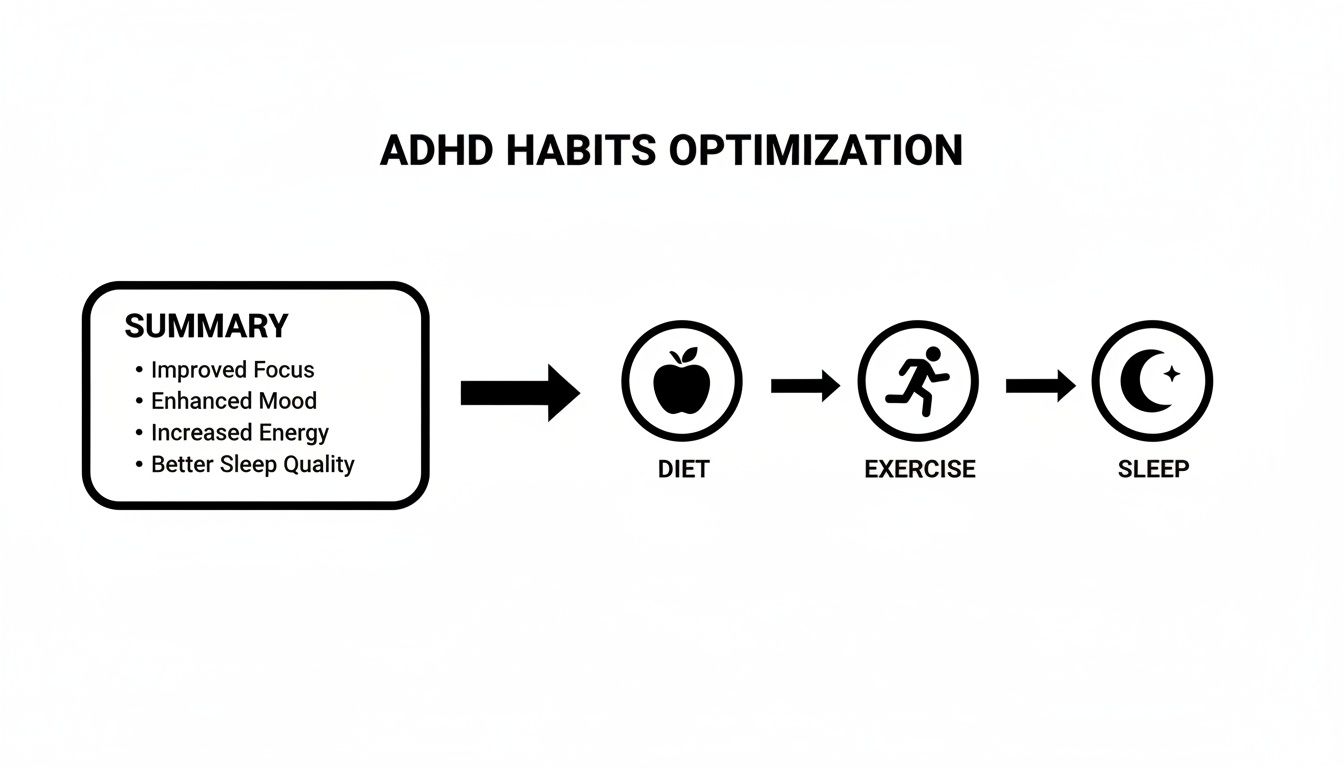
This visual really drives home how looking after your body's basic needs creates the stability required for your mind to focus and feel its best.
ADHD Coaching: Your External Executive Function
If therapy like CBT is about working on your inner world of thoughts and feelings, ADHD coaching is all about practical, real-world action. It’s a partnership focused on one thing: helping you build the specific skills you need to navigate your daily life more easily. A good coach essentially acts as your temporary, external executive function support.
They can help you with things like:
- Deconstructing massive projects: A coach will sit with you and help you turn that overwhelming 'thing' on your to-do list into a series of small, concrete steps.
- Creating systems that stick: They work with you to design organisational systems for paperwork, emails, or even just the clutter at home that actually make sense to your brain.
- Taming time: You might experiment with tools like the Pomodoro Technique, time-blocking, or visual timers to get a better handle on where your time really goes.
- Holding you accountable: Sometimes, just knowing you have a check-in with your coach is the push you need to follow through on what you said you'd do.
What makes coaching so effective is that it’s not a one-size-fits-all programme. It’s all about figuring out your unique strengths and challenges and then co-creating strategies that you can actually maintain, whether that’s at work, at university, or just in running your household.
Comparing Therapeutic Approaches for ADHD
Trying to decide between CBT, mindfulness, and ADHD coaching can be confusing. They all offer unique benefits, but they aren't interchangeable. The table below breaks down the key differences to help you think about which approach might be the best fit for you right now, especially considering your broader mental health.
| Approach | Focus Area | Best For… | Typical Format |
|---|---|---|---|
| CBT for ADHD | Changing negative thought patterns and behaviours related to procrastination, time management, and emotional dysregulation. | Individuals struggling with anxiety, low self-esteem, and avoidance behaviours stemming from their ADHD and co-occurring mental health challenges. | Structured weekly sessions with a trained therapist, often involving homework and practical exercises. |
| Mindfulness | Training attention, increasing self-awareness, and reducing emotional reactivity and impulsivity. | Anyone looking to improve focus and develop a calmer, more measured response to stress and emotional triggers common in ADHD and anxiety. | Daily personal practice (apps, guided meditation), formal classes, or integrated into other therapies. |
| ADHD Coaching | Developing practical skills, building systems, and implementing real-world strategies for organisation, planning, and goal-setting. | People who need hands-on support and accountability to translate knowledge into consistent daily action. | Collaborative one-on-one sessions (weekly/bi-weekly) focused on specific, goal-oriented tasks. |
Ultimately, the "best" therapy is the one that addresses your most pressing challenges. Some people find that a combination—for example, using CBT to tackle negative self-talk while working with a coach on practical life management—provides the most comprehensive support.
Structuring Your Environment for Success
One of the smartest ways to manage ADHD without turning to medication is to become the architect of your own environment. Rather than fighting a constant battle against your brain's wiring, you can shape your physical and digital worlds to work with you. Think of it as building scaffolding to support your executive functions. This simple shift can dramatically reduce your cognitive load and decision fatigue, setting you up to win before you even start a task.
This whole process is about creating external systems that do the heavy lifting when your internal systems struggle. For many people, especially those who are also autistic, having predictable and well-organised spaces is a game-changer for mental health. It lowers the background hum of daily stress and frees up so much mental energy for the things that really matter.
Creating an ADHD-Friendly Home
Your home should be a sanctuary, not another source of overwhelm. The secret here is to reduce clutter and give everything a designated "home." This turns organising from a monumental chore into something more automatic.
A classic, and incredibly effective, strategy is to create a 'launch pad' right by your front door. This is just a specific spot—a bowl, a tray, maybe some hooks—where your absolute essentials live. Keys, wallet, phone, glasses… they all go there the moment you walk in. It’s the last place you check before you leave. This one simple habit can almost entirely wipe out those frantic, late-for-work searches.
Another powerful tactic is to make things visual. The ADHD brain often lives by the rule of "out of sight, out of mind."
- Visual Planners: A big whiteboard or a wall calendar in a high-traffic spot like the kitchen makes it impossible to forget appointments.
- Clear Storage: Switch to clear containers for things in the pantry, for craft supplies, or for toiletries. If you can see it, you're far more likely to remember you have it.
- Colour-Coding: Assigning specific colours to different tasks, projects, or even family members can make a busy schedule feel much less chaotic at a quick glance.
"The goal isn't a sterile, minimalist show-home. It's about creating a functional space that lowers the barrier to getting things done. By making it easier to find what you need and see what you have to do, you're giving your future self a massive head start."
Optimising Your Workspace for Focus
Whether you're in an office or working from home, your workspace has a colossal impact on your ability to focus. The principles are exactly the same: cut down on distractions and create external systems for organisation. This is absolutely critical if you want to protect your focus for deep, meaningful work and manage potential sensory overload.
Start with your desk. Clear away everything that isn't essential for the task you're doing right now. From there, think about asking for reasonable adjustments at work, which is your legal right. Our guide on reasonable adjustments for ADHD walks you through how to have that conversation.
Some of the most common and effective adjustments include:
- Noise-Cancelling Headphones: Honestly, these are non-negotiable for anyone with ADHD or sensory sensitivities in a busy office.
- Flexible Hours: The ability to start earlier or finish later lets you work during your peak productive hours and avoid a draining commute.
- A Quieter Desk Location: Simply moving away from the kitchen, photocopier, or main entrance can make a world of difference.
Leveraging Digital Tools and Supports
Technology can be our biggest distraction or our most powerful ally. The trick is to choose your tools carefully and use them with real intention. There's a growing world of apps designed specifically to support ADHD brains with everything from managing tasks to maintaining focus.
Interest in these digital supports has shot up as NHS services have become overstretched. While ADHD prescribing has increased, it still only covers a fraction of the people who need support. In recent years, around 233,000 people in England received medication, a number that falls far short of UK prevalence estimates. This gap is pushing more people to explore non-drug options, including digital cognitive-behavioural therapy (CBT) and other tech-based tools.
To build that crucial sense of daily structure, exploring some of the effective daily routine apps can be a huge help. These tools provide the consistency that is so vital when you're managing ADHD without medication.
Here are a few types of digital tools I often recommend:
| Tool Category | How It Helps | Popular Examples |
|---|---|---|
| Task Managers | Lets you break huge projects into small, non-threatening steps with visual deadlines. | Asana, Trello, Todoist |
| Focus Timers | Uses methods like the Pomodoro technique to help you work in focused bursts. | Forest, Be Focused |
| Distraction Blockers | Temporarily blocks your access to time-wasting websites and apps. | Freedom, Cold Turkey |
By thoughtfully shaping your physical and digital worlds, you create a framework that actively helps you manage your ADHD symptoms. It's a practical, empowering approach that puts you back in control, relying on smart systems instead of sheer willpower.
Finding Strength in Connection and Support Systems
Living with ADHD, especially if you also navigate autistic traits, can be incredibly isolating. It’s a common feeling—that no one else quite understands the daily friction of a brain wired differently. This is precisely why building a solid support network isn't just a bonus; it’s a cornerstone of any effective non-drug treatment plan. When you connect with others, that emotional weight gets lighter, and you find a shared space that genuinely boosts your mental health.
There’s a real power in shared experience. It validates your feelings and shrinks down challenges that once felt monumental. The moment you realise you’re not the only one who struggles with a particular task, the shame that so often rides shotgun with ADHD begins to fade. That connection is vital for building resilience and keeping the momentum going with all your other strategies.
The Value of Peer Support Groups
Think of peer support groups—whether online or in person—as safe harbours. They’re places where you can talk openly about your strategies and frustrations without worrying about being judged. These communities are so valuable because they’re filled with people who have direct, lived experience of the very things you’re facing. They just get it in a way that even the most well-meaning friends or family sometimes can’t.
In these groups, the conversation is real. You can troubleshoot problems, celebrate the small wins, and pick up practical tips that have actually worked for other people with ADHD, autism, and related mental health concerns.
For instance, you might mention that you’re finding it impossible to stick with a new organisational system. Instead of getting some generic advice, another member might chime in about a specific app or a visual trick that clicked for their AuDHD brain. It’s that exchange of hands-on wisdom that makes these groups so powerful.
Engaging Your Closest Relationships
While connecting with peers is crucial, getting your immediate circle—partners, family, and close friends—on board can make a world of difference. ADHD doesn't just affect you; it ripples through your relationships. It's so easy for misunderstandings to crop up around things like forgetfulness, emotional intensity, or struggling to follow through on plans.
This is where family or couples counselling can be a game-changer. It creates a structured, neutral space for your loved ones to learn about the neurobiology of ADHD and autism. A good therapist can act as a translator, explaining what’s happening in your brain in a way that makes sense to others. This helps reframe behaviours not as personal failings, but as symptoms of a neurological condition.
The goal of therapy here isn’t about 'fixing' you. It's about building a bridge of communication and empathy. It gives your support system the tools to offer effective, compassionate support, turning frustration into teamwork.
Here’s what can happen when you involve your family:
- Shared Understanding: Your loved ones can finally grasp that your challenges with executive functions aren't about a lack of care or effort.
- Practical Strategies: Everyone can learn to build ADHD-friendly routines and communication styles that cut down on conflict.
- Emotional Validation: You get a space to express how ADHD truly affects you, which can foster a much deeper emotional connection.
This kind of collaborative effort can transform your home from a source of stress into a foundation of strength.
Finding Your Community in the UK
Finding the right support does take a bit of digging, but the payoff for your mental well-being is huge. A number of reputable UK-based organisations offer resources and directories to help you find local and online groups. Charities focused on ADHD and autism are a fantastic place to start, as they often host their own forums or can point you toward affiliated local networks.
By taking the time to build these connections, you’re creating a safety net that strengthens all the other strategies you're putting in place. You’re reminding yourself that you are not alone on this journey—and that might just be the most powerful non-drug treatment there is.
Your Questions About Non-Drug ADHD Treatment, Answered
Deciding to manage ADHD without medication is a big step, and it’s completely normal to have questions. You might be wondering what this path really looks like, how long it takes to see real change, and what to do if you feel stuck, especially when dealing with the complexities of co-occurring conditions like autism.
Getting answers to these questions helps build a solid foundation for your journey. This isn't about finding a one-size-fits-all solution; it's about being curious and patient as you discover what truly works for you.
Can You Really Manage ADHD Without Any Medication?
For many people, the answer is a resounding yes. The key isn't a single magic bullet, but rather a dedicated, multi-layered approach. When you consistently combine things like therapy, practical skills coaching, and smart lifestyle adjustments, you can absolutely thrive.
Of course, a lot depends on your specific symptoms and how much they impact your day-to-day life. It's about building a personal toolkit of strategies that helps you navigate executive function challenges, from planning your day to managing your emotions. This is a journey of skill-building, not a search for a 'cure'.
It’s also worth noting that for some, especially those with co-occurring conditions like autism or severe anxiety, non-drug approaches are an essential part of a bigger picture that might, down the line, include medication. The goal is always to find the most sustainable and effective path for your individual needs and overall mental health.
How Long Until I See Results from These Strategies?
This is where managing ADHD without medication really differs. Unlike medication, which can sometimes have a noticeable effect quite quickly, the benefits here are more gradual. You’re essentially forming new habits and rewiring years of old patterns, and that takes time. Patience is your best friend here.
You’ll likely feel the first small wins from lifestyle changes. For example, getting your sleep on track or improving your diet can boost your energy and stabilise your mood within just a few weeks. These are the foundational pieces that make everything else easier.
Therapies like CBT or dedicated ADHD coaching often start producing noticeable results within a few months. As you put the new skills and thought processes into practice, you'll begin to see genuine improvements in how you organise your life, handle your emotions, and get things done. It’s all about the long game.
Think of this as a marathon, not a sprint. You're building skills and systems that will support you for life. Make sure to celebrate the small victories along the way—they're what keep you going.
How Do I Know If Non-Drug Strategies Aren't Enough for Me?
This is a crucial question, and answering it requires some honest self-reflection. If you’ve been giving it your all—consistently applying a range of strategies for at least six months—and your symptoms are still severely impacting your life, it might be time to look at other options.
A few signs that your current plan isn't cutting it might include:
- Persistent issues at work: You're using all the tools and have accommodations, but you're still getting warnings or feel your job is at risk.
- Serious relationship strain: Your ADHD symptoms are still a major source of conflict with your partner, family, or close friends.
- Worsening mental health: You’re dealing with severe, ongoing anxiety or depression that just isn't lifting, despite therapy and lifestyle efforts.
If this sounds familiar, it’s not a failure. It’s just new information. It simply means it’s time to speak with a healthcare professional to explore whether adding medication to your existing plan could give you the extra support you need.
Where Can I Find an ADHD Coach or Therapist in the UK?
Finding the right professional is a game-changer. A good starting point is often your GP, who can refer you to local NHS mental health services. Just be prepared that waiting lists can sometimes be quite long.
If you're looking at private options, there are some great resources to help you find an accredited professional. The British Association for Counselling and Psychotherapy (BACP) and the UK ADHD Partnership (UKAP) both have directories of qualified specialists. When you're searching, make sure you look for people who explicitly mention experience and training in working with adults with ADHD and, if relevant for you, autism.
At Insight Diagnostics Global, our consultant-led team of psychiatrists provides thorough, CQC-regulated assessments for adults seeking clarity on ADHD, autism, and other mental health conditions. If you're ready to understand your neurotype and develop a clear, personalised plan, explore our services at https://insightdiagnostics.co.uk.