Let's get one thing straight from the start: in the United Kingdom, there's no such thing as a licensed non-prescription ADHD medication. The core treatments you might have heard of—like Elvanse, Concerta, or Ritalin—are classified as controlled drugs.
This isn't about creating barriers. It’s a critical safety measure. To get these medications legally and safely, you absolutely need a formal diagnosis and a prescription from a specialist. This is especially vital for individuals navigating the complexities of co-occurring conditions like Autism and other mental health challenges, ensuring that any treatment plan is truly holistic and considers all aspects of your well-being.
The Reality of ADHD Medication in the UK
When you start looking into support for Attention Deficit Hyperactivity Disorder (ADHD), the conversation often turns to medication. It's completely natural to be curious. But it’s vital to understand why the prescription-only rule exists. It’s a safeguard.
This is especially true for people managing co-occurring conditions, such as Autism or other mental health challenges. The whole point is to make sure any treatment is carefully matched to your unique brain chemistry and overall health, which is why a formal diagnosis is always the first, most important step.
A Safeguard, Not a Roadblock
Try to see the diagnostic process less as a hurdle and more as a team of experts creating a detailed, personalised map of your brain. Taking powerful medication without that map would be like trying to navigate a new city with your eyes closed—you wouldn't get very far, and it could be incredibly risky. This is particularly crucial when you consider the complex overlap that can exist between ADHD and Autism Spectrum Disorder (ASD).
The journey to managing ADHD effectively starts with real understanding, not just a pill. A formal diagnosis offers profound self-awareness and opens the door to new, effective strategies for navigating daily life—something that over 84% of diagnosed individuals say is a primary benefit.
This carefully structured approach ensures the support you receive is not only safe but genuinely effective for you. It shifts the focus from a quick, temporary fix to a sustainable, long-term management strategy that supports your entire mental health profile.
To give you a clearer picture, here’s a quick breakdown of the different routes available for ADHD support in the UK.
UK ADHD Treatment Options At a Glance
| Category | Legal Status | Examples | How to Obtain |
|---|---|---|---|
| Stimulant & Non-Stimulant Medications | Prescription-Only (Controlled Drugs) | Methylphenidate (Ritalin, Concerta), Lisdexamfetamine (Elvanse), Atomoxetine (Strattera) | Requires a formal diagnosis from a qualified specialist (psychiatrist or specialist nurse). |
| Lifestyle & Behavioural Support | No Prescription Needed | ADHD coaching, mindfulness, exercise routines, nutritional adjustments, organisational systems | Available to anyone. Can be self-directed or accessed via therapists, coaches, and support groups. |
| Therapy | No Prescription Needed | Cognitive Behavioural Therapy (CBT), psychoeducation | Accessed via NHS referral (often with long waits) or through private therapists. |
| Nutritional Supplements | Over-the-Counter | Omega-3 fatty acids, zinc, magnesium, iron | Available in pharmacies and health shops. Always consult a doctor before starting new supplements. |
This table shows that while medication is a key part of the puzzle, it's surrounded by a host of other supportive strategies that you can start exploring right away.
What Is Actually Possible
Instead of fixating on what's unavailable "over the counter," it’s far more empowering to focus on what is possible. The UK has clear, safe, and legal pathways to get the support you need—pathways designed to lead to real, positive outcomes. You can dive deeper into the specifics of ADHD medication for adults in the UK in our detailed guide.
This guide will walk you through these legitimate routes, covering everything from:
- Safe, non-prescription strategies that can make a genuine difference.
- The official pathways to getting an ADHD and Autism assessment.
- Lifestyle and therapeutic approaches that support your mental well-being.
Why a Prescription Is a Critical Safety Net
When you're looking into ADHD medication, it can feel a bit overwhelming. But the reason it's a prescription-only system is actually very simple: it’s all about keeping you safe.
Think of your brain's unique neurochemistry as a complex, high-performance engine. The right medication is like a key that’s been precision-cut to fit the ignition perfectly, helping that engine run smoothly and efficiently.
Trying to use the wrong key, or even a badly copied one, won’t just fail to start the car—it could seriously damage the entire system. This is precisely why a specialist's oversight isn't just a suggestion; it's non-negotiable. They're the expert mechanics, making sure you get exactly what your specific engine needs.
The Dangers of Unregulated Online Sources
It’s completely understandable to look for a quick fix online, but that path is paved with some serious risks. Unregulated websites claiming to sell ADHD medication are often just fronts for counterfeit pills. You have no way of knowing what you're actually getting – it could be the wrong drug, an incorrect dose, or worse, harmful fillers like chalk or even fentanyl.
This risk gets even bigger if you're managing other conditions alongside ADHD. For someone with both ADHD and Autism, or perhaps underlying anxiety, the wrong medication can throw a delicate balance completely out of whack. It could easily make other symptoms worse and cause real harm. A proper medical assessment ensures your entire mental health profile is taken into account.
A formal prescription process isn't a barrier; it's a personalised safety protocol. It ensures the medication you receive is tailored to your brain's unique wiring, protecting you from the unpredictable and often dangerous world of unregulated online sellers.
Titration: The Key to Finding Your Balance
Finding the right medication and dose isn't a one-and-done deal. It's a careful, gradual journey called titration, and it’s always overseen by a medical professional.
A specialist will start you on a very low dose and closely monitor how you're doing, making tiny adjustments over several weeks or months. This meticulous process is all about finding that sweet spot—the optimal dose that gives you the most benefit with the fewest side effects, while also making sure it’s safe for your heart. You can learn more about how specialists handle issuing private prescriptions online in a safe, regulated way.
This careful management is more important than ever. In the second quarter of 2025/2026, ADHD prescriptions in the UK saw a sharp 5% rise, reaching 297,000 patients and pushing prescribing costs to £45 million. This surge really underscores the importance of safe, medically supervised access to treatment, which you can read more about in this detailed report on ADHD prescription trends.
Your Guide to a Formal ADHD Diagnosis
Figuring out how to get a formal ADHD diagnosis can feel like trying to solve a puzzle, but knowing the routes you can take is the first and most important step. This process isn't just about getting a label; it's about finding a safe, legal, and effective way to manage your symptoms, particularly if you're also dealing with conditions like Autism or anxiety. In the UK, you essentially have three main paths to choose from.
The NHS Pathway
For most people, the journey starts with a chat with their GP. You'll talk through your concerns and symptoms, and if your doctor thinks ADHD is a possibility, they'll refer you to a specialist mental health service for a proper assessment.
The quality of care through the NHS is fantastic, but there’s a major hurdle: the waiting lists. It’s not uncommon to wait for years, which is a long time to be left struggling without support. This delay can be incredibly frustrating and take a real toll on your mental health.
The Private Pathway
If you're in a position to pay, going private is a much quicker option. You can book an assessment directly with a private clinic and often get seen by a specialist within a matter of weeks, not years.
Of course, this speed comes at a price. The assessment itself, plus any follow-up appointments and treatment, is a significant financial commitment. For many, though, the ability to get a diagnosis and start treatment quickly makes the cost worthwhile, especially when their daily life is being heavily impacted. Our guide on how to get tested for ADHD in the UK breaks down what this process looks like.
Right to Choose in England
For those in England, there's an excellent middle-ground option called Right to Choose. This legislation lets you ask your GP to refer you for an NHS-funded assessment with a qualified private provider. Essentially, you get the speed of the private sector without the hefty price tag.
You still need that initial GP referral, but it’s a brilliant system that blends the best of both worlds—the accessibility of the NHS and the speed of private care. It puts a lot more control back in your hands.
The flowchart below makes it crystal clear why sticking to these official routes is so important compared to sourcing medication from unregulated online sellers.
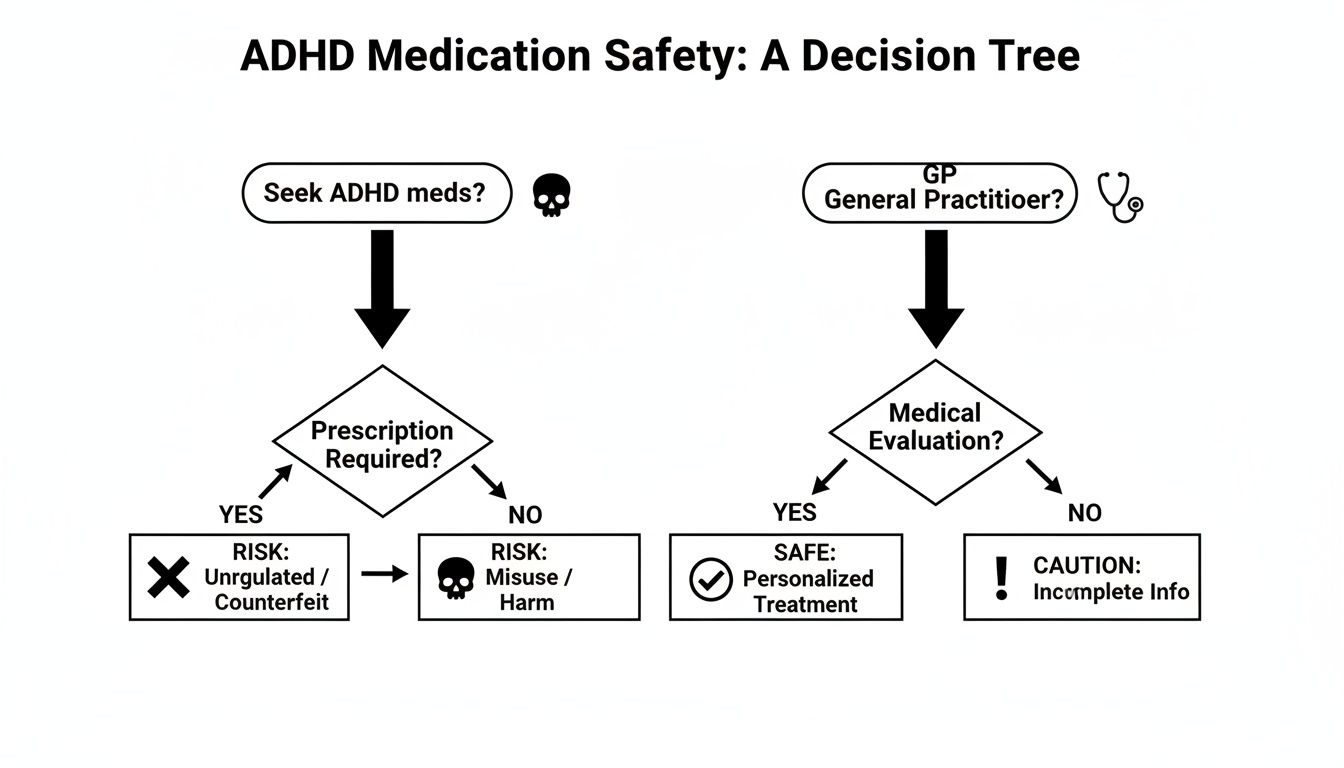
As you can see, the path through a GP leads to safe, professional care, while buying online is a dangerous gamble with an unknown outcome.
Sadly, under-diagnosis is still a massive problem in the UK. A major study of GP records revealed that only 1 in 9 people with ADHD are ever formally identified. This forces over 20% of people to go private simply because they can't endure the long NHS delays. Choosing the right diagnostic path for your circumstances is the key to getting the support you need, safely and without unnecessary delay.
Building Your ADHD Management Toolkit
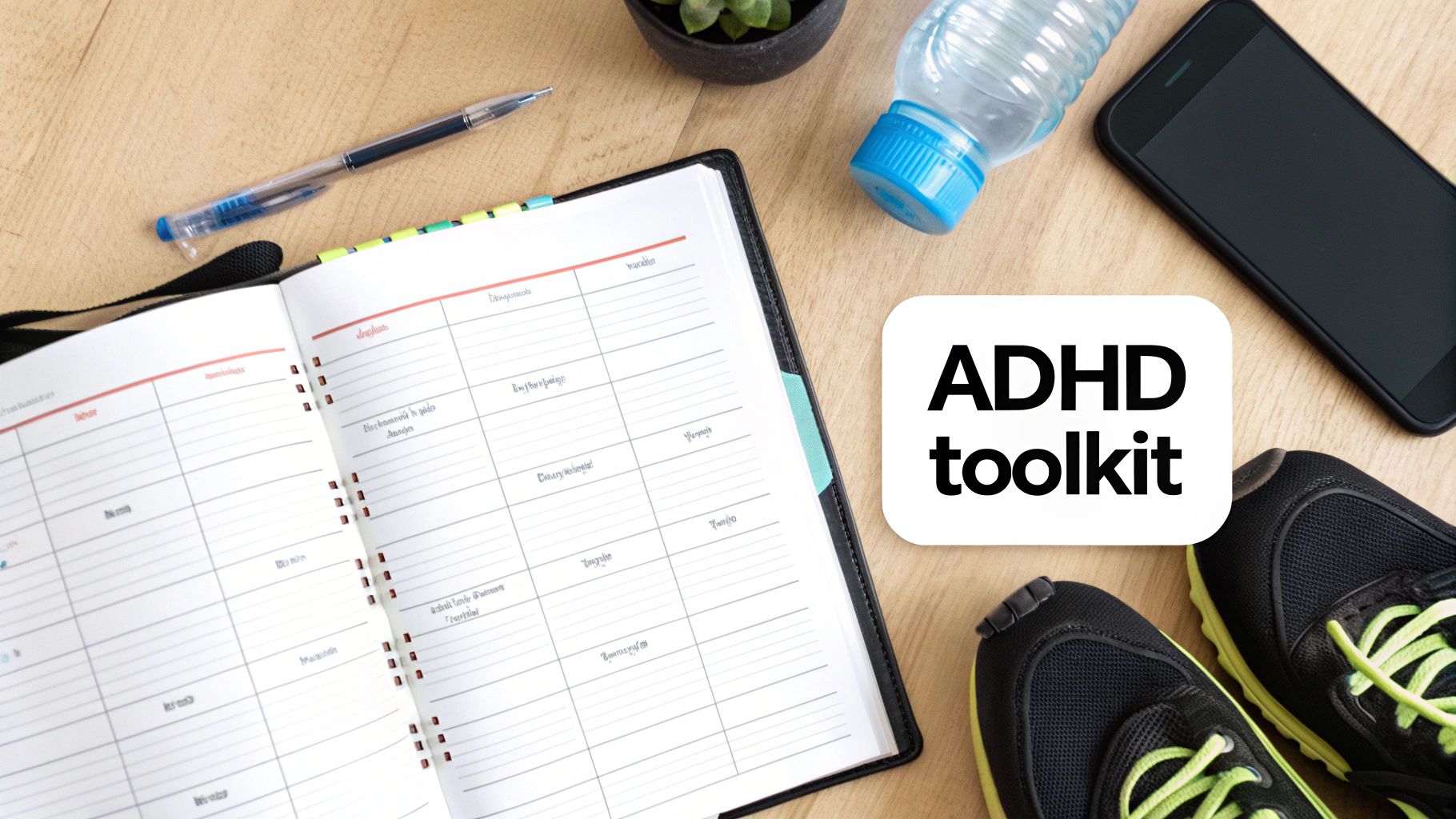
While medication is a critical tool for many, it’s not the only one. You can start building a powerful toolkit of non-medical strategies right now, which are fundamental for managing ADHD and often co-occurring conditions like Autism and anxiety.
These approaches aren't just "alternatives"—they're the pillars that support your overall well-being. Think of it as building scaffolding around your brain. Medication might be a key structural beam, but its strength is magnified by having multiple supports in place: lifestyle, therapy, and practical, everyday tools. These strategies give you back a sense of control, helping you create an environment where you can truly thrive.
This is all about actionable, evidence-based things you can start doing today to bring more focus, calm, and organisation into your life.
The Power of Lifestyle Adjustments
Never, ever underestimate how much your daily habits impact your brain. For someone with ADHD, simple, consistent choices around exercise and nutrition can lead to massive improvements in focus, emotional regulation, and overall well-being.
Regular exercise isn't just a "nice to have"; it's a non-negotiable for the ADHD brain. Physical activity naturally boosts key neurotransmitters like dopamine and norepinephrine—the very same chemicals that stimulant medications target. Even a brisk 20-minute walk can sharpen your focus and lift your mood.
What you eat plays a huge part, too. A balanced diet packed with protein, complex carbs, and omega-3 fatty acids helps keep your blood sugar stable and gives your brain the raw materials it needs to work properly. On the flip side, processed foods and sugary snacks often lead to energy crashes that make ADHD symptoms feel so much worse.
A well-rounded lifestyle approach provides your brain with the consistent fuel and regulation it needs to function at its best. It's about creating a predictable, supportive internal environment to counteract the brain’s natural tendency towards chaos.
Beyond these core habits, some people explore complementary therapies. For example, Dr. Brandon Crawford offers some interesting insights into laser therapy for ADHD support, which might be worth looking into.
Behavioural Therapies That Reshape Thinking
Therapy isn’t about "fixing" you; it's about learning to work with your brain's unique wiring. These structured approaches arm you with practical skills to navigate the day-to-day challenges of ADHD and Autism.
Cognitive Behavioural Therapy (CBT) is a game-changer for many. It teaches you to spot and challenge the unhelpful thought patterns that fuel procrastination and anxiety—things like "all-or-nothing" thinking or harsh perfectionism. Instead of staring at a huge project and feeling paralysed, CBT helps you break it down into tiny, manageable steps and quieten that inner critic.
Other incredibly helpful therapies include:
- ADHD Coaching: A coach acts as your strategist, helping you build personalised systems for time management, organisation, and actually reaching your goals.
- Mindfulness and Meditation: These practices are like a workout for your attention span. They help you notice your thoughts and impulses without letting them run the show.
- Psychoeducation: Sometimes, just learning the "why" behind your ADHD or Autistic brain is immensely powerful. It reduces self-blame and helps you move towards self-acceptance.
We cover these methods in much more detail in our guide on how to manage ADHD without medication.
Practical Tools for Daily Organisation
When your internal world feels chaotic, creating external structure is essential. The right tools can act as a kind of "external brain," taking on the heavy lifting of remembering, planning, and prioritising so you don't have to.
The secret is finding what actually works for you, not what you think should work. A super-complex digital planner might be a lifesaver for one person, while a simple, colour-coded wall chart is perfect for another. The goal here is consistency, not perfection.
Here are a few proven tools to get you started:
- Visual Timers: Things like the Time Timer are brilliant. They make the abstract concept of time feel real and tangible, which is invaluable for staying on task.
- Noise-Cancelling Headphones: For anyone with ADHD or sensory sensitivities related to Autism, these are a must-have. They create an instant "focus bubble" in a distracting world.
- Digital Apps: Use the tools you already have! Your phone’s calendar, reminders, or apps like Trello and Todoist can automate planning and take things off your mind.
- Body Doubling: This sounds strange, but it works. The simple act of having another person in the room (or even on a video call) while you work can massively boost focus and accountability.
Evaluating Supplements for ADHD Support
When you start digging into non-prescription ways to manage ADHD, you'll inevitably run into the world of supplements. It's an attractive thought, isn't it? The idea of using natural compounds to give your brain a helping hand.
But this is a path that demands a bit of caution and a healthy dose of scepticism. While some supplements do show potential, they mostly work by topping up nutritional levels that, if low, can sometimes look a lot like ADHD symptoms or make them feel worse.
Let's be clear from the outset: supplements are not a substitute for proper medical treatment. Think of them as potential allies in your toolkit, not a cure.
And the golden rule? Always, always have a chat with your GP before you start taking anything new. This is non-negotiable. It's especially vital if you have other conditions to consider, like Autism, or if you plan to get a formal diagnosis and medication down the line.
Sorting Science From Speculation
The supplement industry is huge and, frankly, confusing. It's filled with big promises that often aren't backed up by solid scientific proof. So, when you're looking at non-prescription options, figuring out what's safe and what's just marketing is key. It's worth learning about finding trusted, third-party tested supplements so you can make choices you feel confident about.
Here’s a look at some of the most talked-about supplements in the ADHD community.
A Scientific Look at Supplements for ADHD
To cut through the noise, this table breaks down the evidence for some common supplements associated with ADHD support. Remember, this is for informational purposes—it's not medical advice.
| Supplement | Potential Role in ADHD | Level of Evidence | Consult a GP First? |
|---|---|---|---|
| Omega-3 Fatty Acids | Crucial for overall brain health and function. Some studies link supplementation to improved focus and less hyperactivity. | Promising, but mixed. More research is needed to confirm the direct benefits and ideal dosages for ADHD. | Yes, always. |
| Zinc | This mineral plays a key part in dopamine regulation. A deficiency can interfere with neurotransmitter function. | Moderate. Most effective when a blood test has confirmed a genuine zinc deficiency. | Yes, always. |
| Magnesium | Known for its calming effect on the nervous system. Can be helpful for restlessness and sleep problems. | Moderate. Like zinc, it's most beneficial for those who are actually deficient in magnesium. | Yes, always. |
| Iron | An iron deficiency (anaemia) can cause fatigue and poor concentration, which can easily be mistaken for ADHD symptoms. | Strong link between deficiency and ADHD-like symptoms. Supplementation is vital if a deficiency is diagnosed. | Yes, always. |
It's clear that while these supplements can be beneficial, their effectiveness often hinges on correcting an existing deficiency. They are not a one-size-fits-all solution for ADHD itself.
The real goal with supplementation isn't to 'treat' ADHD. It's about making sure your brain has all the essential building blocks it needs to work at its best. Fixing a nutritional shortfall can sometimes take the edge off certain symptoms, but it's not going to produce the same targeted effect as prescribed medication.
Why You Must Consult a Doctor First
Going it alone with supplements is a risky game. Your GP can run simple blood tests to see if you even have a deficiency in the first place. This step alone can save you from spending money on products your body simply doesn't need.
More importantly, it's about safety. Some supplements can mess with other medications you might be taking or even make underlying health conditions worse. For instance, tinkering with mineral levels can have implications for heart health—a critical factor for anyone who might be prescribed stimulant medication in the future.
Seeing your doctor provides an essential safety net, ensuring that anything you try now won't cause problems or interfere with your treatment options later on.
Your Questions on UK ADHD Medication Answered
Trying to figure out ADHD support in the UK can feel like navigating a maze. With so much conflicting information out there, it's easy to get lost. Here, we'll give you clear, straightforward answers to the questions we hear most often, so you can understand your options and feel confident about what to do next.
Can I Buy ADHD Medication Over the Counter in the UK?
The short answer is no, you can't. Every licensed ADHD medication in the UK—think Elvanse, Concerta, and Ritalin—is classified as a controlled drug.
This means they are strictly prescription-only. You can only get them from a specialist, like a psychiatrist, after you've received a formal diagnosis. It might seem like a barrier, but this regulation is a critical safety net designed to protect your health.
Why Is It So Strictly Controlled?
It comes down to how these medications work. They have a powerful effect on your brain chemistry and can also impact your cardiovascular system. Without an expert overseeing things, you’d be flying blind.
A specialist’s involvement is essential to:
- Confirm your diagnosis is accurate before any treatment begins.
- Carry out essential health checks, like monitoring your heart rate and blood pressure.
- Manage the titration process, which is the careful, gradual adjustment to find the dose that works best for you.
- Keep an eye out for side effects, which is especially important if you have other conditions like Autism or anxiety.
How Long Does It Take to Get a Prescription After Diagnosis?
This is what many people call the "hidden wait." Getting a diagnosis is one hurdle, but starting treatment is another. You have to go through a process called titration, where a specialist works with you over several weeks or even months to find the right medication and dose.
The waiting lists for this titration service can be incredibly long—sometimes up to a year, even after you’ve already waited years for the initial assessment. It’s a major bottleneck in the system right now.
What if I Have Both ADHD and Autism?
Managing co-occurring conditions really needs a specialist's touch. A psychiatrist who understands both neurotypes will carefully consider how a medication might interact with Autistic traits, such as sensory sensitivities or anxiety.
This is precisely why turning to unregulated non prescription ADHD medication UK is so risky, especially for neurodivergent individuals. It completely bypasses the expert evaluation needed to keep you safe and ensure the treatment actually helps.
The problem is made worse by the ongoing supply chain chaos. While UK ADHD medication costs hit a staggering £45 million in the second quarter of 2025/26, severe shortages of key medications are still a reality. Recent surveys revealed that 27% of patients are going completely without their prescribed medication. This instability just underscores why professional guidance is so vital. You can read more about the impact of these shortages on patients at ADHDUK.co.uk.
Are There Any Non-Prescription Alternatives That Actually Work?
While no over-the-counter pill or supplement can do what prescribed medication does, several other strategies are the bedrock of good ADHD management. Think of them as essential tools in your toolkit, not replacements.
- Cognitive Behavioural Therapy (CBT): This is a highly effective therapy for building practical coping mechanisms and changing unhelpful thought patterns.
- Lifestyle Adjustments: Don't underestimate the power of regular exercise and a balanced diet. Both can have a significant, positive impact on focus and mood.
- ADHD Coaching: A coach provides practical, one-to-one support to help with things like organisation, planning, and time management.
These approaches are fundamental for everyone with ADHD, whether you take medication or not. They help you build lasting skills that empower you to manage your symptoms for life.
At Insight Diagnostics Global, our team of consultant psychiatrists provides CQC-regulated, fully online assessments for ADHD and Autism. We then follow up with safe, structured medication titration and ongoing management. If you're ready to get clear answers and access a professional and secure pathway to support, book your assessment with us today. https://insightdiagnostics.co.uk