
An online mental health assessment is a proper, in-depth diagnostic meeting held remotely with a fully qualified psychiatrist. It’s a world away from a simple online quiz; think of it as a robust, clinically valid alternative to a traditional face-to-face appointment, designed to give adults the clarity they need when seeking a formal diagnosis for conditions like ADHD or Autism Spectrum Disorder (ASD).
A Modern Route to Understanding Your Mind
Imagine being told you need to see a specialist for a nagging health issue, only to discover the waiting list is well over a year long. That’s the reality for countless adults across the UK trying to get support for suspected ADHD or Autism. An online mental health assessment cuts through the red tape, connecting you with an expert consultant psychiatrist without the frustrating delays and geographical hurdles of the conventional system.
But this isn't just about a quick video call. It's a thorough evaluation designed to build a complete picture of you—your life experiences, your unique challenges, and your personal strengths. For anyone who has spent years wondering if their struggles with focus, social situations, or managing emotions are signs of neurodivergence, this service is an absolute lifeline.
What Really Happens in an Online Consultation?
So, what can you expect? At its core, it’s a structured diagnostic interview with a specialist doctor who is laser-focused on specific clinical criteria to figure out what's going on, particularly when exploring ADHD or Autism.
Here’s what that looks like in practice:
- Expert-Led, Always: Your assessment is with a GMC-registered psychiatrist, a specialist with deep experience in diagnosing adult ADHD and ASD. No exceptions.
- A Structured Approach: The entire process follows strict clinical guidelines, often using diagnostic frameworks like the DSM-5 to ensure every assessment for conditions like ADHD and Autism is accurate and reliable.
- Digging Deep: Before you even speak to the psychiatrist, you’ll usually fill out detailed questionnaires. During the consultation itself, the psychiatrist will want to hear about everything from your childhood and school days to your career and relationships, looking for lifelong patterns relevant to neurodevelopmental conditions.
- Your Lived Experience Matters Most: The aim is to understand how symptoms show up in your day-to-day life. This makes sure the diagnosis isn't just clinically sound, but also genuinely meaningful to you.
The explosion in demand for these assessments isn't surprising. A 2023 survey from NHS England revealed that one in five children and young people had a probable mental disorder. This immense pressure on the system means adults are left facing impossible waits, making online diagnostics a crucial way to get seen when demand massively outstrips what the NHS can provide.
This isn't just about convenience. It's about getting timely, expert-driven access to a diagnosis that can genuinely change your life. For many people, finally getting that clarity on ADHD or Autism is the very first step towards self-acceptance and finding the support they’ve always needed.
If you’re specifically looking into an ADHD diagnosis, it’s worth exploring all the avenues. This comprehensive guide to online ADHD assessment in the UK is a great resource for a detailed walkthrough. An evaluation like this is a specialised type of psychiatric consultation, and you can get to grips with the basics by reading our article on what is a psychiatric assessment.
Your Assessment Journey From Start to Finish
Taking that first step towards an online mental health assessment can feel daunting, but knowing exactly what to expect can make all the difference. We’ve designed the entire process to be clear, supportive, and completely focused on you, guiding you from your initial questions right through to a detailed, final report. It's a structured path to clarity, especially for adults wondering about conditions like ADHD or Autism.
From the moment you get in touch, our dedicated team is there to make sure you feel supported and informed. The whole experience is built around you, aiming to take the stress out of seeking a diagnosis. Our professional, empathetic approach helps to demystify what can often feel like a confusing medical process.
The Initial Steps: Enquiry and Triage
Your journey with us starts the moment you reach out. This is your chance to ask any initial questions and give us a little background on what you’re looking for. Once we have your enquiry, we begin a clinical triage process where a professional reviews your information to make sure an online assessment is the right path for you.
This triage stage is a vital quality check. It’s how we ensure our service is a good fit for your specific needs, pointing you towards the most effective support from day one. It’s all about providing a responsible, clinically sound service right from the get-go.
This diagram shows how we’ve refined the traditional assessment model for a more accessible online approach.
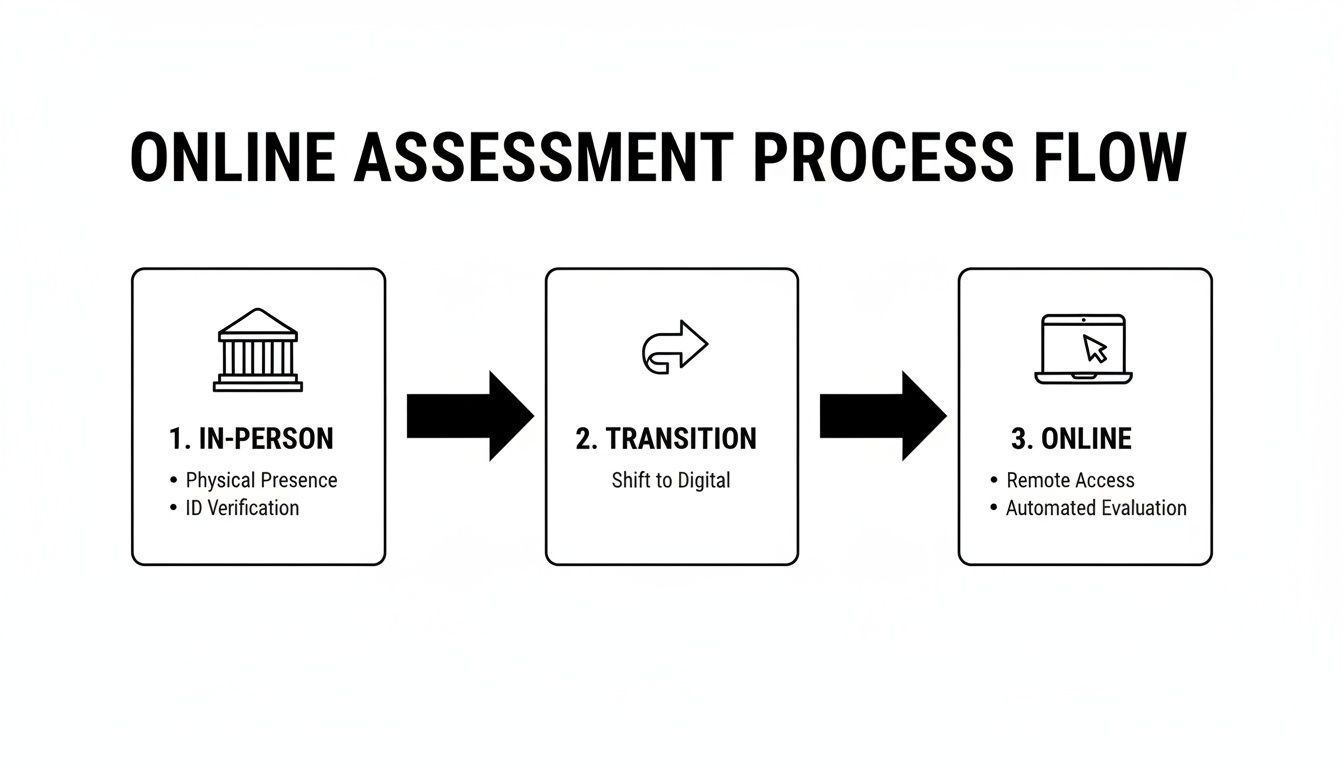
As you can see, it’s a clear progression, moving away from older, in-person methods towards a more efficient and user-friendly platform.
Preparing for Your Consultation
After the triage, we'll send you a set of pre-assessment questionnaires. These aren't just simple tick-box forms; they're carefully designed to gather a comprehensive picture of your life history, symptoms, and experiences. Taking the time to complete them thoroughly is crucial, as this gives your psychiatrist a wealth of context before you even speak.
Think of these questionnaires as laying the groundwork for your consultation. The more detail you provide, the more focused and productive your time with the psychiatrist will be, allowing them to dig deeper into what really matters.
This preparation is especially important for ADHD and Autism assessments, as these neurodevelopmental conditions require a careful look at patterns of behaviour across your entire life. If you’re specifically looking into an ASD diagnosis, you might find it useful to understand what a professional test for autism entails.
The Comprehensive Online Interview
The heart of the assessment is the online interview with one of our GMC-registered consultant psychiatrists, which is usually scheduled within seven working days of you returning your paperwork. This is an in-depth diagnostic conversation where the psychiatrist will discuss the information you've provided and explore things in more detail.
This is very much a two-way street. It’s your opportunity to share your story and experiences in a safe, non-judgemental space. The psychiatrist is there to listen, ask specific questions based on clinical criteria (like the DSM-5), and build a complete diagnostic picture.
Receiving Your Diagnostic Report
After your consultation, the psychiatrist writes up a detailed diagnostic report. This is typically ready within five working days and gives you a full summary of the assessment, the clinical findings, and a formal diagnosis if one has been made.
The report doesn't just stop there. It also includes personalised recommendations for what to do next. This might involve:
- Suggestions for psychological therapies.
- Recommendations for adjustments at work or in education.
- For an ADHD diagnosis, information about medication options and our titration service.
This report is a formal medical document that you can share with your GP, employer, or university. It’s the official record of your diagnosis and the first step in your next chapter.
Understanding ADHD and Autism Assessments

While the phrase "online mental health assessment" is a broad one, when we talk about evaluations for Adult ADHD and Autism Spectrum Disorder (ASD), we're referring to something highly specialised. These are not just simple checklists you can tick off. They are deep, diagnostic explorations that aim to uncover lifelong patterns in how you think, behave, and interact with the world around you.
Getting to grips with what each assessment focuses on is the essential first step to finding the right path for yourself.
An ADHD assessment, for example, is a bit like an investigation into your brain's internal management system—what we call its executive functions. A psychiatrist will look for consistent challenges in areas like regulating attention, controlling impulses, and managing hyperactivity. Crucially, they’re not just looking at how you are now, but digging back into your experiences all the way through childhood. For many adults, these traits have been mistakenly labelled as carelessness or a simple lack of motivation for years, which can make receiving a formal diagnosis an incredibly validating experience. You can learn more about our online assessment for ADHD and see the specific steps involved.
An ASD assessment, on the other hand, explores a different cluster of developmental patterns. The spotlight here is on social communication, sensory sensitivities, and a natural preference for routine or highly specific interests. The psychiatrist will explore how you interpret social cues, build relationships, and navigate a world that can often feel overwhelming or confusingly unstructured.
The Diagnostic Framework A Clinician Uses
To make sure every diagnosis is accurate, consistent, and clinically robust, psychiatrists work from established diagnostic manuals. The most widely recognised is the Diagnostic and Statistical Manual of Mental Disorders (DSM-5). Think of it as a detailed guidebook that provides the specific criteria that must be met before a formal diagnosis of ADHD or ASD can be given.
During your online assessment, the psychiatrist uses these criteria to structure the evaluation. They gather the necessary information by:
- Asking targeted questions about your experiences at school, work, and in your personal relationships.
- Carefully reviewing your pre-assessment questionnaires to spot patterns that have been present throughout your life.
- Observing your communication style and how you respond during the video consultation itself.
This structured, evidence-based approach ensures a diagnosis isn't just based on a single symptom. Instead, it's founded on a whole collection of traits that significantly impact your day-to-day life, giving real weight and credibility to the final diagnostic report.
Uncovering Co-occurring Conditions
It’s incredibly common for ADHD and Autism to exist alongside other mental health conditions, like anxiety and depression. A vital part of any thorough assessment is identifying these co-occurring issues, as they can heavily influence both the diagnosis and any subsequent support plan. For instance, untreated ADHD can often lead to chronic anxiety, while the daily struggle of navigating a neurotypical world can contribute to depression in autistic individuals.
The need to assess these overlapping conditions has never been more urgent. In the UK, the prevalence of anxiety disorders alone highlights how important a complete psychiatric evaluation is. It's estimated that in any given week, 6 in 100 people in England are diagnosed with generalised anxiety disorder. This rise in anxiety-related assessments really underlines the need for online services that can provide timely and detailed diagnostics. You can find more insights into UK mental health statistics on the Priory Group's website.
Recognising co-occurring conditions is essential. It ensures that your support plan addresses the complete picture, not just one piece of the puzzle. This holistic view is the hallmark of a high-quality online mental health assessment.
Comparison of Online Mental Health Assessments
To help clarify the differences between our main evaluations, the table below breaks down the primary focus and key areas explored for each one. This should give you a clearer idea of which assessment might be the most suitable for you.
| Assessment Type | Primary Focus | Key Areas Explored | Typical Outcome |
|---|---|---|---|
| Adult ADHD Assessment | Examines patterns of inattention, hyperactivity, and impulsivity. | Childhood history, executive functioning, focus at work/home, organisational skills, and emotional regulation. | A formal diagnosis of ADHD, recommendations for medication, therapy, and workplace adjustments. |
| Adult ASD Assessment | Explores social communication, interaction, sensory processing, and restricted/repetitive behaviours. | Social understanding, relationship patterns, sensory sensitivities, adherence to routines, and special interests. | A formal diagnosis of ASD, insights into neurotype, and suggestions for supportive strategies and therapies. |
| General Mental Health Assessment | Identifies symptoms of conditions like anxiety, depression, or mood disorders. | Mood fluctuations, thought patterns, levels of worry, sleep disturbances, and impact on daily functioning. | A diagnosis of a specific mental health condition with recommendations for therapy, medication, or lifestyle changes. |
Ultimately, whether you're exploring ADHD, Autism, or other mental health concerns, the goal is the same: to gain clarity and find a path forward with the right support.
Online vs. In-Person: Which Assessment is Right for You?
Choosing between an online or an in-person mental health assessment is a big decision. The main question on most people’s minds is pretty simple: can an online evaluation really be as thorough and reliable as a traditional, face-to-face appointment? When it's done right by a regulated service with qualified specialists, the answer is a firm yes.
At the end of the day, both routes are designed to achieve the exact same thing: a precise, expert-led diagnosis. Both rely on the clinical skills of a GMC-registered psychiatrist and use the same established diagnostic frameworks, like the DSM-5. The real difference isn’t about the quality of the clinical judgement—it’s about how that expertise is delivered to you.
Breaking Down Barriers with Online Access
One of the biggest advantages of an online mental health assessment is its power to dismantle the old obstacles that have stopped so many people from getting help. If you live in a rural area, have mobility challenges, or are trying to fit an appointment around a hectic work schedule, just getting to a specialist's office can feel like an impossible task. Online assessments simply make that problem disappear.
This is more than just a convenience; it's a critical step forward. Consider this: in England, one in five adults lives with a common mental health condition, but getting support is another story. In 2023/24, only 47.7% of adults aged 16-74 who needed it were able to access mental health services, leaving a massive gap in care. Online services are helping to bridge that divide by offering a real-world solution to things like travel, time off work, and even the stigma that can come with walking into a clinic. You can find more detail on this in the UK mental health access statistics on the Mental Health Foundation's website.
The setting matters, too. For many people, especially those exploring a possible Autism or ADHD diagnosis, a formal clinical environment can be intimidating or even overwhelming.
Being assessed from the comfort and safety of your own home can massively reduce anxiety. It helps you feel more relaxed and able to speak openly, which in turn gives our psychiatrists a much clearer and more genuine picture of who you are and what you're experiencing.
The Practical Side of Things: Key Differences to Know
While the benefits are compelling, it’s good to have a realistic view. A successful online assessment does have a few practical needs that you wouldn’t have to think about for an in-person visit.
To make sure your consultation is effective, you’ll need three things:
- A stable internet connection: This is key for a smooth, clear video call without any frustrating interruptions.
- A private, quiet space: You need somewhere you can talk freely without distractions or worrying about being overheard.
- A working device: A laptop, tablet, or smartphone with a camera and microphone will do the trick.
On the other hand, an in-person assessment takes care of the environment for you, but it brings its own set of challenges. You have to factor in travel time and expenses, the stress of finding a new place, and, quite often, much longer waiting lists to get an appointment in the first place.
Ultimately, a CQC-regulated online assessment offers a strong, credible, and far more convenient route to getting the answers you need. It delivers the same standard of clinical expertise you’d expect from a traditional appointment, but with the added benefits of flexibility and comfort, putting expert psychiatric care within reach for more people than ever before.
Professional Uses for Medico-Legal Reports
While getting a personal diagnosis can be a huge moment for an individual, the value of an online mental health assessment doesn't stop there. These detailed evaluations result in expert reports that are indispensable for solicitors, employers, and GPs, especially when conditions like ADHD or Autism are part of the picture.
Think of the final report as more than just a document; it’s a specialist tool. For a lawyer, it’s an objective piece of evidence that can clarify a complex case. For an employer, it’s a practical guide to building a supportive and legally compliant workplace. And for a GP, it’s a vital piece of the puzzle in a patient’s overall healthcare.
Supporting Legal Proceedings
In any legal setting, impartiality and clinical expertise are everything. An online assessment carried out by a GMC-registered consultant psychiatrist results in a court-compliant medico-legal report that can withstand tough scrutiny. These documents are put together with painstaking care to be objective and comprehensive, providing crucial evidence in a number of legal situations.
This is particularly true in cases where neurodivergence plays a role and understanding the real-world impact of ADHD or Autism is essential. The applications are surprisingly broad:
- Employment Tribunals: A report can add weight to claims of discrimination or unfair dismissal. It details how an individual's condition impacts their ability to work and whether an employer has failed to make the legally required reasonable adjustments.
- Personal Injury Claims: It can help establish the psychological fallout from an accident or act of negligence, drawing a clear line between the event and conditions like anxiety, depression, or PTSD.
- Family Court: The assessment offers impartial evidence about a parent's mental state or capacity, helping the court make decisions that truly serve the best interests of a child.
For any professional involved in these cases, getting the documentation right is critical. A good medical transcription guide can be a useful resource for understanding the level of precision needed for strong medico-legal work.
Informing Workplace Adjustments and GP Care
Outside the courtroom, these reports are just as vital for employers and HR teams. When an employee shares a diagnosis of ADHD or Autism, a formal assessment report gives the business the specific, practical information it needs to implement reasonable adjustments. It takes the conversation out of the realm of guesswork and into clear, medically-backed strategy.
A detailed report empowers employers to understand an employee's unique challenges and strengths. This allows them to create an environment where the individual can thrive, fulfilling both their legal duties and their commitment to employee wellbeing.
This proactive approach is invaluable for everything from managing workplace stress to conducting formal capacity evaluations. You can find out more about how our specialists provide expert evidence through our medico-legal consultancy services.
Finally, GPs are often the first port of call for complex mental health concerns. A specialist online assessment acts as an efficient and powerful referral pathway, giving them access to timely psychiatric expertise. The detailed report arms the GP with a clear diagnosis and a recommended management plan, allowing them to guide their patient’s care with confidence. This kind of collaboration ensures people receive consistent, high-quality care, no matter where they are in the healthcare system.
Getting Ready for Your Online Assessment

A bit of preparation can make a world of difference to how your online mental health assessment goes. Taking a few simple steps beforehand means the consultation runs smoothly, letting you focus entirely on the conversation with your psychiatrist. It's all about making sure you get the most out of your time.
Think of it like setting the stage before an important conversation. The idea is to clear away any technical hiccups or distractions so you can feel comfortable and speak openly. This is particularly important when you're discussing lifelong experiences, like those related to Autism or ADHD, where feeling focused is key.
Your Pre-Assessment Checklist
Before your appointment, have a quick look through this checklist. It’s designed to help you create the best possible environment for a successful and stress-free online session.
- Find a private spot. Choose a quiet room where you won’t be disturbed or overheard. This is vital for feeling secure enough to have an honest conversation about personal subjects.
- Do a quick tech check. Test your internet connection, camera, and microphone well before your appointment. A quick video call with a friend can iron out any issues and save you from last-minute stress.
- Gather any relevant documents. Having some paperwork ready can give the psychiatrist some useful background. Think about things like old school reports, work performance reviews, or even letters from your GP that mention your concerns.
- Jot down some notes. It's so easy to forget what you wanted to say in the moment. Make a few bullet points about the main challenges you’ve been facing, specific examples from your life, and any questions you have for the psychiatrist.
Taking care of these details isn't just about the technology. It also helps you mentally organise your thoughts, so you can walk into the assessment feeling more confident and ready to tell your story.
What Happens After the Assessment?
Receiving your diagnostic report is a big step, but it’s often the start of the next part of your journey, not the end. It's really helpful to understand what support is available to you after the assessment is complete.
For many people diagnosed with ADHD, the conversation often turns to medication. We offer a full medication titration service, where our specialists work with you to find the right medication and dosage to manage your symptoms. It's a careful process, managed closely through follow-up consultations.
No matter the outcome – a diagnosis of Autism, ADHD, or another condition – ongoing support is there for you. We provide follow-up appointments to go through your report in detail, answer any new questions, and help you make sense of it all. This continued care gives you a clear plan for what comes next, helping you move forward with confidence and the right support in your corner.
Frequently Asked Questions
It’s completely normal to have questions when you’re looking into something as important as a mental health assessment, especially for conditions like Autism and ADHD. We've put together some straightforward answers to the queries we hear most often, aiming to give you the clarity and confidence you need to move forward.
Is an Online Diagnosis for ADHD or Autism Valid?
Yes, absolutely. When an assessment is carried out by a CQC-regulated service with GMC-registered consultant psychiatrists, an online diagnosis is just as valid and credible as one you’d receive face-to-face. Our entire process is built on the same rigorous clinical standards and diagnostic criteria, like the DSM-5, that you would find in any traditional clinic.
The detailed report you get at the end isn't just a summary; it's a formal medical document. It’s widely recognised by employers, universities, and other healthcare professionals, so you can be confident in its legitimacy.
How Can a Solicitor Trust a Medico-Legal Report?
Our consultant psychiatrists have a great deal of experience in creating impartial, evidence-based medico-legal reports that are fully compliant with UK court requirements. We understand that legal proceedings demand a specific, meticulous structure, and every report is crafted to meet those exacting standards.
We make sure each document delivers the objectivity and clarity needed for matters such as:
- Personal injury claims
- Employment tribunals
- Family court proceedings
This clinical rigour means solicitors can depend on our reports to be robust, defensible, and reliable under scrutiny.
The core of a trustworthy medico-legal report is its impartiality and adherence to established legal standards. Our specialists are trained to provide an objective clinical perspective that stands up to scrutiny, ensuring fairness and clarity in legal contexts.
What Happens After I Receive My Diagnosis?
Getting your diagnostic report is the first major step, and it will include personalised recommendations to guide you on what to do next. We also offer optional follow-up consultations, which are a great opportunity to talk through the findings with your psychiatrist and ask any questions that have come to mind.
If you receive an ADHD diagnosis, we can provide a complete medication titration service and ongoing monitoring. This is a supportive process designed to help you find the most effective treatment, and we always work in collaboration with your GP to ensure your care is seamless and safe.
Is This a Service for a Mental Health Crisis?
No, our service is not suitable for emergencies. We provide scheduled, in-depth diagnostic assessments and do not offer immediate crisis support.
If you are going through a mental health crisis and need help right now, it is vital that you seek immediate assistance. Please call 999 or contact NHS 111 for urgent support. Your immediate safety is always the top priority.
Ready to take the next step towards clarity and support? Insight Diagnostics Global offers expert-led online assessments for adults. Find out more and book your consultation.