If you've spent years wondering if ADHD is the reason behind your struggles, a private assessment is simply a way to get answers from a qualified specialist without going through the NHS. It’s a diagnostic process, just like any other, but run by an independent clinic or psychiatrist.
For many adults, this isn't just about getting a label; it's a vital investment in understanding their neurodevelopmental profile, improving their overall mental health, and finally getting the right support to move forward, especially when conditions like autism might also be part of the picture.
Why Choose a Private ADHD Assessment?
Let's be honest: for many adults in the UK, trying to get an ADHD or autism diagnosis on the NHS can feel like being stuck in a never-ending queue. While the NHS is an incredible service, the waiting lists for specialist assessments can be daunting, sometimes stretching on for years.
This isn't just an inconvenience. That long wait can take a real toll on your job, your relationships, and your mental health.
This is exactly why so many people are turning to a private ADHD assessment. It’s not about skipping the line, but about taking a faster, more direct route to the same destination: getting clarity and the right support. Living in limbo with unexplained symptoms can fuel anxiety, self-doubt, and frustration, leaving you to cope with complex mental health challenges all on your own.
Private ADHD Assessment vs NHS At a Glance
To make things clearer, let's break down the main differences between the two paths. While both aim to provide an accurate diagnosis for conditions like ADHD and autism, the journey to get there can look very different.
| Factor | Private Assessment | NHS Assessment |
|---|---|---|
| Waiting Time | Typically weeks to a few months | Often 1-3+ years, depending on the region |
| Cost | Self-funded (costs vary significantly) | Free at the point of service |
| Choice of Clinician | You can research and choose your specialist | You are assigned to the next available clinician |
| Flexibility | Appointments often available evenings/weekends | Usually offered during standard clinic hours |
| Post-Diagnosis | Immediate access to treatment/medication titration | May involve another wait for treatment to begin |
Ultimately, the choice comes down to weighing up the urgency of your need for answers against the financial cost involved.
The Impact of Waiting on Mental Health
If you've spent a lifetime feeling "different" without knowing why, that waiting period for an assessment can be incredibly tough. You might be struggling to keep up at work, finding your relationships are strained, or just feeling like you're constantly falling short of your potential.
When other conditions like autism or anxiety might be in the mix, that internal struggle becomes even more complicated. Getting a diagnosis isn't just about a piece of paper; it's validation. It's the moment you can finally say, "Okay, this is what's going on," which is the first real step towards self-acceptance and finding mental health strategies that actually work for your brain.
The Benefits of a Faster Diagnosis
Choosing a private assessment is about more than just speed. It's about taking back control of your life and your mental health.
The key advantages really boil down to this:
- Get Clarity Sooner: Put an end to the years of uncertainty and stop blaming yourself for things that are genuinely difficult.
- Start Getting Support Faster: Whether it's medication for ADHD, therapy, or coaching, you can begin treatment without being stuck on another long waiting list.
- Validate Your Experiences: A formal diagnosis helps you, your family, and even your employer understand your challenges in a new light.
- A More Complete Picture: Many private specialists are also well-versed in co-occurring conditions like autism, providing a holistic understanding of how your brain is wired and its impact on your mental health.
In the end, seeking a private ADHD diagnosis in the UK is a powerful, proactive step. It allows you to shift from a place of questioning and confusion to one of informed, active self-management.
Your Private Assessment Journey Explained
Deciding to get a private ADHD assessment can feel like a massive step, but knowing what’s involved can make all the difference. Think of it less as a test and more as a structured conversation designed to build a complete picture of your life, your challenges, and your unique strengths. It’s a deep dive, led by an expert, that goes far beyond a simple online quiz to understand your complete mental health profile.
The whole process kicks off the moment you get in touch with a clinic. This is usually pretty straightforward – you might fill out an online form or make a quick phone call. It’s your chance to ask any initial questions and for the clinic to walk you through their process, costs, and timings so you feel comfortable from the get-go.
This infographic gives a clear visual of how the direct private route stacks up against the typical NHS pathway.
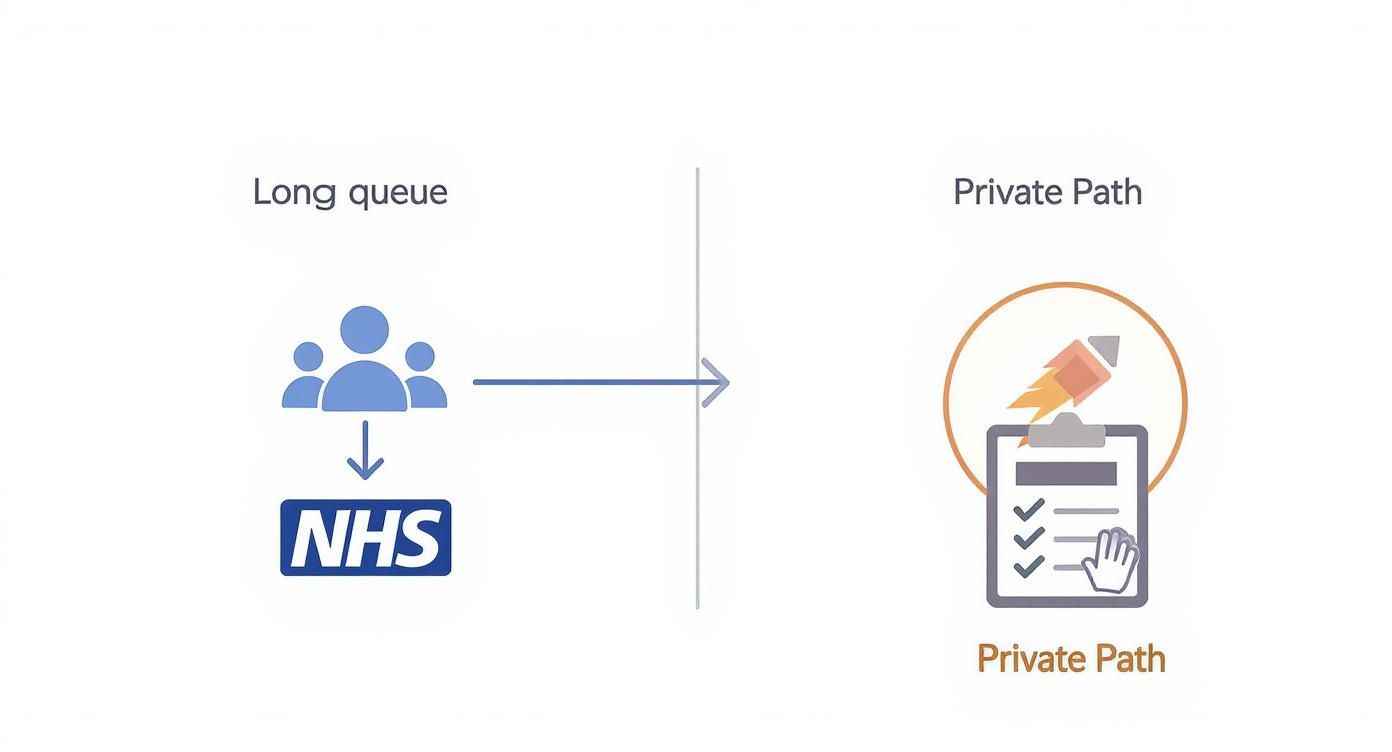
As you can see, the private path is all about cutting down that long wait, giving you a much faster route from that first enquiry to getting a diagnosis and the right support for your ADHD or other mental health needs.
The Initial Screening and Triage Stage
Once you’ve made contact, the next stage is what’s known as triage or screening. You’ll be sent a set of detailed questionnaires to complete. These forms are the foundation of your assessment; they give the clinician a huge amount of background information before you even have your main appointment.
These questionnaires are vital for painting a full picture. They’ll usually dig into:
- Your Personal History: This means looking back at your childhood, key developmental milestones, and what school was like for you.
- Current Symptoms: You’ll be asked to rate how often you run into specific ADHD-related challenges, like struggling to focus, stay organised, or manage impulsivity.
- Impact on Daily Life: This part explores how these symptoms affect your job, your relationships, and your general sense of wellbeing.
- Mental Health History: It’s also important to understand any co-existing conditions like anxiety or depression, which often go hand-in-hand with neurodevelopmental conditions like ADHD and autism.
This information helps the clinical team decide if a full assessment is the right next step. It also means the psychiatrist comes into your interview already having a solid understanding of your experiences, and can consider other factors that might be affecting your mental health.
The In-Depth Clinical Interview
The heart of the entire process is the clinical interview. This is a one-on-one session with a specialist psychiatrist that usually lasts between 60 to 90 minutes. It’s much more of a guided conversation than an interrogation – the whole point is for the psychiatrist to understand your world from your perspective.
During the interview, the clinician will ask open-ended questions about everything from your early school days to your life right now. They’re looking for patterns of behaviour that match up with the official diagnostic criteria for ADHD, which are laid out in manuals like the Diagnostic and Statistical Manual of Mental Disorders (DSM-5). This makes sure the assessment is robust, evidence-based, and meets recognised clinical standards.
The interview is also a chance to talk about how your symptoms might have changed over time. Many adults develop incredibly sophisticated coping mechanisms over the years. A skilled psychiatrist is trained to look beyond these strategies to see the underlying challenges of ADHD or potential signs of autism. To get that full, 360-degree view, they might also ask for input from someone who knows you well, like a partner or a parent (only if you’re comfortable with it, of course). A holistic approach is key, which is why many providers offer a comprehensive mental health assessment online that looks at your overall wellbeing.
Forming a Diagnosis and Next Steps
After the interview, the psychiatrist pulls everything together – your questionnaire responses, the interview itself, and any reports from others – to make a diagnostic decision. This isn’t a quick judgement; it’s a careful, considered process.
If you meet the criteria for an ADHD diagnosis, the psychiatrist will explain this to you clearly. They’ll also discuss whether any other conditions, like anxiety, depression, or traits of autism, are part of the picture. A good diagnosis isn't just a label; it’s a tool that helps you finally understand your mental health better.
No matter the outcome, you’ll leave with clarity. If it turns out not to be ADHD, the specialist will talk through other possible reasons for your struggles and suggest different avenues for support. If it is ADHD, the final step is receiving a detailed diagnostic report. This document will outline all the findings and provide personalised recommendations, marking the start of a new chapter in managing your symptoms and improving your mental health effectively.
Life After an ADHD Diagnosis
Getting an ADHD diagnosis is often a huge moment of clarity. For many, it's not a label but a key that finally unlocks years of questions and struggles related to their mental health. It’s less of an endpoint and more of a starting line for a new chapter—one where you can begin to work with your brain, not against it. The next phase is all about building a solid support plan that’s right for you.
This journey goes beyond just understanding the diagnosis. It’s about taking practical steps to manage your symptoms, which often means looking at medication, getting therapeutic support, and learning new ways to navigate daily life. You're moving from a place of uncertainty to one of empowerment over your own mental health.
Starting ADHD Medication and Titration
For a lot of people, medication is a cornerstone of managing adult ADHD. If you and your psychiatrist agree it's the right move, the process kicks off with something called titration.
Think of it like tuning a guitar. You don't just crank the strings and hope for the best; you adjust each one carefully until it hits the perfect note. Titration is the same idea—we're looking for the exact medication and dosage that helps your brain perform at its best, with the fewest possible side effects.
It’s a very personal process. Your clinician will start you on a low dose and schedule regular check-ins to see how you're getting on. They'll want to know what's improving, how you're feeling, and if anything feels off. It’s a real partnership to get the balance right. To get a better handle on this, you can read up on the potential ADHD medication side effects and how they're managed.
Titration isn't a one-size-fits-all fix. It’s a careful, medically supervised adjustment period that can take several weeks or even a couple of months to get just right. This ensures your treatment is both safe and effective for your specific brain chemistry.
This close monitoring is absolutely vital because everyone's body responds differently. What works brilliantly for one person might not be the right fit for another, which is why having an expert guide you through this stage is so important for your mental and physical health.
Navigating Shared Care Agreements with Your GP
Once your medication and dosage are stable, the next step for many is setting up a Shared Care Agreement with their NHS GP. This is simply a formal plan that allows your private psychiatrist to hand over the responsibility of writing your prescriptions to your GP.
This document is crucial for making sure your care continues smoothly. It will usually lay out:
- The diagnosed condition (e.g., Adult ADHD).
- The stabilised medication and dosage found during titration.
- The specialist's responsibilities, like carrying out yearly reviews.
- The GP's responsibilities, which usually involve issuing repeat prescriptions and keeping an eye on your physical health.
It's good to know that NHS GPs aren't required to accept a Shared Care Agreement. However, most are happy to do so, especially when the private assessment has been carried out by a reputable, GMC-registered specialist. Keeping the lines of communication open between yourself, your private clinic, and your GP is the key to a hassle-free transition.
Building Your Wider Support System
Medication can be a game-changer, but it’s usually just one piece of the puzzle. A truly robust long-term plan also addresses the practical and emotional sides of living with ADHD and any co-occurring conditions like autism. This is where creating a wider support network for your mental health comes into play.
After a diagnosis, finding new strategies for everyday life can make a world of difference. For example, looking into effective time management strategies specifically for adults with ADHD is a fantastic starting point.
Beyond that, you might want to consider some other supports:
- ADHD Coaching: A coach can work with you to build practical skills in organisation, planning, and hitting goals in a way that suits an ADHD brain.
- Therapy (CBT/Psychotherapy): It's common for adults with ADHD and autism to also deal with things like anxiety, depression, or emotional dysregulation. Therapy offers a safe space to work through these mental health challenges and find healthier coping strategies.
- Workplace or Educational Adjustments: Your diagnostic report is a powerful document. You can use it to request "reasonable adjustments" at work or university, like flexible hours, a quieter desk, or extensions on deadlines. These small changes can help you thrive.
Understanding the Costs of a Private Assessment
Thinking about a private ADHD assessment means you also have to think about the finances involved. It’s a significant investment, but it’s one that fast-tracks you to getting the clarity and mental health support you need. Before you jump in, it’s really important to have a clear picture of the full cost, which covers much more than just the initial diagnosis. It's a complete pathway, from your first chat right through to getting settled on a treatment plan.
For most people, the financial side is a big deal. Understanding exactly what you’re paying for means no nasty surprises down the line. It helps you budget properly and feel confident that you’re making the right choice for your future.
Breaking Down the Assessment Fees
The biggest chunk of the cost is for the diagnostic assessment package. This is the deep-dive evaluation that leads to a clinical diagnosis. What you’re really paying for is the clinician's expert time—reviewing your forms, conducting the main interview, and pulling together a thorough report.
Currently, the average cost for a private adult ADHD assessment in the UK hovers around £1,200. It's worth noting that face-to-face appointments tend to be about 9% more expensive than online ones, which makes sense given the costs of running a physical clinic. The assessment itself usually takes between 60 and 90 minutes, and you can expect your full report within a couple of weeks. For a more detailed breakdown, you can read our guide on the private ADHD assessment cost.
A good provider will be completely upfront about what’s included in that initial price. As a rule of thumb, the package fee should cover:
- The initial screening and a review of all your questionnaires.
- The full clinical interview with a GMC-registered psychiatrist.
- A comprehensive diagnostic report explaining the findings.
- Personalised recommendations for what to do next, including medication and therapy options.
Costs Beyond the Initial Diagnosis
If a diagnosis is made and you decide to explore medication, there are other costs to factor in. The fee for the assessment itself almost never includes medication titration, which is handled and billed as a separate process.
Titration is the crucial period where you have follow-up appointments with your psychiatrist. The goal is to carefully find the right type of medication and the most effective dose for you. It’s a vital part of the treatment journey, but it comes with its own fees.
Remember, a private ADHD assessment isn't just about getting a diagnosis; it's about unlocking a complete care plan. Budgeting for follow-up appointments and titration is just as important as planning for the initial assessment.
Finally, you’ll also need to budget for the cost of the private prescriptions. Until you and your GP can set up a Shared Care Agreement, you’ll be covering the full price of the medication each month, which can add up. It's always a good idea to ask your provider for a rough estimate of these ongoing costs so you can plan ahead. A little foresight here can make the whole journey much smoother and more sustainable.
How to Find a Reputable ADHD Provider
An ADHD diagnosis is only as good as the professional who gives it. When you're going private, you get to choose your provider, but that freedom comes with a responsibility to choose wisely. This is especially true when you're navigating the often-overlapping worlds of ADHD, autism, and general mental health. A robust, accurate diagnosis is the bedrock for all the support that follows.
Making the right choice isn't just about avoiding a bad service; it’s about getting an assessment that your GP and other medical professionals will actually respect.

You're not just looking for an answer. You’re looking for a specialist who truly gets the nuances of adult neurodevelopmental conditions and their impact on mental health.
Essential Credentials to Verify
Before you even think about booking, there are a few non-negotiable checks to make. These credentials are your proof that a clinician is a legitimate medical expert with the right specialism. Think of it as doing your due diligence before making a major investment in your mental well-being.
Your first port of call is their professional registration. Any psychiatrist practicing in the UK must be on the General Medical Council (GMC) Specialist Register. You can check this online in a couple of minutes. It’s a public database that confirms they have the legal standing and qualifications to diagnose and treat medical conditions in this country.
Next, dig into their specific expertise. A general psychiatrist might not be the best person for the job. You're looking for a clinician with a special interest and deep experience in adult neurodevelopmental conditions. Their website or professional bio should clearly state their experience with Adult ADHD and, ideally, Autism Spectrum Disorder (ASD), as the two often go hand-in-hand.
Questions to Ask Potential Providers
Once you have a shortlist, don't be shy about asking some direct questions before you commit. Any good provider will welcome your queries and give you clear, straightforward answers. This is your chance to get a feel for their professionalism and check that their process is up to scratch.
Here’s a practical checklist to get you started:
- Who exactly will I be seeing? You need to confirm it’s a GMC-registered Consultant Psychiatrist conducting the assessment.
- What diagnostic tools do you use? They should be following established clinical guidelines, like using the DSM-5 criteria, alongside structured interviews and proper, validated questionnaires.
- Do you look for other conditions too? A thorough assessment should consider common co-occurring conditions like anxiety, depression, and autism to get a complete picture of your mental health.
- What happens after the diagnosis? Ask about their process for medication titration, what follow-up care looks like, and whether they work with NHS GPs on Shared Care Agreements.
A thorough private ADHD assessment is more than a one-off appointment. It's the beginning of a care pathway. A good clinic will be transparent about the entire journey, from the initial interview to ongoing support and medication management.
How they handle these initial questions is a fantastic indicator of the quality of care you'll receive later on.
Red Flags to Avoid
It’s an unfortunate reality that the huge demand for ADHD and autism assessments has attracted some questionable providers. Knowing what to look out for can help you sidestep the clinics that care more about profit than patients.
If a service sounds too good to be true, it probably is. Keep an eye out for these major red flags:
- A Guaranteed Diagnosis: No ethical clinician can promise a diagnosis before they've even assessed you. This is a massive red flag and suggests they’re running a business, not a clinical service.
- Vague or Hidden Pricing: All costs—for the assessment, follow-ups, titration, and reports—should be listed clearly on their website or given to you upfront. Hidden fees are a classic sign of a dodgy operator.
- High-Pressure Sales Tactics: You should be given plenty of time and space to think about your options. If you feel rushed into making a booking or a payment, walk away.
- No Mention of GMC Registration: Reputable clinics are proud of their credentials and will display them clearly. If you have to hunt for this information, it’s a bad sign.
By staying vigilant and asking the right questions, you can find a provider you can trust to deliver a high-quality, reliable, and empathetic assessment.
Got Questions? Let's Cover Some Common Ones
Taking the leap to get a private ADHD assessment is a big decision, and it’s completely normal to have a few questions rattling around your head, even after you think you’ve got it all figured out.
This last section is all about tying up those loose ends. We'll tackle the practical queries that often come up last, helping you feel confident and ready for what’s next.
Can I Be Assessed for ADHD and Autism at the Same Time?
Yes, you certainly can. In fact, it’s becoming much more common for specialist clinics to offer combined neurodevelopmental assessments that look for both ADHD and Autism Spectrum Disorder (ASD) in one go.
This integrated approach makes a lot of sense, especially since the conditions often go hand-in-hand. Because some traits can overlap—things like difficulties with social interactions or executive function—having a specialist who can unpick the nuances is incredibly helpful. It gives you a much clearer, more complete picture of how your brain works and leads to a support plan that’s genuinely right for you and your mental health.
Will Schools, Universities, and My Employer Accept a Private Diagnosis?
This is a big one for many people, and the short answer is yes, they generally will. As long as your diagnosis comes from a qualified, GMC-registered psychiatrist using standard clinical criteria (like the DSM-5), it’s a valid medical document.
Your diagnostic report is the key. It's the official paperwork that confirms your diagnosis and, crucially, outlines recommended adjustments. You can share this with your university or HR department to get the support you’re entitled to, such as:
- Extra time for exams or coursework
- A quieter desk or workspace
- Flexible working hours that suit your focus
- Access to helpful assistive technology
What Happens if the Assessment Says I Don’t Have ADHD?
It's a real possibility that the assessment might conclude your challenges aren't caused by ADHD. That can feel deflating at first, but a good assessment is about finding clarity, whatever the outcome. The goal of a responsible clinician isn't just to hunt for ADHD; it's to find the right explanation for what you're going through.
If ADHD isn't the answer, you won't be left in the dark. The psychiatrist will talk through other potential causes for your difficulties, which could range from anxiety and depression to trauma or even traits of autism that present differently. Your final report will still be an incredibly valuable tool, offering professional insights into your mental health and pointing you towards other avenues for support.
How Is This All Connected to Mental Health?
The search for an ADHD diagnosis is very often part of a much bigger journey toward better mental health. The scale of the problem here in the UK is huge. It's thought that around 2.6 million people have ADHD, yet only a tiny fraction of them ever receive a formal diagnosis.
One review of 9 million GP records found that a mere 0.32% had ADHD on their file. That suggests as few as one in nine adults with the condition are actually diagnosed. You can read more about the ADHD crisis in the UK and its impact.
This gap leaves millions of people struggling for years, often developing secondary mental health issues like chronic anxiety, depression, and cripplingly low self-esteem. They end up blaming themselves for challenges that are fundamentally neurological, whether from ADHD, autism, or both. For many, a private assessment is the first real step in untangling these issues and finally building a solid foundation for their long-term mental wellbeing.
At Insight Diagnostics Global, we provide CQC-regulated, consultant-led online assessments for adults seeking clarity on ADHD, Autism, and a range of mental health conditions. Our GMC-registered specialists deliver thorough, empathetic evaluations and robust diagnostic reports to help you understand your unique profile and access the right support.
Take the first step towards answers and empowerment. Explore our services and book your confidential assessment today at https://insightdiagnostics.co.uk.