A private psychiatric assessment in the UK is a fast-track way to get a clear picture of your mental health. It’s particularly valuable if you suspect you have a neurodevelopmental condition like ADHD or Autism, or are struggling with other mental health challenges. This guide explains how it offers timely diagnostic clarity and one-on-one support, without the long delays often found in public health services.
Why Choose a Private Psychiatric Assessment UK for ADHD & Autism?
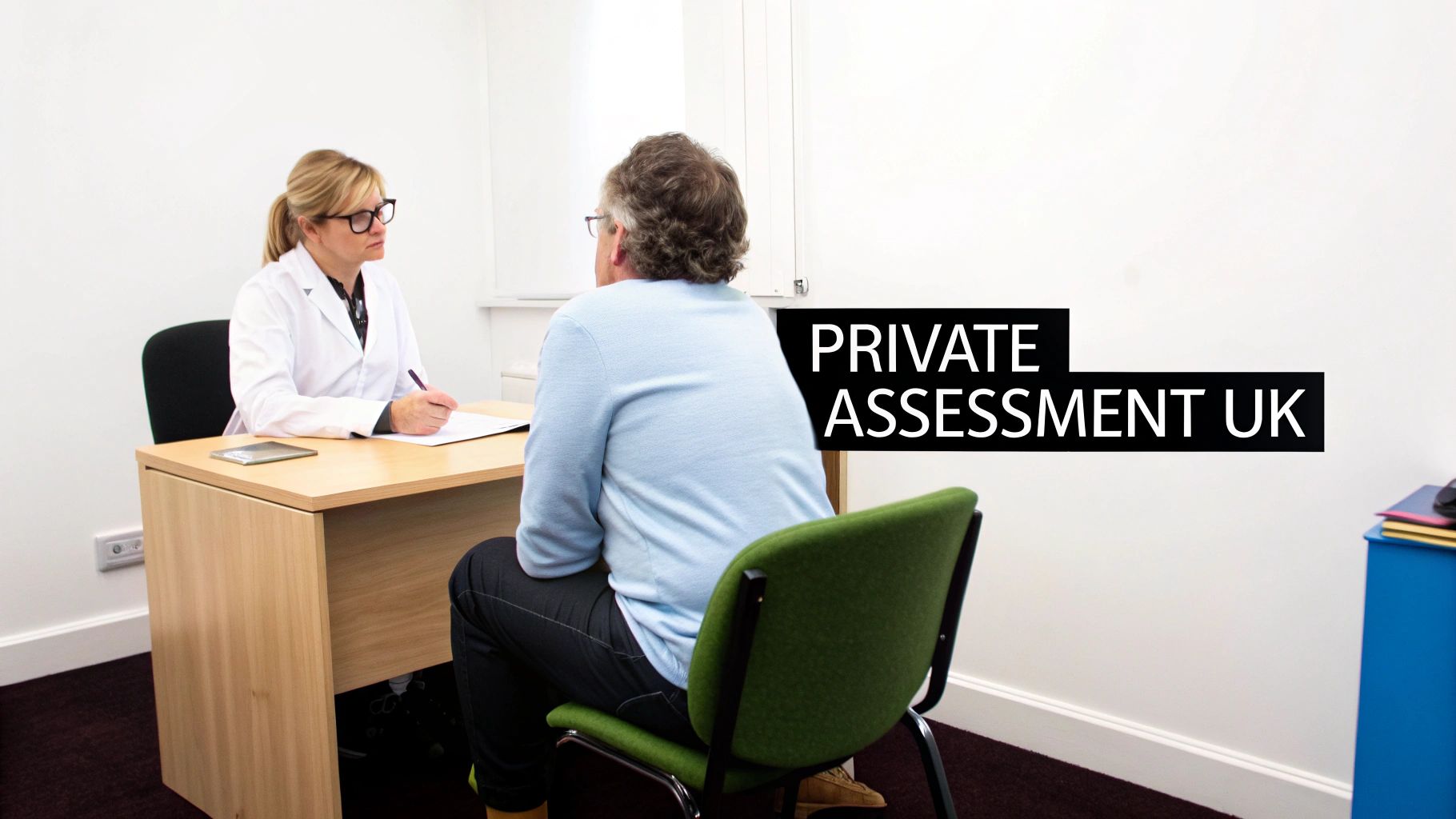
Feeling stuck on a waiting list when you need answers about your mental health is incredibly frustrating. You might have a strong suspicion you have ADHD, Autism, or another condition, but the official path to a diagnosis can feel impossibly long. It’s this exact situation that leads so many people in the UK to see a private psychiatric assessment as a necessary and empowering alternative for their mental health.
Think of it like choosing a direct flight instead of a journey with multiple, lengthy layovers. A private assessment provides a clear, structured, and much faster route to understanding your neurotype or mental health, so you can finally start moving forward.
The Driving Force: Timeliness and Specialisation in Mental Health
The number one reason people go private is speed. It’s no secret that NHS waiting lists for mental health services, especially for ADHD and Autism assessments, have become incredibly long, with waits stretching from many months into years. Private assessments, on the other hand, can slash that time dramatically. It's often possible to get an initial appointment within just a few weeks.
This speed isn't just a convenience; it's critical when symptoms of ADHD, Autism, or other mental health conditions are affecting your job, your relationships, and your general wellbeing.
Here’s a quick comparison to put the timelines into perspective:
NHS vs Private Assessment Timelines at a Glance
| Assessment Stage | Typical NHS Waiting Time | Typical Private Sector Waiting Time |
|---|---|---|
| Initial Referral to First Appointment | 6 months – 2+ years | 2 – 6 weeks |
| Full Diagnostic Assessment | Can be part of the initial wait | Often included in the initial process |
| Report and Diagnosis Delivery | 4 – 8 weeks after assessment | 1 – 4 weeks after assessment |
As you can see, the difference is stark. Choosing the private route means getting the answers you need in a fraction of the time.
Beyond just speed, private clinics often offer highly specialised services. If you’re an adult who thinks you might be neurodivergent, finding a clinician with the right expertise is crucial.
A private assessment gives you the freedom to choose a specialist who truly focuses on adult ADHD or Autism. This means your evaluation will be done by someone who understands the subtle ways these conditions show up in adulthood, rather than applying a generic, child-focused model.
Control and Personalisation in Your Mental Health Journey
Opting for a private psychiatric assessment in the UK puts you firmly in the driver's seat of your mental health care. You can self-refer without needing a GP's sign-off, research and pick a psychiatrist whose expertise in ADHD or Autism matches your concerns, and book appointments that actually work with your schedule. For many, this is a huge step towards overcoming the barriers to mental health treatment that can feel so daunting in other systems.
This personalised feel extends to the assessment itself, which is built to be a deep dive into your unique life experiences. This is especially helpful for adults with suspected Autism or ADHD who have spent years building complex coping strategies to mask their difficulties.
Ultimately, choosing a private assessment is an investment in your own clarity, peace of mind, and future mental health.
Is a Private Assessment Right for You?
Making the decision to get a private psychiatric assessment is a big one. It usually starts with a persistent feeling that something just isn't right. Maybe you’re finding it impossible to focus at work (a common sign of ADHD), social events leave you feeling completely drained (often experienced by autistic individuals), or you just can't shake a low mood. This section will help you see if those feelings line up with what a formal evaluation can help with.
We'll look at the common signs that lead adults to explore an ADHD or Autism diagnosis, and how these assessments work for children, too. We'll also cover how a private assessment can provide real clarity for other mental health conditions, going far beyond a quick chat with your GP to truly get to the heart of the matter.
Recognising the Signs of Adult ADHD and Autism
For a lot of adults, the possibility of having ADHD or Autism doesn't even come up until later in life. You might have gone decades feeling 'different' without ever having a word for it. A private assessment can be the key to connecting those dots, turning a lifetime of confusing or frustrating experiences into a story that finally makes sense and improves your mental health.
Do any of these scenarios sound familiar?
- ADHD: Are you constantly losing your keys or wallet? Do you miss deadlines even when you’re trying your best, or find yourself starting new hobbies with huge enthusiasm only to abandon them a week later? That feeling of a motor constantly running inside you, or a mind that pinballs from one thought to the next, isn't a personal failing—it’s a hallmark of adult ADHD.
- Autism: Do you feel utterly exhausted after socialising, like you’ve been playing a part all day? Perhaps you find small talk baffling, much preferring to dive deep into your specific interests, and feel easily overwhelmed by bright lights, strong smells, or loud noises. Many autistic adults learn to "mask" these traits to fit in, but it takes a huge toll on their mental and emotional energy.
A private psychiatric assessment creates a dedicated space to unpack these lifelong patterns with a specialist. It’s a chance to get validation for what you’ve been going through and, finally, to have a name for the challenges you've faced.
Support for Children and Adolescents with ADHD or Autism
When it’s your child who is struggling, getting clear answers feels even more urgent. A private assessment can be tailored to their age and development, helping to figure out what's typical childhood behaviour and what might be a sign of an underlying condition like ADHD or Autism.
For kids, this usually means the psychiatrist will gather information from parents and teachers to get a full 360-degree view of how they are at home versus in the classroom. The aim is always to spot challenges early, whether it's trouble paying attention (ADHD) or difficulties making friends and reading social cues (Autism). An early, accurate diagnosis is the bedrock for getting the right support in place, helping them to flourish at school and in their personal lives.
Clarity for Broader Mental Health Concerns
While ADHD and Autism are common reasons people seek us out, these assessments are just as valuable for a whole host of other mental health conditions. Many people come to us with symptoms of anxiety, depression, or trauma that haven't improved with initial treatments or may have been misdiagnosed entirely. A comprehensive psychiatric evaluation is a different league from a standard GP appointment.
A specialist assessment is a deep dive into your symptoms, personal history, and life experiences. This allows for a much more precise diagnosis, helping to tell apart conditions with similar symptoms, like Bipolar Disorder and Borderline Personality Disorder, or to identify underlying PTSD that might have been missed.
The hard truth is that countless people are struggling without the right diagnosis. It's estimated that around one in four adults in England experiences a mental health problem each year, but only about one in eight of them gets any formal treatment. A private assessment can help close that gap by providing timely and accurate answers.
This clarity is the essential first step toward a treatment plan that actually works. Whether it's a mood disorder, an anxiety disorder, or the long-lasting effects of trauma, a formal diagnosis provides a clear path forward. Our guide on what a mental health assessment online involves can give you a much better feel for the process. In the end, deciding if a private assessment is for you is about choosing to find the answers you need to start feeling better.
What Happens During Your Assessment
Knowing what to expect can really help take the edge off. The whole point of an assessment is for you and a specialist to work together to understand what’s going on in your life—it’s absolutely not a test you can pass or fail. From the initial paperwork to the final questions, every step is designed to build a complete and accurate picture of your mental health, whether you're exploring ADHD, Autism, or other concerns.
Whether your consultation is held online or in person, the core of the process is the same. The psychiatrist's job is to create a safe, open environment where you feel comfortable sharing your story. This is what allows them to properly explore your symptoms, your history, and the real-world impact it's all having on your day-to-day life.
This visual gives you a good sense of the typical flow, from those first nagging concerns right through to getting a clear diagnosis.
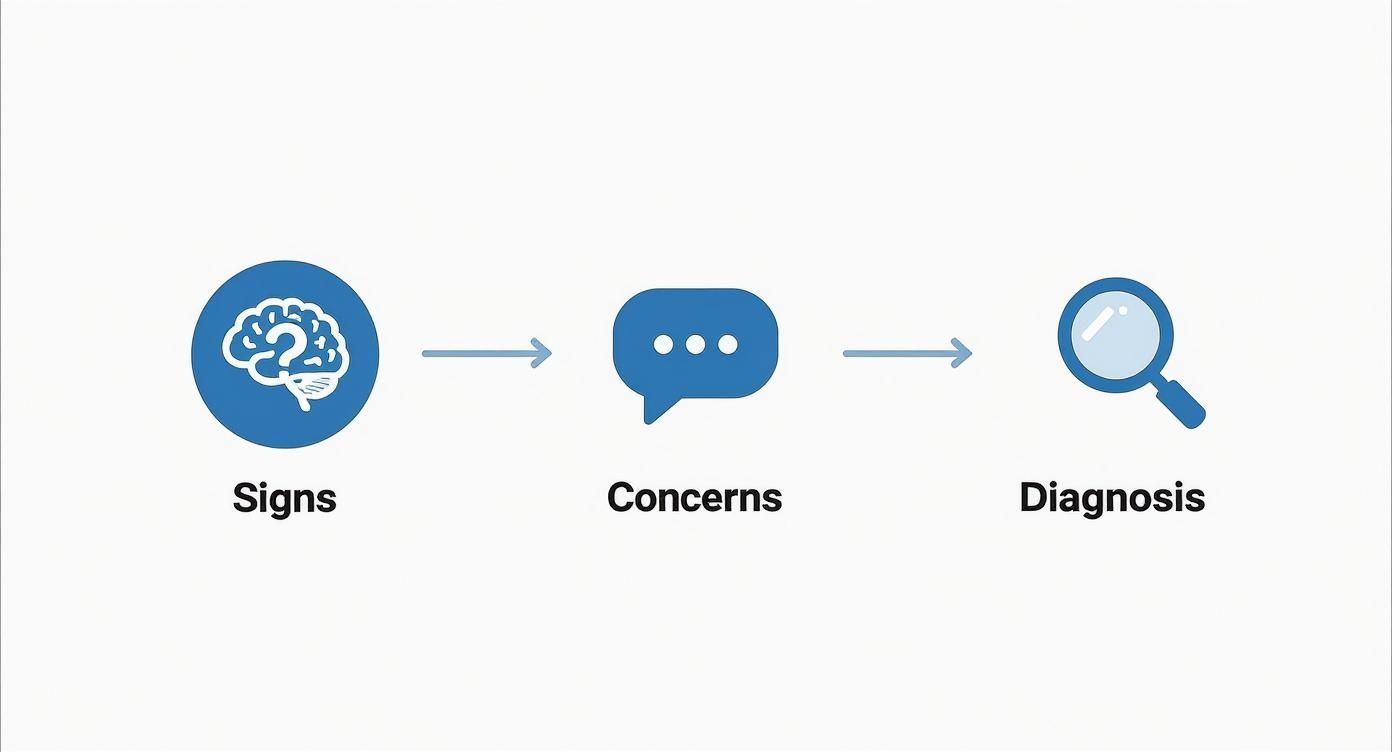
As you can see, it’s a logical journey. It starts with you recognising something isn’t right, and those concerns become the foundation for the formal diagnostic work that follows.
The Initial Steps: Booking and Pre-Assessment
Your journey really kicks off the moment you book your appointment. Once that's confirmed, you’ll usually get a secure link to a set of pre-assessment questionnaires. It’s so important to take your time with these forms and answer them as thoughtfully and honestly as you can, especially for ADHD and Autism where lifelong patterns are key.
These documents are incredibly useful. For one, they give your psychiatrist vital background information before you even meet, which helps them prepare a focused and productive session. They also prompt you to reflect on your own experiences, which is a brilliant way to organise your thoughts beforehand.
Think of the pre-assessment forms as your first opportunity to share your story. They often dig into your developmental history, family background, current symptoms, and how these challenges affect things like work, relationships, and your self-esteem. Your detailed input here lays the groundwork for a truly thorough evaluation.
Good communication is obviously key. To manage appointments and share information securely, many clinics use modern systems. If you're curious about how this works behind the scenes, it can be interesting to read about the common SMS communication strategies in medical practices.
The Core Clinical Interview
The heart of your private psychiatric assessment is the clinical interview itself. This is basically a structured, in-depth conversation, typically lasting between 60 and 90 minutes. Your psychiatrist will guide the discussion, asking detailed questions based on your pre-assessment forms and their own clinical expertise.
These questions are designed to be exploratory, not accusatory. If you’re there for an ADHD assessment, you might be asked about how you stay focused on boring tasks or manage deadlines. For an Autism assessment, the conversation might turn to your social communication style, sensory sensitivities, or your lifelong special interests.
This is a deep dive into your lived experience. The psychiatrist is looking for lifelong patterns of behaviour that line up with the diagnostic criteria for specific conditions. For example, they'll want to understand if the challenges you’re facing today were also present in some form during your childhood.
Using Standardised Diagnostic Tools for ADHD and Autism
Alongside this detailed chat, your psychiatrist will use standardised, evidence-based tools to make sure the diagnosis is robust and accurate. These aren’t ‘tests’ in the traditional sense; they're more like structured frameworks that help to measure and contextualise your symptoms against established medical guidelines, such as the DSM-5.
Think of these tools as a ruler for symptoms. They provide an objective layer of data that complements the personal story you share. It’s this powerful combination of qualitative conversation and quantitative data that makes a diagnostic assessment so effective.
Here are a few examples of tools you might come across:
- For ADHD: The DIVA-5 (Diagnostic Interview for ADHD in Adults) is a very common structured interview. It systematically guides the conversation through the specific ADHD criteria, tracing how they’ve shown up from childhood right through to your adult life.
- For Autism: The ADOS-2 (Autism Diagnostic Observation Schedule) involves a series of activities and conversations that allow the clinician to observe social communication and interaction in real-time. Other tools like the ADI-R (Autism Diagnostic Interview-Revised) might also be used, which often involves getting input from a parent or someone who knew you well as a child.
- For Mental Health: You might be asked to complete questionnaires like the PHQ-9 for depression or the GAD-7 for anxiety. These help to measure the severity of your symptoms over a recent period.
By the end of your session, the psychiatrist will have gathered a huge amount of information. This is all then carefully analysed to form the basis of your comprehensive diagnostic report, which will clearly outline the findings and recommend what to do next.
Understanding the Costs of Private Assessments
Let's talk about the financial side of things. When you're thinking about a private psychiatric assessment for ADHD, Autism, or other mental health conditions, one of the first questions on your mind is probably, "How much is this going to cost?" It's a completely fair question, and getting a clear answer upfront is crucial.
The price you see isn't just for a single chat with a psychiatrist. It's an investment in a thorough diagnostic process, and it’s important to understand what that covers, as well as any potential ongoing costs for treatment, especially for conditions like ADHD and Autism. A good clinic will be completely open about its fees, so you can plan without worrying about surprise bills later on.
Breaking Down the Initial Assessment Fee
The main figure you'll see quoted is for the comprehensive diagnostic assessment. Think of this as an all-inclusive package, not just an hourly rate.
This one-off fee typically bundles together several crucial steps:
- Pre-assessment review: Before you even meet, the clinician dedicates time to carefully go through your questionnaires and any other documents you've sent, like a letter from your GP. This groundwork is vital.
- The clinical interview: This is the main appointment, which can last 90 minutes or even longer. It’s a deep-dive conversation where the specialist explores your history, symptoms, and life experiences in detail.
- The diagnostic report: After your meeting, the psychiatrist spends considerable time writing up a detailed, multi-page report. This document explains their findings, confirms any diagnosis, and lays out a clear, personalised plan for what to do next.
For a full ADHD or Autism assessment in the UK, you should expect the initial fee to be somewhere between £700 and £2,000. The final price often depends on the clinic's location and the specific expertise of the consultant. It might seem like a lot, but it reflects the significant clinical time and expertise needed to provide an accurate, reliable diagnosis you can count on.
Ongoing Costs Beyond the Diagnosis
It’s really important to know that the assessment is just the first step. If you're diagnosed with a condition like ADHD and decide to explore medication, there will be other costs to factor in. These are almost always billed separately.
Think of it like buying a car. The assessment fee is the price of the car itself—a one-time purchase to get you the vehicle. The ongoing costs are the fuel, insurance, and servicing needed to actually drive it and keep it running well.
These follow-on expenses often include:
- Follow-up Appointments: Regular check-ins are needed to see how you're getting on with your treatment plan. These are shorter than the initial assessment and are charged per session.
- Medication Titration: This is a critical process for finding the right medication dose for you. It involves careful adjustments and monitoring over several weeks or months to get the best results with the fewest side effects.
- Private Prescriptions: You’ll need to cover the cost of the medication itself. Until your GP agrees to a Shared Care arrangement, you'll pay for private prescriptions, which cost more than the standard NHS fee.
For a more detailed look at what's involved, you can see a full breakdown of the private ADHD assessment cost and how the figures add up.
Estimated Costs for Private Psychiatric Services
To give you a clearer picture for budgeting, here is a table of typical costs for private psychiatric services in the UK. Remember, these are estimates and will vary from one provider to another.
Estimated Costs for Private Psychiatric Services
| Service | Estimated Cost Range (£) |
|---|---|
| Initial ADHD/Autism Assessment | £700 – £2,000 |
| Follow-Up Consultation (30 mins) | £150 – £350 |
| Medication Titration Package | £400 – £800 |
| Private Prescription Issuing Fee | £30 – £50 per prescription |
| Cost of Private Medication | £50 – £150+ per month |
Having this complete financial picture from the start helps you plan properly. It ensures your journey towards diagnosis and better mental health can be as smooth and straightforward as possible.
Your Diagnosis Report and What Comes Next

Getting your diagnostic report is a pivotal moment. After what could be weeks, months, or even years of uncertainty about your mental health, you finally hold a clear, evidence-based explanation in your hands. But this document is so much more than a label; think of it as a personalised roadmap, detailing your psychiatrist’s findings and, crucially, sketching out a plan for the road ahead.
The journey doesn’t end with a diagnosis. In many ways, it's just beginning. The focus now shifts to taking practical steps that can genuinely improve your quality of life. This could involve medication, therapy, lifestyle adjustments, or specialist support—all tailored to your specific profile for ADHD, Autism, or other mental health needs.
Understanding Your Personalised Treatment Plan
Your report will be packed with information, but the most vital part is the recommended treatment plan. This is your guide to managing symptoms and building a life that feels more supportive, especially when dealing with conditions like ADHD and Autism.
A robust treatment plan isn’t a one-trick pony. It recognises that everyone is different and will almost always suggest a blend of approaches that work together to support your mental health.
You’ll likely see recommendations such as:
- Medication: For ADHD in particular, medication is often a very effective first step to help manage core symptoms like inattention and hyperactivity.
- Therapeutic Support: Therapies like Cognitive Behavioural Therapy (CBT) can be incredibly useful for building coping strategies, managing anxiety, or working on the emotional regulation challenges that often come with both ADHD and Autism.
- Specialist Coaching: ADHD coaching or Autism-specific mentoring can offer practical, real-world strategies for things like executive functioning, social communication, and getting the right adjustments at work.
- Lifestyle Adjustments: The plan might also touch on sleep hygiene, diet, and exercise. It’s amazing how much these fundamentals contribute to our overall mental wellbeing.
Navigating Medication and Titration
If you and your psychiatrist agree that medication is the right path, the next stage is a process called titration. It’s not as simple as just being handed a prescription. Instead, it’s a careful, collaborative period of finding the precise medication and dosage that works best for you.
Think of titration like tuning a musical instrument. The goal is to adjust the 'strings'—your dosage—bit by bit until you find the perfect pitch where symptoms are effectively managed with minimal side effects. This careful calibration is essential for successful long-term treatment.
This process means you’ll have regular check-ins with your psychiatrist to see how you’re getting on and make small adjustments as needed. While this is managed privately, you'll also need to get your prescriptions sorted. To get a better handle on how that works, you can read our guide to getting private prescriptions online.
Working with Your GP and Shared Care Agreements
One of the most important things to do after your diagnosis is to talk to your GP about the report. For many people, the end goal is to set up a Shared Care Agreement. This is a formal arrangement where your private psychiatrist remains the specialist overseeing your condition, but your GP agrees to handle the routine prescribing of your medication through the NHS.
A Shared Care Agreement can make a huge difference to your long-term medication costs. Getting one in place, however, depends on your GP feeling confident in the private diagnosis and the proposed treatment plan. This is exactly why a high-quality, detailed report from a reputable clinic is so vital.
The need for these agreements really shines a light on the strain on public services. By early 2025, NHS data showed that a staggering 16,522 people were waiting over 18 months for mental health treatment—a figure eight times higher than for elective physical treatments. This systemic pressure often makes collaboration between private and NHS services a necessary, practical solution for patients.
Ultimately, your report is the key that unlocks a new phase of support. It gives you the knowledge and a clear plan to connect with the right resources—whether that's an Autism support network, an ADHD coach, or a trusted therapist—and helps you finally start to thrive.
Your Questions Answered
When you're considering a private psychiatric assessment, it’s natural to have questions. You want to know how it all works, what to expect, and how it fits in with the NHS. Let’s walk through some of the most common queries we hear from people looking for clarity on ADHD, Autism, and other mental health conditions.
Will My GP Accept a Private Diagnosis?
This is a big one, and rightly so. In most cases, the answer is yes. A GP will usually accept a diagnosis from a private psychiatrist, but there are a couple of important conditions. The diagnosis must come from a specialist on the General Medical Council (GMC) register, and the assessment itself needs to have followed the official NICE guidelines. A comprehensive, well-written report is your best friend here.
Now, accepting the diagnosis is one thing; taking over your prescriptions is another. For your GP to start prescribing your medication on the NHS, they’ll need to enter into a 'Shared Care Agreement' with your private specialist. This is simply a formal plan where your specialist provides the ongoing expert advice, and your GP handles the day-to-day prescribing.
It’s always a good idea to have a chat with your GP before you even book a private assessment. Giving them a heads-up helps build a collaborative relationship from the get-go. If you do find your GP is unsupportive, remember you’re well within your rights to ask for a second opinion or switch to another practice.
Can I Use My Private Health Insurance?
This really comes down to the fine print of your policy. Many UK insurance plans have specific exclusions for pre-existing or chronic conditions, and neurodevelopmental disorders like ADHD and Autism often fall into this category.
So, the single most important thing you can do is call your insurance provider before you book anything.
Get pre-authorisation from your insurer. It's the only way to be certain about what your policy covers. Ask them specifically about the initial assessment, any follow-up appointments, and the costs of medication titration. Taking this step can save you from any nasty surprises with out-of-pocket expenses.
Psychiatrist vs Psychologist: What's the Difference?
It’s easy to get these two mixed up, but their roles are quite distinct. Choosing the right one depends entirely on what you need for your mental health.
- Psychiatrist: A psychiatrist is a medical doctor who has gone on to specialise in psychiatry. They can diagnose the whole spectrum of mental health conditions, prescribe medication, and provide therapy. If you need a medical diagnosis for something like ADHD and want to explore medication, a psychiatrist is the professional you need to see.
- Psychologist: A psychologist has studied human behaviour and mental processes, usually to a doctorate level. They are experts in talking therapies (like CBT) and can conduct diagnostic assessments for conditions like Autism and ADHD, but they cannot prescribe medication.
A simple way to think about it is that a psychiatrist manages both the medical and therapeutic side of your care, while a psychologist focuses squarely on the diagnostic and therapeutic aspects.
How Do I Find a Reputable UK Psychiatrist?
Finding a trustworthy, qualified professional is the most critical part of this process. A good clinic will be completely open about its credentials, so you shouldn't have to dig too deep.
Here are four essential checks to make:
- GMC Specialist Register: Your first stop. Check that the psychiatrist is listed on the General Medical Council (GMC) Specialist Register. This is your guarantee that they are a fully qualified doctor with specialist training in psychiatry.
- CQC Regulation: See if the clinic is regulated by the Care Quality Commission (CQC). The CQC is the independent health and social care regulator in England, and their seal of approval is a powerful sign of quality and safety.
- Specialist Expertise: Make sure the psychiatrist has real experience in the area you need help with. If you think you might have adult ADHD or Autism, you want a clinician who lives and breathes neurodevelopmental conditions, not just a generalist.
- Patient Reviews: Look for genuine feedback from previous patients. While not a formal check, reviews can tell you a lot about what it’s actually like to be a patient there—from the clinician’s bedside manner to the clinic’s overall professionalism.
By doing this homework, you can feel confident that your private psychiatric assessment UK is in safe and experienced hands.
At Insight Diagnostics Global, our consultant-led team of GMC-registered psychiatrists specialises in providing CQC-regulated assessments for adults with ADHD, Autism, and a wide range of mental health conditions. We offer a clear, supportive, and professional path to diagnosis and treatment. To learn more or to book your assessment, please visit us at Insight Diagnostics.