Autism Spectrum Disorder (ASD) Level 1 is the clinical term used to describe autistic individuals who require some support, but who often have strong verbal and intellectual skills. You might be more familiar with older terms like Asperger's syndrome or 'high-functioning autism', but Level 1 is now the standard diagnostic classification, rightly shifting the focus from functioning labels to an individual’s specific support needs and their impact on mental health.
Decoding Autism Spectrum Disorder Level 1
It’s not uncommon for adults to seek a diagnosis later in life, sometimes after decades of feeling 'different' or struggling with their mental health without knowing why. Many have done well in their studies or careers but have always felt a persistent sense of being out of sync, or utterly exhausted by social situations. For these individuals, finally understanding what is autism spectrum disorder level 1 can be a profound moment of relief, linking a lifetime of experiences to a clear neurodevelopmental cause.
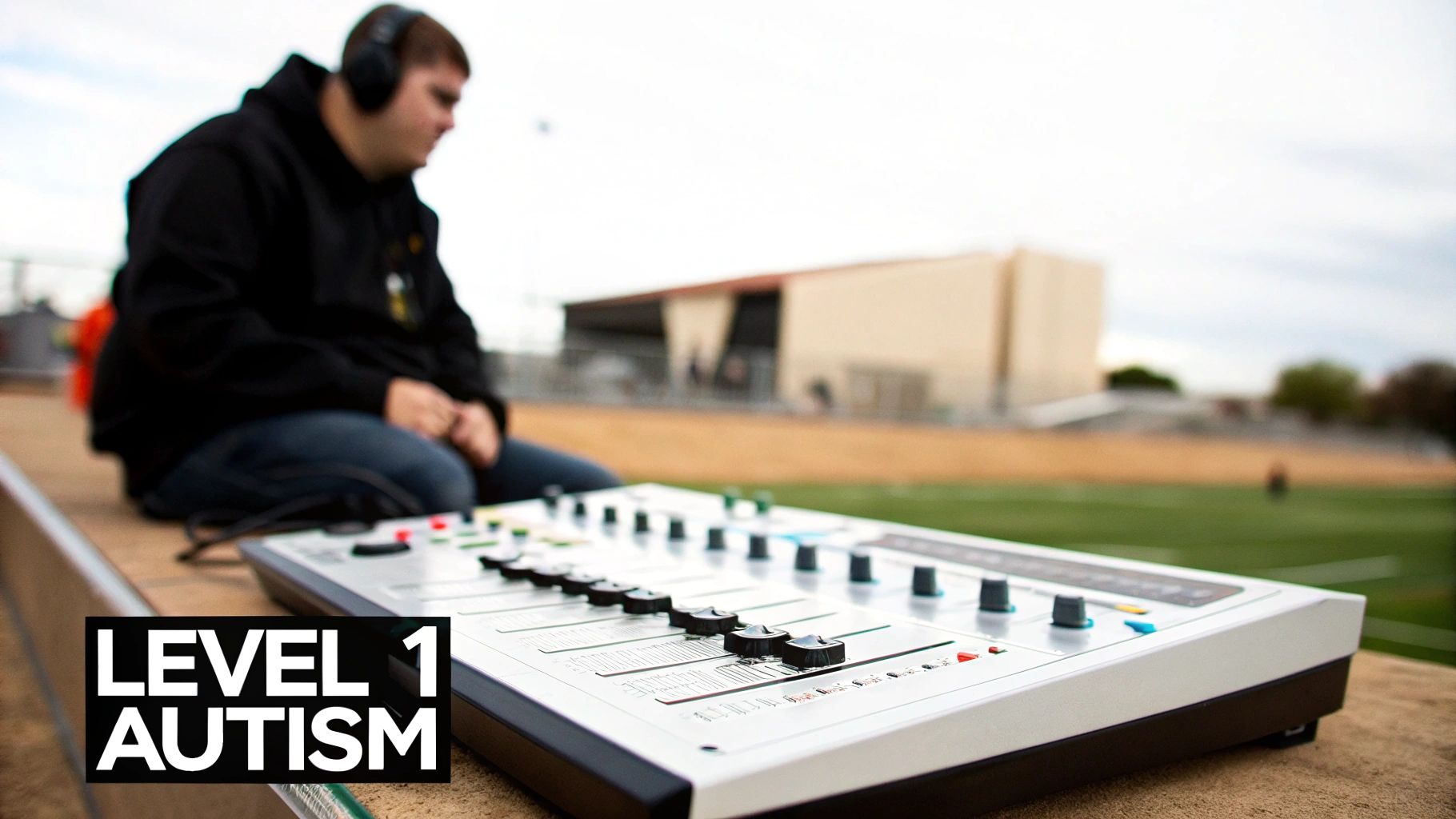
A great way to picture the autism spectrum is to think of a complex sound mixing desk rather than a simple line from 'less' to 'more' autistic. Everyone has a unique mix. For one person, the slider for sensory sensitivity might be cranked all the way up, while for another, the need for a rigid routine might be much lower. This is precisely why two people with a Level 1 diagnosis can present in completely different ways, each with their own unique impact on their mental wellbeing.
If you’re looking for a wider perspective, our guide on what is autism spectrum disorder in adults offers a broader overview.
Core Experiences in Adulthood
For an adult with ASD Level 1, life often feels like trying to navigate a world that wasn't designed for their way of thinking, which can be a huge source of mental and emotional strain. The main challenges usually cluster around a few key areas:
- Social Communication: You might find small talk pointless and draining, or struggle to pick up on unspoken social cues, sarcasm, and body language that others seem to grasp instinctively. This can lead to social anxiety and isolation.
- Sensory Processing: Everyday environments can be an assault on the senses. The hum of fluorescent lights, the texture of certain foods, or the noise of a busy street can quickly become overwhelming, leading to sensory overload and heightened anxiety.
- Mental Exhaustion: The constant, conscious effort to 'mask'—or mimic neurotypical behaviours to blend in—is incredibly tiring. This cognitive load is a major contributor to chronic anxiety, depression, and burnout.
The Link to Mental Health and ADHD
It's crucial to recognise that for many, autism doesn't exist in a vacuum. The sheer effort of navigating a neurotypical world can understandably lead to anxiety and depression. Furthermore, there is a significant overlap between autism and ADHD, and a large number of individuals are diagnosed with both conditions.
This intricate connection highlights the importance of a holistic assessment. Recognising how autism, ADHD, and mental health intersect is crucial for receiving the right support and developing effective coping strategies that address the whole person, not just one aspect of their neurotype.
Getting to grips with this complete profile isn't just about getting a label. It’s about validating a lifetime of experiences, including the mental health struggles that often accompany them. It opens the door to self-acceptance and practical accommodations that can genuinely improve your quality of life.
Key Characteristics of ASD Level 1
The following table summarises the common traits and support needs you might see in an adult with an ASD Level 1 diagnosis. It helps to break down how the core diagnostic criteria often present in daily life.
| Area of Impact | Common Adult Presentation | Support Needs |
|---|---|---|
| Social Communication | Difficulty initiating or maintaining conversations (especially small talk). Struggles with interpreting non-literal language (sarcasm, idioms). May miss social cues. | May need support in professional networking or unstructured social settings. Clear, direct communication from others is very helpful. |
| Repetitive Behaviours | Strong adherence to routines; distress at unexpected changes. Highly focused, intense interests in specific subjects. Repetitive motor movements (stimming) when stressed or excited. | Requires predictable environments and advance notice of changes. Needs time and space to engage with special interests, which can be a source of joy and stress relief. |
| Sensory Sensitivity | Heightened or dulled sensitivity to sounds, lights, textures, or smells. Can lead to sensory overload in busy environments like supermarkets or open-plan offices. | May need accommodations like noise-cancelling headphones, sunglasses, or control over their immediate environment (e.g., dimming lights). |
Understanding these characteristics is the first step toward creating supportive environments, both personally and professionally, that allow autistic individuals to thrive.
A Clinician's Guide to the DSM-5 Criteria for Level 1 Autism
To really get to grips with Autism Spectrum Disorder Level 1, it helps to understand the framework clinicians use for diagnosis. This is the Diagnostic and Statistical Manual of Mental Disorders, 5th Edition (better known as the DSM-5). It might sound a bit dry and technical, but the DSM-5 criteria are really just a structured way of describing a lifetime of experiences that many autistic adults will recognise immediately.
At its heart, the diagnosis is built around two key areas of difference. It's crucial that these traits were present from a young age, even if they were misunderstood at the time or only became more obvious in adulthood as social and professional demands increased. These criteria help make sense of why certain social situations can feel utterly draining, or why a predictable routine brings such a deep sense of comfort.
Criterion A: Social Communication and Interaction
The first major area looks at persistent difficulties with social communication and interaction in different situations. This isn't just about being shy or introverted; it’s about a fundamental neurological difference in how the brain processes social information, which often leads to significant social anxiety.
Think of it this way: many people seem to have an intuitive, built-in grasp of social rules. For many autistic individuals, however, it's a manual process. You have to consciously learn those rules by watching others and figuring things out, often through trial and error. It’s like being handed a complex piece of equipment with no instruction manual, while everyone else seems to know exactly how it works.
This can show up in a few common ways:
- Challenges with social-emotional back-and-forth: This is the natural rhythm of a conversation. It might mean finding small talk pointless and exhausting, or feeling totally lost on how to start a conversation in the first place.
- Difficulties with nonverbal cues: This is about missing the subtle messages neurotypical people send with their body language, tone of voice, or facial expressions. You might take sarcasm literally or not pick up on when someone is teasing.
- Struggles in building and keeping relationships: Friendships can be hard work. You might find you connect far better with people over deep, shared interests rather than through casual get-togethers.
A huge part of this experience, especially for women and those diagnosed later in life, is masking. This is the exhausting, conscious effort of mimicking neurotypical social behaviours to fit in. It's an incredible survival skill, but it takes a massive mental toll and is a primary driver of anxiety, depression, and burnout.
Criterion B: Restricted and Repetitive Behaviours
The second key area involves what the DSM-5 calls "restricted, repetitive patterns of behaviour, interests, or activities." For many autistic people, these aren't just odd quirks; they are absolutely essential tools for managing anxiety and navigating a world that often feels overwhelming.
These behaviours provide a vital sense of order, predictability, and comfort in a world that can feel chaotic. Far from being a deficit, they are a logical and effective coping strategy for the autistic mind to regulate sensory input and emotional states.
This criterion covers a whole range of experiences:
- Stereotyped or repetitive movements: Often called "stimming," this can include things like hand-flapping, rocking, or fiddling with an object. It's a way to self-regulate emotions, whether that's excitement, stress, or sensory overload.
- An insistence on sameness and routines: Having a predictable daily structure can be deeply calming. An unexpected change, like a last-minute cancellation, can cause real distress because it shatters that feeling of safety and control.
- Highly restricted, intense interests: These are often known as "special interests." An autistic person might develop an incredibly deep, passionate knowledge of a specific subject, from Viking history to a particular video game. These interests are a source of profound joy and expertise.
- Sensory sensitivities: This means being either hyper- (over) or hypo- (under) sensitive to sensory information. The hum from a refrigerator might be unbearably loud, or the scratchy tag on a shirt might be physically painful. This is why many autistic people find tools like noise-cancelling headphones so helpful.
For a diagnosis of Autism Spectrum Disorder Level 1, the defining factor is that these traits are significant enough to require support. This doesn’t mean an inability to succeed—far from it. It simply means that specific strategies or accommodations are needed to manage the mental health challenges these differences can present.
The Connection Between Autism, ADHD, and Mental Health
https://www.youtube.com/embed/TZ5V_-hP05g
To really understand autism spectrum disorder level 1, you have to look beyond the textbook autistic traits. For many adults, it’s not a single, isolated experience. It’s a complex interplay between autism and other conditions, especially ADHD, anxiety, and depression. Grasping this overlap is vital for true self-understanding and for finding support that actually works.
Autism and ADHD are very often found together. While they’re separate neurodevelopmental conditions, they share a surprising amount of genetic ground and frequently co-occur. In fact, some studies have found that as many as 70% of autistic people also have ADHD traits. This can create a confusing and often contradictory inner world that significantly impacts mental health.
Think about it: an autistic person might rely on routine and predictability to feel secure, but their co-existing ADHD might be craving novelty and stimulation. It’s a recipe for internal conflict and anxiety. Both conditions can cause trouble with executive functions—those core mental skills for managing time, organising your life, and keeping emotions in check—but the underlying reasons can be poles apart.
Autism and ADHD: A Tale of Two Brains
Even when the outward behaviour looks the same, the internal reasons for it can be completely different. A thorough assessment must dig into these nuances to devise strategies that work for the individual's unique neurotype.
- Starting a Task: An autistic person might struggle to get going because of autistic inertia or a paralyzing fear of not doing it perfectly. Someone with ADHD, on the other hand, might struggle because their brain has trouble with activation energy, often putting things off until the last possible second.
- Social Challenges: In autism, social difficulties often come from struggling to read body language or understand unwritten social rules. For someone with ADHD, social slip-ups might be down to impulsivity, like interrupting people or finding it hard to stay focused during a conversation.
- Focus: One of the hallmarks of autism is the ability to focus intensely on a special interest. While hyperfocus is also a big part of ADHD, it tends to be less controlled and more driven by whatever is new and interesting in the moment.
If you’re trying to untangle this for yourself, learning more about specific ADHD symptoms in adults can be incredibly illuminating. Seeing both profiles clearly is the first step to making sense of your own experience.
The High Cost of Masking and Autistic Burnout
Beyond ADHD, anxiety and depression are incredibly common companions for autistic adults. This isn't usually an inherent part of being autistic. Instead, it’s often a direct result of the relentless effort of trying to exist in a world that wasn't designed for an autistic mind. This constant effort to hide natural autistic behaviours and perform neurotypical ones is known as masking, and it is profoundly exhausting.
Masking is a survival strategy, but it comes at a steep price. The relentless mental energy required to perform social expectations and manage sensory overload can lead to profound exhaustion, anxiety, and a state known as autistic burnout.
Autistic burnout is more than just feeling tired; it’s a debilitating state of physical, mental, and emotional collapse. It’s often accompanied by a loss of skills and an even greater sensitivity to your surroundings. It’s caused by the cumulative stress of navigating a world full of social demands and sensory assaults without the right support. It's a serious mental health issue that demands rest, recovery, and changes to your environment. In this context, knowing your rights around things like taking sick leave for mental health can be a crucial lifeline.
Ultimately, a good diagnosis isn't just about putting a label on autism. It's about seeing the whole person: how autism might interact with ADHD, how societal pressures can lead to anxiety, and how proper support is the key to preventing burnout. A proper assessment validates all of these interconnected experiences and lights the way toward support that truly makes a difference.
Getting an Adult Autism Diagnosis in the UK
Coming to the realisation as an adult that your lifelong experiences—including struggles with mental health—might actually be autism can be a huge moment. But what comes next? For many, the path to an official diagnosis in the UK feels complicated and overwhelming. This guide is here to give you a clear, straightforward map of the journey, whether you choose to go through the NHS or a private clinic.
A diagnosis isn't just about a label. For adults who've spent years, or even decades, feeling different without knowing why, it's often about validation. It's the confirmation that the struggles you've faced—whether it's social burnout, sensory overwhelm, or chronic anxiety—are real and rooted in how your brain is wired. This understanding is often the first step towards self-acceptance and finding the right kind of support.
When assessing an adult, clinicians are looking at your whole life story, not just who you are today. They'll want to understand your developmental history, searching for a consistent pattern of autistic traits that have been there since you were a child, even if nobody recognised them at the time. This deep dive is essential because so many adults have become masters at masking their autistic traits to fit in.
Your First Steps on the Diagnostic Pathway
In the UK, the road to an adult autism diagnosis usually begins in one of two places: with your GP for an NHS referral, or by contacting a private clinic directly. While both routes aim for the same outcome, the timelines and what’s involved can be very different.
-
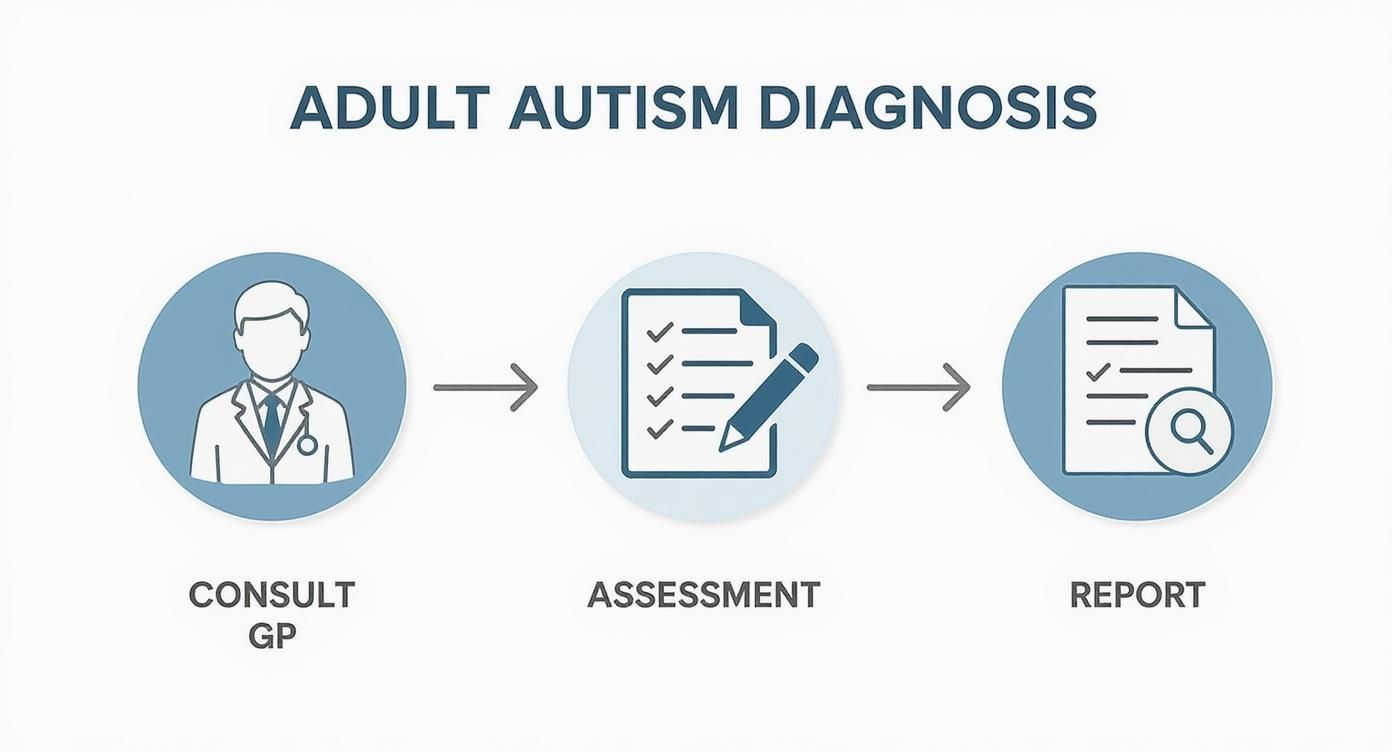
The NHS Route: Your first port of call is your GP. It’s a good idea to go prepared—make a list of your experiences and how they connect to the known traits of autism, including any co-occurring mental health concerns. Your GP can then refer you to a local team that specialises in adult autism assessments. Be prepared for a wait, though. NHS waiting lists for these services are notoriously long, and it can sometimes take several years to be seen.
-
The Private Route: For those who can't or don't want to wait, a private assessment offers a much quicker path. Specialist clinics can often see you within weeks rather than years. This route does have a cost, but many people find the speed and direct access to expert clinicians to be a worthwhile investment in their mental wellbeing. Just make sure you choose a reputable, CQC-regulated clinic staffed by experienced professionals.
What to Expect During an Assessment
A proper diagnostic assessment is far more than a quick chat. It’s a detailed and structured evaluation designed to get a complete picture of your experiences, your strengths, and the things you find challenging, including your mental health history. While the exact process can vary between clinics, most follow a similar structure. You can read more about the specifics of diagnosing autism in adults in the UK in our dedicated guide.
Typically, the process kicks off with some pre-assessment questionnaires. You'll be asked to fill these out, and sometimes a parent or partner might be asked to contribute, to help build a picture of your history and current traits.
The main part of the assessment is a long, in-depth interview with a clinician, like a psychiatrist or clinical psychologist. They will ask you about a whole range of things, including:
- Your childhood, development, and experiences at school
- How you’ve navigated friendships and relationships
- The way you communicate and interpret what others mean
- Your sensory world (your sensitivities to light, sound, touch, etc.)
- Your routines, special interests, and hobbies
- Your mental health history, including any experiences with anxiety, depression, or ADHD traits
This comprehensive, life-span approach is so important because countless adults have lived their whole lives without a diagnosis. The assessment is focused on uncovering a lifetime of evidence, finally providing answers to questions you may have had since childhood.
This reality of underdiagnosis is a major issue. Research suggests there could be around 750,000 undiagnosed autistic adults over 20 in England alone. This could potentially double the official UK figures to over 1.2 million. The gap is particularly wide for older adults, who grew up when the diagnostic criteria were much narrower. You can read more about these findings on autistic population estimates.
After your assessment, you’ll receive a detailed diagnostic report. This document will explain whether or not you meet the criteria for Autism Spectrum Disorder and, crucially, will provide personalised recommendations to help you move forward.
Thriving After Your Diagnosis with the Right Support
Receiving an adult diagnosis of Autism Spectrum Disorder Level 1 isn't the end of the road. Far from it. Think of it as finally getting the right map for a journey you've been on your whole life. It provides a clear framework for your experiences, including how they connect to your mental health, and opens the door to support and accommodations that can make a profound difference.
The goal isn't to force yourself into a neurotypical mould; it's about building a life that works with your neurotype. It's about finding smart strategies to handle sensory overwhelm, navigate executive function hurdles, and protect your precious mental energy from burnout. With the right toolkit, you can shift from simply coping to genuinely thriving.
The diagnostic process itself is a structured, clinical journey designed to bring clarity. It’s the essential first step toward getting the right support in place.
Therapies That Actually Work for the Autistic Mind
It's a common experience for autistic people to find that standard talking therapies just don't click, especially if they don't account for co-occurring ADHD or the root causes of their anxiety. Thankfully, there are approaches that can be adapted to work with an autistic way of thinking, not against it.
A great example is a specialised form of Cognitive Behavioural Therapy (CBT). Standard CBT can sometimes feel invalidating, as it might try to challenge thoughts that are actually a perfectly logical outcome of autistic processing. Adapted CBT, on the other hand, gets this.
Instead of just telling you not to feel anxious about an unpredictable social event, it focuses on practical, real-world strategies. This could mean planning a clear exit strategy in advance, identifying a quiet corner to decompress, or simply using noise-cancelling headphones to manage the sensory chaos. It's about solutions, not just reframing.
Practical Support and Accommodations
Beyond therapy, day-to-day practical support is where the real changes happen. This is all about making small but powerful tweaks to your environment and routines to support your mental health.
- Sensory Support: First, you need to pinpoint your specific sensory triggers. This might lead you to wear sunglasses indoors to cope with harsh lighting, use headphones in noisy places, or choose clothes made from fabrics that don't feel like sandpaper on your skin.
- Executive Function Support: There are brilliant tools to help with the classic challenges of planning and organisation common in both autism and ADHD. Think visual planners, phone reminders for everything, or the simple but effective technique of breaking massive projects into tiny, manageable steps.
- Energy Management: Autistic burnout is a very real, very serious risk. Learning to manage your 'social battery' is non-negotiable. This means consciously scheduling downtime after socialising and learning to spot the early warning signs of overload before you hit a wall.
A diagnosis provides the language and legal standing to ask for what you need. It shifts the focus from "What's wrong with me?" to "What support do I need to succeed?"—a powerful change in perspective.
Your Rights at Work in the UK
Your diagnosis also unlocks crucial legal protections at work. In the UK, autism is recognised as a disability under the Equality Act 2010. This isn’t just a label; it means your employer has a legal duty to make "reasonable adjustments" to support you in doing your job.
These adjustments aren't about getting an unfair advantage. They’re about levelling the playing field so you can bring your best self to work. The constant stress of trying to cope in a workplace that doesn't fit can take a huge toll on your mental health, and there are many helpful workplace stress management strategies you can explore to protect your wellbeing.
So, what does a reasonable adjustment look like? It could be:
- Flexible Working: Changing your start and finish times to avoid the sensory hell of a rush-hour commute.
- Environmental Changes: Moving your desk to a quieter part of the office or getting permission to wear noise-cancelling headphones.
- Communication Adjustments: Asking for important instructions to be put in writing rather than given verbally.
- Sensory Adjustments: Being allowed to dim the harsh overhead lights or use a filter on your computer screen.
Requesting these things is a proactive step toward building a sustainable career that you can succeed in long-term. A formal diagnosis gives you the backing and confidence to advocate for the support you need.
Knowing When You Need a Medico-Legal Report
A standard diagnostic report can be life-changing. It offers self-understanding and a clear path to getting the right support. But sometimes, when legal issues are involved, you need something more specialised. This is where a medico-legal report comes in.
It’s a very different beast from a clinical report. It’s not just for diagnosis; it’s a robust, impartial document created to provide evidence that will hold up under the intense scrutiny of a legal environment.
Think of it like this: a clinical report is a user guide for your brain, explaining its unique wiring and what it needs to thrive. A medico-legal report, on the other hand, is a formal expert analysis written to answer specific, complex questions posed by a court or tribunal. It translates your lived experience—your ASD Level 1 diagnosis, co-occurring ADHD, mental health, and support needs—into the precise language the legal system understands. This makes sure your neurotype is properly represented when crucial decisions are on the line.
When a Clinical Report Just Won't Cut It
While your initial diagnosis confirms you are autistic and outlines support, a medico-legal assessment digs much deeper. It’s built from the ground up to address legal questions, offering a detailed, evidence-based opinion from a specialist consultant psychiatrist. This becomes absolutely essential in a few key situations.
You will almost certainly need a medico-legal report if you're facing:
- Employment Tribunals: These reports are often central to cases involving disability discrimination, unfair dismissal, or arguments over reasonable adjustments. The report provides expert evidence explaining how your autism and any co-occurring conditions like ADHD or anxiety affect your work, and what support you're legally entitled to.
- Family Court Proceedings: When it comes to child arrangements or other family law matters, a report can clarify how a parent's autism or mental health might impact their parenting. It helps ensure that decisions are made based on a real understanding of the situation, not on myths or stereotypes.
- Personal Injury or Clinical Negligence Claims: If an accident or medical issue has triggered or worsened a mental health condition like anxiety or PTSD, a medico-legal report can officially establish the psychological damage, outlining your prognosis and future treatment needs for the court.
A medico-legal report bridges the gap between your clinical reality and the legal world. It delivers the objective, expert analysis needed to protect your rights and ensure legal outcomes are based on a true understanding of your circumstances.
At the end of the day, getting this type of report is about protecting yourself. When the stakes are high—your job, your family, your health—it ensures your case is backed by the highest standard of psychiatric evidence, presented in a format that's clear, defensible, and ready for the rigours of the legal process.
Frequently Asked Questions About Level 1 Autism
When you start exploring the world of neurodiversity, it's completely normal to have a lot of questions. Let's tackle some of the most common ones about Autism Spectrum Disorder Level 1 to help clear up any confusion and offer some practical insights.
Whether you're thinking about a diagnosis for yourself or trying to better understand someone you care about, getting solid, reliable information is always the best first step.
Can You Outgrow Level 1 Autism?
In a word, no. Autism isn't an illness or a childhood phase; it's a lifelong neurodevelopmental difference. It's about how a person's brain is wired, and that's fundamental to who they are.
Over time, an autistic person can develop fantastic coping strategies, and therapy can certainly help them navigate challenges and lean into their strengths. But the goal of good support isn't to ‘cure’ or change the person—it's to help them thrive as their authentic self.
Is Level 1 Autism Just a New Name for Asperger's?
That’s a common and understandable question. The terms did once describe very similar profiles, but the clinical and autism communities have largely moved on from using "Asperger's Syndrome." The current diagnostic manual, the DSM-5, uses ‘Level 1’ instead.
The shift to 'Level 1' is important because it focuses on the level of support someone needs, rather than making a value judgement like "high-functioning." It acknowledges that even someone with excellent verbal skills still faces genuine, significant challenges that warrant support and accommodation, particularly concerning their mental health.
What’s the First Step to Getting an Autism Diagnosis in the UK?
Your journey usually starts with a chat with your GP. They can refer you for an assessment on the NHS. The only catch is that, unfortunately, the waiting lists for these services can be incredibly long.
Because of this, many adults decide to go down the private route with a specialist clinic, which is often a much faster way to get clarity. A good starting point for many is using an online screening tool to gather their thoughts before speaking with a professional.
At Insight Diagnostics Global, we offer timely, consultant-led online assessments for adults who want to understand more about autism, ADHD, and their mental health. When you feel ready to take that next step, you can find out more about our CQC-regulated services and book a consultation directly on our website.
Find out more at https://insightdiagnostics.co.uk