

A psychiatric assessment is a detailed, guided conversation with a mental health expert. The whole point is to understand your unique experiences, the challenges you're facing, and the strengths you bring to the table. It's a crucial first step for anyone seeking clarity about their mental health, especially when considering conditions like ADHD or Autism.
It’s not a test you can pass or fail. Think of it more as a collaborative effort to build a clear, comprehensive picture of your mental health. This process is often the beginning of figuring out if a neurodevelopmental condition like ADHD or Autism is at play, and it lays the groundwork for getting you the right support for your overall mental wellbeing.
Demystifying The Psychiatric Assessment
If the idea of a "psychiatric assessment" sounds a bit daunting, try thinking of it differently. It’s less like a formal exam and more like a skilled detective working with you to gather clues. A clinician will piece together information—your thoughts, feelings, personal history, and behaviours—to understand the root of your difficulties.
The goal isn't just to stick a label on things. It's to develop a clear, actionable plan that genuinely helps you move forward. This structured approach is especially crucial when the picture is complex, perhaps with overlapping symptoms of anxiety, depression, and neurodevelopmental conditions like ADHD or Autism Spectrum Disorder (ASD). For many adults, it's the first real opportunity to make sense of lifelong struggles with focus, social interactions, or managing emotions.
A psychiatric assessment provides a formal, evidence-based foundation for diagnosis and treatment. It moves beyond guesswork, offering a structured framework to make sense of your experiences and access the right support for your mental health.
The Purpose Behind The Process
At its core, the main objective is to achieve diagnostic clarity. By systematically exploring your symptoms and background, a clinician can tell the difference between various conditions that might look similar on the surface. For example, trouble with concentration might point towards ADHD, but it could just as easily be a symptom of anxiety or depression. The assessment is designed to untangle these threads.
The table below breaks down the primary goals of this initial evaluation.
| Key Goals of a Psychiatric Assessment |
| :— | :— |
| Objective | Description |
| Accurate Diagnosis | To identify or rule out specific mental health or neurodevelopmental conditions like ADHD or Autism. |
| Personalised Treatment Planning | To create a tailored roadmap that may include therapy, medication, or lifestyle adjustments to improve mental health. |
| Establishing a Baseline | To get a clear snapshot of your current functioning, which helps in tracking progress over time. |
Essentially, the assessment provides a solid starting point for everything that comes next.
In the UK, this process often kicks off with a detailed evaluation using standardised, well-regarded tools. Data from Our Future Health's analysis of over 1.5 million questionnaires reveals just how common mental health challenges are: 1 in 6 people reported a lifetime diagnosis of depression, and 1 in 7 reported anxiety. These numbers highlight why accurate assessments for all mental health conditions, including ADHD and Autism, are so vital for guiding proper care.
To get a better sense of what this entails, you can learn more about what a private psychiatric assessment in the UK involves. Taking this first step helps transform a feeling of uncertainty into a clear path forward.
What Happens During the Assessment
Walking into a psychiatric assessment can feel daunting, but knowing what to expect can make a world of difference. Think of it less like an interrogation and more like a structured conversation—a methodical way for a clinician to piece together your unique story and understand what’s going on. The goal is to build a complete and accurate picture of your mental health, especially when looking into conditions like ADHD and Autism.
The cornerstone of the whole process is the clinical interview. This is simply a detailed chat where you’ll be asked about your current symptoms, your personal history, and significant life events. The clinician isn't just trying to figure out what you're experiencing, but how it's actually affecting your day-to-day life—from your job and relationships to your overall sense of wellbeing.
This process generally unfolds in a few logical stages.
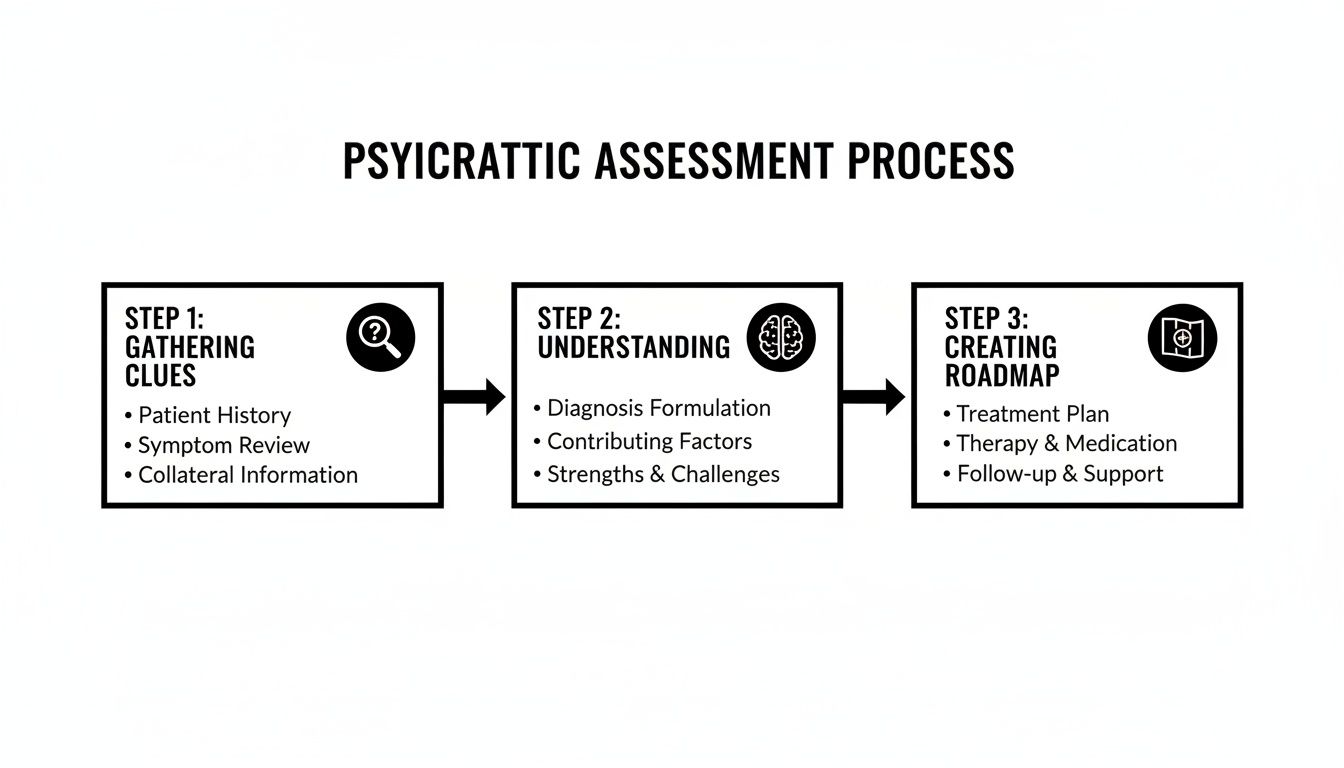
It all starts with gathering information, which leads to a deeper understanding, and finally, to creating a practical plan to help you move forward.
Key Components of the Evaluation
As part of the session, the clinician will carry out a Mental State Examination (MSE). This sounds formal, but it’s really just a real-time 'snapshot' of your psychological functioning at that moment. It’s not a test with right or wrong answers, but a set of observations covering a few key areas:
- Appearance and Behaviour: General observations about your body language, restlessness, or eye contact.
- Mood and Affect: This is about how you say you feel (your mood) versus the emotions the clinician can see (your affect).
- Thought Processes: How you organise your thoughts and connect ideas when you speak, such as topic-switching or detailed, specific descriptions.
- Cognition: A check on your concentration, memory, and attention levels during the conversation.
This part of the assessment helps the clinician see how your internal world shows up on the outside.
The Mental State Examination provides immediate, valuable context. For instance, if someone is being assessed for ADHD, observations about restlessness or rapid-fire speech can be just as telling as the life history they share.
Building a Complete Picture
A single conversation rarely gives the full picture. To make sure a diagnosis is thorough—especially for neurodevelopmental conditions like Autism or ADHD that have roots in childhood—clinicians often gather collateral information. This just means they might ask for your permission to speak with someone close to you or to look at old documents.
Some examples of helpful information include:
- Family History: Knowing about the mental health of your relatives can sometimes reveal genetic links or patterns, especially for conditions like ADHD and Autism.
- School Reports: Old report cards are a goldmine. They can offer priceless clues about your behaviour, focus, and social skills as a child.
- Input from a Partner or Parent: Someone who knows you inside and out can offer a different viewpoint on your daily struggles and strengths.
Everything discussed and observed is carefully documented in structured sample clinical notes, which form the foundation of your final diagnostic report.
The entire process is designed to be comprehensive and, most importantly, collaborative. If you're thinking about taking this step, know that getting a mental health assessment online can be a really convenient and effective way to get the clarity you’re looking for, right from your own home. It’s all about creating a clear path forward, built on a solid foundation of understanding.
Assessments for ADHD and Autism
While a general psychiatric assessment gives a fantastic bird's-eye view of your mental health, spotting neurodevelopmental conditions like ADHD and Autism Spectrum Disorder (ASD) requires a much more specialised approach.
Think of it like this: a general assessment is like a GP check-up, covering all the bases. An assessment for ADHD or autism, on the other hand, is like seeing a specialist cardiologist—it’s designed to look at a very specific, complex system in detail.
These evaluations aren’t just a snapshot of how you’re feeling today. They go much deeper, tracing patterns of behaviour, social interactions, and how you think, all the way back to your earliest memories.
The Role of Developmental History
The real heart of an ADHD or autism assessment is mapping out your life story. It’s a deep dive into your personal history. A clinician isn't just asking if you struggle to focus now; they're piecing together a puzzle. Were you the child who was constantly told off for daydreaming? Did you find social cues confusing or overwhelming?
This comprehensive look back is absolutely crucial. ADHD and ASD are neurodevelopmental, which means the signs have been there since childhood, even if nobody put a name to them back then. To create this detailed timeline, clinicians gather evidence from a few different places:
- You, first and foremost: Your own account of your life, your struggles, and your strengths is the most vital part of the process.
- Someone who knows you well: With your consent, the clinician might chat with a parent, a partner, or a close friend who can offer another perspective on your journey.
- A look at the records: Old school reports can be like gold dust. They offer an objective glimpse into your behaviour and academic life from a teacher’s point of view.
Specialised Tools and Frameworks
To arrive at an accurate diagnosis, specialists use very specific, evidence-based tools designed to measure the traits of ADHD and ASD. These are far more than simple tick-box questionnaires; they are structured interviews and observational guides that take real expertise to use and interpret correctly.
One of the biggest differences in these assessments is the focus on how you process the world, not just what you’re thinking or feeling. For autism, this might mean exploring the way you interpret social cues. For ADHD, it could involve observing patterns of attention and impulsivity right there in the conversation.
In the UK, with NHS mental health services facing record demand, these structured assessments are more important than ever. The British Medical Association's data analysis highlights this surge in referrals. Using the right tools helps ensure people get channelled into the most appropriate care pathways from the start.
Ultimately, these targeted evaluations do more than just hunt for symptoms. They build a complete picture of your unique neurotype. If you're curious about the nuts and bolts, learning more about the process of an autism assessment in the UK can offer some really helpful clarity. It's this structured, thoughtful approach that ensures a diagnosis is accurate and provides a solid foundation for whatever comes next.
How to Prepare for Your Appointment

It’s completely normal to feel a bit anxious about a psychiatric assessment, but a little preparation can make a world of difference. Think of it less like studying for a test and more like organising your thoughts so you can tell your story clearly.
Whether you're exploring the possibility of ADHD, autism, or another mental health condition, being prepared helps your clinician get a full, accurate picture of your life and your challenges. It’s all about making the best use of the time you have together.
Gathering Your Personal History
Think of yourself as the expert historian of your own life. The aim is to gather the key pieces of evidence that build a timeline of your experiences, which is especially important for conditions like ADHD and autism where childhood history is a vital part of the puzzle.
Before your appointment, it’s a great idea to pull together any relevant documents you can find. Old school reports are gold dust; they provide impartial observations from teachers about your concentration, social interactions, or behaviour back then. Any previous medical letters or reports from other specialists can also add crucial context.
Preparing for your assessment is an act of self-advocacy. By organising your thoughts and documents, you ensure your voice is central to the process and that your concerns are clearly heard and understood.
Putting this information together helps the clinician see the connections between your past and present, which is fundamental to reaching an accurate diagnosis.
Documenting Your Symptoms and Questions
Your personal experience is the most important evidence you can bring. It’s so easy for your mind to go blank in the moment, so writing things down beforehand is a simple but incredibly effective strategy. This way, you won’t leave wishing you’d remembered to mention something important.
Here’s a practical way to structure your notes:
- List Your Main Symptoms: What are the key difficulties that brought you here? For suspected ADHD, this might be constantly missing deadlines. For autism, it could be feeling overwhelmed in social settings or struggling with changes in routine.
- Note When They Started: Try to pinpoint when you first noticed these issues. Can you trace them back to your school days, or even earlier?
- Consider the Impact: How do these symptoms affect your job, your relationships, and your day-to-day mental health? Specific examples are really helpful.
- Write Down Your Questions: What are you hoping to find out? No question is silly or too small.
Taking the time to do this ensures all your concerns are on the table. For anyone exploring a diagnosis in adulthood, our guide on how to get an adult autism diagnosis has some extra tips you might find useful. Ultimately, being prepared makes you an active partner in your own healthcare journey.
Understanding Your Results and Next Steps

The time immediately after your assessment can feel a bit like holding your breath. This is the moment where all the pieces—the interviews, the questionnaires, your personal history—are carefully put together to form a coherent picture. It’s not just about getting an answer; it’s about finding a clear path forward for your mental health.
Think of this stage less as an ending and more as the beginning of a new, more informed chapter in your life. The first step is usually a feedback session, where your clinician walks you through their findings. This isn’t a lecture; it's a conversation. It’s your chance to ask questions and really understand what everything means for you.
Deciphering the Diagnostic Report
After the feedback session, you’ll receive a comprehensive diagnostic report. This document is much more than a clinical label. It's essentially a personalised roadmap to understanding your own mind, linking your personal history and experiences to a recognised framework, especially for conditions like ADHD or autism.
So, what’s inside? The report will generally break down into a few key areas:
- A Summary of Findings: This is the diagnostic conclusion, clearly explaining how your symptoms and history meet the criteria for a particular condition.
- Detailed Observations: The report will draw on specific examples from your interview, questionnaire responses, and any information shared by others.
- Personalised Recommendations: This is the most important part. It’s a practical, actionable plan outlining what to do next.
This document becomes the cornerstone for any future support you might need, from seeking workplace accommodations to accessing specialised services. It validates what you’ve been going through and provides a clear guide for the journey ahead.
For many people, receiving a diagnosis is an incredibly empowering moment. It finally gives a name to lifelong challenges, replacing confusion or self-blame with understanding and opening the door to support that actually works.
Navigating What Comes Next
The outcome of your assessment directly informs your next steps. This is about creating a practical plan to genuinely improve your quality of life, tailored to your unique situation.
Depending on the findings, your recommendations might include:
- Therapeutic Interventions: You could be referred for therapies like Cognitive Behavioural Therapy (CBT) to manage anxiety or learn new coping strategies for ADHD.
- Medication Options: For certain conditions, medication can be a helpful part of the treatment plan. Your clinician will talk you through the benefits and potential drawbacks of different options, like medication titration for ADHD.
- Specialist Referrals: Sometimes, you might be connected with other experts, such as an occupational therapist or a specialist coach for autism.
It's also worth remembering that the demand for psychiatric assessments is shaped by broader societal issues. For example, Mind’s Big Mental Health Report revealed that adults in the UK’s most deprived areas experience higher rates of mental health problems, which in turn affects NHS referral pathways and the demand for assessments. You can discover more insights about mental health disparities from their report.
Ultimately, your results give you a solid foundation to build upon. With a clear diagnosis and a set of expert recommendations, you’re in a much stronger position to create a more supportive future for yourself.
Common Questions About Psychiatric Assessments
Stepping into the world of mental health support often brings up a lot of questions. It's completely normal to wonder about the practical side of things, especially when it comes to a psychiatric assessment for conditions like Autism or ADHD. Getting clear on the process can help you feel more comfortable and confident.
Let's walk through some of the most common queries we hear.
Is Everything I Say Confidential?
Absolutely. Confidentiality is the bedrock of trust between you and your clinician. Think of it as a protected space. Everything you share is held in the strictest confidence, bound by professional ethics and legal standards.
The only time this rule changes is if there’s a serious risk of harm – either to you or to someone else – or if child protection issues come to light. Even in these very rare situations, your clinician has a duty to act to keep people safe, but they will almost always discuss their concerns with you before taking any action.
Can My Family Be Involved in the Assessment?
Yes, they can, and sometimes it’s incredibly helpful. For neurodevelopmental conditions like ADHD or Autism, which start in childhood, getting an outside perspective can be a game-changer. A parent or older sibling might remember things you don't.
Involving a family member isn't about checking up on you; it's about adding another layer of detail to your life story. A parent might recall specific school report comments or social challenges from your childhood that you've forgotten, providing crucial context for the clinician.
But let’s be clear: this only happens with your explicit consent. You are always in the driver's seat. No one will be brought into the conversation unless you give the green light.
What if I Disagree With the Diagnosis?
It’s a fair question, and it’s important to know you have a voice in this. A psychiatric assessment should feel collaborative, not like a verdict being handed down. If the conclusion doesn't sit right with you, you should absolutely bring it up.
A good clinician will take the time to explain their reasoning, connecting the dots between your story and their diagnostic conclusion. If you're still not convinced, you are well within your rights to seek a second opinion from another qualified professional. After all, your own insight into your life is a vital piece of the puzzle.
There are many places to find more general information that can help you make sense of things. For broader insights and articles on mental health and healthcare topics, you may find additional information on the WeekdayDoc Blog. The ultimate goal is to arrive at an understanding that truly reflects your experience and points you toward the support that will actually help.
At Insight Diagnostics Global, we believe in providing clear, thorough, and empathetic assessments for adults exploring ADHD, Autism, and other mental health conditions. Our consultant-led online service ensures you receive expert care with the clarity you deserve. https://insightdiagnostics.co.uk