It often feels like some invisible force is constantly creating friction in your relationship. When you’re living with ADHD, the root of many relationship problems comes down to one thing: mistaking the symptoms for personal failings. What looks like forgetfulness, emotional outbursts, or inattention isn't a lack of care—it's the outward expression of a neurodevelopmental condition.
Understanding the Unseen Guest in Your Relationship
When you don't realise ADHD is playing a role, it’s all too easy for both of you to feel hurt, confused, and deeply alone. Imagine an unseen guest at the dinner table who keeps interrupting and making a mess. Instead of identifying the real culprit, you end up blaming each other for the chaos. This is a common experience, but when conditions like Autism co-occur with ADHD, or other mental health challenges are present, the complexity deepens.
This cycle of misunderstanding is absolutely exhausting. The partner without ADHD can feel ignored, unloved, and unimportant when anniversaries or simple requests are forgotten. At the same time, the partner with ADHD is often drowning in shame and feelings of inadequacy, frequently compounded by anxiety or depression, even when they’re trying their hardest.
Reframing Frustration as a Symptom
The first real step toward a healthier dynamic is to reframe these recurring frustrations. It's not about a lack of love; it’s about how the ADHD brain is wired differently.
- Chronic Forgetfulness: This isn't a sign that your partner doesn't care. It’s a genuine struggle with working memory, a core executive function that ADHD directly impacts.
- Intense Emotional Reactions: Seemingly small things can trigger huge emotional responses. This is down to emotional dysregulation, a common feature of ADHD and other mental health conditions, where the brain finds it incredibly difficult to put the brakes on feelings.
- Apparent Inattention: When your partner seems to "zone out" while you’re talking, it feels like disrespect. But often, it's their brain failing to filter out other thoughts or sounds to stay focused on your words.
This table can help you connect the dots between what you're experiencing and the underlying ADHD challenge.
Decoding ADHD Behaviors in Your Relationship
| How It Feels to the Partner | The Underlying ADHD Challenge |
|---|---|
| "They never listen to me." | Inattention: The brain struggles to filter distractions and sustain focus, making active listening difficult. |
| "They're so unreliable and lazy." | Executive Dysfunction: Difficulty with planning, organising, and initiating tasks—not a lack of motivation. |
| "They don't care about my feelings." | Emotional Dysregulation: Trouble managing the intensity and expression of emotions, leading to big reactions. |
| "They're so selfish and impulsive." | Impulsivity: Acting without thinking through the consequences, driven by a need for immediate reward. |
Seeing these behaviours through the lens of neurology can completely change the conversation, moving it from blame to understanding.
By seeing these behaviours as symptoms, you can shift from a mindset of blame to one of collaborative problem-solving. This perspective change allows both partners to stop fighting against each other and start working together against the challenges ADHD presents.
The Impact of an Undiagnosed Condition
Things get even trickier when ADHD hasn't been diagnosed, which is the case for a shocking number of adults. Here in the UK, the struggle to maintain romantic relationships is a serious reality for adults with ADHD. With over 80% of the estimated 2.5 million adults with the condition remaining undiagnosed and untreated, symptoms like forgetfulness, impulsivity, and mood swings put a constant strain on their partnerships. You can read more about the findings of the ADHD crisis in the UK to see the scale of the problem.
Without a diagnosis, there’s no language or framework to understand what’s really going on. The non-ADHD partner might resort to labels like "lazy" or "selfish," while the undiagnosed partner internalises this criticism, leading to deep-seated shame and anxiety, which can worsen co-existing mental health conditions. This guide is here to give you practical, actionable strategies to navigate these challenges, turning them into opportunities for a stronger, more profound connection where you both finally feel seen and heard.
How ADHD and Autistic Traits Can Strain a Relationship
To really get to the heart of why so many arguments seem to happen on a loop, we have to look past the surface-level behaviours and understand the brain wiring underneath. It’s almost never about a lack of love or one person not caring. The real culprits are often the core traits of neurodivergence, which typically fall into three main areas: executive function, emotional regulation, and social or sensory differences, often overlapping with mental health challenges.
Many of the most common adhd problems with relationships trace back to something called executive function. Think of this as the brain's air traffic controller—it’s in charge of planning, organising, prioritising tasks, and keeping track of time. When that control tower is understaffed or a bit chaotic, it causes a chain reaction of problems in day-to-day life.
This is why seemingly simple things, like paying a bill on time, remembering to pick up milk, or just starting the laundry, can feel like monumental efforts. For the partner without ADHD, this can look a lot like laziness or not caring. Before you know it, a parent-child dynamic emerges, where one person feels like they're managing everything, leading to a deep sense of resentment and burnout.
The Challenge of Executive Dysfunction
Struggles with executive function aren't a choice or a matter of motivation; they're a neurological reality for countless adults with ADHD and can be present in Autism as well. The brain genuinely struggles to connect the intention to do something with the action of getting it done. This gap is where so much friction in a relationship is born.
Just think about these common scenarios:
- "Time Blindness": Someone with ADHD can honestly believe they have loads of time to get ready, only to find themselves frantically rushing at the last second, making their partner late yet again. They don't perceive time passing in a linear way, which can feel deeply disrespectful to the person waiting.
- Object Permanence Issues: If something is out of sight, it's quite literally out of mind. This is why important letters get lost or a text message can be read and then completely forgotten moments later.
- Trouble Starting Tasks: Kicking off a task, especially a dull one like washing the dishes, can feel like trying to push a car uphill. It's not that they don't want to help; it's that their brain has immense difficulty engaging the gears to just begin.
Emotional Dysregulation and Its Ripple Effect
Alongside executive function, emotional dysregulation is another massive piece of the puzzle. Research shows that around 70% of adults with ADHD find it hard to manage their emotional responses. This isn't just being a bit moody; it's a genuine neurological difficulty in putting the brakes on the intensity of feelings. This is also a significant factor in other mental health conditions like anxiety and mood disorders, which frequently co-occur with ADHD.
A tiny disagreement can quickly spiral into a full-blown argument because the ADHD brain's emotional regulation system is less effective. This can leave the other partner feeling like they’re constantly walking on eggshells, too scared to bring up small issues for fear of a huge reaction. This creates an atmosphere thick with anxiety and shuts down any chance of open, honest communication.
The diagram below shows exactly how these core symptoms can feed directly into relationship conflict.
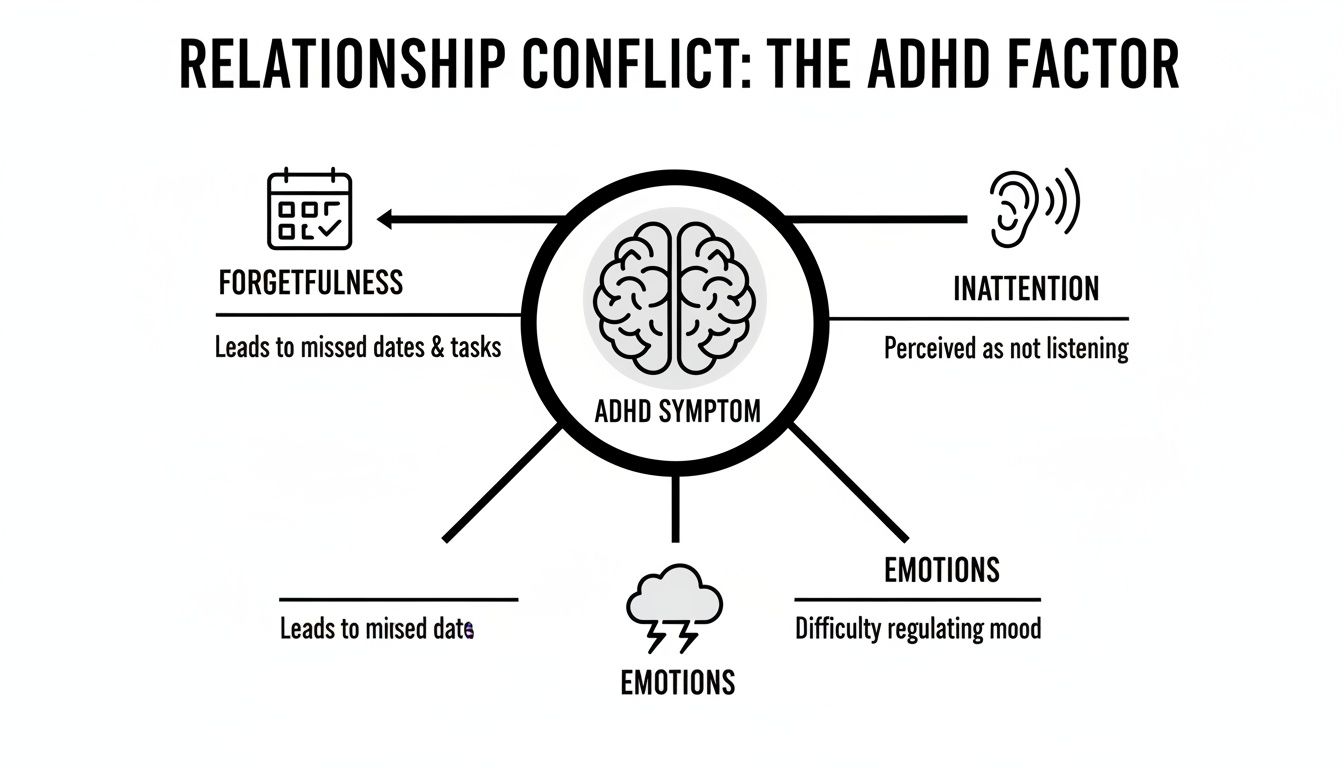
As you can see, what might look like separate problems—forgetfulness, emotional outbursts, and disorganisation—all stem from the same neurological roots, creating a tangled web of challenges for a couple to navigate.
The Autistic Dimension in Relationships
When autistic traits are part of the picture—a common scenario, as ADHD and Autism frequently co-occur—things can get even more complex. Autism influences social communication, sensory processing, and the need for routine in ways that can easily clash with a partner's expectations if they aren't understood.
For example, an autistic partner might communicate in a very direct, literal way that can come across as blunt or even unkind. They may not instinctively pick up on subtle social cues like tone of voice or body language, which can cause frequent misunderstandings.
What one partner sees as rigid or controlling behaviour—like needing to follow the exact same schedule every single day—is often a crucial coping mechanism for their autistic partner. Routine is what helps reduce anxiety and prevent the cognitive overload that comes from living in a world that often feels overwhelming.
Sensory sensitivities are another huge factor. An autistic person might find certain sounds, textures, or even a light touch to be physically uncomfortable or distressing. This can affect everything from what you can cook for dinner to how you can be physically intimate, requiring both partners to consciously adapt.
Getting to grips with these traits is the first, most critical step towards empathy. When you can see that your partner zoning out isn't a sign of disinterest but a lapse in attention, or that their need for a strict routine isn't inflexibility but a tool for self-regulation, you can start to shift the dynamic. You move away from blame and towards collaboration.
To better understand these nuances, you can explore the various ADHD symptoms in adults and see how they show up in real life. By finally acknowledging and respecting the unique wiring of each other's brains, you can build a new foundation for your relationship—one based on real understanding and mutual support.
The Hidden Toll on Neurodiverse Couples
The day-in, day-out cycle of misunderstandings and frustrations does more than just cause a bit of friction. When neurodivergent traits like ADHD and Autism go unmanaged, they can start to chip away at a couple’s emotional, mental, and financial wellbeing, creating a deep, hidden toll. This strain isn't just about who forgot to take the bins out; it slowly erodes the very foundation of the partnership.

So many of the common adhd problems with relationships are born from this building pressure. The neurotypical partner often starts to feel incredibly lonely and isolated, even when they’re in the same room. They can slip into the role of a project manager or even a parent, constantly trying to pre-empt problems, sending reminders, and cleaning up the fallout from forgotten tasks or impulsive choices.
This dynamic is a fast track to burnout. The sheer emotional labour of managing the relationship becomes exhausting and, eventually, feels completely unsustainable.
The Emotional Cost of Unmet Expectations
For the neurodivergent partner, the emotional cost is just as high, though it often looks different. They find themselves wrestling with intense feelings of shame, anxiety, and a sense of being fundamentally inadequate. They see the disappointment in their partner's eyes and internalise it, convinced they are failing no matter how hard they try. This is often magnified by co-occurring mental health conditions like depression or anxiety disorders, which are more common in adults with ADHD and Autism.
This internal battle can be crushing. It often leads to a constant, low-level hum of anxiety about making the next mistake. This cycle of shame can cause them to withdraw, which only creates more distance and reinforces the neurotypical partner’s feeling of being left to handle everything alone.
The emotional toll isn't one-sided; it's a painful feedback loop. One partner's burnout feeds the other's shame and anxiety, which in turn deepens the first partner's sense of isolation, creating a downward spiral that can feel impossible to escape.
This emotional weight has very real consequences. In the UK, untreated ADHD places a massive strain on relationships, with emotional dysregulation and interpersonal difficulties increasing the risk of divorce and social isolation. One analysis estimated that the healthcare costs from related conditions could reach between £1.33bn and £5.78bn over a decade, much of it driven by crisis management tied to these relational pressures and associated mental health struggles.
Financial Strain and Career Instability
On top of the emotional impact, there are often very real financial pressures that can rock a partnership. These challenges frequently spring directly from core neurodivergent traits.
- Impulsive Spending: When impulse control is a struggle, unplanned purchases can quickly lead to significant debt, creating enormous strain on the household budget and damaging trust.
- Career Instability: Difficulties with organisation, time management, and navigating workplace social dynamics can make it tough to hold down a steady job, leading to financial insecurity.
- The 'ADHD Tax': This is the term for all the extra costs that pile up due to symptoms—things like late fees on forgotten bills, paying to replace lost items, or relying on expensive convenience services to cope with executive dysfunction.
The cost of getting help can also be a major stressor. Private assessments, therapy for multiple conditions, and coaching are significant investments, adding another layer of financial pressure when things are already tight. It’s no surprise that money can become a primary source of conflict and a constant battleground.
It's so important to validate that these stressors are real. Recognising that the emotional burnout, mental health struggles, and financial worries are legitimate consequences of navigating a neurodiverse relationship is the first step toward making a change. It shows why seeking a formal diagnosis and building supportive systems isn't just about "managing symptoms."
Ultimately, it’s about protecting the long-term health, stability, and happiness of your partnership. A great starting point is understanding the depth of your emotional responses, and an emotional dysregulation test can offer valuable perspective on these patterns. By addressing these hidden tolls head-on, couples can begin to heal the deeper wounds and build a more resilient future together.
Actionable Strategies for a More Connected Partnership
Understanding why conflicts happen is one thing, but making real, lasting change means putting that knowledge into practice. This is where you and your partner can start building a new foundation, one based on teamwork and genuine support. The goal is to stop feeling like you're fighting against each other and start tackling the challenges of ADHD and Autism together, as a team.
These strategies aren't about 'fixing' one person. They're about creating a shared system that works for both of your brains. It’s about building a partnership that not only acknowledges but actively supports your individual needs, turning daily friction into opportunities for real connection.

Rewrite Your Communication Rules
So many adhd problems with relationships begin and end with communication breaking down. When one partner has ADHD or autistic traits, the usual ways of talking often fall flat because they don't account for differences in how information is processed, where attention goes, or how emotions are managed. The secret is to replace blame with clear, structured, and empathetic conversation.
A genuinely powerful technique is swapping "You always…" accusations for "I feel…" statements. It's a simple shift, but it can de-escalate a tense moment almost instantly. It moves the conversation away from attacking your partner’s character and towards expressing your own emotional experience—something that’s far easier for them to hear without getting defensive.
To help with this, we've put together some practical scripts for reframing common arguments. Think of them as conversation starters that can create a safer space for you both to feel heard.
Communication Scripts for Common Neurodiverse Conflicts
| Conflict Scenario | Instead of This Reaction… | Try This Approach… |
|---|---|---|
| A forgotten promise | "You never listen to me! I can't believe you forgot again." | "When the promise was forgotten, I felt hurt and unimportant. Can we figure out a system to help us remember important things together?" |
| Emotional outburst | "You're overreacting! Why are you always so dramatic?" | "I can see you're really upset right now. I want to understand what's going on, but I'm finding it hard when the energy is this intense. Can we take a 10-minute break and then try talking again calmly?" |
| Zoning out during a chat | "Are you even listening? You just don't care about what I have to say." | "I feel a bit disconnected right now. Could we find a time to talk without any distractions, maybe put our phones away, so I can have your full attention for a few minutes?" |
These small changes in wording can lead to massive shifts in understanding, turning a potential fight into a moment of collaboration.
Build a Brain-Friendly Home
Expecting a brain that struggles with executive functions to thrive in a disorganised home is like asking someone to read in the dark. It just won't work. You can slash daily friction by externalising support—in other words, using outside tools to do the heavy lifting of remembering, planning, and organising. This isn't about enabling; it's about being strategic.
A shared digital calendar is a brilliant place to start. Every appointment, bill deadline, and social plan goes into one place that you can both see. This immediately lifts the burden of being the sole 'keeper of the schedule' off one person's shoulders.
Another life-saver is the 'launch pad' by the front door. This is just a designated spot for keys, wallets, phones—anything you need to grab on your way out. This simple system fights the "out of sight, out of mind" trap and can save you from countless frantic morning searches. For an autistic partner, adding clear labels and consistent structure can further reduce mental load and anxiety.
Master Emotional Co-Regulation
Emotional dysregulation can make disagreements feel like they go from zero to one hundred in a heartbeat, leaving both partners feeling unsafe. Emotional co-regulation is simply the act of helping each other manage those intense feelings and get back to a state of calm. It's about being a safe harbour for your partner during an emotional storm, not another wave crashing over them.
When you notice your partner is getting overwhelmed, the goal is to de-escalate, not to engage in the fight. This could look like:
- Agreeing on a "pause" word: A neutral word you can both use to signal the need for a time-out without pointing fingers.
- Validating the feeling, not the behaviour: Saying, "I can see you're incredibly angry," acknowledges their emotion without necessarily agreeing with what sparked it.
- Taking a timed break: Agree to step away for 20 minutes to let your nervous systems settle before trying to solve the problem.
By learning to co-regulate, you're teaching both your brains that conflict doesn't have to be a threat. Over time, this builds a profound sense of security and trust, reinforcing the fact that you're a team, even when you disagree.
Divide and Conquer Together
Finally, it’s time to throw out the traditional rulebook for household chores. In a neurodiverse relationship, assigning tasks based on who is 'supposed' to do them is a recipe for resentment. A much smarter approach is to divide the work based on individual strengths and challenges.
Sit down together and make a complete list of all the household jobs. Then, go through it and be honest about which tasks feel energising and which feel utterly draining for each of you. The partner who finds it easy to hyperfocus on details might be perfect for managing the finances, while the one who needs to move their body might be better suited to gardening or walking the dog. An autistic partner might excel at and find comfort in repetitive, structured tasks.
This isn't about a perfect 50/50 split. It’s about creating a system that is effective and sustainable for your unique partnership. Exploring different strategies for coping with ADHD can give you even more ideas for structuring your life for success. When you both play to your strengths, you lower the stress for everyone and build a real sense of being in it together.
The Power of Professional Guidance and Diagnosis
While all the strategies we've covered can make a real difference, sometimes you hit a wall. There comes a point where good intentions and self-help guides just aren't enough to mend the deeper fractures. If you and your partner feel trapped in a repeating loop of conflict, exhaustion, and misunderstanding, it might be time to bring in a professional who understands ADHD, Autism, and co-occurring mental health conditions.
Taking that step isn’t an admission of failure. Think of it as a powerful move towards clarity—and towards solutions that actually stick.
Why a Diagnosis Can Change Everything
The idea of a formal assessment for adult ADHD or Autism can feel intimidating, but the impact can be life-altering. It provides a clear, evidence-based reason for the struggles you’ve faced for years. Finally, there's a name for the invisible force that’s been quietly creating chaos in your relationship.
This simple act of naming the problem depersonalises it. The focus shifts away from blaming each other for character flaws and moves towards understanding a neurological condition.
A proper assessment isn't just a quick checklist. It's a deep dive with a specialist psychiatrist who gets how neurodivergence shows up in adults, particularly within relationships. They’ll conduct detailed interviews and look back at your history to build a complete picture of what's going on, including screening for common mental health co-morbidities.
A formal diagnosis acts like a roadmap. It doesn't just label the problem; it illuminates the path forward, highlighting specific, targeted support options that are most likely to work for your unique brain wiring and relationship dynamic.
This clarity can feel like a massive weight has been lifted. For both partners, it can dissolve years of built-up resentment. Suddenly, the chronic lateness isn't a deliberate sign of disrespect. The need for quiet time alone isn't a personal rejection. It's a recognised trait of a condition that can be managed with the right tools and a bit of teamwork.
Finding the Right Path Forward
Once you have a diagnosis, a whole new world of tailored support opens up. For many people with ADHD, medication is a game-changer. It can help manage the core symptoms—like inattention and impulsivity—by turning down the constant 'noise' in the brain. This creates the mental breathing room needed for other strategies, like therapy, to really work.
Alongside medication, specialised therapy is invaluable. Seeing a couples counsellor who truly understands neurodiversity can give you a shared language to navigate your differences. They can help you both:
- Build empathy for what the world feels like from the other's perspective.
- Develop communication skills that bridge the gap between neurotypical and neurodivergent processing styles.
- Create practical, fair systems for managing the day-to-day running of the household.
In the UK, the toll of undiagnosed ADHD on relationships is significant. With an estimated 3-4% of adults having the condition, most go without a diagnosis. They face higher risks of divorce, social isolation, and constant conflict driven by symptoms of inattention and hyperactivity. As highlighted in official reports like the NHS England report of the independent ADHD taskforce, getting a formal diagnosis is a critical step in breaking this painful cycle.
Taking the Next Step
If you can start to see professional guidance as an investment in your relationship's future, it changes the entire dynamic. It’s about giving yourselves the best possible chance to build a partnership based on genuine understanding, not guesswork.
If this sounds like the path you need, exploring a formal adult ADHD diagnosis could provide the answers you’ve been searching for, helping you move forward together with confidence and hope.
Why You Might Need More Than Just a Diagnosis
Getting an ADHD diagnosis can be a huge moment of personal clarity. Suddenly, things click into place. But sometimes, the impact of ADHD goes beyond your own understanding or your relationship, creating serious challenges in legal or professional situations. This is especially true when co-occurring conditions like Autism or significant mental health issues are involved.
When the stakes are that high, you need more than a standard doctor's letter. You need a formal, in-depth psychiatric assessment that can hold up under intense scrutiny.
When a Medico-Legal Report Becomes Essential
Think of a medico-legal report as the most thorough, evidence-based document you can get. It's prepared by a specialist psychiatrist specifically to be used in legal settings, providing an impartial and detailed analysis of how a condition like ADHD or Autism affects a person's life and abilities.
This kind of expert report is absolutely critical in a few specific, high-stakes situations:
- Family Court Proceedings: In a divorce or child custody battle, a report can explain behaviours that could easily be misunderstood. It clarifies how issues with executive function, emotional regulation, or social communication differences might impact someone's parenting style or handling of finances, giving the court a complete and accurate picture.
- Employment Tribunals: If you're facing disciplinary action or dismissal because of performance issues tied to unmanaged ADHD symptoms, a report is powerful evidence. It can support a claim for disability discrimination or back up a request for reasonable adjustments at work.
- Court of Protection Matters: When there are questions about someone's ability to make their own financial or welfare decisions, a specialist report provides a clear, objective assessment of their cognitive functioning and the level of support they truly need.
In a legal fight, a court-compliant report from a specialist psychiatrist isn't just helpful—it's a game-changer. It turns personal struggles into objective evidence, making sure that life-altering decisions are based on facts, not on guesswork or prejudice.
Ultimately, an impartial and detailed report can be the one thing that protects your rights, secures the right support, and ensures a fair outcome. It’s about making sure your story is heard accurately when it counts the most.
A Few Common Questions About Neurodiverse Relationships
When you’re navigating a relationship where ADHD, Autism, or both are part of the picture, it's natural to have a lot of questions. Let’s tackle some of the most common ones that come up, building on what we've already covered.
My Partner Was Just Diagnosed With ADHD. What Can I Do Right Now?
Your most powerful first move is to get educated. Seriously. The more you learn about how ADHD actually works in an adult brain, the easier it becomes to separate the person from the symptoms. That shift from seeing their behaviour as a personal choice to understanding it as a neurological trait can transform the dynamic from one of frustration to one of teamwork. This includes learning about common co-occurring conditions like anxiety and Autism, which may also be part of their experience.
After that, open up a conversation – a genuinely curious, non-judgemental one. Ask your partner what this diagnosis means to them and how you can be a good ally. You don't have to fix everything at once. Just start small. Pick one single, practical strategy from this guide and agree to try it out together.
How Do We Know If It's ADHD Or If We’re Just Incompatible?
This is a really important question, and it's one that causes a lot of heartache. True incompatibility is usually about a fundamental mismatch in core values or life goals. If one of you wants to travel the world and the other wants to put down roots, or you have completely different views on family or money, that’s a compatibility problem.
But if you both share the same big-picture goals and genuinely love each other, yet you’re constantly trapped in the same draining cycles of misunderstanding, chaos, or feeling like one of you has become the 'parent', it’s a massive clue that neurodivergence is at play. The classic adhd problems with relationships are about disruptive patterns, not a fundamental clash of souls. A professional assessment that considers ADHD, Autism, and overall mental health is the only way to get a definitive answer.
Is Medication The Only Way To Fix Our ADHD-Related Problems?
Absolutely not. Medication can be an incredible tool, there's no doubt about it. For many, it dials down the core symptoms of inattention and impulsivity enough to create the breathing room needed to build better habits.
But it’s not a magic pill that fixes the relationship. Lasting change comes when both partners commit to learning new skills—in how you talk to each other, how you manage your home, and how you handle big emotions together. Think of medication as the tool that levels the playing field; the actual 'win' comes from the consistent, collaborative effort you put in through therapy, coaching, and daily practice. Therapy is also crucial for addressing any co-existing mental health issues that affect the relationship.
My Partner Also Has Autistic Traits. How Does That Change Things?
When you have autistic traits in the mix with ADHD, you're looking at another layer of neurological wiring. You might see a much stronger need for predictable routines, a communication style that’s incredibly direct and literal, or a heightened sensitivity to things like noise, bright lights, or even certain textures.
The key is to recognise that these aren't just quirks—they are deep-seated neurological needs. The playbook is similar: empathy, clear communication, and teamwork. But your strategies have to be adapted to honour both sets of traits.
For instance, that 'structured weekly check-in' we talked about becomes even more essential for avoiding miscommunication. And consciously creating a sensory-friendly home can do wonders for reducing everyone's stress levels, preventing a lot of conflict before it even starts. Understanding both conditions is vital for a harmonious partnership.
At Insight Diagnostics Global, we provide expert, CQC-regulated assessments for adults who suspect they may have ADHD, Autism, or other mental health conditions. Our specialist psychiatrists deliver clear diagnostic reports and create personalised treatment plans to help you and your partner build a stronger, more understanding future. Learn more about our services at https://insightdiagnostics.co.uk.