
ASD Level 2 is the diagnostic term for autistic individuals who need substantial support to navigate their day-to-day lives. It describes someone who has very noticeable difficulties with social communication and whose restricted or repetitive behaviours are clear to even a casual observer. It's important to remember this isn't about intelligence; it’s a way of describing the level of help a person needs to thrive, especially when dealing with the compounded challenges of co-occurring conditions like ADHD and their impact on mental health.
Decoding What ASD Level 2 Means for Adults
When you first encounter the term "ASD Level 2," it's easy to get tangled up in the clinical jargon. The best way to think of it isn't as a restrictive label, but as a practical guidepost that helps everyone understand an individual's specific support needs. It sits in the middle of the three support levels, between Level 1 (requiring support) and Level 3 (requiring very substantial support).
This framework comes from the DSM-5, the diagnostic manual used here in the UK. It classifies autism based on the level of support a person needs in two key areas. For Level 2, "requiring substantial support" means an adult faces marked challenges in social communication and in managing the impact of restrictive or repetitive behaviours. For context, research indicates that around 30–40% of autistic pupils also have a learning difficulty, which often corresponds with the kind of substantial support needed by those at Level 2.
A Human-First Perspective on Support
Looking past the clinical definition, "substantial support" really boils down to practical, real-world help. For an adult with ASD Level 2, initiating a simple conversation or interpreting body language can be incredibly difficult and mentally draining. Their reliance on routine might be so profound that even a minor, unexpected change—like a bus being late—could trigger significant distress, often leading to heightened anxiety.
This image helps to visualise where Level 2 fits into the bigger picture of the autism spectrum.
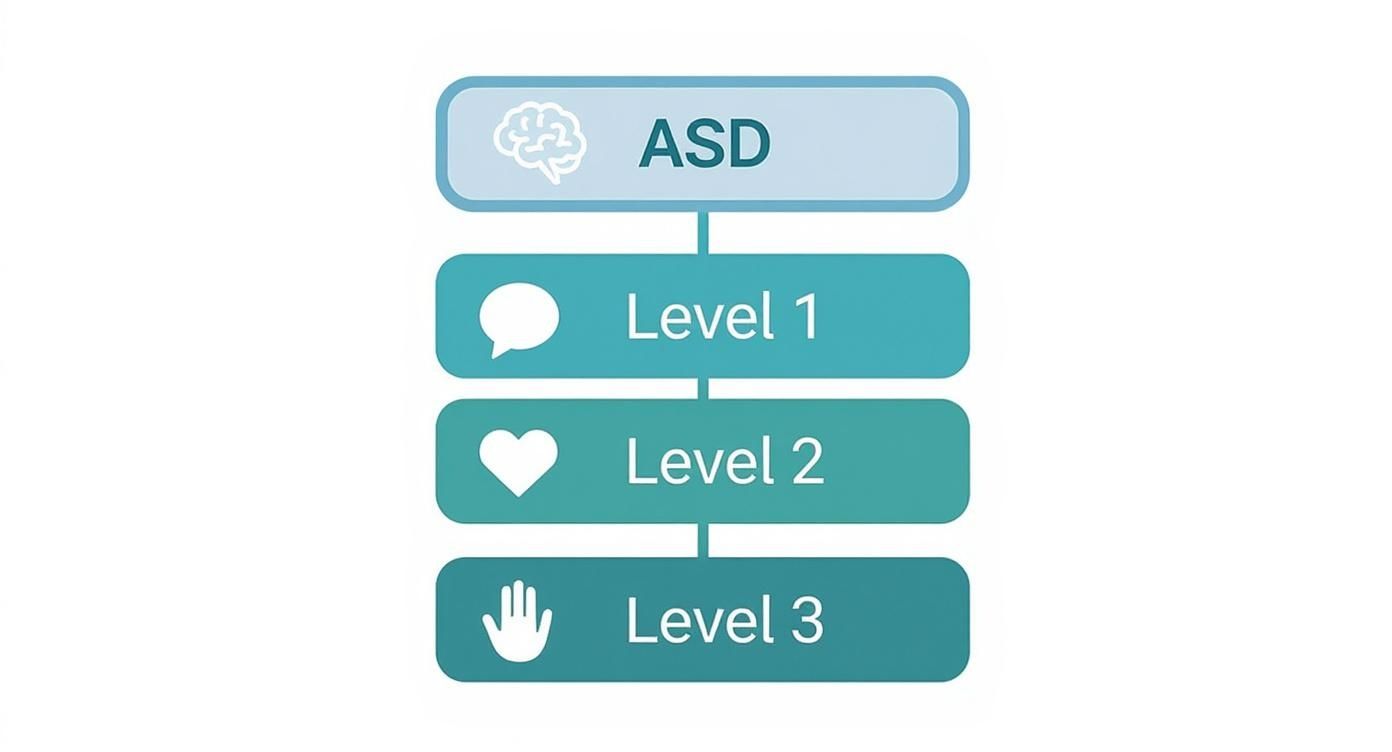
As the diagram shows, the levels represent a clear progression of support needs, placing Level 2 squarely in the middle.
To give a clearer sense of how these levels compare, here’s a quick breakdown.
ASD Support Levels At a Glance
| Support Level | Social Communication Needs | Restricted and Repetitive Behaviour Needs |
|---|---|---|
| Level 1 | Needs support. Difficulty initiating social interactions; odd or unsuccessful responses. | Needs support. Inflexibility interferes with functioning in one or more contexts. |
| Level 2 | Needs substantial support. Marked deficits in verbal and non-verbal social skills, even with support. | Needs substantial support. Inflexibility and repetitive behaviours are obvious to others and interfere with functioning. |
| Level 3 | Needs very substantial support. Severe deficits in social skills cause major impairments. Very limited social interaction. | Needs very substantial support. Extreme difficulty coping with change; behaviours markedly interfere with all areas of functioning. |
This table highlights why understanding the specific level is so crucial for providing the right kind of support.
The Overlap with ADHD and Mental Health
It's vital to recognise that many autistic people are not just autistic. It's very common for other conditions like ADHD, anxiety, and depression to co-occur, which can profoundly shape the experience of someone with ASD Level 2 and take a significant toll on their mental wellbeing.
For many, the executive function challenges that come with ADHD—like difficulties with planning, organising, and staying focused—can magnify the social and routine-based struggles of autism. This creates a unique neurotype where managing daily life demands an even greater amount of mental energy and external support, often leading to chronic stress and burnout.
This overlap often makes diagnosis more complex and demands a support plan that addresses every aspect of an individual's mental and neurodevelopmental needs. For a clearer picture of the differences, you can learn more about the characteristics of ASD Level 1 in our detailed guide. Understanding these distinctions is key to realising why a "one-size-fits-all" approach to autism support will never work.
What ASD Level 2 Looks Like in Daily Adult Life
Putting the clinical language aside, what does it actually feel like to be an adult with ASD Level 2? It’s more than a diagnosis; it’s a constant, lived reality where you're often out of step with the world around you, spending a huge amount of mental and emotional energy just to navigate a typical day, which frequently leads to anxiety and mental exhaustion.

For an adult needing substantial support, social interactions are seldom easy or natural. Every conversation can feel like a complex mental puzzle that needs to be solved in real-time—deciphering someone's tone, figuring out their body language, and then trying to craft the "right" thing to say in return. This level of constant analysis is incredibly draining and often leads to social burnout, a strong preference for being alone, and can be a major source of social anxiety.
The Complication of Co-Occurring ADHD
For many, the experience of ASD Level 2 is made even more complex by the presence of ADHD—a very common co-occurrence. When the core traits of autism collide with the executive function and emotional regulation challenges of ADHD, it creates a unique and often very intense internal experience that directly impacts mental health.
This combination can show up in a few key ways:
- Heightened Emotional Reactions: The emotional dysregulation common in ADHD can intensify an autistic meltdown or shutdown, especially when routines are broken, leading to feelings of being overwhelmed and out of control.
- A Constant Internal Tug-of-War: The autistic brain often craves rigid structure and predictability, which is in direct conflict with the ADHD brain's impulsivity and desire for novelty. This internal friction is a major source of stress.
- Severe Executive Function Strain: The difficulties with planning, starting tasks, and organising thoughts (classic ADHD traits) make it even harder to manage the sensory sensitivities and social demands that come with autism.
This internal battle is exhausting and can take a serious toll on mental health, often contributing to severe anxiety, depression, and low self-esteem. Understanding this dual diagnosis is vital, as many adults may only realise later in life why standard coping strategies have never seemed to fit. You can read more about the signs of undiagnosed autism in adults to see how these traits can appear.
Daily Routines and Close Relationships
An adult with ASD Level 2 doesn't just prefer routine—they often depend on it to function in a world that feels unpredictable and overwhelming. A seemingly minor change, like a last-minute cancellation or a detour on the way home, can be deeply distressing because it shatters the predictable framework that makes the day feel safe and manageable.
This deep-seated need for consistency isn't about being inflexible. It's a powerful self-regulation tool that helps manage sensory overload and reduces the mental effort of making countless small decisions throughout the day. When that structure breaks, it can feel like a total system failure, triggering significant anxiety.
This can be a difficult thing for partners, family, and friends to fully grasp. A spontaneous suggestion for a day trip, meant to be fun, might be received with visible anxiety instead of excitement. Likewise, the person's special interests, which provide them with immense joy and a sense of mastery, might seem obsessive or all-consuming to others. Building strong relationships relies on immense patience, direct communication, and a genuine willingness on both sides to adapt and learn a different way of experiencing the world.
Navigating the Adult Autism Diagnosis Process in the UK
For many adults, starting the process for a potential autism diagnosis can feel like a daunting and confusing journey. It all kicks off with a really important first step: a chat with your GP. Think of this appointment as the gateway to getting a specialist assessment, so a little bit of preparation can make all the difference.

Your GP’s job isn’t to diagnose you on the spot. Instead, they’re there to listen to your concerns and, if appropriate, refer you to a specialised diagnostic service. To give them a clear picture, it’s a good idea to bring a list of the specific challenges you’re dealing with day-to-day. This isn't just about feeling a bit socially awkward; it’s about the very real impact these struggles have on your work, relationships, and overall mental health. Mentioning struggles with focus, organisation (ADHD traits), and feelings of anxiety or depression can provide crucial context.
Preparing for Your Specialist Assessment
Once that referral is in place, you’ll move on to a detailed assessment with clinicians who are experts in adult neurodevelopmental conditions. What they're looking for is a consistent, lifelong pattern of traits – not just something that’s cropped up recently. They'll dig into your history with detailed questions about your childhood and how you're coping now.
To get ready for this, gathering some 'evidence' beforehand is incredibly useful. This might sound formal, but it’s really just about collecting things that tell your story.
- Old School Reports: Teachers' comments about you being quiet, having very specific interests, or finding it hard to make friends can be goldmines of information.
- Personal Journals or Diaries: If you've kept them, these offer a raw, real-time account of your inner world, anxieties, and the challenges you've faced over the years.
- Input from a Parent or Older Sibling: Someone who remembers you as a young child can provide invaluable insight into your early development that you might not remember yourself.
This collection of information helps the clinical team piece together how your autistic traits have shown up throughout your life. For a more detailed walkthrough, our guide on diagnosing autism in adults in the UK breaks down the process even further.
Why Were So Many Adults Overlooked?
It's a question we hear a lot: why were so many adults, particularly those who now need substantial support, missed when they were children? A huge part of the answer lies in how much our understanding of autism has evolved, especially when it comes to how it presents alongside conditions like ADHD. Not too long ago, a quiet child who was doing okay academically was often simply left to get on with it, while their internal struggles with anxiety went unnoticed.
The diagnostic criteria of the past were often much narrower, focused on a more stereotypical and often male presentation of autism. This meant that many individuals, particularly those who were adept at "masking" their difficulties, were left without a diagnosis and the mental health support they desperately needed.
This historical blind spot is so important to understand. A UK population study that tracked diagnoses between 1998 and 2018 uncovered a jaw-dropping 787% increase in recorded autism diagnoses. This surge doesn't mean more people are suddenly becoming autistic; it’s a clear sign that better awareness and more accurate diagnostic tools are finally helping us see the people who were always there, but were effectively invisible.
Managing Daily Life and Workplace Challenges
Receiving an ASD Level 2 diagnosis as an adult can feel like finding a missing piece of a puzzle. It finally gives a name to a lifetime of challenges. But the diagnosis itself doesn't change the day-to-day reality. The real work begins now: turning that new understanding into practical, real-world strategies for home, work, and importantly, for protecting your mental health.
For many, the modern workplace is a minefield of difficulties. Think about the typical open-plan office—it’s a sensory nightmare. The constant buzz of conversation, harsh fluorescent lights, and the endless stream of unpredictable social pop-ins can trigger profound sensory overload. It’s not just distracting; it can make concentration impossible and pave a fast track to burnout and severe anxiety.
The Impact of Co-Occurring ADHD
Throw co-occurring ADHD into the mix, and these hurdles can feel insurmountable. ADHD brings its own set of executive functioning challenges, like struggling to plan, start tasks, or manage time. These are amplified by the autistic need for routine and predictability, creating a perfect storm for workplace stress.
Imagine being handed a big, vaguely defined project. The ADHD brain struggles to find a starting point, while the autistic brain feels intense distress from the lack of a clear, predictable plan. The result? A kind of mental paralysis, where overwhelming anxiety shuts everything down.
This isn't about being unwilling or incapable. It's a fundamental mismatch between how a person's brain is wired and the unspoken expectations of a neurotypical workplace. Real success hinges on closing that gap with the right support, which in turn protects mental wellbeing.
Clear communication helps everyone, not just neurodivergent individuals. Implementing general strategies to improve overall workplace communication can create a more predictable and less ambiguous environment, which is a huge benefit for an employee with ASD Level 2.
Practical Adjustments That Make a Difference
Often, it's the simplest changes that have the biggest impact. These aren't about getting special treatment; they're about providing the necessary tools for someone to do their job effectively and manage their mental energy.
- Sensory Management: A pair of noise-cancelling headphones or access to a quiet corner can be a game-changer, instantly reducing sensory strain and anxiety.
- Clear Communication: Putting instructions and feedback in writing, like in an email, removes the stress of trying to interpret tone and non-verbal cues in the moment.
- Structured Tasks: Breaking a massive project into a checklist of small, concrete steps with clear deadlines makes it feel manageable and helps overcome executive functioning roadblocks common in both ASD and ADHD.
- Flexible Working: Offering flexible hours or the option to work from home can help an employee manage their energy and sidestep the sensory assault and social demands of the office.
These principles apply just as well to life at home. A visual schedule for chores, predictable daily routines, and a designated quiet space to decompress can make a huge difference in managing a household and preserving mental health.
Finding the Right Support and Therapeutic Options
Receiving an ASD Level 2 diagnosis isn't the end of the road; it's the beginning of a new one. It’s the point where you can start accessing a whole ecosystem of support designed to help you thrive. The aim isn't to change the core of who you are, but to give you the right tools to build on your strengths, enhance your quality of life, and protect your mental health in a world that often isn't set up for neurodivergent individuals.
This support is multifaceted, covering everything from practical financial help to highly specialised therapies.

Here in the UK, an ASD Level 2 diagnosis often means you’re eligible for practical support like the Personal Independence Payment (PIP). This benefit is designed to help with the extra living costs that come with a long-term health condition or disability, acknowledging the very real financial impact that ASD Level 2 challenges can have.
Building Skills and Reducing Stress
Beyond day-to-day assistance, targeted therapies are fundamental for developing coping mechanisms and building crucial life skills. A person-centred approach is non-negotiable here, making sure any therapy is shaped around your specific needs, particularly if you're also navigating co-occurring conditions like ADHD, anxiety, or depression.
A number of key therapies can make a world of difference:
- Occupational Therapy (OT): An OT is fantastic for helping you manage sensory sensitivities and develop practical strategies for daily life. This could be anything from organising your home environment to creating effective routines that work for your AuDHD brain.
- Speech and Language Therapy (SLT): Don't let the name fool you; SLT for adults goes far beyond just speech. It can be incredibly helpful for improving your understanding of social cues, navigating the nuances of conversation, and finding better ways to express your thoughts and needs, reducing social anxiety.
- Adapted Cognitive Behavioural Therapy (CBT): Standard CBT can feel a bit too rigid for many autistic people. Neurodivergent-affirming CBT, however, is modified to align with an autistic communication style, making it a powerful tool for managing the anxiety and depression that so often go hand-in-hand with ASD and ADHD.
The most effective support is always neurodivergent-affirming. It starts from a place of acceptance, focusing on building skills and providing accommodations rather than trying to force an individual to fit into a neurotypical mould and damage their mental health.
To bring these options together, here’s a quick overview of what’s available.
Key Support Options for Adults with ASD Level 2
| Support Type | Primary Focus Area | Potential Benefits |
|---|---|---|
| Occupational Therapy (OT) | Daily living skills, sensory processing, and workplace adjustments. | Improves ability to manage daily tasks, reduces sensory overload, and helps create supportive environments. |
| Speech & Language Therapy | Social communication, understanding non-verbal cues, and self-advocacy. | Enhances conversational skills, reduces social anxiety, and improves relationship-building. |
| Adapted CBT | Managing co-occurring anxiety, depression, and emotional regulation. | Develops coping strategies for stress, challenges negative thought patterns, and improves overall mental health. |
| Peer Support Groups | Community connection, shared experiences, and emotional validation. | Reduces feelings of isolation, builds confidence, and provides a space for authentic self-expression. |
| Career Coaching | Professional development, identifying suitable career paths, and navigating workplace challenges. | Capitalises on autistic strengths, helps secure and maintain meaningful employment, and supports career growth. |
Each of these avenues offers a unique way to build a more manageable and fulfilling life, and they often work best when used in combination.
Mental Health and Community Support
Managing co-occurring conditions is a vital piece of the puzzle. For those also dealing with ADHD, finding integrated strategies is key. While medication is an option for ADHD, many people find that other approaches are just as important. Learning how to manage ADHD without medication can provide valuable techniques for improving focus and executive function that beautifully complement autism support.
Finally, never underestimate the power of community. Connecting with other autistic and AuDHD adults in peer support groups, whether online or in person, creates a space where you don't have to constantly explain yourself. That shared understanding is incredibly validating, chipping away at feelings of isolation and giving your mental wellbeing a real boost.
For long-term professional growth and navigating career changes, exploring the benefits of hiring a career coach can also be a game-changer, offering specialised guidance that plays to your unique strengths.
Your Questions Answered: Living with ASD Level 2
As we wrap up, it's completely normal to have some practical questions buzzing around. Let's tackle some of the most common ones head-on, focusing on what ASD Level 2 actually looks like in everyday life, especially regarding mental health and co-occurring ADHD.
Can an Adult with ASD Level 2 Live on Their Own?
Yes, absolutely—but "independence" might look a bit different from what you'd expect. Many adults with Level 2 autism live independently, but it's rarely a solo act. Success nearly always hinges on having substantial support systems in place.
This could mean a support worker who visits a few times a week to help with budgeting and life admin, an occupational therapist to build practical skills for running a household, or a solid network of family and friends who can step in when needed. The goal isn't to do everything alone; it's about having the right support network to live a life you control and enjoy. For an autistic adult who also has ADHD, this support becomes even more crucial for tackling the executive function hurdles that make planning and organisation so tough.
How Does Level 2 Actually Differ from Level 1 and 3?
The easiest way to think about it is by focusing on the level of support someone needs to navigate their day.
- Level 1: Requires support. Social challenges and repetitive behaviours are present, but with the right strategies, they might not significantly derail daily life.
- Level 2: Requires substantial support. The difficulties with social communication and inflexible behaviours are obvious to casual observers and create significant obstacles in day-to-day functioning.
- Level 3: Requires very substantial support. Communication is severely impacted, and restrictive behaviours interfere with almost every aspect of life.
Level 2 is that middle ground where the need for structured, regular assistance is clear and non-negotiable for a person to function well and maintain their mental wellbeing.
What's the Connection Between ASD Level 2 and Mental Health?
The link is incredibly strong and, frankly, unavoidable for many. Adults with ASD Level 2 face a much higher risk of co-occurring mental health conditions, with anxiety and depression leading the pack. This isn't a personal failing; it’s the logical outcome of constantly trying to function in a world not designed for your brain.
Think about the sheer exhaustion of it all—constantly decoding social cues, battling sensory overload, and masking your true self just to get by. That chronic stress takes a massive toll on your mental wellbeing. If ADHD is in the mix, the added weight of emotional dysregulation and executive dysfunction makes that vulnerability even greater.
This is why effective mental health support must be neurodivergent-affirming. It has to address these unique stressors, not just put a plaster on the anxiety or depression that stems from a lifetime of unmet needs.
How Can I Properly Support a Friend or Partner with ASD Level 2?
If you want to be a genuine ally, your best tools are clarity, patience, and acceptance. Vague plans like "let's hang out this weekend" can be incredibly stressful. Instead, offer concrete details: say where you're going, what time, for how long, and who else will be there. Respect their need for routine and understand that they'll need downtime to decompress after social events, which is crucial for their mental health.
But the most important thing? Just listen. Ask them directly what they need and how they prefer to communicate. Don't guess. Your willingness to adapt and respect their boundaries—especially around sensory needs and energy levels—is the most meaningful and powerful support you can possibly give.
At Insight Diagnostics Global, we provide consultant-led, CQC-regulated online assessments for adults seeking clarity on Autism and ADHD. If you are ready to understand your unique neurotype and explore tailored support options, you can learn more about our services.