
When you get a prescription, one of the first questions is always, "How much is this going to cost?" With ADHD medication, especially when co-occurring conditions like autism are part of the picture, there's no single answer. The final price you pay hinges almost entirely on whether you go through the NHS or a private clinic.
While an NHS prescription in England has a standard, fixed fee, going private means you're covering not just the medication itself, but specialist consultation fees too. For those navigating both ADHD and autism, these costs can add up quickly.
Understanding the Financial Landscape of Neurodivergent Treatment
Getting your head around the costs of ADHD treatment can feel like trying to solve a puzzle, especially when autism is also a factor. The figure you see at the pharmacy counter is just one piece of a much bigger financial picture, with everything from national medication supplies to your chosen healthcare route influencing the final bill.
For many, figuring out this financial side is the first real step toward sustainable, long-term care that addresses the complexities of a dual diagnosis.
Your journey will almost certainly start with a choice between two very different routes: the publicly funded NHS or an independent private clinic. Each comes with a completely different set of costs and considerations, particularly for those with both ADHD and autism.
-
The NHS Pathway: This is the slow-and-steady route. You'll likely face long waiting times, but your direct medication costs will be much, much lower. Once you have a diagnosis and a prescription, you just pay the standard NHS prescription charge for each item.
-
The Private Pathway: This is the fast track. It gets you quicker access to specialists and treatment, but you'll pay for that speed. You’re responsible for the cost of the initial assessment, any follow-up appointments, and the full market price of the medicines themselves.
This difference is critical. While the NHS is far more affordable in the long run, the wait for an initial assessment can be a major hurdle, especially when complex needs are involved. It’s why so many people start with private services to get the support they need right away, often with the goal of moving their care over to the NHS later on. Our guide on ADHD medication for adults in the UK explores the treatment options available through both pathways in more detail.
The demand for ADHD treatment in the UK has exploded. Over the last decade, prescribing rates have shot up, which has had a big impact on NHS budgets. In the 2022/2023 financial year alone, the NHS spent a staggering £104 million on CNS stimulants and other ADHD medicines.
Methylphenidate, one of the most common treatments, made up half of that bill at £52 million, while lisdexamfetamine prescriptions cost the NHS another £33 million. The Pharmaceutical Journal's special report provides a deeper dive into these rising figures.
Navigating treatment costs requires a clear understanding of both immediate prescription prices and the long-term expenses tied to consultations and monitoring, especially when managing co-occurring conditions like autism. Planning for both is essential for a smooth and sustainable treatment journey.
Before we dive deeper, here is a quick overview of how the two pathways compare financially.
NHS vs Private ADHD Medication Costs At a Glance
This table breaks down the typical cost structures you can expect when getting ADHD medication through the NHS versus a private healthcare provider in the UK.
| Aspect | NHS Pathway | Private Pathway |
|---|---|---|
| Initial Assessment | Free (but with long waiting lists) | £600 – £1,500+ (can be higher for dual diagnosis) |
| Medication Titration | Included in standard care | £150 – £500+ per consultation |
| Prescription Cost | Standard NHS fee (e.g., £9.65 in England) | Full market price (e.g., £60 – £150+ per month) |
| Follow-Up Reviews | Free | £100 – £300+ per appointment |
| Access Speed | Slow (months to years) | Fast (weeks) |
| Shared Care | Goal is to establish a shared care agreement for NHS prescribing | Often the long-term goal to reduce costs |
As you can see, the initial speed and convenience of private care come with significant financial commitments.
Ultimately, whether you’re just starting to think about a diagnosis for ADHD, autism, or both, or you're already managing a prescription, understanding what drives these costs is vital. This guide will break it all down, helping you make informed financial decisions about your neurodivergent care.
Breaking Down Private ADHD Medication Prices
Going private for your ADHD treatment means you get to sidestep the long waiting lists, but it also means you’ll be covering the full cost of your medication. Getting a handle on these prices is absolutely key for budgeting, especially when you're just starting out on a treatment path that may need to account for co-occurring autism.
Let's get straight to it: the price of private ADHD medication isn't fixed. It can swing quite a bit depending on the specific drug, the dose you need, and even which pharmacy you use. Unlike the standard NHS prescription charge, private prescriptions are based on the actual market price of the medicine, which could be anywhere from under £50 to well over £150 for a month's supply.
This price difference is most obvious during what's called the titration phase. This is the critical early stage where your specialist works with you to fine-tune your medication and dosage. Because your prescription might change from one month to the next—especially when balancing the needs of both ADHD and autism—your costs can feel a bit unpredictable at first until you find what works for you.
Estimating Your Monthly Medication Expenses
To help you get a clearer idea of what to expect, let's look at the typical private costs for the most common ADHD medications in the UK. Just remember, these are ballpark figures – your actual costs could be different.
Here’s a quick overview of what you might expect to pay for a one-month supply when prescribed privately.
Estimated Monthly Private Prescription Costs for Common ADHD Medications
| Medication Type (Brand Example) | Typical Private Monthly Cost Range (UK) | Key Considerations |
|---|---|---|
| Methylphenidate (e.g., Ritalin, Concerta) | £40 – £90 | Costs are generally lower due to the availability of generic versions. The price varies between immediate-release and extended-release formulas. |
| Lisdexamfetamine (Elvanse) | £80 – £150 | As a long-patented, branded medication, it sits at the higher end of the price scale. Costs are heavily dependent on dosage strength. |
| Atomoxetine (Strattera) | £50 – £100 | A non-stimulant option with available generic versions, making it a more moderately priced choice. Sometimes preferred for individuals with co-occurring anxiety, which can be common in autism. |
| Guanfacine (Intuniv) | £70 – £120 | Another non-stimulant, often prescribed when stimulants aren't a good fit. Pricing falls into a mid-to-high range. |
This table gives you a practical look at the numbers, showing how the choice of medication directly impacts your monthly budget.
As you can see from the infographic below, the NHS also spends a huge amount on methylphenidate and lisdexamfetamine. This really shows just how central these two stimulants are to treating ADHD, whether you're going through the NHS or a private clinic.
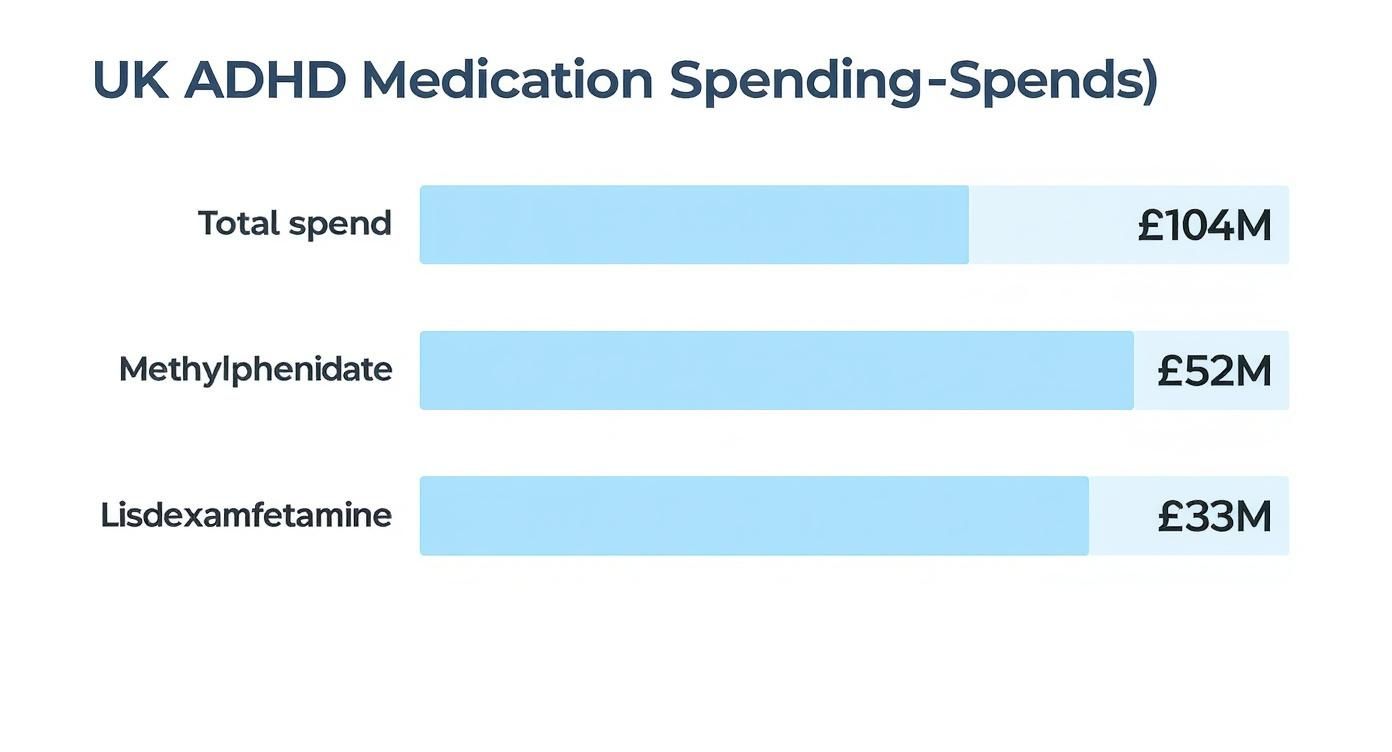
The sheer scale of spending on these two drugs highlights their importance in modern ADHD care pathways across the UK.
Brand Name vs. Generic Versions: A Key Cost Factor
One of the biggest things affecting your medication bill is whether you get a brand-name drug or its generic equivalent. It’s a bit like buying Nurofen versus the supermarket's own-brand ibuprofen – they both have the same active ingredient and do the same job, but the price difference can be massive.
A generic drug is essentially a copy of a brand-name drug. It has the same active ingredient, dosage, safety, strength, and works in the same way. This means it provides the exact same clinical benefits as the brand-name version it’s based on.
When a new drug is first developed, the pharmaceutical company gets a patent, giving them the exclusive right to sell it. This allows them to set a higher price to recover their huge research and development costs. But once that patent runs out, other companies are free to make and sell generic versions.
That new competition on the market is what causes the price to drop, often quite dramatically. For instance, generic methylphenidate is significantly cheaper than its original brand-name version, Ritalin. Choosing a generic is probably the single most effective way to reduce your monthly medication costs without sacrificing the quality of your treatment.
Don’t hesitate to ask your specialist or pharmacist if a generic alternative is available. It’s a simple conversation that could save you a serious amount of money over the long term and is a crucial part of managing your ADHD treatment costs.
NHS vs. Private: Which Prescription Route is Right for You?
When it comes to getting ADHD medication, you're faced with a big decision right from the start. The path you choose – whether it's through the NHS or a private clinic – will have a massive impact on your wallet and your waiting time, particularly if you're seeking support for both ADHD and autism.
Think of it like this: you have two main roads to the same destination. One is a slow, scenic route that’s very light on the pocket. The other is a high-speed motorway that gets you there in record time, but it comes with some hefty tolls. Understanding how each one works is the first step to getting your treatment costs under control.
The Standard NHS Route
For most people in the UK, the journey starts at their local GP surgery. If your doctor suspects you might have ADHD, they'll refer you to a specialist for a proper assessment. And this is where you hit the first, and biggest, hurdle: the waiting lists. It’s no secret that NHS waiting times for ADHD and autism assessments can be painfully long, often stretching into months, and in some areas, even years.
But if you can weather the wait, the financial side of things gets much easier. Once you have a diagnosis and a prescription, you’ll only pay the standard NHS prescription charge. In England, this is a fixed, predictable fee for each medication, which keeps the monthly cost of ADHD medications manageable and affordable. The real cost here isn't money, but time.
The Private Healthcare Alternative
The long NHS waits are what lead many people to explore private healthcare. It's a much faster option, with appointments often available within a few weeks. That speed, however, comes at a significant financial cost. When you go private, you're paying for everything out of your own pocket.
Here’s a quick breakdown of what to expect:
- The Initial Assessment: This is the first major expense, often running from several hundred to over a thousand pounds, and potentially more for a combined ADHD and autism assessment.
- Titration and Follow-ups: You'll also pay for every appointment with your specialist as they help you find the right medication and the perfect dose.
- The Full Cost of Medication: This is where the ongoing costs really bite. A private prescription means you pay the full market price for the drug, which can easily be £80, £100, or even £150+ every month.
These costs add up fast, making the private route a serious financial commitment.
The trade-off is simple: the NHS offers affordability but demands patience. The private sector delivers speed but demands a significant financial investment.
The End Goal: A Shared Care Agreement
For most people who start their journey privately, the long-term plan is to get the best of both worlds. The goal is to move their care over to the NHS to bring those monthly costs down. This is done through something called a Shared Care Agreement (SCA).
An SCA is basically a formal handover from your private specialist to your NHS GP. Once your medication and dosage are stable, the specialist asks your GP to take over the prescribing and monitoring. If the GP agrees, you switch from paying for expensive private prescriptions to the standard, affordable NHS charge. It’s a game-changer for your budget.
But, and it’s a big but, an SCA isn't a given. Your GP can say no. They might not feel confident monitoring a specialist medication, or their local health authority might have policies against it. It's absolutely crucial to talk to your GP before you go private to see if they'd be open to an SCA down the line. To get a better handle on this, it's worth reading up on how to get private prescriptions online and how they can eventually link up with the NHS. Getting this right can make a world of difference to the long-term cost of your ADHD medication.
The Hidden Costs: What Really Drives Up Your Medication Bill

The price on the pharmacy invoice is just the tip of the iceberg. The reality is, the straightforward cost of the pills themselves is often overshadowed by a host of other complex, and frankly, unpredictable factors. These hidden variables can seriously inflate the overall expense of your ADHD treatment, so knowing what they are is key to budgeting for your care without nasty surprises.
One of the biggest headaches in recent years has been the widespread national medication shortages. When go-to medications like Elvanse or Concerta suddenly aren't available, it sends ripples through the system. You might be forced to switch to a different drug that's either pricier or simply doesn't work as well for you. This not only pushes up the direct cost of ADHD medications but can also mean forking out for extra specialist consultations to manage the changeover.
This supply chain chaos adds a layer of financial stress and uncertainty that can be incredibly difficult to plan for month after month.
The NHS Postcode Lottery
Another huge variable is the infamous ‘postcode lottery’ that plagues parts of the NHS. The level of funding and priorities set by your local Integrated Care Board (ICB) can directly dictate your access to care and, in turn, how much you end up paying out of pocket.
These regional differences affect everything. You might face longer waiting lists for a diagnosis in one area, while in another, the local GPs might be hesitant to enter into a Shared Care Agreement. This agreement is a crucial step for lowering long-term costs, as it allows your GP to take over prescribing. But if local policies or a lack of specialist support make them reluctant, you're left holding the bill for private prescriptions for far longer than you planned.
This isn't just anecdotal. While ADHD medication use has climbed across England, the growth is anything but even. Research shows that between April 2019 and March 2024, prescription rates jumped from 25.17 to 41.55 items per 1,000 people. London saw the biggest annual leap at 28%, while the Northeast and Yorkshire had a much slower rise of 13%. To make matters worse, the shortages that started in September 2023 meant a staggering 92% of UK patients faced interruptions, with only 8% getting their medication consistently.
The Complexity of Co-occurring Conditions
For many people, ADHD doesn't travel alone. It often shows up alongside other conditions, with Autism Spectrum Disorder (ASD) being one of the most common. When you're managing both ADHD and autism, the treatment path becomes far more specialised—and that usually means more expensive.
Diagnosing and treating co-occurring conditions demands a much higher level of clinical expertise. A psychiatrist has to carefully untangle how the symptoms of each condition interact and devise a medication plan that tackles ADHD without making autism-related traits, like anxiety or sensory issues, worse.
This added complexity often translates to:
- More In-depth Assessments: The diagnostic process has to be rigorous enough to accurately separate the overlapping symptoms of ADHD and autism.
- Specialist Consultations: You'll likely need more frequent or longer follow-up appointments to check how the medication is affecting both conditions.
- A Slower Titration Process: Finding the right medication and dosage can be a much more delicate and drawn-out process, extending the more costly initial phase of treatment.
These extra steps mean the overall financial commitment can be significantly higher. It's important to factor in the diagnostic costs from the start; getting a clear picture of the private autism assessment cost is a crucial first step if you suspect a dual diagnosis.
When managing co-occurring conditions like ADHD and autism, the cost of care extends beyond just medication. It encompasses the specialist expertise required to create a truly personalised and effective treatment plan that respects the nuances of both neurotypes.
Ultimately, being aware of these hidden factors—from supply chain nightmares and regional NHS quirks to the clinical demands of co-occurring conditions—is your best defence. It allows you to anticipate the hurdles, budget more realistically, and protect yourself from financial shocks on your treatment journey.
Budgeting for Titration and Monitoring Services
Finding the right ADHD treatment isn’t a one-and-done deal. It’s not about just getting a prescription; it's about getting the right prescription at the right dose for you. This vital, initial stage of treatment is called titration, and it’s often one of the biggest upfront costs you’ll face in private ADHD care, especially when managing both ADHD and autism.
Think of it like tuning an instrument. Your specialist won't just hand you a medication and hope for the best. Instead, they'll start you on a very low dose, then carefully adjust it over several weeks or even months. All the while, they’ll be checking in to see how you're feeling—what's working, and what isn't. This methodical approach is the safest and most effective way to find a treatment that works for you in the long run.
Why Titration is a Necessary Investment
In the private sector, this "tuning" process isn't a single appointment; it's a package of care. Every consultation, every tweak to your prescription, and every follow-up chat has a cost attached. It’s easy to see how these fees can add up, often landing somewhere between £150 and £500 for a full titration package.
It might feel like a hefty price tag, but paying for a proper, expert-led titration is one of the smartest investments you can make. It helps you avoid nasty side effects and stops you from wasting time and money on a medication or dose that simply isn't a good fit. Getting this part right from the start seriously boosts your chances of treatment working out for you.
This process is even more important if you have other conditions, like autism. Your specialist needs to tread carefully, finding a medication that helps with ADHD symptoms without making things like sensory sensitivities or anxiety worse. That's a delicate balancing act that absolutely requires close, expert monitoring.
A properly managed titration isn’t just another cost—it's an investment in your well-being. Getting it right sets the foundation for a stable, effective treatment plan and makes it much easier to move over to NHS care later on.
The Financial Bridge to a Shared Care Agreement
For most people starting their ADHD journey privately, the main goal is to eventually get a Shared Care Agreement (SCA) with their NHS GP. This agreement is what allows you to switch from paying for expensive private prescriptions to the standard, much cheaper NHS prescription fee.
Here's the thing, though: a GP will only agree to an SCA if they can see you're on a stable, well-managed, and effective treatment plan. This is where a professional titration service proves its worth.
A well-documented titration process gives your GP everything they need to feel confident, including:
- A Clear Rationale: Detailed notes that explain exactly why a certain medication and dose were chosen for you.
- Evidence of Stability: A clear record showing that your symptoms are under control and you aren’t struggling with side effects.
- Confidence in the Plan: Reassurance that an expert has carefully managed the tricky initial phase, which lowers the perceived risk for the GP.
By paying for a proper titration service, you’re basically building a rock-solid case for your GP to take over your prescribing. You're showing them that all the specialist work has been done, making it a simple and low-risk decision for them. That initial spend can lead to huge long-term savings, making it a crucial part of budgeting for the overall cost of ADHD medications.
Practical Ways to Reduce Your Medication Expenses

Navigating the ongoing cost of ADHD medications can feel overwhelming, but you're not powerless. With a few smart strategies, it's entirely possible to bring those monthly expenses down and make your treatment plan far more sustainable. Think of this as your financial toolkit—full of actionable steps you can take to make your care more affordable.
For anyone on an NHS pathway, one of the best tools in your arsenal is the Prescription Prepayment Certificate (PPC). It's essentially a season ticket for your prescriptions. Instead of paying the standard charge every time you pick up a medication, you pay one fixed fee for a set period, and it covers every single NHS prescription you need.
If you find yourself needing two or more prescribed items each month, a PPC is a no-brainer. It will almost certainly save you a significant amount of money over a year, capping your spending and adding some much-needed predictability to your budget.
Strategic Conversations with Your Healthcare Team
Your doctor and pharmacist are your best allies in this. A frank conversation about your financial situation can open up several avenues for savings, often without changing the effectiveness of your care at all. It might feel awkward, but don't hesitate to bring it up at your next appointment.
A great starting point is simply asking if a generic version of your medication is available. As we’ve covered, generics have the exact same active ingredient and do the same job as the brand-name versions, but they often cost a fraction of the price. This one switch can be the single biggest cost-saver.
Another practical tip is to ask about the length of your prescriptions.
- Ask About 3-Month Prescriptions: Once your dose is stable and working well, your GP might be happy to write a prescription for a 90-day supply. This means fewer trips to the pharmacy and, more importantly, fewer dispensing fees to pay throughout the year.
- Discuss Your Financial Concerns: Be open with your specialist or GP. They’re often aware of local assistance programmes or can suggest alternative medications that are kinder to your wallet, which is especially important when navigating the complexities of co-occurring ADHD and autism.
Being proactive is key. Your healthcare providers want to find a sustainable treatment plan that works for you, both clinically and financially. A simple conversation can lead to significant savings.
Finally, don't forget to shop around. Just like with private prescriptions, pharmacy dispensing fees and even stock levels can differ from one chemist to the next. A few quick phone calls to local pharmacies might uncover a cheaper option or one that reliably has your medication in stock, saving you the stress and potential extra costs of dealing with supply shortages. By combining these approaches, you can build a solid plan for managing the financial side of your ADHD treatment.
Your Questions Answered: ADHD Medication Costs
Getting to grips with the financial side of ADHD treatment can feel overwhelming, so let's clear up some of the most common questions. Here are straightforward answers to help you understand the costs involved in getting ADHD medication in the UK.
Can I Get ADHD Medication Without a Formal Diagnosis?
In the UK, that's a firm no. Medications like methylphenidate and lisdexamfetamine are controlled drugs for a reason.
You can only get a prescription from a qualified specialist—such as a psychiatrist or a specialist nurse—and only after a complete diagnostic assessment for ADHD. Your GP can't start this treatment on their own; they need a formal diagnosis and a specialist's green light first.
How Much Does a Private ADHD Assessment Cost?
For an adult in the UK, a private ADHD assessment will typically set you back somewhere between £500 and £1,500. If you are seeking a combined assessment for both ADHD and autism, the cost is likely to be higher.
What you pay will depend on the clinic, the expert you see, and even where you live. It's really important to remember this fee is just for the assessment itself. It won't cover the ongoing cost of ADHD medications, the crucial titration period, or any follow-up appointments you'll need.
Think of the assessment fee as the starting line. It's the first step on the private treatment path, so planning for the ongoing costs of medication and monitoring from day one is essential.
Why Won't My GP Agree to a Shared Care Agreement?
It can be frustrating when a GP declines a Shared Care Agreement (SCA), but they usually have their reasons. They might not feel confident they have the specialist knowledge to monitor the medication safely, or the private provider’s plan might not quite match local NHS guidelines, especially if the treatment plan is complex due to co-occurring conditions like autism.
Sometimes, it simply comes down to local healthcare funding policies. The best thing you can do is keep the lines of communication open with both your GP and your private specialist to work through any issues and find a way forward.
Are There Cost Differences for Child vs Adult ADHD Medication?
The price tag on the medication itself is tied to the specific drug and dosage, not whether the patient is a child or an adult.
That said, the total cost of treatment can vary. Paediatric specialists might have different consultation fees, and some medication formulas are licensed only for children. This can shape what’s prescribed and how easily it's available, which can indirectly nudge the overall costs up or down. Treatment for children with both ADHD and autism often requires more specialist input, which can also influence the total cost of care.
At Insight Diagnostics Global, we believe in clear, upfront pricing for our CQC-regulated ADHD assessments, medication titration, and ongoing monitoring to help you plan your finances with confidence. Find out more about our consultant-led services.