

For many people in the UK, getting an adult autism diagnosis is a journey they’re starting for the first time, often after a lifetime of feeling out of step with the world around them without knowing why. The process itself is a formal assessment with a qualified clinician – either through the NHS or a private provider – to see if you meet the clinical criteria for Autism Spectrum Disorder (ASD). For many, that clarity is the first real step towards self-understanding, improving their mental health, and getting the right kind of support.
Why Are So Many Adults Seeking an Autism Diagnosis Now?
Ever felt like you're performing in your own life, carefully reading from a script everyone else seems to know by heart? That's a daily reality for a lot of adults in the UK, and it’s a big reason why many are now exploring an autism diagnosis later in life. This isn't some new trend; it’s the result of a massive shift in our collective understanding of neurodiversity.
People are finally starting to connect the dots between lifelong challenges—be it with their mental health, relationships, or career—and the possibility that their brain is simply wired differently. That constant, draining effort of trying to fit into a neurotypical world finally has a potential name, and getting a diagnosis can feel like a powerful act of self-discovery and a vital step for mental wellbeing.
The Heavy Weight of Lifelong Masking
One of the biggest reasons for late diagnosis comes down to a concept called masking. Think of it as spending every waking moment consciously translating your natural way of being into behaviours that are seen as socially acceptable. This is masking—the relentless, exhausting effort to hide or camouflage autistic traits just to blend in.
This is a particularly common experience for women and older generations, who grew up when autism was seen through a very narrow and often inaccurate lens. From a young age, they learned to mimic social cues, force eye contact that felt intensely uncomfortable, and suppress the repetitive movements (stimming) that actually helped them regulate. This constant performance takes a huge toll on mental health, often leading to burnout, anxiety, and depression.
The Overlap with ADHD and Mental Health
The path to an autism diagnosis is rarely a straight line; it often criss-crosses with other conditions, particularly ADHD and mental health struggles. A significant number of autistic people also have Attention-Deficit/Hyperactivity Disorder (ADHD), and this overlap can make self-understanding tricky. Traits like intense, single-minded focus (hyperfocus) could be part of either, as could difficulties with executive function and emotional regulation.
As a result, it’s quite common for an adult seeking an assessment for one condition to discover they have traits of both. Living with undiagnosed autism, with or without co-occurring ADHD, has a serious impact on mental wellbeing, often showing up as:
- Chronic Anxiety: The constant stress of navigating unpredictable social environments and managing sensory overload.
- Recurrent Depression: A deep sense of isolation from feeling fundamentally misunderstood or "broken".
- Burnout: The sheer exhaustion from the mental energy spent on masking and social processing.
Putting a finger on these challenges can be the first step. If this is sounding familiar, you might find it helpful to explore the common 8 signs of undiagnosed autism in adults for more clarity.
The Hidden Crisis of Undiagnosed Adults
The scale of undiagnosed autism, particularly among middle-aged and older adults, is a significant public health issue here in the UK. Countless individuals have gone through life without any formal recognition or support, which has had a profound impact on their quality of life and mental health.
One landmark review brought this into sharp focus, revealing that a staggering 89% to 97% of autistic adults aged 40 and over are likely undiagnosed. This points to a huge population that has missed out on the right services, contributing to higher rates of both mental and physical health problems. To truly grasp the scale of the issue, you can read the full findings on undiagnosed older adults.
Choosing Your Path: NHS vs Private Assessments
If you’re considering an adult autism diagnosis in the UK, you’re essentially looking at two main roads: the NHS path and the private route. Both can lead you to the same destination—a formal assessment—but the journey, the time it takes, and the cost involved are dramatically different. Getting to grips with these differences is the best first step you can take.
For most people, the journey starts with a trip to their local GP to ask for an NHS referral. This route won't cost you a penny, but it does demand a good deal of patience. You’ll need to clearly explain why you think you might be autistic, and it's a really good idea to go prepared with a list of traits and lifelong experiences that have led you to this point, including any mental health history.
If your GP agrees that an assessment is the right next step, they’ll refer you to your local adult autism service. Unfortunately, this is where the brakes often get slammed on.
Navigating the NHS Waiting Lists
The hard reality of the NHS pathway is the waiting time. It’s long. In fact, it’s exceptionally long. The system is simply overwhelmed by the number of adults seeking a diagnosis, leaving hundreds of thousands of people stuck in limbo. This long wait can be incredibly tough on your mental health, often making the very anxiety and stress that led you to seek answers even worse.
Many people who reach this point started with a simple question: ‘Why?’. It’s a question that often sparks a deep dive into your own mind, trying to make sense of your experiences before finally reaching a moment of clarity.
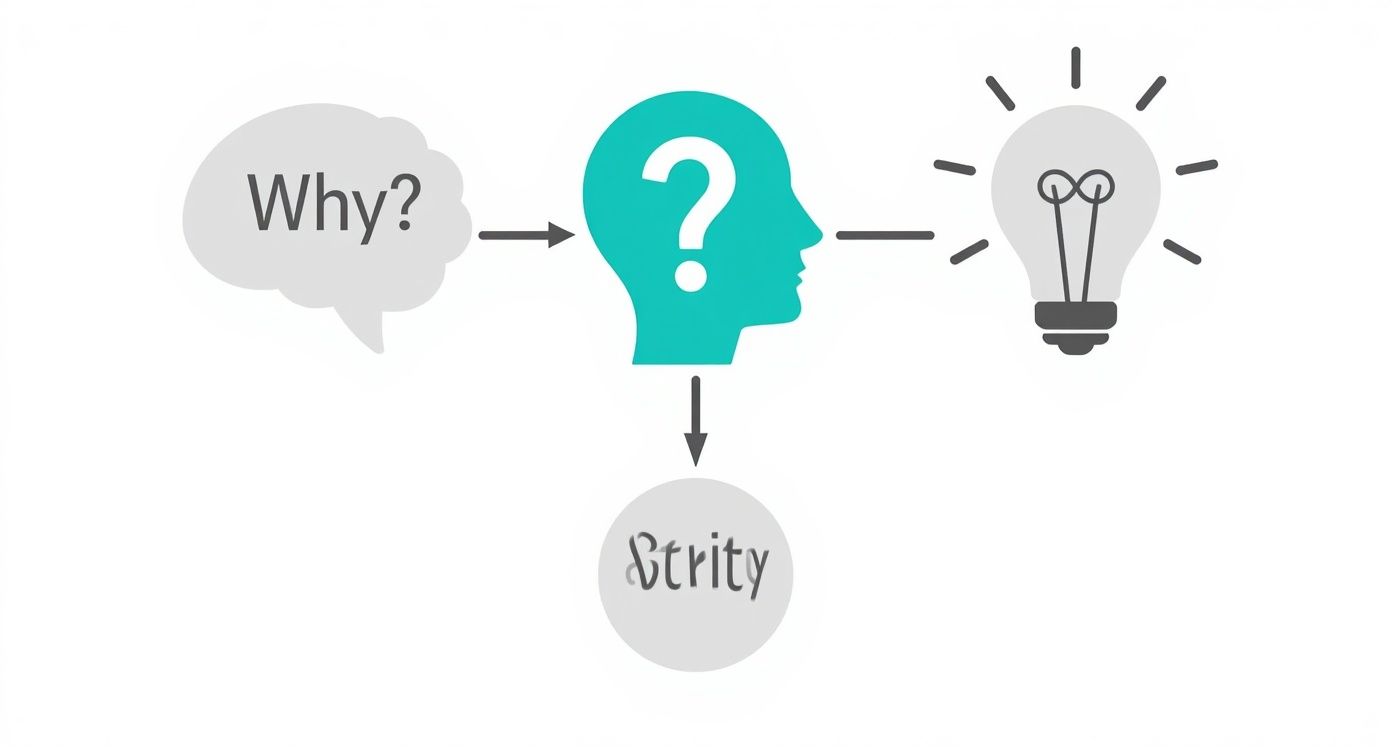
This image really captures that internal journey well—moving from that initial uncertainty towards a clearer sense of self, which a formal diagnosis can help solidify.
Sadly, the waiting times for autism assessments in England have hit crisis point. Right now, there are over 236,000 people on the waiting list. To make matters worse, nearly nine out of ten of them have been waiting for more than the 13 weeks recommended by NICE guidelines. With the average wait now stretching to over 17 months, going private has become a necessary choice for many who just can't wait that long for answers that could transform their mental health.
Exploring the Private Assessment Route
For those who need clarity sooner, the private pathway is a much faster alternative. Going private means you can refer yourself directly to a specialist clinic, cutting out the need for a GP referral and skipping those long NHS queues entirely. The biggest draw here is speed; you can often get an appointment in a matter of weeks, not years.
A major plus for the private route is getting to choose a provider who really specialises in adult diagnosis, especially if you suspect you might also have a co-occurring condition like ADHD. Many private clinics offer combined Autism and ADHD assessments, which is a far more efficient and joined-up way of understanding how these neurotypes interact and impact your mental health.
Of course, the main hurdle is the cost. It’s a significant financial commitment. It’s absolutely vital to do your homework and choose a reputable, CQC-regulated provider that follows NICE guidelines. This ensures your final report will be robust and widely recognised. For a full walkthrough of what’s involved, our guide on how to get tested for autism breaks down the entire process.
Comparing NHS and Private Autism Assessment Pathways
So, which path is right for you? It really comes down to your personal situation—your finances, how urgently you need a diagnosis, and what you need from the process. To help you see things a bit more clearly, here’s a straightforward comparison.
| Feature | NHS Pathway | Private Pathway |
|---|---|---|
| Cost | Free at the point of service. | Typically costs between £1,500 and £3,000. |
| Wait Times | Extremely long, often 1-3 years or more. | Much shorter, often a few weeks to a few months. |
| Referral Process | Requires a GP referral to a local NHS trust. | Self-referral is usually possible, direct to the clinic. |
| Choice of Clinician | You are assigned to the local service; no choice. | You can research and choose your own specialist. |
| Combined Assessments | May require separate referrals for Autism and ADHD. | Often offers integrated assessments for both conditions. |
| Report Recognition | Universally recognised by all UK public services. | Recognised by employers/education; NHS acceptance varies by trust. |
Ultimately, neither path is perfect. The NHS offers a free, gold-standard service but at the cost of a very long, often distressing wait that can worsen mental health. The private route provides speed and choice but requires a substantial financial investment. Weighing these pros and cons carefully will help you decide on the best way forward for you.
What Really Happens During an Adult Autism Assessment?
The thought of an adult autism assessment can be pretty nerve-wracking. Let's be honest, it's a big step. But knowing what’s coming can make all the difference. It’s not a test you can pass or fail; think of it more as a guided conversation—a deep dive into your entire life story, designed to understand how your brain is wired.
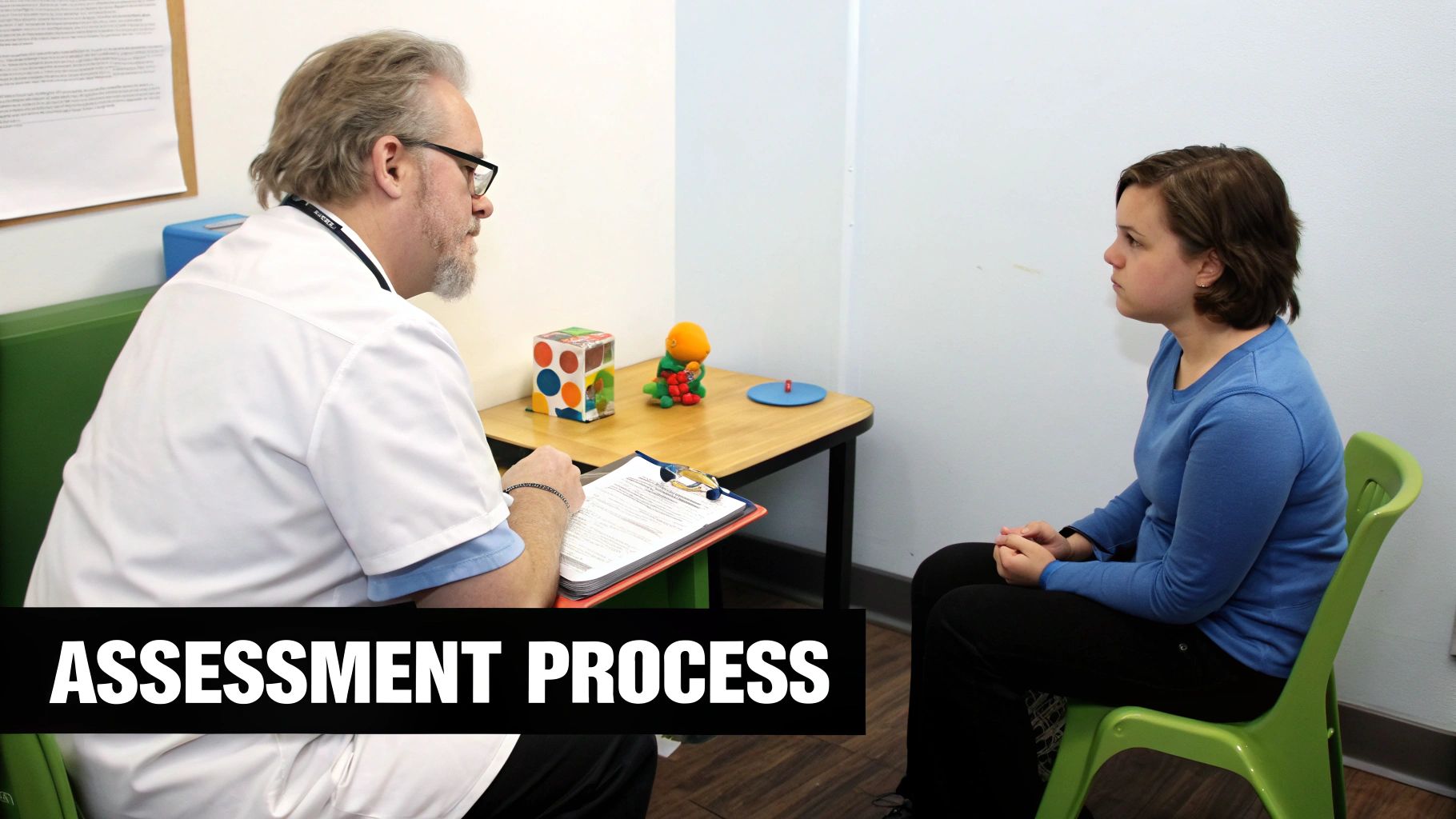
This isn't an exam. It’s a collaborative effort between you and a specialist who is trying to see the world through your eyes. They use established clinical frameworks for diagnosing autism in adults in the UK, making the whole process thorough, consistent, and respectful. The real aim here is clarity.
The Clinical Framework: DSM-5 and ICD-11
Clinicians in the UK don't just go on gut feeling. They rely on internationally recognised diagnostic manuals to guide their assessments. You’ll hear two main ones mentioned: the DSM-5 (Diagnostic and Statistical Manual of Mental Disorders, 5th Edition) and the ICD-11 (International Classification of Diseases, 11th Revision).
These manuals aren't just rigid checklists. They provide the structured criteria that clinicians use to look for patterns of autistic traits consistently, over your whole life.
They're essentially looking for evidence across two core areas:
- Social Communication and Interaction: This isn't just about being shy. It covers your lifelong experiences with reading social cues, making and keeping friends, and using non-verbal communication like eye contact or body language.
- Restricted and Repetitive Behaviours: This domain includes everything from deep, passionate special interests and a powerful need for routine, to repetitive physical movements (stimming) and sensory sensitivities—like being overwhelmed by bright lights or certain sounds.
The clinician’s job is to connect the dots between your lived experience and these official criteria. If you want to get into the nitty-gritty of how this works in practice, understanding what a private autism assessment for adults entails can shed more light on the process.
The Key Stages of an Assessment
A proper adult autism assessment is a multi-stage process, with each step building on the last to create a complete picture. It often kicks off long before you meet the clinician.
-
Pre-Assessment Questionnaires: You’ll almost certainly be sent some detailed forms to fill out first. These gather crucial background information about your childhood, developmental milestones, current struggles, and your mental health history. It's your first chance to get your thoughts down on paper.
-
The In-Depth Clinical Interview: This is the heart of the assessment. You'll sit down (often for several hours) for a structured chat with the clinician. They’ll guide you through your life story, from your earliest memories to school, work, and relationships, asking very specific questions to see how your experiences map onto the diagnostic criteria.
-
Observational Tools (like the ADOS-2): For some assessments, especially those done in person, clinicians might use a tool like the Autism Diagnostic Observation Schedule (ADOS-2). This involves a set of activities and prompts designed to see your social communication and interaction styles in action, right there in the room.
An assessment is a 'neurobiography'—a comprehensive story of your brain's unique journey. It’s not about finding deficits, but about understanding a different and valid way of processing the world.
Spotting Co-occurring Conditions
A thorough assessment doesn’t stop at autism. A good clinician is trained to look for co-occurring conditions, as understanding the full picture is crucial for accurate diagnosis and effective support. This is vital when dealing with conditions that have overlapping traits.
- ADHD: Executive function struggles, emotional dysregulation, and hyperfocus can show up in both autism and ADHD. A skilled clinician knows how to tease these apart and understand how they interact.
- Anxiety and Depression: It's incredibly common for autistic adults to experience anxiety or depression, often as a direct result of the exhaustion from masking and navigating a neurotypical world. The assessment will explore whether these are separate issues or secondary to being autistic.
- Other Conditions: A good assessment will also screen for conditions like dyspraxia, dyslexia, or trauma-related disorders which can co-occur or present with similar traits.
By carefully considering these overlaps, the assessor builds a complete profile of who you are. This ensures that any support plan they recommend is truly tailored to you, addressing your whole wellbeing, not just one part of it.
Getting Ready for Your Assessment
Heading into an autism assessment can feel daunting, but a bit of preparation goes a long way. This isn't about passing a test; it's about helping the clinician understand the real you. The more you can show them, the clearer the picture becomes, and the more accurate the outcome will be.
Think of it as building a case for yourself. You're the expert on your own life, and your job is to gather the evidence that shows the consistent patterns you've lived with. This helps the assessor see that the challenges and traits you experience aren't new—they've been part of your story all along.
What Evidence Should You Gather?
Before you even step into the clinic, start pulling together information that paints a full picture of your life. Concrete examples from childhood are particularly powerful.
Old school reports can be a goldmine. You're looking for comments from teachers like, "very bright but struggles with focus," "finds group work difficult," or "often lost in their own world." These observations can be early signposts of autistic or ADHD traits.
Work appraisals or performance reviews can also be telling. Do they consistently mention difficulties with vague instructions, office politics, or a strong preference for working alone on structured tasks? These are useful clues.
Don’t overlook personal items. Old diaries, letters, or even home videos can offer unfiltered glimpses into how you've always navigated the world, what your interests were, and how you interacted with others. When you're thinking back, you might find using journaling prompts for self-reflection helps to organise your memories and feelings.
Here’s a quick checklist of things to look for:
- School Reports: Focus on comments about social skills, concentration, behaviour, and how you handled unstructured time.
- Work Appraisals: Note feedback on communication style, teamwork, task management, and focus.
- Personal Journals or Diaries: These offer a direct window into your inner world and mental health struggles over the years.
- Input from Someone Who Knows You Well: If possible, ask a parent, older sibling, or a long-term partner for their perspective. They often remember things about your childhood that you don’t.
How to Talk About Your Experiences
The next step is to get your thoughts in order. It’s completely normal to feel flustered or go blank during an assessment, so having notes to refer to can be a real lifeline.
Try to frame your experiences around the core areas of the diagnostic criteria for both autism and potentially ADHD. For each one, come up with specific, real-life examples.
- Social Communication: How do you really find conversations? Do you feel like you're constantly running a social calculator in your head, trying to figure out rules that everyone else seems to know instinctively?
- Sensory Sensitivities: Be specific about how sensory input affects you. Do fluorescent lights buzz and give you a headache? Does the texture of a certain food make you physically recoil? Does a light touch feel unbearable?
- Your Relationship with Routine: How important is routine to you? What happens to your day—and your mood—when plans change at the last minute?
- Intense Interests & Hyperfocus: Explain your special interests and how you engage with them. Do you also experience hyperfocus, where you lose all track of time when absorbed in a task?
- Mental Health Impact: Be ready to discuss your history with anxiety, depression, or burnout. Explain how you think these relate to your potential neurodivergence.
Your diagnostic report is more than just a yes-or-no answer. It's a detailed manual for understanding your own brain. It explains the 'what' and 'why' behind your experiences, giving you a solid foundation for getting the right support.
What to Expect in Your Diagnostic Report
After the assessment process is complete, you’ll receive a comprehensive report. It can look like a lot to take in, but understanding its layout makes it much easier to digest. The report will walk you through the entire process, explaining what information was considered and how the clinician reached their conclusion.
It will usually be broken down into a few key sections:
- Background Information: A summary of your personal story—your developmental history, medical background, and mental health journey.
- Assessment Process: This part details which clinical tools, interviews, and questionnaires were used.
- Clinical Formulation: Here, the clinician pulls all the evidence together and explains how your lifelong experiences do (or don't) fit the diagnostic criteria for autism and any other considered conditions.
- Conclusion and Diagnosis: This gives the final outcome. It will explicitly mention any co-occurring conditions that have been identified, such as ADHD, anxiety, or dyspraxia.
- Recommendations: This is the "what next" part. It should provide practical, actionable steps for support, which might include therapy, suggestions for workplace adjustments, or strategies for managing ADHD traits.
If the report concludes that you are not autistic, it can feel incredibly disappointing. A well-written report, however, will still be valuable. It should clearly explain the reasoning and offer alternative explanations for your experiences, pointing you towards support that might be a better fit.
Life After Diagnosis: Finding Support and Moving Forward
Getting an autism diagnosis isn't the end of the road; it's more like being handed the right map for the first time. Suddenly, years of experiences and mental health struggles start to make sense, and you can begin navigating your life with a much deeper understanding and kindness towards yourself. This newfound clarity is the key to unlocking support that might have felt out of reach before.
For many, the diagnosis brings a wave of conflicting emotions. There's often a profound sense of relief—a validation that explains so much. But it’s also quite normal to feel a sense of grief for the struggles you endured without knowing why. Both reactions are completely valid and part of the process.
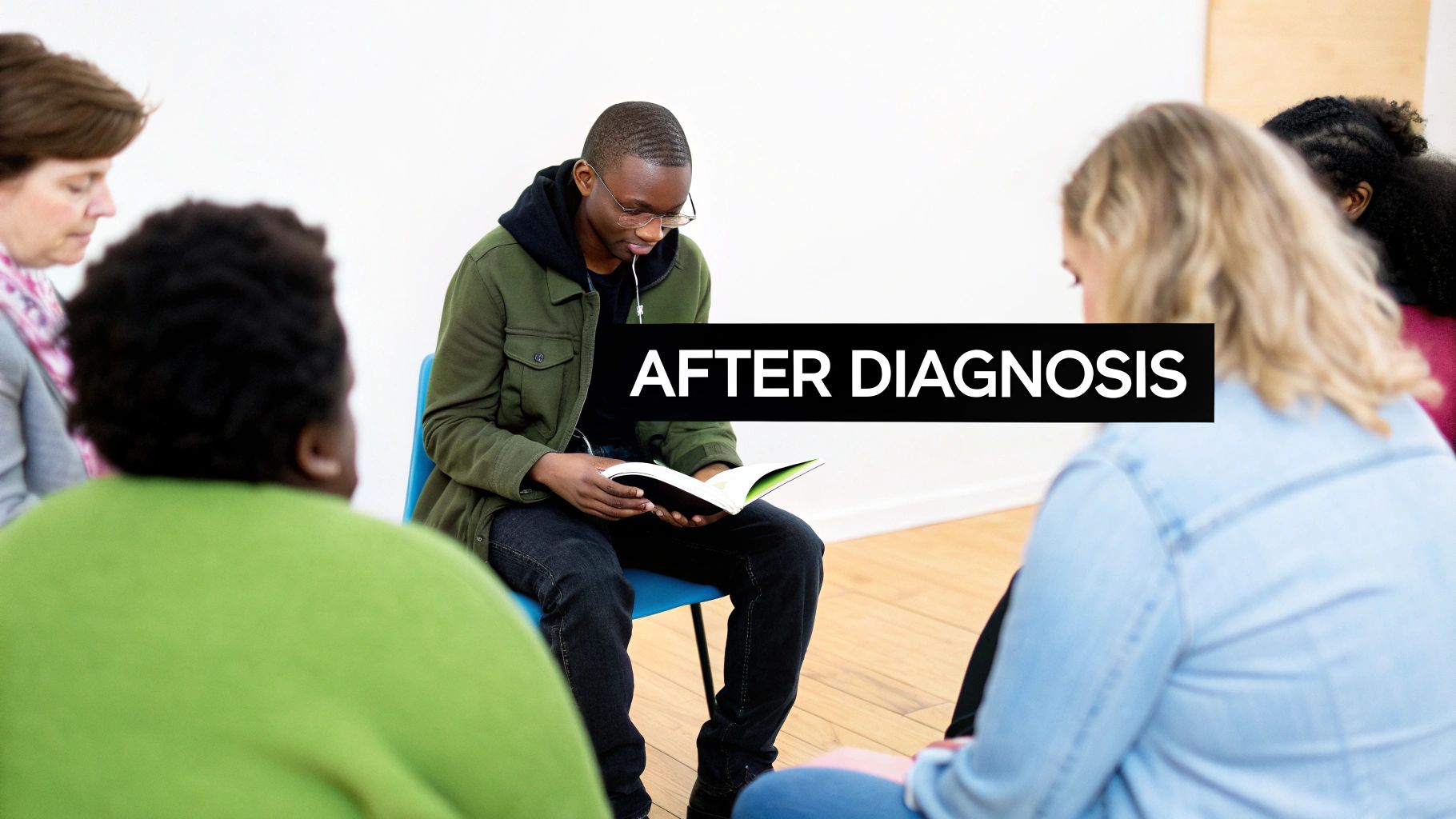
This is why finding the right kind of support is so critical during this period. The diagnosis doesn't change who you are, but it can completely reshape how you see yourself and what you need to improve your mental health and thrive.
Accessing Mental Health and Peer Support
Your mental health journey often takes a new turn after a diagnosis. With a formal report in hand, you can seek out therapists and counsellors who genuinely specialise in working with autistic adults and those with ADHD. They can help you unpack the exhaustion of lifelong masking and develop neuro-affirming ways to manage common co-occurring conditions like anxiety or depression.
Just as important is connecting with other autistic people. Peer support groups, whether online or down the road, provide a space where you don’t have to translate your own experiences. There’s an incredible power in sharing with others who just ‘get it’, helping to dissolve feelings of isolation and build a real sense of community.
A diagnosis gives you the language to describe your experience. Support gives you the community to share it with. It's the difference between knowing the name of a place and finally feeling like you've come home.
If you have a dual diagnosis of Autism and ADHD, finding practical life strategies becomes key. Many neurodivergent people find structure incredibly helpful, so exploring things like specific time blocking techniques can make a real difference in daily life.
Disclosing at Work and Getting Adjustments
One of the most immediate, practical benefits of a formal diagnosis is the legal protection it offers at work. Under the UK’s Equality Act 2010, autism (and ADHD) is a protected characteristic. This means your employer has a legal duty to make reasonable adjustments to support you.
Of course, you’re under no obligation to tell your employer. But if you want to access that support, disclosure is the first step.
Common workplace adjustments can include:
- Environmental Changes: Moving to a quieter desk or being allowed to wear noise-cancelling headphones to manage sensory input.
- Communication Adjustments: Asking for important instructions to be put in writing rather than given verbally.
- Flexible Working: Shifting your start and finish times to avoid the sensory assault of a rush-hour commute.
- Task Management Support: Using software or getting support to break down large projects into smaller steps.
Starting that conversation can feel daunting. If you need a hand navigating these challenges, our article on workplace stress management strategies offers some solid advice.
Unlocking Practical and Financial Support
A formal diagnosis is often the key that unlocks other forms of help. It can significantly strengthen applications for benefits like Personal Independence Payment (PIP), which is there to help with the extra costs that come with a long-term health condition or disability.
The gap between the number of autistic people and those with a formal diagnosis is staggering. A 2023 study suggested that as many as 500,000 adults aged 20-49 in England alone could be autistic but undiagnosed. This really highlights just how many people might be missing out on vital support simply because they haven't been through the diagnostic process.
Your Questions About Adult Autism Diagnosis Answered
Getting your head around an adult autism assessment in the UK can feel overwhelming. It’s a journey that often starts with a lot of uncertainty and a deep desire for answers. In this final section, I’ll tackle some of the most common questions people have, giving you straightforward, practical advice to help you feel more confident as you move forward.
Can I Be Assessed for Both Autism and ADHD at the Same Time?
Yes, you can, and it’s often a very good idea. Many private clinics in the UK now offer combined neurodevelopmental assessments. There's a strong clinical reason for this: Autism and ADHD very often co-occur, and their traits can overlap in ways that make it tricky to get a clear picture without looking at them together. A combined assessment allows a clinician to understand how your unique neurotype presents as a whole.
For instance, is that intense focus on a project an autistic special interest, ADHD hyperfocus, or a combination of both? A skilled clinician in an integrated assessment can carefully unpick these nuances, providing a more accurate and useful diagnosis for your mental health.
Going through the NHS, on the other hand, can be a different story. You might be told you need separate referrals for each condition, which can unfortunately mean much longer, more fragmented waiting times. If you think you have traits of both, state this clearly when you speak to your GP or a private clinic to ensure you get the right kind of assessment.
Will an Autism Diagnosis Affect My Job or Driving Licence?
This is a big worry for many people, and it’s completely understandable. The good news is that your rights are legally protected here in the UK. Autism is considered a protected characteristic under the Equality Act 2010, which means it’s illegal for you to be discriminated against at work because of your diagnosis.
You are under no legal obligation to tell your employer. However, if you want to ask for "reasonable adjustments" – things like a quieter place to work or having instructions given to you in writing – you will need to disclose it. Think of disclosure as the key that unlocks that support.
As for driving, you only have to inform the DVLA if your autism, or a co-occurring condition like ADHD that affects attention, genuinely impairs your ability to drive safely. For the vast majority of autistic adults, this isn't an issue. If you do have specific concerns about how your traits might affect you behind the wheel, it's best to have a chat with your assessing clinician.
A diagnosis isn't a label that holds you back; it's a tool that can empower you. It gives you the language and the legal framework to ask for what you need to thrive, whether that’s at work, at home, or in the car.
What Happens if the Assessment Says I’m Not Autistic?
It can be incredibly disheartening to go through the whole process, only to be told you aren’t autistic, especially if you felt sure that was the answer. It’s really important to give yourself the space to process those feelings. But a properly conducted, thorough assessment should never leave you with nothing.
A high-quality diagnostic report is more than just a ‘yes’ or ‘no’. It should offer valuable insights into your personal cognitive and emotional profile. The clinician might suggest that other explanations for your experiences and mental health struggles fit your profile better.
This could point towards other conditions with overlapping traits, such as:
- ADHD (if not already diagnosed)
- Complex Post-Traumatic Stress Disorder (C-PTSD)
- Social Anxiety Disorder
- Personality Disorders
The report should also give you clear recommendations for what to do next, pointing you towards more suitable mental health support. And don’t forget, you always have the right to seek a second opinion from another qualified provider if you feel the first assessment missed the mark or didn't fully capture your experience.
Is a Private Diagnosis Recognised by the NHS?
This is a crucial question if you’re weighing up your options. Generally speaking, a private diagnosis carried out by a reputable provider that follows NICE guidelines is widely accepted by employers, universities, and other organisations when you’re asking for reasonable adjustments.
Where it can get more complicated is with the NHS, particularly when it comes to follow-on care like medication for co-occurring ADHD. The reality is, it varies a lot from one local NHS trust to another. Some trusts will accept a private report and agree to a shared care agreement for prescribing medication.
Others, however, might insist on doing their own assessment before they offer any treatment, which could mean you end up on their long waiting list anyway. Before you commit to a private assessment, it’s a smart move to check the policy of your local integrated care board (ICB). You’ll also want to make sure your chosen private clinic has a solid reputation and employs GMC-registered specialists.
At Insight Diagnostics Global, our consultant-led team specialises in providing clear, robust, and NICE-compliant online assessments for adults seeking answers about Autism and ADHD. We understand the importance of a thorough diagnosis for your mental health and future wellbeing. If you're ready to take the next step towards clarity, explore our CQC-regulated services.