

You may be reading this after another forgotten school form, another missed direct debit, or another argument that started small and then spiralled far beyond the actual issue. If you're living with someone with ADHD, the hard part often isn't one dramatic event. It's the repetition. The promises that sound sincere, the effort that appears real, and the daily breakdowns that still keep happening.
That pattern can leave partners, relatives, and housemates feeling confused, lonely, and guilty all at once. You may care a lot about the person you live with and still feel worn down by the practical consequences of their behaviour. Both things can be true.
ADHD helps explain these patterns, but it doesn't erase their impact. The most helpful stance is neither blame nor excuse. It's accurate understanding, followed by systems that make everyday life more manageable.
The Reality of Living with an Adult with ADHD
In clinic, the complaints I hear from partners are strikingly similar. Bills get missed despite reminders. Plans are agreed and then forgotten. One person becomes the organiser, memory bank, cleaner, emotional regulator, and crisis manager for the whole home. Over time, resentment grows because the non-ADHD partner starts to feel more like a manager than an equal.
ADHD is a neurodevelopmental condition, not laziness or indifference. That distinction matters, because it changes the question from "Why don't they care?" to "What is repeatedly getting in the way of follow-through?" It doesn't remove accountability. It makes accountability more realistic.
In the UK, many households are living with this strain for years rather than weeks. NHS England data discussed here shows that prescriptions for ADHD medication in England rose from 297,689 in 2015/16 to 546,976 in 2023/24, which is about an 84% rise, and that 108,000 people were waiting for an ADHD assessment at the end of June 2023. That helps explain why many families are trying to manage serious symptoms while still waiting for formal clarity.
What this often looks like at home
- Forgetfulness with consequences means appointments, bills, and school deadlines don't just disappear. Someone else has to catch them.
- Uneven follow-through creates mistrust. Your partner may begin tasks with good intentions and still leave you carrying the ending.
- Emotional intensity can turn a practical conversation about bins, money, or noise into a painful row.
- Disorganisation affects shared routines, from meal planning to getting out of the house on time.
Practical rule: If the same problem keeps recurring, stop treating it as a motivation issue. Treat it as a system failure.
Many partners feel isolated in this. They shouldn't. Some readers also find it useful to compare relationship patterns with practical advice outside the UK, such as this piece on St. Petersburg counseling for ADHD relationships, because the day-to-day themes are often recognisable across settings.
If relationship strain has become a defining feature of home life, it can help to read more specifically about ADHD problems with relationships. Naming the pattern often reduces shame and makes change more possible.
Understanding ADHD Behaviour Beyond Stereotypes
Most people still picture ADHD as distractibility and restlessness. In adults, especially at home, the picture is usually more complicated. The core issue is often executive dysfunction. That means difficulty starting, sequencing, prioritising, remembering, and finishing tasks, even when the person genuinely wants to do them.
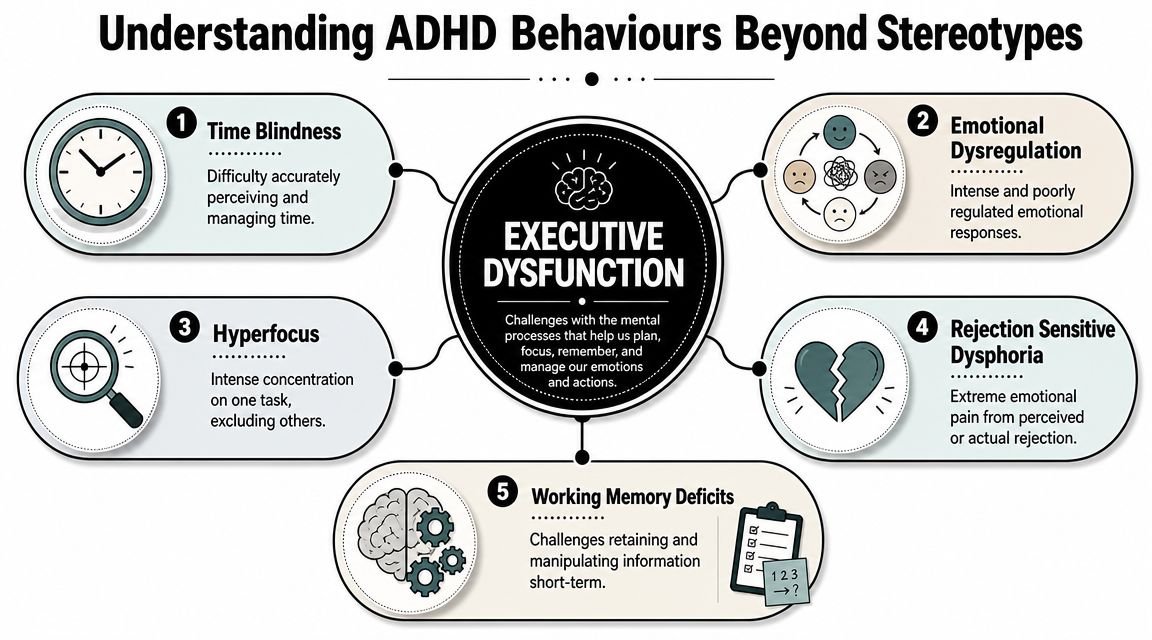
The behaviours people misread
A useful way to think about executive function is as the household management system in the brain. When it's under strain, simple tasks stop being simple.
Time blindness often means your partner isn't judging duration accurately. "I'll do it in ten minutes" may not be evasive. It may reflect a poor internal sense of time passing.
Working memory problems mean information drops out quickly. They may agree to buy milk, reply to a message, and take the car for petrol, then only remember one item by the time they reach the front door.
Hyperfocus confuses many couples. A person who can't reply to an email may spend hours absorbed in a game, hobby, repair project, or work task. To the partner watching, that can look selective or selfish. In reality, ADHD often involves difficulty regulating attention, not just a deficit of attention.
Emotional dysregulation and rejection sensitivity
The emotional side of ADHD is under-recognised. Some adults react to disappointment, criticism, or perceived disapproval with a speed and intensity that feels out of proportion. Partners often describe walking on eggshells because a small comment can trigger defensiveness, withdrawal, or anger.
Understanding proves helpful. It doesn't mean accepting hurtful behaviour. It means recognising that the nervous system may be reacting before reflective thinking catches up.
A related issue is rejection sensitive dysphoria, often shortened to RSD in everyday discussion. In practical terms, it can look like this:
- Mild feedback feels severe. "Can you put your plate in the dishwasher?" is heard as "You never do anything right."
- Shame arrives quickly. The person may become tearful, furious, or abruptly shut down.
- Repair becomes harder because the original discussion about chores, parenting, or money disappears beneath the emotional reaction.
Symptoms aren't fixed across all situations
One of the most important clinical points is that ADHD symptoms can vary with context. This expert discussion notes that symptoms are highly context-dependent and can intensify with stress, sleep deprivation, and burnout. That's why a routine that works in an ordinary week may collapse during exams, night shifts, illness, deadlines, or a noisy living situation.
This matters in shared homes. If you're living with someone with ADHD, you need to ask not only, "What are their usual difficulties?" but also, "What makes those difficulties worse?"
| Trigger | What you may notice at home |
|---|---|
| Poor sleep | More irritability, slower task initiation, more forgotten steps |
| Stress | Shorter temper, avoidance, rushed decisions |
| Burnout | Withdrawal, shutdown, unfinished tasks piling up |
| Busy environment | Distractibility, sensory overload, more conflict |
If there are overlapping concerns such as anxiety, mood symptoms, autistic traits, or other complications, it can help to understand comorbidities with ADHD, because the presentation at home is often shaped by more than one factor.
Effective Communication Strategies for Connection
When couples tell me they "talk all the time" but nothing improves, the problem is usually not lack of communication. It's that the communication isn't landing, isn't being remembered, or happens at the wrong emotional moment.
The goal isn't to become endlessly patient. The goal is to build a communication method that works for a distracted, overloaded brain and for the partner who's exhausted by repetition.
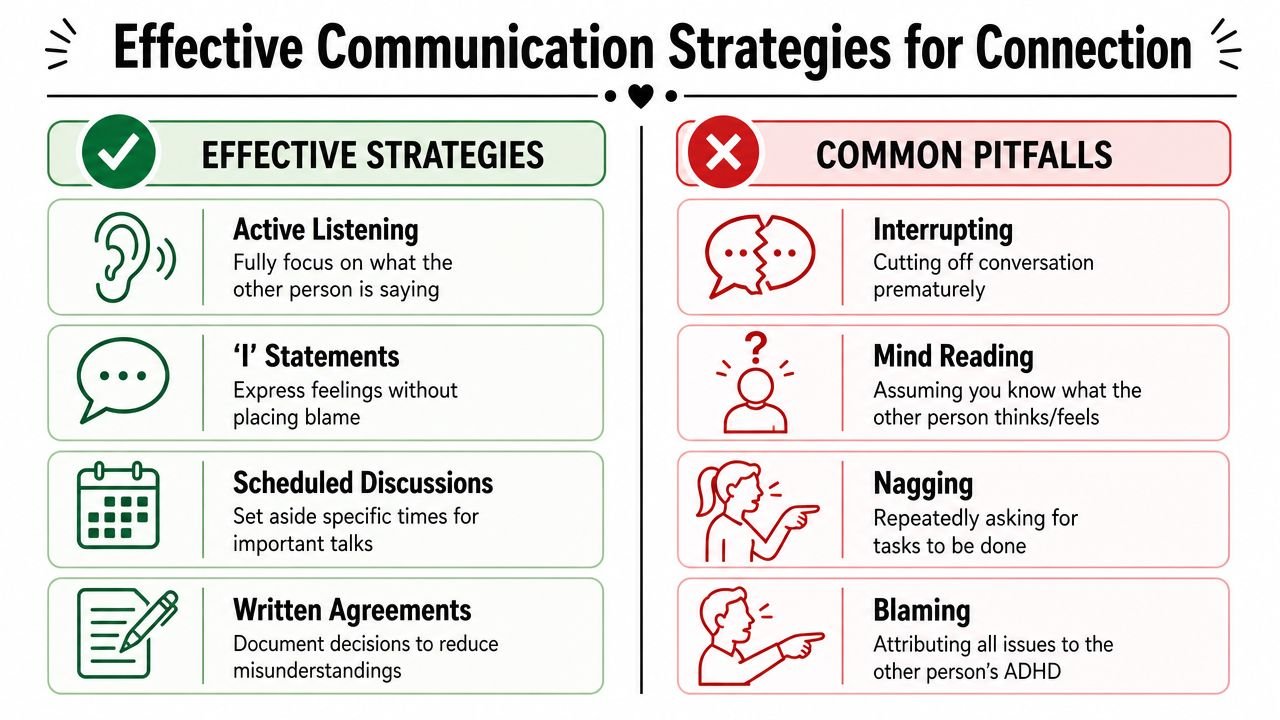
What works better than repeating yourself
A useful starting point comes from this qualitative research article, which highlights practical ways to reduce miscommunication. These include asking the ADHD partner to repeat back agreements, sending short written follow-ups after discussions, and separating symptom-management discussions from emotionally loaded household negotiations.
That sounds simple. In practice, it's powerful.
Instead of saying, "We've already talked about this," say, "Let's make sure we're leaving with the same plan. Can you tell me what we've agreed?" That isn't patronising when done respectfully. It's a memory support.
A short text after a discussion can prevent hours of later confusion. For example:
"We've agreed you'll ring the landlord tomorrow before lunch, and I'll send the tenancy photos tonight."
That message becomes an external memory aid. It also reduces later arguments about what was said.
For readers considering more structured support around these patterns, counselling for ADHD can be useful when both people are stuck in accusation and defence.
A better format for difficult conversations
Don't raise complex issues when either of you is hungry, rushing out, overstimulated, or already angry. Timing matters more than many couples realise.
Use a brief structure:
State one issue only
Keep it narrow. "We need a better system for post and bills" works better than "You're never organised."Name the impact without moral judgement
"I felt anxious when the bill was missed" is easier to hear than "You don't care."Agree one concrete next step
Put one action in place now. Don't end with vague promises to "try harder."Confirm the plan in writing
A text, note in a shared app, or calendar entry is enough.
Here's the difference:
| Less helpful | More helpful |
|---|---|
| "You never listen." | "I need us to agree what happens with the school forms this week." |
| "Why can't you just do it?" | "What's the obstacle between remembering and getting it done?" |
| "We've had this argument a hundred times." | "Let's set up a system so this doesn't rely on memory." |
A short video can be a useful prompt before trying a new approach at home:
Talk about the system when you're calm. Talk about the feelings after the system is in place.
That order matters. If you reverse it, many couples end up arguing about intention rather than solving the actual problem.
Creating a Supportive and Organised Home
Nagging feels productive because it creates momentary movement. In most homes, it doesn't produce reliable change. It produces dependence, irritation, and a parent-child dynamic that slowly damages the relationship.
A better approach is to make the environment do more of the remembering. Homes that work well with ADHD don't rely on willpower alone. They reduce friction, visual clutter, and hidden tasks.
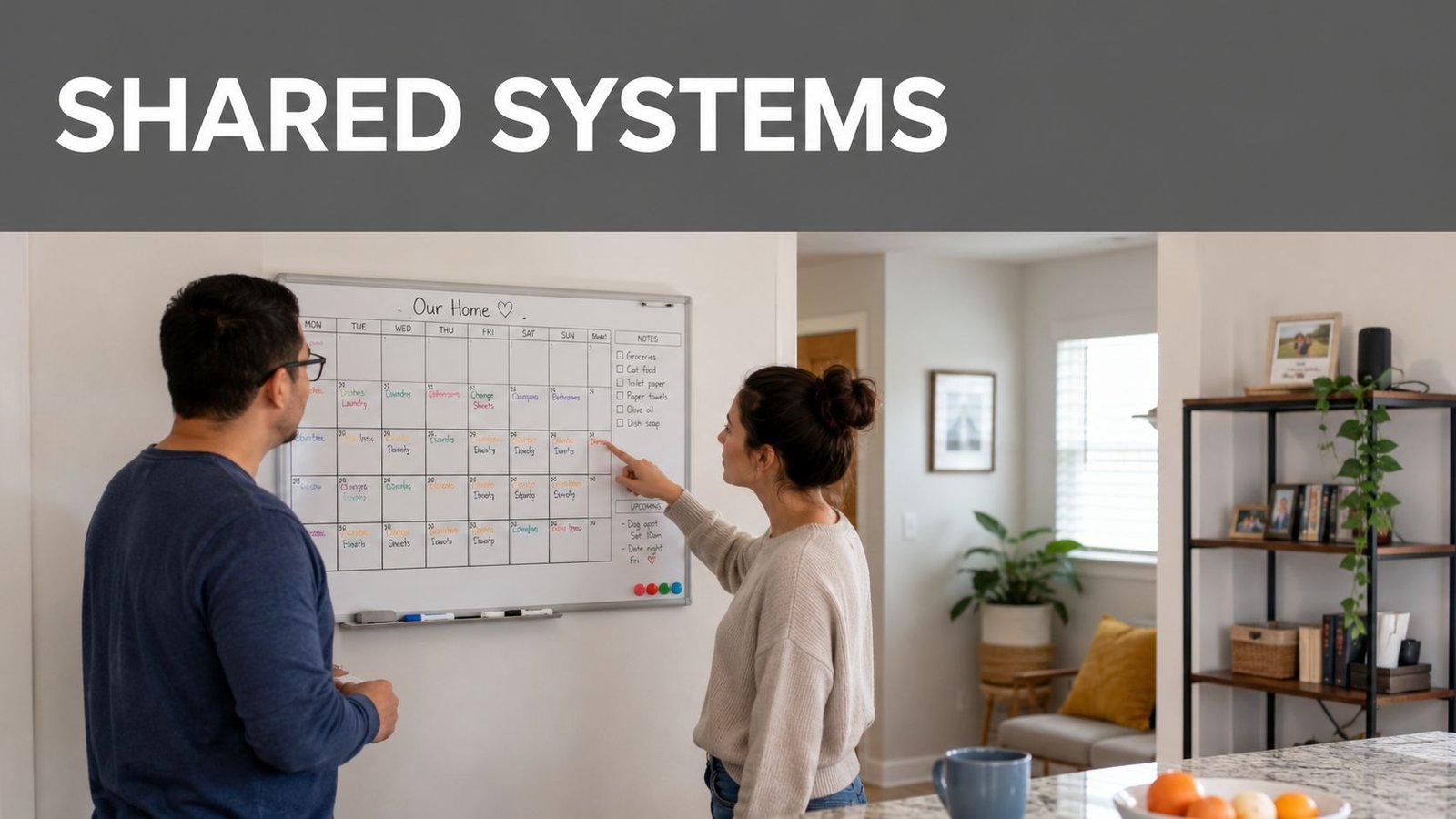
Build visible systems, not heroic intentions
A written household system is one of the most effective ways to reduce recurring resentment. HelpGuide's relationship guidance recommends formalising household labour by dividing tasks by strength, reviewing them weekly, and automating or outsourcing repetitive duties where possible.
That advice works because vague responsibility is where couples come unstuck. "We'll both try to keep on top of things" usually means one person ends up becoming responsible for everything that isn't done.
Try this instead:
- Assign by strength. One person may be better at food planning, the other at laundry turnover or school communication.
- Define the full task. "Bins" includes checking the day, changing liners, and putting them back. Not just taking them out once reminded.
- Add a closer. If your partner starts jobs and leaves them half-finished, agree who checks completion and how that handoff happens.
- Use automation first. Direct debits, calendar reminders, repeating shopping lists, and grocery delivery reduce preventable failure points.
Practical changes that lower daily friction
Small environmental changes often do more than repeated conversations.
- Create a launch pad near the front door for keys, wallet, work badge, and chargers.
- Use one shared digital calendar for appointments, school dates, deliveries, and shifts. Two systems usually become no system.
- Keep visual cues obvious. A hidden planner won't help if the problem is remembering to look.
- Reduce choices. Too many storage locations, too many apps, or too many versions of the routine can all increase drop-off.
If you want examples of what a central household setup can look like, this guide to an ADHD-friendly family command center offers practical ideas you can adapt without turning your home into a project.
What a weekly review should cover
A weekly review doesn't need to be long. It does need to be specific.
Household check-in: What worked this week, what got dropped, and what needs to change before resentment builds?
Use a simple agenda:
- What got done
- What didn't get finished
- Whether the task allocation still feels fair
- What can be automated, simplified, or postponed
The point isn't surveillance. It's reducing the invisible load that usually falls on the more organised person.
Protecting Your Own Wellbeing with Boundaries
One of the common traps in living with someone with ADHD is becoming the external brain for the household. You remind, prompt, rescue, smooth over, explain, and compensate. At first, that can feel loving. Over time, it becomes draining and unsustainable.
Support is healthy. Over-functioning is not.
The difference between helping and enabling
Helping means making success more likely. Enabling means protecting someone from the consequences of patterns they need to address.
That line isn't always obvious, so ask yourself a few blunt questions:
- When I remind them, am I supporting an agreed system or replacing one?
- If I stop doing this task, will the household wobble briefly or collapse entirely?
- Have I become responsible for things that belong to another adult?
If your answer to the last question is yes, boundaries are overdue.
Boundaries that are firm and compassionate
Good boundaries aren't punishments. They are clear limits on what you can reasonably carry.
Examples that often help:
- "I can help us set up a bill system, but I can't be the only reminder system."
- "I'm happy to talk about this when we're both calm. I won't stay in the conversation if voices are raised."
- "I'll support the appointment booking, but I won't keep chasing if you decide not to respond."
Those statements do two things. They protect you, and they place responsibility back where it belongs.
A useful format is simple:
| Situation | Boundary |
|---|---|
| Repeated shouting in arguments | "I'm stepping away now. We'll talk later when it's calmer." |
| Chronic reliance on your reminders | "Let's put it in the shared calendar. I won't keep holding it in my head." |
| Last-minute crises caused by delay | "I'll help with today's problem, but we need a prevention plan after this." |
Burnout signs partners often miss
Partners often notice their loved one's stress before their own. Watch for these signs in yourself:
- Resentment that spills out in sarcasm or sharpness
- Hypervigilance about what has been forgotten next
- Loss of personal time because you are always tracking household gaps
- Emotional numbness rather than open conflict
- Withdrawal from friends, hobbies, or rest
You are allowed to need support, even if your partner is the one with the diagnosis or suspected diagnosis.
Keep parts of your life that don't revolve around managing symptoms. Maintain your own appointments, friendships, exercise, downtime, and routines. If every ounce of your capacity goes into holding the home together, the relationship becomes fragile because it depends on one exhausted person staying functional.
Navigating the Path to a Professional Assessment
Home strategies matter. Sometimes they are enough to stabilise day-to-day life. But if the same patterns continue to affect work, relationships, finances, education, or mental health, a proper assessment can change the trajectory of the entire household.
The value of assessment isn't just the label. It's the clinical clarification. Many adults have spent years being described as lazy, chaotic, overemotional, anxious, difficult, or unreliable. A thorough evaluation asks a different question: what is driving these difficulties?
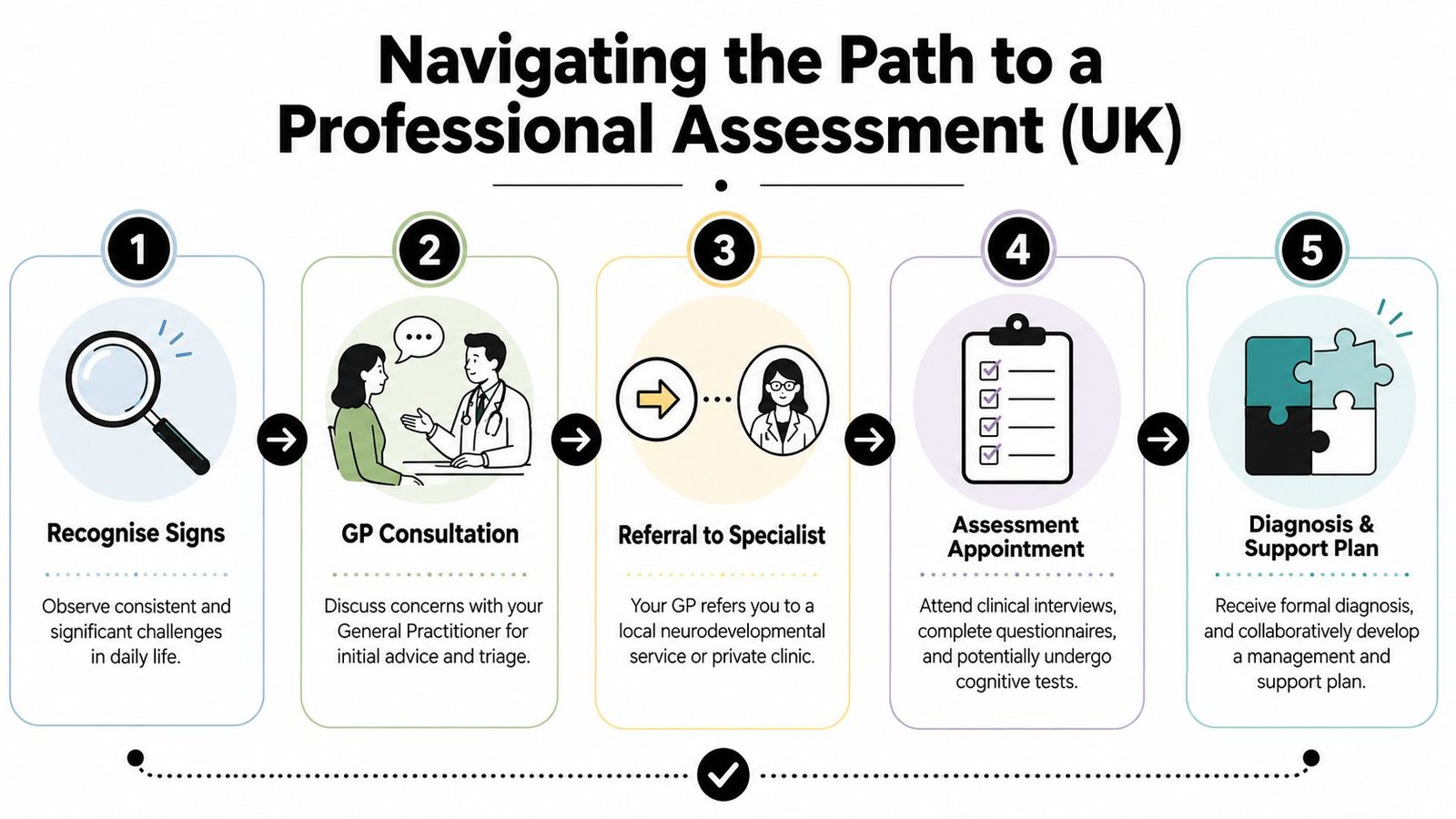
When it's time to seek specialist input
Consider assessment when the person you're living with shows a longstanding pattern of difficulties in areas such as:
- Organisation and follow-through across work and home
- Chronic forgetfulness that causes repeated functional problems
- Emotional volatility that regularly harms relationships
- Academic or occupational strain
- Burnout, anxiety, low mood, or shame developing around these patterns
- Possible overlap with autism or other mental health conditions
An assessment is also worth considering when both partners are stuck in the same argument. If every discussion ends in blame, defensiveness, or confusion, clearer formulation can help.
What the UK pathway usually involves
In practical terms, the assessment route often begins with a GP discussion, especially if you want to explore NHS referral routes. Some adults also pursue an independent assessment because they want faster appointments, more scheduling flexibility, or clearer specialist input.
A high-quality adult assessment usually includes:
Initial triage or screening
This checks whether ADHD is a reasonable clinical question and whether there are urgent mental health concerns that need separate attention.Detailed history taking
The clinician explores childhood patterns, adult functioning, education, work, relationships, coping methods, and mental health.Collateral information where available
School reports, partner observations, or earlier records can sometimes strengthen the picture, though not everyone has these.Consideration of alternatives and overlap
Good assessment doesn't assume ADHD too quickly. It considers anxiety, depression, trauma, autistic traits, sleep problems, substance use, and personality factors where relevant.Diagnostic feedback and recommendations
This should explain not only whether ADHD is present, but what to do next.
If you're trying to understand local options, this guide on an ADHD assessment for adults near me gives a useful overview of what people often look for in a service.
Private assessment, Right to Choose, and what happens next
In the UK, some patients ask about Right to Choose, which can be relevant in England when seeking access to certain providers through the NHS pathway. Others choose private assessment because delays have become too disruptive to work, study, or family life.
The practical trade-off is usually this:
| Route | Main advantage | Main consideration |
|---|---|---|
| GP and NHS referral | Lower direct cost to the patient | Waiting times can be long |
| Right to Choose where available | Potentially faster access through an NHS pathway | Eligibility and process can vary |
| Private assessment | Speed and flexibility | Self-funding or insurance arrangements may apply |
What matters most is quality. The assessment should be clinician-led, developmentally informed, and robust enough to guide treatment. That may include psychoeducation, environmental adaptations, therapy input, coaching approaches, workplace or university recommendations, and, where clinically appropriate, medication discussion and titration.
For households, a proper assessment often changes the emotional climate. It doesn't make every difficulty disappear. It does replace confusion with a shared framework. Couples move from "Why are you like this?" to "What support does this brain need?"
Building a Thriving Future Together
Living with someone with ADHD can be draining, but it doesn't have to stay chaotic. The turning points are usually practical. Understand the behaviour accurately. Communicate in ways that survive distraction and stress. Build a home that remembers more than either person has to. Protect your own mental health with clear boundaries.
A diagnosis isn't a verdict on character. It's useful when it leads to better systems, more realistic expectations, and less shame.
Some couples never become effortless. That isn't the standard to aim for. The aim is a household where both people feel respected, where problems are named early, and where support is structured rather than improvised. With the right help, many adults with ADHD, and the people who live with them, move from constant firefighting to something steadier and kinder.
If you're looking for a consultant-led route to clearer answers, Insight Diagnostics Global offers adult assessments for ADHD, autism, and related mental health concerns, with online and face-to-face appointments, thorough diagnostic reports, and follow-up options including medication titration and ongoing monitoring. For adults, families, students, and GP-referred patients who need a structured next step, it's a practical way to move from uncertainty to a clear support plan.