

You wake up tired, push through the morning, and tell yourself you'll feel better once the week calms down. Then you notice you're snapping at people you care about, avoiding messages, and struggling to start tasks that used to be routine. Nothing looks obviously wrong from the outside. You may still be working, replying, showing up. But inside, it feels as if your system is running on reserve.
That pattern matters. Burnout rarely begins with a dramatic collapse. More often, it starts as a slow narrowing of energy, patience, and clarity. For many adults, especially those juggling work, caregiving, study, masking, or sensory overload, the early signs of burnout are easy to dismiss as stress, laziness, or “just a busy patch”.
When burnout is layered with ADHD, Autism, anxiety, low mood, or longstanding personality and relational difficulties, the picture can become even harder to read. That's why careful psychological assessment matters. In consultant-led practice, one of the most useful parts of the work is helping people separate what is temporary overload from what reflects a deeper neurodevelopmental or mental health pattern. Leading with extensive experience, top, leading Consultant Psychiatrists in neurodevelopmental and personality disorder work, including Dr Sai Achuthan, often focus on exactly this kind of diagnostic clarity.
That Feeling of Running on Empty
Some people describe the start of burnout as feeling “flat”. Others say they feel wired but useless, exhausted but unable to rest properly. A lot of adults notice a more subtle change first. They stop feeling present in their own life. Work becomes mechanical. Conversations feel far away. Small demands start to feel intrusive.
This is often the stage where people blame themselves. They assume they've become disorganised, oversensitive, or emotionally weak. In reality, early burnout often shows up before anyone has a clear name for it.
When disconnection becomes the clue
A common early sign is disconnection. You may still be attending meetings, replying to texts, or sitting with family, but emotionally you feel slightly outside the room. Some people describe it as watching life through glass. Alongside that, emotional exhaustion can emerge as irritability, cynicism, or a surprisingly sharp response to minor requests.
Another pattern is the creativity crash. You're trying hard, sometimes harder than before, but your mind won't generate ideas in the same way. Tasks that need flexibility, problem-solving, or emotional bandwidth begin to stall. That loss of creative thinking can itself become a source of anxiety.
Burnout often announces itself through changes in tone before changes in output. You may sound more brittle long before you stop functioning.
This isn't rare. Recent UK-specific research indicates that 88% of the workforce has experienced burnout since 2020, with 63% of employees currently exhibiting early symptoms such as exhaustion and disengagement, according to this UK burnout summary.
Why many people miss it
Early burnout can look deceptively productive. You may be overcommitting, saying yes too quickly, staying late, or compensating for mental fatigue by pushing harder. That can hide the problem from colleagues and from you.
For adults with ADHD, emotional intensity can further complicate the picture. What looks like “overreacting” may be a nervous system under persistent strain. The overlap is explored well in this discussion of ADHD and emotions, particularly if you're noticing quicker frustration, rejection sensitivity, or emotional depletion.
What Are the Universal Early Signs of Burnout
Burnout isn't just tiredness. The World Health Organization classifies burnout as an “occupational phenomenon” arising from chronic unmanaged workplace stress, and early signs are often physical first, including persistent fatigue, frequent headaches, and sleep disturbances, as outlined by Mental Health UK's burnout overview.
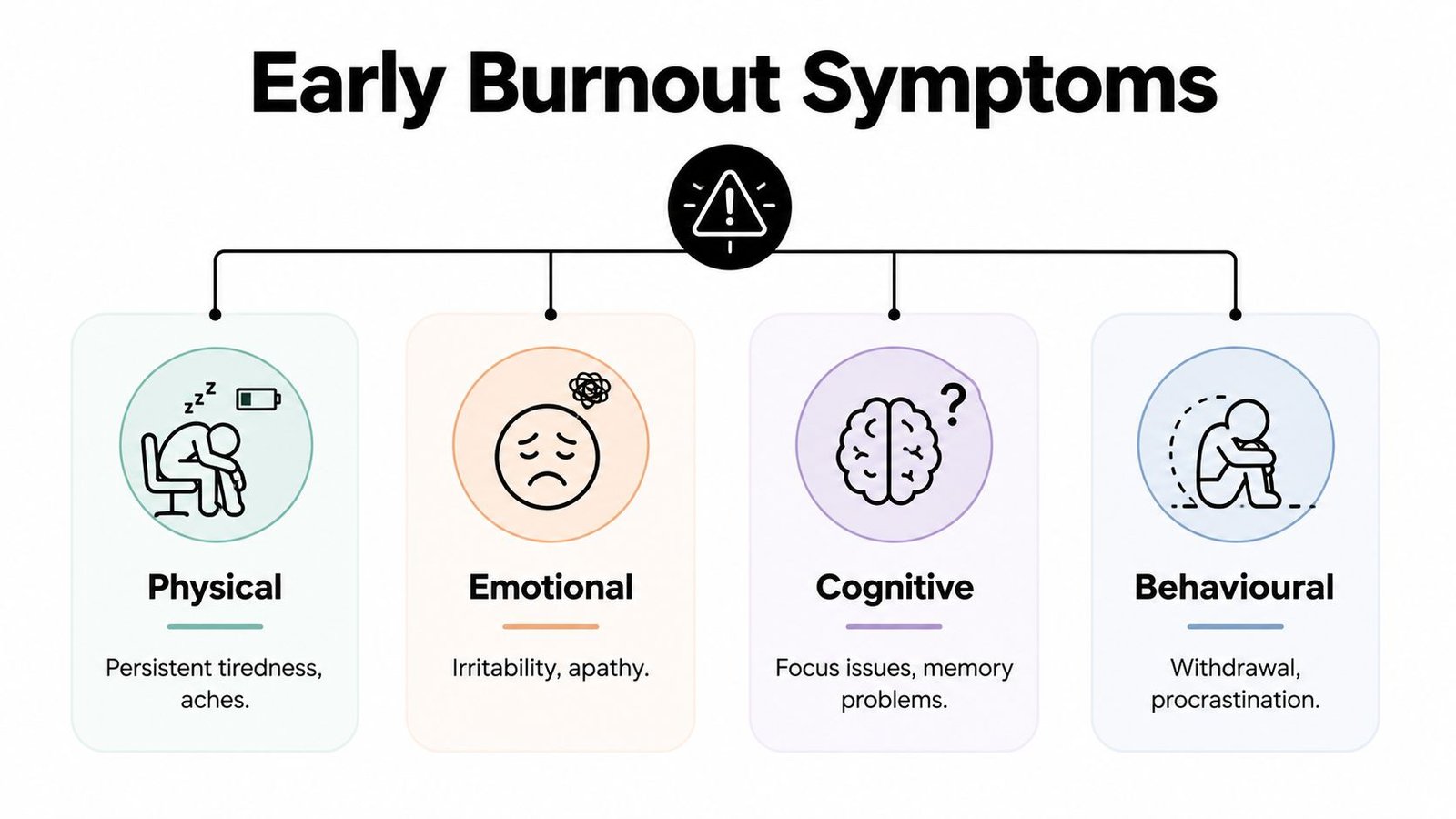
Physical signs
Your body usually notices before your beliefs do.
- Persistent fatigue means rest doesn't restore you in the usual way.
- Headaches or muscle tension often become more frequent.
- Sleep disruption can take several forms. Trouble falling asleep, waking in the night, or sleeping but not feeling recovered.
- Appetite changes may involve skipping meals, comfort eating, or losing track of hunger.
For some adults, these are the first real clues. They don't feel emotionally distressed yet. They just feel physically depleted.
Emotional signs
Emotional burnout is less about sadness and more about depletion.
- Irritability often appears early. Minor requests feel larger than they are.
- Cynicism can replace warmth or interest. Work that once felt meaningful now feels thankless.
- Detachment shows up as numbness, distance, or a lack of emotional availability.
- Apathy can be mistaken for not caring, when in fact the person has run out of accessible energy.
Practical rule: If your emotional response to ordinary demands has changed for weeks, pay attention before you force yourself to “push through”.
Cognitive signs
People often overlook this area, yet it is one of the most disabling.
A classic pattern is the creativity crash. You can still do familiar tasks, but thinking flexibly becomes difficult. Concentration drops. Decision-making slows. Memory becomes patchy. You may reread the same email several times or avoid tasks that require planning because your mind feels foggy.
At this stage, many people start worrying they have become less capable. Usually, the problem is overload, not a sudden loss of intelligence.
Behavioural signs
Behaviour changes are often easier for other people to spot.
- Working longer just to keep up can indicate reduced efficiency rather than increased dedication.
- Withdrawal may mean fewer social replies, cancelled plans, or avoiding collaborative work.
- Reduced performance tends to show up unevenly. Simple tasks are done, but complex or relational tasks slip.
- Self-care spirals happen when sleep, meals, movement, and routine all become less organised.
If you want a broader view of how stress starts to distort functioning before full burnout develops, these signs of stress are often a useful comparison point.
The Neurodivergent Burnout Experience in ADHD and Autism
Neurodivergent adults often recognise themselves only partly in standard burnout descriptions. That's because the pathway into burnout can be different. The cost of masking, constant self-monitoring, sensory strain, executive effort, and repeated social adaptation can be immense, even when someone appears highly capable.

ADHD burnout often feels like hitting a wall
ADHD burnout is frequently described as reaching an “invisible wall”, where tasks that were previously manageable suddenly feel impossible. It can also involve persistent mental fatigue that isn't relieved by rest, along with stronger emotional sensitivity or mood swings, as described in this ADHD burnout explanation.
In practice, this might look like:
- Task paralysis after a period of overcompensating
- Extreme mental clutter even with simple decisions
- Increased shame because the person knows what to do but can't initiate it
- More volatile emotions when demands stack up
The trade-off is important. Many adults with ADHD cope for years by running on urgency, novelty, fear of letting others down, or perfectionistic compensation. Those strategies can keep performance afloat for a while. They are not sustainable.
Autistic burnout is more than being tired
Autistic burnout has a more specific clinical shape. It is defined as a syndrome of chronic exhaustion lasting typically 3+ months, with pervasive loss of function (skill regression) and reduced tolerance to sensory input, as outlined in this guide to autistic burnout.
That loss of function matters. A person may find that communication becomes harder, self-care slips, sensory overwhelm increases, and ordinary demands become far less manageable than before.
Some adults describe:
- Speech becoming effortful
- More shutdowns after social or sensory exposure
- Less tolerance for noise, light, touch, or change
- A reduced ability to plan, cook, travel, or maintain routines
This is one reason generic advice can fail. If the problem is prolonged mismatch between demands and neurological capacity, “be more resilient” is the wrong intervention.
A fuller explanation of overlap and distinction is available in this overview of Autism and ADHD, especially for adults who have spent years wondering why ordinary life seems to cost them more energy than it appears to cost other people.
A short video can also help put words to that lived experience:
Is It Burnout Stress or Depression
People often use these words interchangeably, but they aren't the same. The distinction matters because the next steps differ. Burnout usually grows from chronic demands and gradually leads to disengagement. Stress is more often a state of overactivation. Depression tends to be broader, more pervasive, and less tied to one context.
Burnout versus stress versus depression
| Characteristic | Chronic Stress | Burnout | Depression |
|---|---|---|---|
| Primary pattern | Over-engaged, tense, driven | Depleted, detached, running on empty | Low mood or loss of interest across life |
| Typical feeling | Urgency, pressure, worry | Exhaustion, cynicism, helplessness | Sadness, emptiness, hopelessness, numbness |
| Relationship to work | Work feels too intense | Work feels unmanageable or emotionally deadened | Difficulties usually extend well beyond work |
| Energy state | Agitated and strained | Drained and flattened | Often low, slowed, or variable |
| Thought pattern | “I have too much to do” | “I can't keep doing this” | “Nothing will help” or “I can't feel much at all” |
| Rest response | Short breaks may help briefly | Time off may help, but not if the pattern continues unchanged | Rest alone is often insufficient |
| Functional pattern | Still pushing, often frantically | Pulling back, avoiding, emotionally blunted | Function may reduce across multiple areas of life |
The practical difference
Stress still has fuel in it. The person is overloaded, but active. Burnout is what often follows when that state continues for too long without recovery or adjustment. The system begins to protect itself by shutting down enthusiasm, flexibility, and emotional availability.
Depression can overlap with burnout, but it usually spreads further. If you feel flat not just at work but in relationships, hobbies, appetite, motivation, and your sense of self, depression needs to be considered carefully.
If your distress feels tightly linked to workload, masking, deadlines, or sensory demands, burnout becomes more likely. If it feels global and follows you everywhere, look beyond burnout alone.
When the picture is mixed, assessment helps. Many adults don't have “just one thing”. They may have burnout layered on top of ADHD, Autism, anxiety, depression, trauma, or personality vulnerabilities that shape how they cope under strain.
Practical Steps for Recovery and Prevention
The advice that helps early burnout is often less glamorous than people expect. Recovery usually starts with reducing load, not optimising your calendar. For neurodivergent adults in particular, research on neurodivergent burnout recommends reducing long-term stress and demand rather than increasing resilience training, including adjustments such as quiet workspaces, flexible hours, and clear written instructions, according to this overview of neurodivergent burnout support.
What tends to work
The most effective strategies are usually practical and specific.
Energy accounting
Stop measuring your day only by time. Track what drains you and what restores you. A one-hour meeting in a noisy office may cost more than two hours of solitary admin.Demand reduction
Remove non-essential tasks before adding coping tools. If your system is overloaded, mindfulness apps won't fix the basic arithmetic.Scheduled unmasking time
If you spend the day monitoring tone, eye contact, body language, movement, or impulsivity, build in periods where you don't have to perform normality.Sensory protection
Use tools that lower input. Noise-cancelling headphones, lower-light environments, fewer notifications, and quieter transition spaces can make a meaningful difference.Written external supports
Use calendars, task apps, checklists, visual routines, or scripted replies. Burnout reduces spare mental bandwidth. External structure helps preserve it.
What usually doesn't work on its own
Some strategies sound sensible but fail when used as a substitute for structural change.
| Helpful only in part | Why it often falls short |
|---|---|
| Pushing through | It may preserve short-term output while worsening collapse later |
| Generic resilience training | It can place responsibility on the person without changing harmful demands |
| Weekend recovery only | Two days rarely offset a week of chronic overload |
| Saying yes more nicely | Better communication doesn't solve overcommitment |
| Rest without review | Time off helps, but only if you also change the pattern that caused the exhaustion |
Recovery becomes more likely when you stop asking, “How do I keep functioning exactly as before?” and start asking, “What has to change so my mind and body can function safely?”
Useful workplace adjustments
For many adults, practical accommodation matters more than motivation.
Consider requesting:
- Flexible hours if mornings, commuting, or transition periods are especially costly
- Clear written instructions instead of verbal-only requests
- Protected focus time without unnecessary meetings
- A quieter workspace or permission to use headphones
- Boundaries around after-hours contact
- Task prioritisation support when everything feels urgent
If you're looking for a grounded, non-promotional self-help resource alongside clinical support, reVIBE Mental Health burnout help offers practical coping ideas that many people find easier to apply than generic wellness advice.
Red Flags That Signal You Need Professional Help
Self-help is useful early. It is not always enough. The point to seek professional input is not when you have failed. It is when the pattern has become harder to interpret, harder to reverse, or more dangerous to ignore.
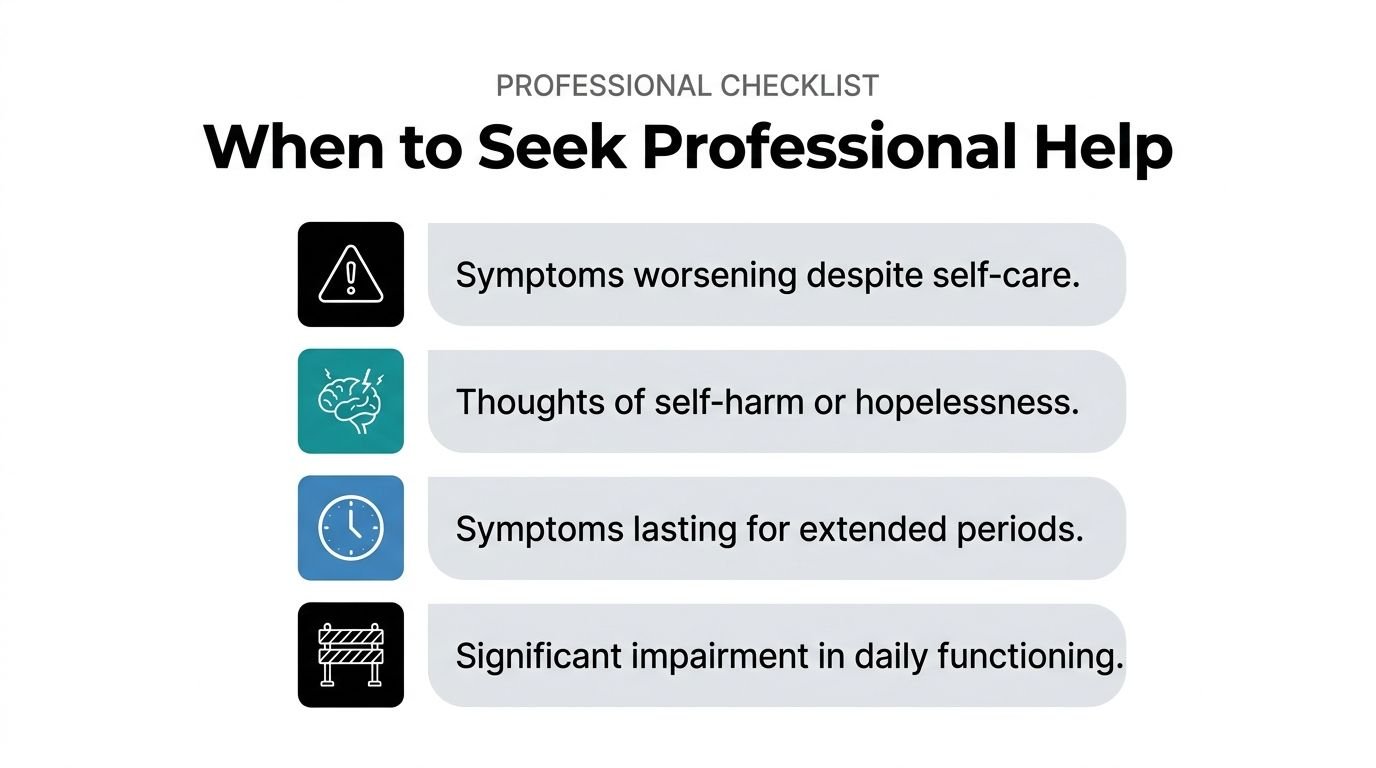
Warning signs that shouldn't be minimised
Professional assessment becomes important when any of the following are happening:
Your own strategies aren't shifting it
You've reduced demands, rested more, set boundaries, and adjusted routines, but the exhaustion or detachment remains.Function is clearly dropping
You're missing deadlines, withdrawing from people, neglecting self-care, or struggling to do ordinary daily tasks.Your relationships are being affected
You are more irritable, unavailable, reactive, or emotionally shut down than usual.You're no longer sure what you're dealing with
It could be burnout, depression, anxiety, trauma, ADHD, Autistic burnout, or a combination.You feel hopeless or unsafe
Thoughts of self-harm, worthlessness, or not wanting to continue need prompt help.
Why waiting can make things murkier
Burnout can blur into other conditions. ADHD can look worse under pressure. Autism-related shutdown or sensory overwhelm may be mistaken for low mood. Depression can begin in the context of burnout and then become more pervasive. Anxiety can keep someone over-functioning long after their system has exceeded capacity.
Seeking help early often shortens the path back. Waiting until complete shutdown usually means more distress, more disruption, and a more complicated recovery.
If there are urgent safety concerns, contact emergency services, NHS 111, or local crisis support rather than relying on routine assessment.
How a Professional Assessment Provides Real Clarity
When burnout is straightforward, the main intervention is often rest, boundary repair, and reducing demands. But many adults don't arrive with a straightforward picture. They arrive saying they can't cope anymore, they don't recognise themselves, and they don't know whether the problem is stress, depression, ADHD, Autism, or years of compensating finally catching up.
That is where structured assessment earns its value.

What a consultant-led assessment actually helps clarify
A good diagnostic assessment doesn't just ask whether you're tired. It looks at pattern, duration, context, developmental history, coping style, functional impairment, and overlap between conditions.
That matters because these questions are different:
- Is this occupational burnout without an underlying neurodevelopmental condition?
- Is burnout sitting on top of undiagnosed ADHD?
- Is the person experiencing Autistic burnout with sensory and functional decline?
- Is there depression or anxiety that needs direct treatment?
- Are longstanding personality or relational patterns increasing vulnerability under pressure?
In experienced psychiatric practice, those distinctions change the recommendations. Someone with ADHD may need help with task structure, medication review, emotional regulation, and demand pacing. An Autistic adult may need sensory reduction, communication adjustments, and protection from prolonged masking. A person with depression needs more than advice about taking breaks.
Why the report matters
Clarity is useful in the room, but it becomes more useful when documented. A thorough report can support conversations with employers, universities, GPs, insurers, and family. It can also give the patient a language for their own experience that is less blaming and more accurate.
This is especially valuable for adults who have spent years being told they are lazy, inconsistent, too sensitive, difficult, or “fine on paper”. Many are not lacking effort. They are lacking a framework that explains the mismatch between what others see and what life costs them internally.
For people wondering what that process typically involves, this guide to a mental health assessment gives a clear overview.
Why expertise matters
In complex presentations, experience matters. Consultant psychiatrists who work regularly in neurodevelopmental and personality disorder assessment are better placed to recognise overlap, avoid simplistic labelling, and tailor recommendations to the individual rather than the stereotype.
That includes specialists such as Dr Sai Achuthan, whose work reflects the value of thorough, consultant-led assessment when burnout may be entangled with Autism, ADHD, emotional dysregulation, or personality factors. The aim isn't to turn exhaustion into a label. It is to produce a clinically sound explanation and a realistic plan.
If you suspect you're not merely stressed, trust that instinct. The right assessment doesn't pathologise you. It helps you understand what your mind and body have been trying to communicate.
If you want clear, consultant-led answers about burnout, ADHD, Autism, or overlapping mental health difficulties, Insight Diagnostics Global offers thorough assessments for adults aged 18 and over, both online and face to face. Their CQC-regulated service is led by psychiatrists on the GMC Specialist Register and provides structured evaluations, reliable diagnostic reports, personalised recommendations, and optional follow-up support. It isn't a crisis service, so if you're in immediate danger call 999 or contact NHS 111 for urgent help.