

You can be sitting at your desk, reading a short email that says your work needs “a few changes”, and feel your chest drop. Nothing dramatic has happened, nobody has shouted, and yet your mind is already replaying every awkward meeting, every delayed reply, every moment you might have disappointed someone.
That reaction can feel embarrassing, especially when other people seem to brush off feedback and move on. But for many adults, that surge of shame, panic, anger, or urge to disappear has a name in clinical conversation, rejection sensitivity dysphoria, and it deserves to be taken seriously rather than dismissed as being “too sensitive”. For a broader overview of how emotions and attention interact in ADHD, this guide on ADHD and emotions is a useful companion read.
When Criticism Feels Like a Physical Wound
The first clue is often the speed of the reaction. A manager asks for a revision, a friend takes longer than usual to reply, or a partner sounds distracted on the phone, and within seconds the body is already acting as if a threat has arrived. The mind then fills in the blanks with catastrophic meaning, even when the evidence is thin.
The reaction is real, even when the trigger looks small
That mismatch can confuse both the person experiencing it and the people around them. The situation may look minor from the outside, but the emotional experience can be intense enough to feel physical, with a rush of heat, nausea, tears, or the urge to shut down completely. This is one reason the term rejection sensitivity dysphoria has stuck, it points to distress that is more than ordinary disappointment.
Practical rule: if your reaction is always fastest when you think someone is unhappy with you, the trigger is probably not “lack of resilience”, it’s a pattern worth assessing.
The important point is not whether the event was objectively huge. It is whether your nervous system consistently treats perceived rejection as if it were a major social threat. That pattern shows up in adults with ADHD, autism, anxiety, depression, and in people with no formal diagnosis at all.
Why the name matters
Having a name helps because it moves the experience out of the moral realm. It stops being “I’m weak” or “I’m difficult” and becomes “this is a predictable emotional response that needs understanding”. That shift matters in UK mental health care, because assessment should focus on what drives the reaction, what it disrupts, and what else is happening alongside it.
Rejection sensitivity dysphoria is not a separate social flaw. It’s a pattern of threat detection and emotional pain that can sit underneath very different presentations, including work avoidance, conflict in relationships, perfectionism, masking, and sudden withdrawal. Once you recognise the pattern, the next question becomes what it connects to and how best to assess it.
What Rejection Sensitivity Dysphoria Is
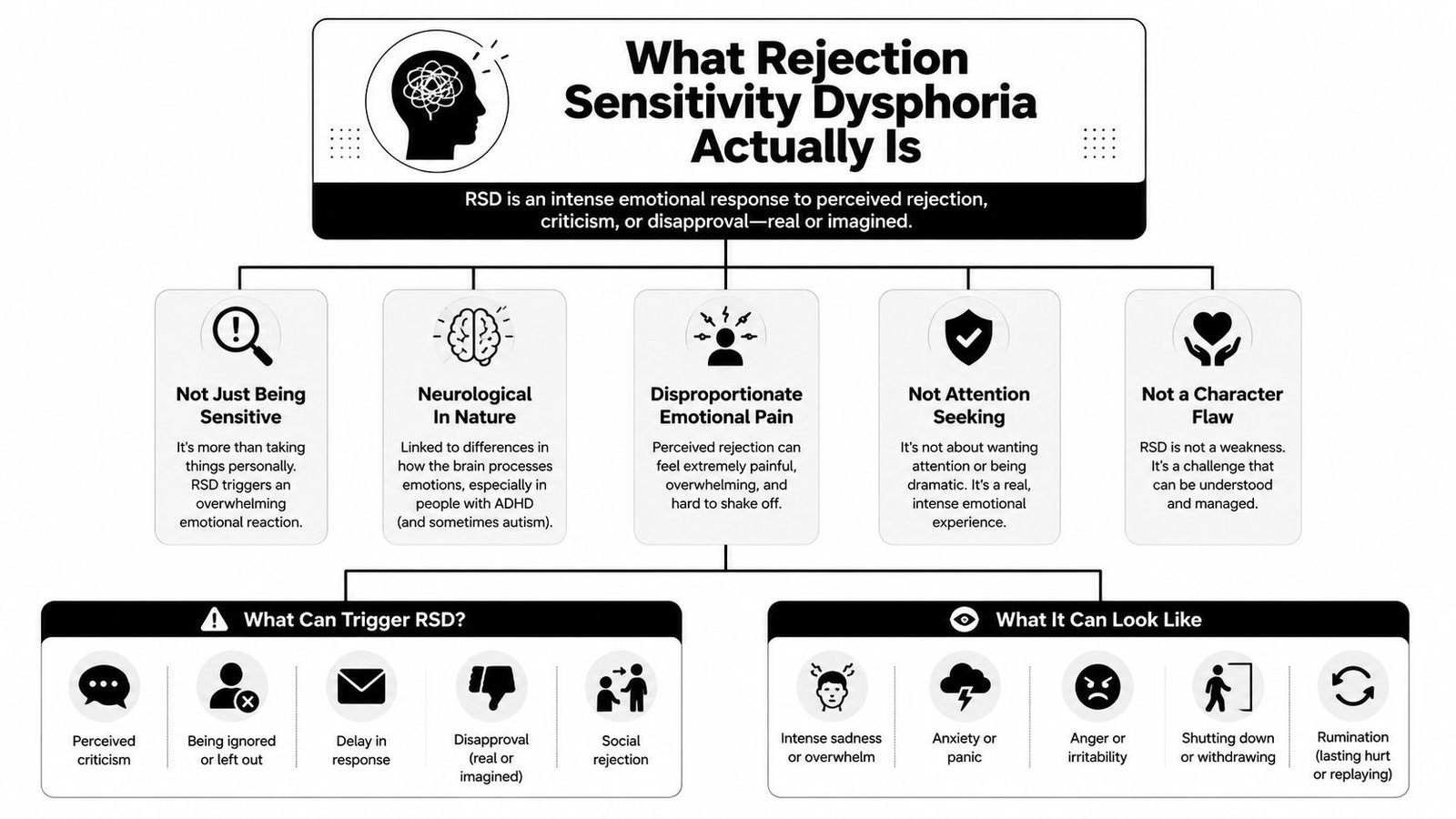
A common clinic scenario is an adult who receives a brief email from work, reads it as disapproval, and then spends the rest of the day feeling physically sick, ashamed, and unable to concentrate. That pattern is often what people mean by rejection sensitivity dysphoria.
Rejection sensitivity dysphoria is not an official diagnosis in the DSM-5. Clinically, the term is used for a recognisable cluster of symptoms, intense emotional pain triggered by perceived criticism, rejection, or failure. It remains relevant in assessment even without its own code or NICE pathway.
A construct with a research history, not a standalone disorder
The broader psychological construct of rejection sensitivity was formally described in 1996, so the topic has a research base that predates today’s ADHD-focused discussion. In UK-facing academic work, it is usually treated as a measurable trait within broader emotional dysregulation and mental health assessment, rather than as a separate disease category. The Oxford repository review on rejection sensitivity and mental health found that higher rejection sensitivity was significantly and moderately associated with five mental health problems, including depression, anxiety, loneliness, and borderline-type symptoms, which is part of why it matters in ordinary clinic work. Oxford repository review on rejection sensitivity and mental health
This also explains why there are no NICE prevalence figures or NHS diagnostic codes specific to RSD in the sources available. UK clinicians therefore assess the wider picture, the trigger pattern, the degree of impairment, and the conditions that may be driving it.
What that means in real life
A person might describe feeling crushed by mild correction at work, then spending hours analysing what they said, avoiding the colleague involved, and feeling ashamed for overreacting. Another person might not cry at all, but instead go cold, defensive, or disappear from the conversation entirely. Both can fit the same broad pattern.
The key point is that RSD is best understood as a symptom cluster, not a label that explains everything. UK psychiatric assessment usually asks what sits beneath the reaction, for example ADHD, autism, anxiety, depression, trauma, or a combination. For readers who want to understand the overlap between neurodevelopmental profiles, a clear overview of ADHD and autism overlap gives useful context. Assessment also follows the wider clinical frame of implementing biopsychosocial principles, because the reaction is shaped by symptoms, stressors, relationships, and functioning together.
The Cleveland Clinic summary gives a useful clinical overview of the assessment context for rejection sensitive dysphoria. a clinical summary of RSD assessment context
How RSD Connects to ADHD, Autism, and Mood Disorders
RSD is often discussed in ADHD spaces, but it does not belong to ADHD alone. People with ADHD and autism may be more susceptible to rejection sensitivity, yet the pattern can also appear in people without either condition. That makes it a transdiagnostic emotional regulation problem, not an autism-specific or ADHD-specific diagnosis. For readers exploring overlap, this overview of ADHD and autism overlap is a helpful companion.
Side by side comparison
| Condition | Typical RSD Presentation | Key Distinguishing Features |
|---|---|---|
| ADHD | Fast emotional escalation after criticism, strong shame, sudden withdrawal, or angry self-protection | Often sits alongside impulsivity, inattention, disorganisation, and broader emotional dysregulation |
| Autism | Heightened distress around misunderstanding, social exclusion, or perceived disapproval | May be linked to social uncertainty, sensory overload, masking, and effortful social processing |
| Anxiety or depression | Rejection is interpreted as proof of personal failure or unworthiness | The emotional response may blend with low mood, worry, rumination, and avoidance |
| No formal diagnosis | Strong sensitivity to criticism, praise feels fragile, conflict is hard to recover from | Assessment may still find traits, stressors, trauma, or mood symptoms that explain the pattern |
Why UK services assess the whole picture
A consultant psychiatrist does not usually treat RSD as a standalone issue because the practical question is different. Is the person’s emotional pain driven mainly by ADHD-related emotional dysregulation, autistic misattunement, social anxiety, depressive thinking, trauma, or a mix of these? Once that is clear, the care pathway becomes more useful.
A biopsychosocial approach matters here. If you want a concise introduction to implementing biopsychosocial principles, it helps to think of RSD as sitting at the intersection of temperament, neurodevelopment, current stress, and learned expectations from relationships.
Clinical takeaway: the same rejection-triggered collapse can mean different things in different people, so the label alone never tells you enough.
How the pattern can look different
In ADHD, the person may know the feedback is proportionate but still feel flooded by it. In autism, the person may struggle more with ambiguity, delayed interpretation, or repeated social misses that make criticism especially painful. In mood disorders, the rejection can be absorbed into a broader negative self-view, so one comment lands as evidence that everything is going badly.
That difference matters because treatment planning should follow the cause, not just the symptom. When adults are assessed properly, the conversation usually shifts from “Do I have RSD?” to “What is driving this response, and what else needs attention?”
Practical Coping Strategies That Work
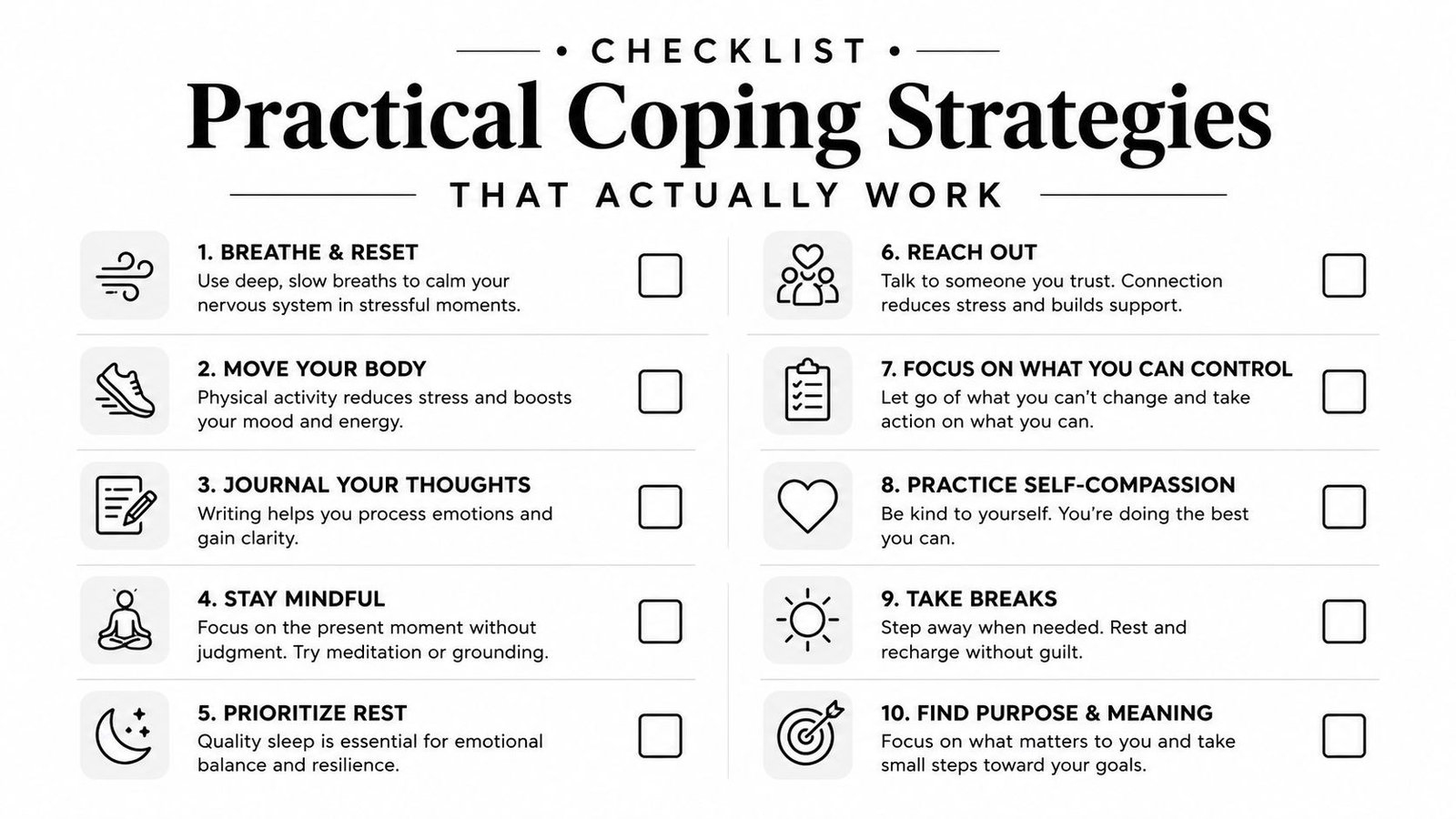
A common pattern is this. Someone receives a brief email, a changed plan, or a small piece of criticism, and their body reacts as if a much bigger threat has appeared. The aim of coping work is to slow that reaction down enough for the thinking part of the mind to come back online.
There is no RSD-specific treatment with strong evidence, so the most useful coping work borrows from CBT-style thinking, emotion regulation, and mindfulness-based skills. That does not mean “just think positive”. It means creating a pause between trigger and response so the emotional system does not get to write the whole story.
Start with the trigger pattern, not the feeling
Track the situations that reliably set you off. Many people notice the same themes, delayed replies, neutral feedback, someone looking distracted, or a plan changing without warning. Writing these down helps you separate the event from the interpretation.
A useful question is, “What did I assume this meant about me?” That is often where the pain lives. For a practical ADHD-focused companion, these coping strategies for ADHD can be adapted when emotional reactivity is part of the picture.
Use a short pause before acting
When the trigger hits, do three things before replying, leaving, or apologising.
- Name the reaction. Say to yourself, “This feels like rejection”.
- Check the facts. Ask, “What was said, and what am I adding?”
- Delay the response. Give yourself ten minutes, or longer if needed, before sending the message or making a decision.
That pause is not avoidance. It is a way of stopping the nervous system from turning a sharp feeling into a relationship rupture.
Reframe the meaning, not the event
You may not be able to stop the feeling, but you can stop it from becoming a global conclusion. A correction at work is not the same thing as being disliked. A slow reply is not the same thing as abandonment. Repeating that kind of sentence sounds simple, but it gives the brain a different script to hold onto.
Useful reframe: the feeling is real, the conclusion might not be.
For longer-term resilience, regular sleep, predictable routines, and less chaotic social contact usually help because baseline stress lowers reactivity. Therapy is also useful when it teaches specific skills for managing shame, rumination, and conflict repair, rather than only talking about the origin of the sensitivity. In UK practice, those skills are often part of broader support plans for ADHD, autism, anxiety, or mood symptoms, because the emotional pattern often sits across more than one diagnosis.
The goal is not to become unmoved by criticism. It is to make criticism less able to hijack your day, your relationships, and your sense of self.
Treatment Options and the Evidence Gap
The honest answer is that there is no recognised pharmaceutical treatment specifically for RSD. In the available guidance, management is usually extrapolated from treatment for the conditions that often sit underneath it, especially ADHD, anxiety, and depression. That means the treatment conversation is less about “curing RSD” and more about lowering the emotional load that makes it flare.
What tends to help in practice
CBT-style work can reduce the speed and force of catastrophic interpretation. Emotion-regulation skills can help people recognise the first bodily signs of flooding, then choose a different response. When ADHD is part of the picture, treating the ADHD itself can make a noticeable difference to the background level of dysregulation, even though the trigger pattern may still exist.
The research gap matters here. Coverage online often presents RSD as uniquely severe, but the evidence base still shows a lot of overlap with broader rejection sensitivity and emotional dysregulation. That is why clinicians tend to look for the underlying syndrome rather than treat “RSD” as if it were fully separate.
Why this matters for UK patients
In UK practice, the practical question is what the assessment identifies. If a person has ADHD, autism, depression, anxiety, trauma-related symptoms, or a combination, then treatment needs to fit that mix. A single-label approach usually misses the point.
Practical rule: if your emotional reactions only make sense in the context of ADHD, autism, mood symptoms, or long-term stress, a proper assessment is more useful than self-labelling alone.
The evidence gap also affects self-management. Awareness, journalling, breathing exercises, and therapy skills are sensible, but they’re not a substitute for identifying a treatable underlying condition. If symptoms are escalating, affecting work, or damaging relationships, the next step should be assessment rather than endlessly refining coping tips.
When to Seek Professional Assessment
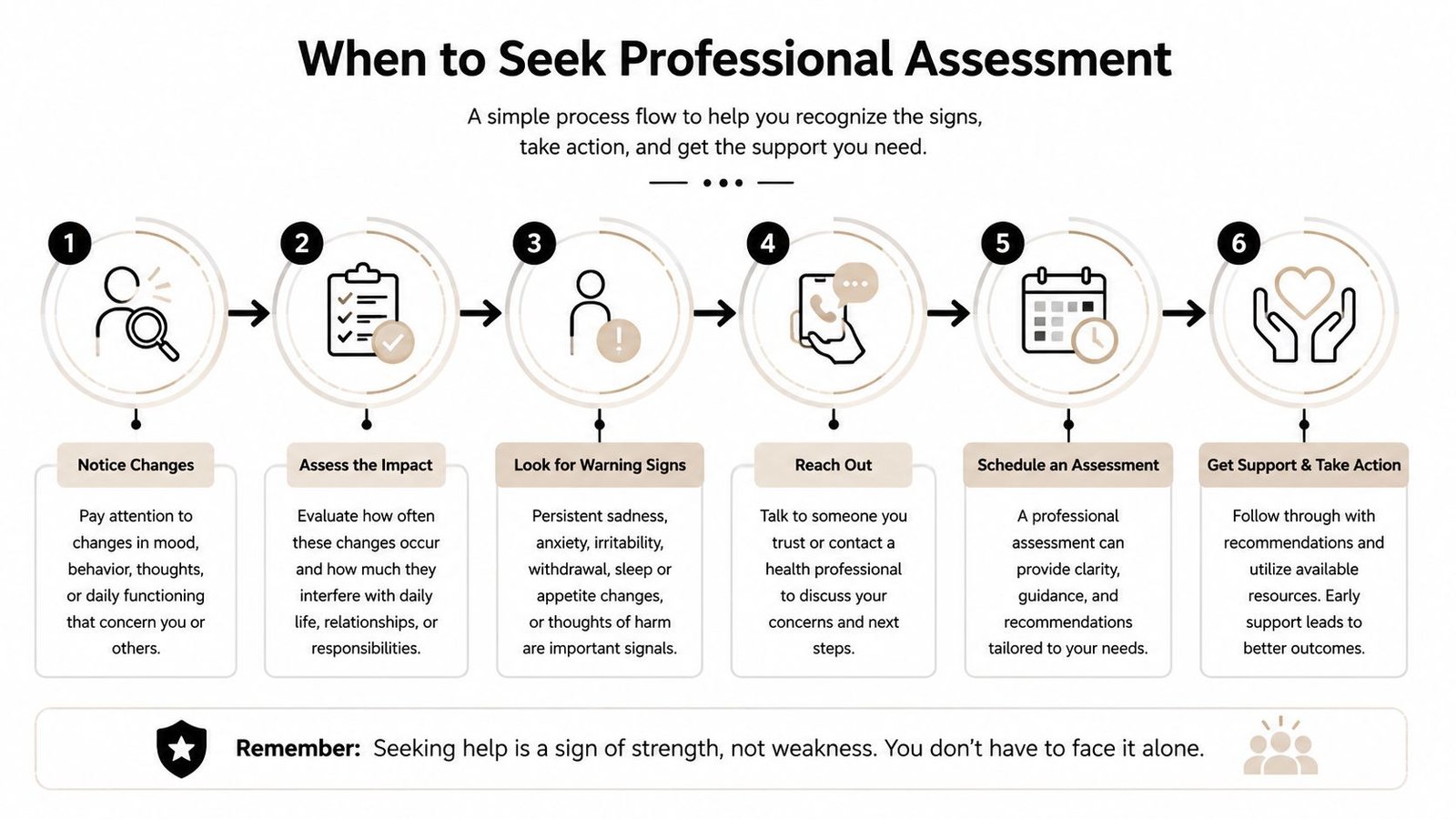
A prompt is reasonable if criticism is beginning to shape your choices. If you avoid certain people, shrink back from work, or withdraw from relationships because feedback feels overwhelming, the pattern needs proper assessment. The same applies when it sits alongside concentration problems, chronic disorganisation, social confusion, panic, low mood, or long-standing masking. In clinical terms, the question is not whether the reaction feels intense, but whether it is affecting day-to-day functioning.
Signs that an adult assessment is worth booking
- You repeatedly over-interpret neutral feedback. That often points to a threat response in emotional regulation, rather than a simple confidence problem.
- You have long-standing attention or organisation problems. That raises the possibility of ADHD being part of the picture.
- You feel socially exhausted or misunderstood. Autism, anxiety, or both may be contributing.
- You swing between shutting down and anger. That can happen when emotional control is under strain.
- You are avoiding work, relationships, or appointments. Impairment matters more than the label.
A structured adult assessment should look at history, triggers, functioning, and differential diagnoses. It should not stop at one symptom and call it the answer. Good assessment asks what else is present, what came first, and what is causing the most disruption now.
UK routes, including Right to Choose
In the UK, you can pursue assessment through the NHS, through Right to Choose where available, or privately if you need a quicker route or a more flexible appointment format. Right to Choose can be useful when waiting lists are long, but the referral still needs to be matched carefully to a provider that offers the right service. For people who want to understand how specialist evaluation is typically organised, A psychiatric assessment in the UK explains the process in more detail.
If distress becomes urgent, use 999 or NHS 111 for immediate help. The Samaritans can be reached in the UK and Ireland on 116 123 if you need someone to talk to right away. The crisis route matters if rejection-related pain is linked to self-harm thoughts, suicidal thinking, or feeling unable to stay safe.
The consultation below shows what a mental health assessment discussion can look like, especially how a clinician asks about symptoms, context, and impact rather than focusing on one isolated feeling.
A consultant-led assessment is often the clearest next step if you need help separating ADHD, autism, mood disorders, anxiety, and personality-pattern concerns. That broader clinical question is usually more useful than trying to force one symptom into a single internet category. The aim is to identify what is driving the emotional pattern, then match support to the conditions present.
How Consultant-Led Assessment Supports Adults with RSD
A rejection-sensitive pattern can look simple from the outside and feel chaotic from the inside. One sharp comment at work, a delayed reply from a friend, or a small change in tone can trigger a wave of shame, anger, or withdrawal. A consultant-led assessment helps sort out whether that response is part of ADHD, autism, anxiety, depression, or another clinical picture, rather than treating it as a single stand-alone problem.
Why structured assessment is better than self-diagnosis
Self-diagnosis can be a useful first guess, but it cannot separate overlap, severity, and treatment priorities. A psychiatric assessment gives shape to a vague experience like “criticism hurts too much” and turns it into a clinical formulation with next steps that fit the person in front of the clinician. For a clearer explanation of what the process usually involves, this guide to psychiatric assessment in the UK is a useful place to start.
A consultant-led service can also give adults a clearer route through care. Insight Diagnostics Global offers online and face-to-face consultant-led assessments for adults, with psychiatrists on the GMC Specialist Register, including clinicians with expertise in neurodevelopmental and personality disorder presentations such as Dr Sai Achuthan. Typical assessment scheduling is usually within seven working days, with reports completed within five working days afterwards. The service also provides ADHD medication titration and ongoing monitoring where indicated.
That matters because people with RSD-like symptoms often need more than reassurance alone. They need a structured triage process, a careful interview, a diagnostic report, and a plan that matches the underlying condition rather than the label they may have found online. In UK practice, that kind of consultant review can also help clarify whether NHS Right to Choose is an option, or whether another route will be more appropriate for the referral and the presentation.
If rejection sensitivity has been affecting your work, relationships, or confidence, a consultant-led assessment can help you understand what is driving it and what the next step should be. Visit Insight Diagnostics Global to review adult ADHD, autism, and mental health assessment options, and arrange a specialist consultation that focuses on careful clinical understanding rather than guesswork.