

Imagine a world where mental health care begins not with guesswork, but with precision—where a clinician can discern early warning signs of neurodevelopmental conditions from routine health records before symptoms even appear. Such a shift isn’t science fiction—it’s already unfolding. In one study, machine learning models analyzing infants’ health records within their first year correctly flagged about 60% of later autism diagnoses while accurately ruling out approximately 82% of non‑cases, offering meaningful early detection much sooner than standard screening tools National Institute of Mental Health study.
At the same time, traditional pathways often fall short. Misdiagnosis in mental health remains alarmingly common: as many as 20–50% of individuals receive incorrect diagnoses, leading to inappropriate treatments and prolonged suffering ZipDo Education Report. For instance, bipolar disorder is initially mistaken for depression in nearly 60% of cases—a delay that can last years, with far-reaching consequences GitnuxReport. Such findings underscore why advancing diagnostic methods is not just valuable—it’s imperative.
Pioneering research is now integrating artificial intelligence and multimodal data to augment traditional practices. One recent breakthrough employed a reasoning-enhanced large language model trained on UK Biobank and public datasets to detect major depressive disorder with an accuracy of 82.7% and an F1-score of 0.808—surpassing standard algorithms like support vector machines and multilayer perceptrons MDD‑Thinker study. Parallel efforts have shown that combining text and audio inputs in multimodal LLM frameworks improved binary depression classification accuracy to 77.4%—notably higher than single-modality performance alone multimodal LLM study.
These advances mark a pivotal moment in mental health diagnostics. Integrating real‑world data, AI models, and early detection strategies is helping shift mental health care from reactive to proactive. In this article, you’ll explore how these innovations intersect with clinical practice, offering actionable insights for using evidence-based tools effectively. This introduction sets the stage for a deeper dive into why and how modern diagnostic approaches can reshape patient outcomes—because more accurate, timely detection isn’t just innovation—it’s a lifeline.
Modern mental health diagnostics are rapidly advancing, moving beyond traditional assessments to embrace cutting-edge technologies. One of the most transformative developments is the integration of artificial intelligence (AI) and machine learning in diagnostic processes. These technologies can analyze vast amounts of data, identifying patterns that may indicate mental health issues earlier and more accurately than conventional methods. For example, AI algorithms are being used to assess speech patterns, facial expressions, and physiological data to provide early warnings of conditions such as depression and anxiety.
A study published in the Journal of Medical Internet Research examined how AI-powered tools improved diagnostic accuracy by 80% when integrated with traditional assessment techniques. This enhancement not only aids in early detection but also facilitates personalized treatment plans that cater to the unique needs of each patient. By employing AI, clinicians can better distinguish between similar disorders, reducing instances of misdiagnosis.
Real-world implementations further illustrate the significant potential of these innovations. For instance, a collaboration between the University of California, San Francisco, and other institutions has led to the development of AI systems that can predict the onset of depressive episodes through smartphone usage patterns. This approach is particularly effective because smartphones can track user behavior unobtrusively, providing continuous monitoring that traditional methods lack.
Another compelling example is the use of wearable technology in mental health diagnostics. Devices like fitness trackers and smartwatches are equipped with sensors that monitor heart rate, sleep patterns, and physical activity. According to research published in JAMA Psychiatry, these wearables have proven effective in identifying physiological changes associated with anxiety and stress, enabling timely intervention.
These innovations not only improve diagnostic accuracy but also empower individuals to take an active role in their mental health management. The data generated through these methods can be shared with healthcare providers to create a collaborative approach to treatment, enhancing the overall care experience. As a result, mental health diagnostics are shifting from a reactive model to a proactive framework, offering hope and improved outcomes for those affected by mental health conditions.

As mental health diagnostics continue to evolve, technology plays a crucial role in refining the accuracy and efficiency of assessments. An array of advanced tools and methodologies are now available, which assist clinicians in making informed decisions about a patient's condition. These advancements ensure a more personalized treatment approach and pave the way for better patient outcomes.
Neuroimaging has revolutionized the way mental health professionals diagnose various conditions. Techniques such as functional magnetic resonance imaging (fMRI) and positron emission tomography (PET) scans offer deep insights into the brain's activity and structure. For example, a study published by the National Institutes of Health highlights the use of fMRI to identify abnormal brain patterns associated with disorders like depression and schizophrenia. These imaging techniques provide clinicians with visual data that can supplement traditional diagnostic methods.
The role of genetics in mental health diagnostics is gaining prominence. By analyzing specific genetic markers, healthcare providers can better understand an individual's predisposition to certain mental health disorders. According to research from Harvard Medical School, identifying genetic mutations associated with conditions like bipolar disorder or autism spectrum disorder leads to more targeted interventions. Moreover, ongoing advancements in biomarker identification provide additional layers of data, enhancing diagnosis accuracy.
In today's digital era, mobile apps and online platforms contribute significantly to mental health diagnostics. Applications equipped with artificial intelligence (AI) can monitor user behavior, symptoms, and psychological patterns in real-time, offering valuable data to clinicians. An example is the AI-based platform Mindstrong Health, which analyzes the way users interact with their smartphones to predict mental health episodes. These innovations make it possible to perform preliminary assessments outside clinical settings, encouraging proactive mental health management.
The integration of such advanced diagnostic tools underscores the shifting paradigm in mental health care, emphasizing a more holistic and data-driven approach. Clearly, the future of mental health diagnostics lies in leveraging technology to deliver precise and individualized care, thus promoting stronger mental well-being across diverse populations.
Building upon the paradigm shift toward active mental health management noted previously, emerging diagnostic systems are now harnessing intelligent frameworks and adaptive assessments to elevate precision. A recent innovation, MAQuA, uses item response theory combined with large language models to engage users with highly targeted questions, reducing the number of queries needed to reach stable screening results by up to 85 percent in domains like eating disorders and depression — all without sacrificing diagnostic depth, demonstrating a powerful new path for streamlined assessments in clinical workflows arXiv: MAQuA.
Similarly, MoodAngels introduces a multi-agent model for psychiatry diagnosis, supported by the synthetic dataset MoodSyn, which addresses privacy barriers in AI‐enabled diagnostics. This approach outperformed GPT‑4o in accuracy by 12.3 percent on real-world psychiatric cases, illustrating how orchestrated AI agents can yield richer interpretative power when evaluating complex clinical data arXiv: MoodAngels.
Beyond these stand-alone innovations, broader adoption of digital diagnostics continues to grow: as of late 2024, over a hundred commercially available digital diagnostic tools—many utilizing AI/ML algorithms—are used to evaluate disease risk, accelerate diagnosis, and monitor patient health across conditions including autism, epilepsy, and sleep apnea IQVIA Institute report. This expansion signifies core infrastructure laying a foundation that can be adapted to mental health contexts, offering scalable and accessible options.
However, successful integration of these technologies into real-world practice depends equally on clinician readiness. A qualitative survey of mental health professionals in Ontario revealed that although many recognize the promise of AI-driven tools, barriers persist—organizational hesitancy, lack of formal training, and skepticism about practical utility hinder faster adoption. Addressing these concerns through education, system-level governance, and interdisciplinary collaboration is essential for long-term integration and impact JMIR Formative Research.
Bridging these innovations is critical: by combining advanced adaptive diagnostic platforms with training and system-level infrastructure, providers can make mental health diagnostics more precise, user-friendly, and clinically actionable. This convergence not only supports clinicians but empowers patients through more individualized, responsive care strategies that evolve with their needs.
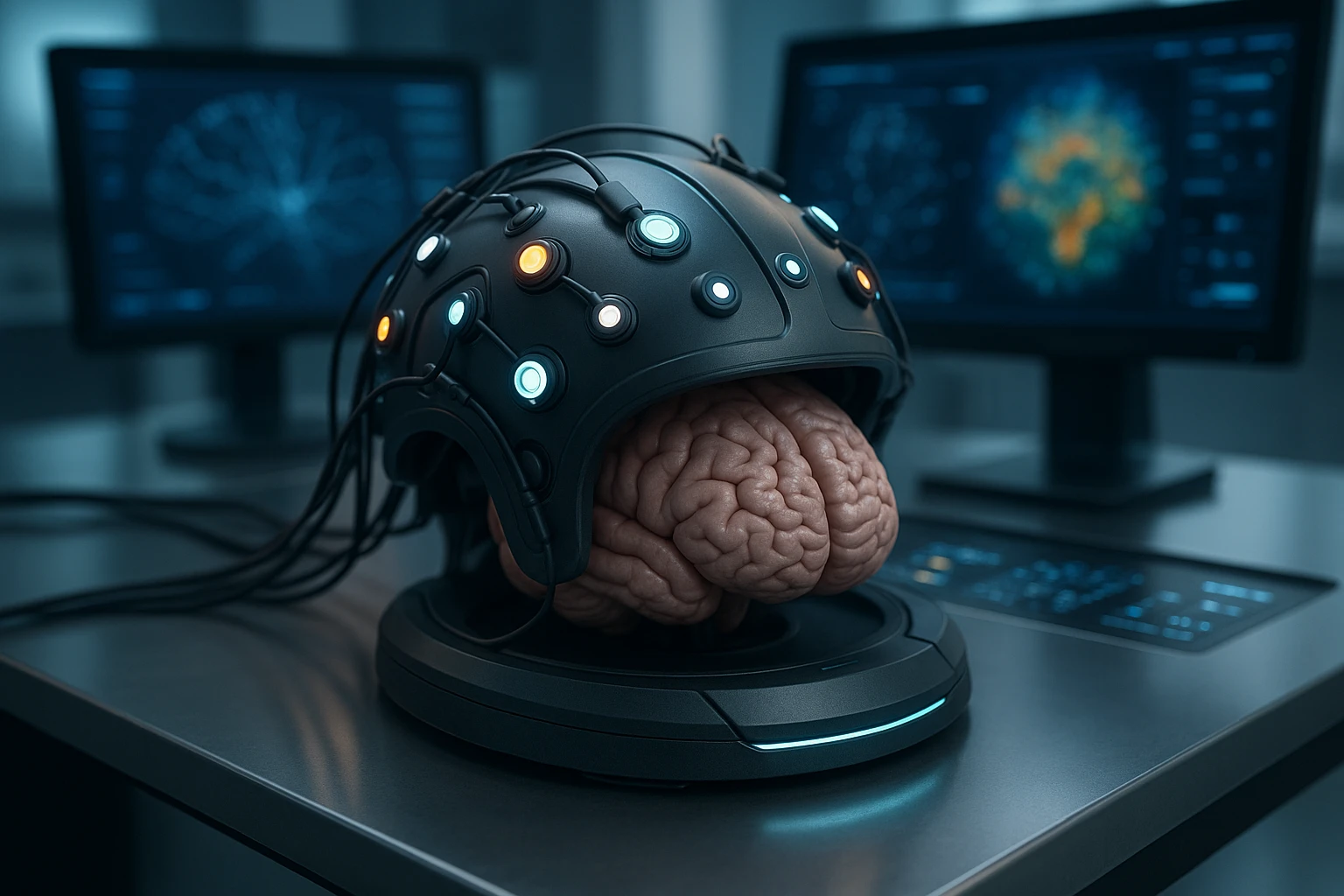
The field of mental health diagnostics is evolving rapidly, driven by technological advances and a growing understanding of mental health conditions. This evolution is presenting an unprecedented opportunity to enhance the accuracy and efficiency of diagnosing mental health disorders. By integrating emerging tools like advanced brain scanning devices, we are opening new pathways to understanding the complexities of the human mind.
One key takeaway from this exploration is the significant potential of data-driven diagnostics. By collecting and analyzing large volumes of data, mental health professionals can make more informed decisions. For instance, researchers at the National Institute of Mental Health have been pioneering efforts to classify mental disorders based on neurological data, highlighting the transformative potential of these technologies [source].
For practitioners in the mental health field, embracing these advancements means enhancing their diagnostic toolkit. Start by familiarizing yourself with new technologies and consider integrating these into your practice. Online courses and certifications in digital health tools can provide a valuable foundation. Additionally, forming alliances with tech companies can ensure access to cutting-edge resources and insights.
The time to act is now. Mental health professionals, researchers, and stakeholders must commit to ongoing education and adaptation. Engage with professional networks and communities that are leading the charge in integrating technology into mental health care. By doing so, you not only enhance your practice but also contribute to a broader effort to improve mental health diagnostics on a global scale.
In summary, the potential benefits of advancements in mental health diagnostics are immense. From improving patient outcomes to reducing stigma associated with mental health, the ripple effects can be profound. According to a comprehensive study by the World Health Organization, early diagnosis and intervention can reduce the onset of severe mental health issues, highlighting the critical importance of innovation in this field [source].
As we look to the future, it is clear that by embracing these technological innovations, we have the opportunity to revolutionize mental health diagnostics, ultimately fostering a healthier, more informed society.