

In recent years, the significance of mental health diagnostics has been increasingly recognized in both medical and social contexts. With mental health issues affecting approximately one in five adults in the United States each year, the demand for accurate diagnostics is critical. According to the National Institute of Mental Health, the complexities of mental health disorders make diagnostics a pivotal component in addressing these challenges effectively.
Advancements in psychological assessments and technological innovations have revolutionized how mental health diagnostics are approached. For instance, digital platforms and AI technologies are now being used to analyze vast amounts of data, providing clinicians with deeper insights into patient conditions. The development of apps and wearable devices has further transformed this landscape, offering innovative ways to monitor and diagnose cognitive and emotional states in real time.
One notable example of innovation in this field is the use of machine learning algorithms to predict mental health issues based on patterns in social media behavior and smartphone usage. This method has proven effective in identifying early signs of anxiety and depression, offering a proactive approach to mental health care. Such predictive tools highlight the potential to revolutionize mental health diagnostics by providing timely interventions, ultimately reducing the burden of mental disorders on individuals and healthcare systems alike.
The importance of cultural considerations cannot be overstated in the realm of mental health diagnostics. Culturally sensitive diagnostic tools ensure that diverse populations receive accurate and personalized assessments, mitigating the risk of misdiagnosis due to cultural misunderstandings. For instance, incorporating cultural competency training for healthcare providers can significantly enhance the quality and relevance of diagnostic procedures.
As we delve deeper into the intricacies of mental health diagnostics, it becomes clear that ongoing research and development are essential. The combination of traditional psychological assessment techniques with cutting-edge technology offers a promising future, where early diagnosis and personalized treatment plans become more accessible and effective. As experts continue to explore these innovations, the ultimate goal remains clear: to improve the quality of life for individuals affected by mental health disorders through more accurate and efficient diagnostics.
Understanding the evolving landscape of mental health diagnostics is crucial for stakeholders across the spectrum, from healthcare professionals to policymakers. It is only through a collaborative effort that we can hope to address the mental health crisis effectively, with diagnostics playing a pivotal role in shaping future strategies and interventions.
The field of mental health diagnostics has witnessed significant advancements driven by technological innovation and evolving scientific understanding. One of the primary methodologies currently in use involves psychiatric assessments carried out by trained professionals. These assessments often include a mix of interviews, questionnaires, and observations designed to gather comprehensive psychological profiles of individuals. Such evaluations remain the gold standard for diagnosing conditions such as depression, anxiety, bipolar disorder, and schizophrenia.
Beyond traditional assessments, technological tools are increasingly being integrated into diagnostic processes. For instance, digital health apps equipped with artificial intelligence (AI) can analyze speech patterns and social media activity to identify early signs of mental health issues. According to a study by researchers at Stanford University, AI algorithms can predict depression with nearly 90% accuracy by analyzing language patterns in social media posts [source]. This integration of technology not only enhances diagnostic accuracy but also enables earlier intervention.
In addition to AI, biological diagnostics are gaining traction, particularly in measuring biomarkers related to mental health disorders. Research led by the National Institute of Mental Health (NIMH) highlights the potential of blood tests that measure inflammation markers or genetic predispositions to provide additional insights into mental health diagnoses [source]. This development suggests a future where diagnostics can offer a multi-faceted approach, combining biological, psychological, and technological insights.
Real-world applications of these innovative diagnostics are already visible in clinical settings. For example, some hospitals are utilizing wearable devices to continuously monitor patients' physiological responses, such as heart rate variability and sleep patterns. This data aids clinicians in crafting personalized treatment plans that acknowledge the nuances of each individual's mental health condition. These case studies demonstrate the transformative potential of modern mental health diagnostics in providing a deeper understanding of patient needs and responses.
Despite these advancements, challenges remain. One critical issue is ensuring that diagnostic technologies are accessible and reliable across diverse populations. Additionally, concerns about data privacy and the ethical use of AI in healthcare must be carefully managed. Addressing these concerns requires a collaborative effort across the healthcare ecosystem to ensure that mental health diagnostics continue to evolve in a responsible and equitable manner.

In recent years, technology has significantly influenced the process of mental health diagnostics, enhancing accuracy and efficiency. One of the most notable advancements is the use of artificial intelligence (AI) in evaluating patient data. AI systems can analyze vast amounts of data, including patient history, genetic information, and even social media activity, to identify patterns that may indicate mental health issues. According to a study by Nature Medicine, AI algorithms have been shown to predict conditions like depression and anxiety with up to 80% accuracy Nature Medicine.
Another breakthrough is the development of wearable devices and smartphone applications that monitor physiological signals related to mental well-being. Devices that track sleep patterns, heart rate variability, and physical activity can provide insights into a person’s mental health state. For instance, the WHOOP strap offers continuous monitoring, enabling real-time feedback on stress and recovery levels WHOOP Journal. These tools are particularly valuable for preventive measures, allowing users to identify stressors before they escalate into more severe conditions.
Telemedicine has transformed mental health diagnostics by making evaluations and consultations more accessible. Patients can now engage in diagnostic assessments through online platforms, removing geographical barriers and reducing stigma associated with in-person visits. For example, platforms like BetterHelp provide comprehensive assessments and direct access to therapists, streamlining the diagnostic process. This approach not only increases accessibility but also allows for continuous monitoring and adjustments in treatment plans BetterHelp.
Overall, these technological advancements are reshaping mental health diagnostics, offering more personalized and precise options for patients. By leveraging AI and digital tools, healthcare professionals can provide better, more timely interventions, ultimately leading to improved outcomes for individuals struggling with mental health issues. As technology continues to evolve, the potential for even more innovative approaches in mental healthcare is vast, promising a future where diagnostic processes are both effective and empathetic.
Building on the promise of AI and digital tools, this section explores real-world implementations that demonstrate tangible progress in improving mental health diagnostics. Through concrete examples, we highlight how emerging technologies have impacted accuracy, efficiency, and patient engagement.
Recent meta-analyses reveal strong performance of AI-driven methods in psychiatric diagnostics. One systematic review and meta-analysis reported pooled diagnostic accuracy of approximately 85% (95% CI: 80%–87%), with machine learning models leading performance, followed by hybrid and deep learning approaches. The pooled therapeutic efficacy was similarly robust, around 84% (95% CI: 82%–86%) pubmed.ncbi.nlm.nih.gov. In another review, support vector machines (SVMs) delivered exceptionally high accuracy—95% for anxiety and 95.8% for depression—though accuracy dipped to 69% for disorders like PTSD or bipolar disorder among war veterans bmcpsychiatry.biomedcentral.com. These findings underscore the nuanced strengths of AI algorithms in diagnostics, while also pointing toward areas where accuracy may still vary.
Advancements in natural language processing are driving progress in automating clinical assessments. A recent study compared various AI models—ranging from traditional classifiers to deep learning architectures such as DistilBERT and SciBERT—for classifying clinical notes into diagnoses like anxiety and adjustment disorder. Both decision tree-based machine learning models and BERT-based deep learning models achieved an accuracy of 96%, and hyperparameter tuning significantly improved results, while sampling methods (e.g., SMOTE) offered limited added benefit arxiv.org. These outcomes highlight the potential for AI tools to augment clinician workflows without compromising quality.
To address challenges such as data privacy and diagnostic complexity, researchers have developed multi-agent systems supported by synthetic data. MoodAngels, a retrieval-augmented multi-agent framework, demonstrated performance that outstripped conventional methods: its baseline agent achieved 12.3% higher accuracy than GPT-4o on real-world cases, and the full system performed even better. It leveraged MoodSyn, an open-source synthetic psychiatric case dataset designed to maintain clinical validity while protecting privacy arxiv.org. This innovative pairing of synthetic data with modular AI agents is paving the way for scalable and secure diagnostic tools.
Comprehensive reviews of AI in mental health care also reveal both strengths and limitations. One systematic review spanning diagnosis, monitoring, and intervention applications found accuracies ranging from 51% to as high as 97.5%, with most classification tasks scoring above 75% pmc.ncbi.nlm.nih.gov. A key limitation identified across studies included bias from homogeneous datasets, confounding variables, and reduced generalizability pmc.ncbi.nlm.nih.gov. These observations underscore the importance of diverse and well-structured data, rigorous validation, and transparency to ensure AI tools reliably support clinical decision-making.
Through these real-world examples and case studies, we see that AI-driven solutions are already enhancing diagnostic capabilities, though thoughtful integration remains essential to maximize effectiveness and trust.
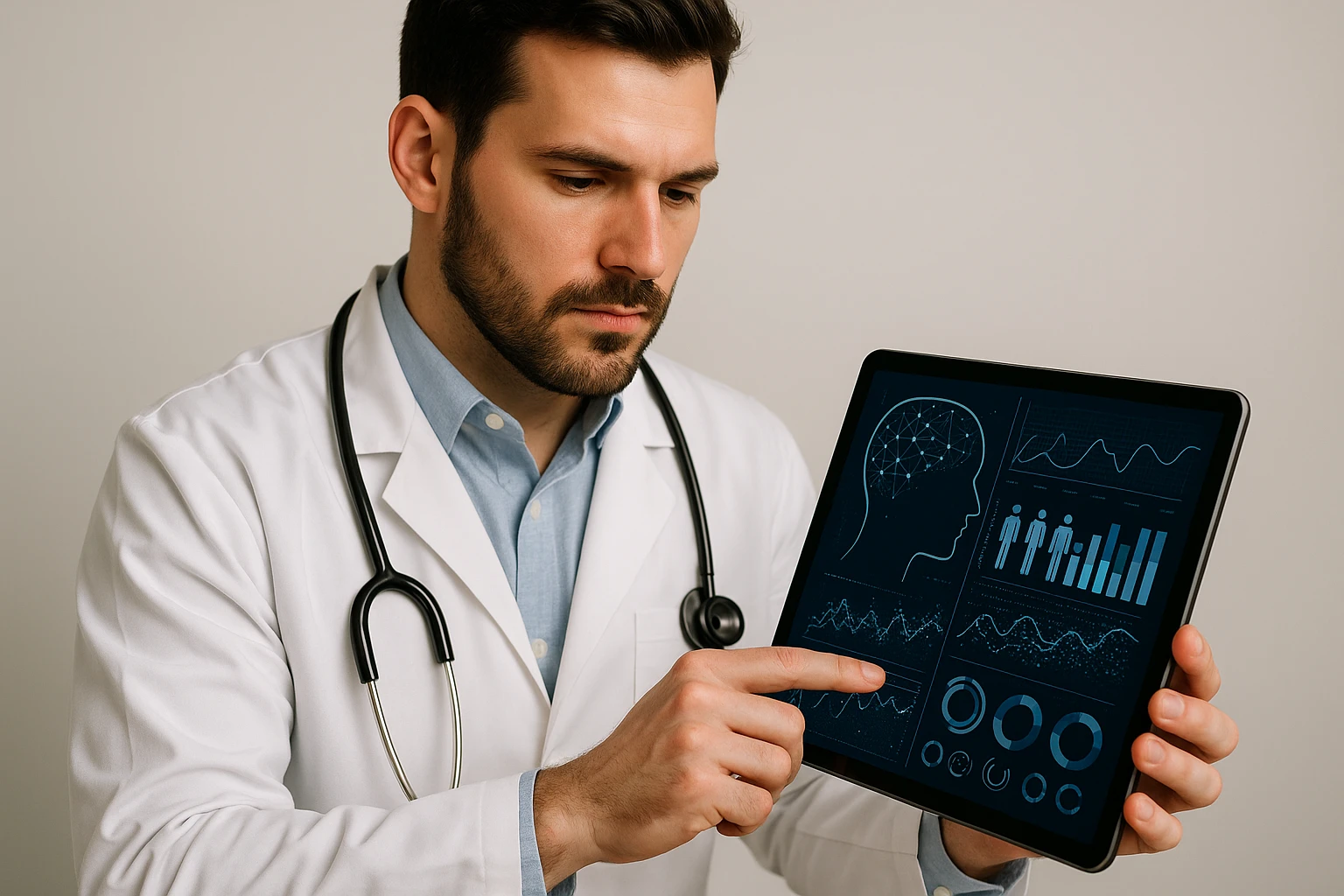
The field of mental health diagnostics is evolving rapidly, driven by technological innovation and a greater understanding of mental health conditions. As explored throughout this article, advancements in AI and machine learning are at the forefront, offering promising pathways to more accurate and timely diagnoses. These technologies not only enhance diagnostic precision but also offer a more personalized approach to treatment, ensuring that individuals receive care tailored to their unique needs.
The integration of AI into mental health diagnostics has the potential to revolutionize the approach to mental health care. By analyzing diverse data patterns, from patient history to behavioral indicators, AI systems can predict conditions and suggest interventions with unprecedented accuracy. This minimizes the risk of misdiagnosis and optimizes treatment plans, ultimately improving patient outcomes. For example, a study highlighted by the Journal of Psychiatric Research demonstrated the efficacy of machine learning models in predicting major depressive episodes with high accuracy.
Healthcare providers should consider adopting AI-driven diagnostic tools to streamline their mental health services. Implementing systems that can swiftly analyze patient data not only improves diagnostic efficiency but also enhances the clinician's decision-making process. Practitioners are encouraged to participate in ongoing training to effectively integrate these technologies into their practice. Additionally, policymakers should focus on establishing clear guidelines and regulations to ensure the ethical use of AI in healthcare settings, safeguarding patient privacy and data security.
Stakeholders, including healthcare providers, researchers, and policymakers, must collaborate to enhance the capabilities of AI in mental health diagnostics. Continuous research and development are crucial to refine these technologies and address any emerging challenges. By doing so, we can ensure that mental health care is more accessible, equitable, and effective for all. Learn more about innovative applications in this field by exploring the resources provided by the National Institute of Mental Health, which offers comprehensive insights into the future of mental health diagnostics.