Yes, absolutely. A proper, comprehensive ADHD assessment can be done online, giving you a legitimate diagnosis from a qualified specialist. The best part? It cuts out the notoriously long waits you often face with traditional healthcare routes. This is all done using secure video calls and clinically validated tools, so you can get a thorough evaluation right from your own home.
The Urgent Need for Online ADHD Assessments in the UK
For so many adults across the UK, trying to get answers about their mental health feels like being stuck in an endless queue. You might see the signs of Attention Deficit Hyperactivity Disorder (ADHD) in your own life—the daily battles with focus, the constant struggle to stay organised, or that familiar impulsivity. But taking that suspicion and turning it into a clear diagnosis often hits a brick wall: getting access to an expert in the first place.
This isn't just a feeling; it's a real, nationwide problem. The gap between how many people likely have ADHD and how many have actually been diagnosed is huge. The challenge gets even bigger if you suspect you might also have a co-occurring condition like autism, which can make navigating the healthcare system feel even more complicated and lonely.
Traditional pathways are often completely overwhelmed, which leads to frustrating delays that can drag on for months, and sometimes, even years. We cover this in more detail in our guide on Psychiatry UK waiting times.
Why the Diagnosis Gap is Such a Critical Problem
This wait isn't just an inconvenience. It can have a profound impact on your mental health, career, and even your personal relationships. When you’re living without answers, you’re forced to cope without the right support, strategies, or potential treatments. It's like trying to build a piece of flat-pack furniture with the instructions missing—you might get there eventually, but it's going to be unnecessarily difficult and stressful.
An ADHD assessment online offers a crucial alternative. It creates a direct, modern route to getting the clarity you've been looking for, bypassing many of the usual barriers to provide a structured, professional, and timely diagnosis.
An online assessment isn't a shortcut; it's a necessary evolution in mental healthcare. It provides an essential service for adults who are otherwise left in limbo by a system struggling to meet demand, offering a legitimate and regulated route to understanding their neurodiversity.
The Scale of Underdiagnosis in the UK
The numbers really do paint a stark picture. Despite growing awareness, ADHD diagnosis rates in the UK remain shockingly low. One major study looking at 9 million GP records found that just 0.32% of adults had an official ADHD diagnosis recorded.
Think about that for a moment. This suggests that only about 1 in 9 people who likely have ADHD have actually received a formal diagnosis. That leaves over 2 million undiagnosed adults trying to manage their lives without the support they need. You can read more about the research behind UK ADHD diagnosis rates to get the full picture.
Virtual services have stepped in to address this crisis, offering a lifeline for people seeking answers about ADHD, autism, and their mental wellbeing. They offer a clear path forward when other doors seem firmly closed.
Your Online ADHD Assessment Journey Step by Step
Taking that first step towards an ADHD assessment online can feel a bit daunting, but it helps to know what’s involved. It’s not some automated quiz or a cold, impersonal survey. What you’re actually getting is a thorough clinical evaluation, broken down into clear, manageable stages, all designed to bring you clarity. Knowing the path from start to finish can take the mystery out of it and give you the confidence to get started.
The whole process kicks off with you. After your initial enquiry, we begin with a triage stage. This is where our clinical team makes sure an online assessment is the right path for you and gathers some essential background information. Think of it as laying the groundwork, allowing the specialist to come to your main consultation fully prepared to have a focused and productive conversation.
The Core Components of Your Evaluation
Once we’ve cleared the initial screening, the assessment itself begins. This is more than just a single chat; it's a multi-layered process designed to build a complete picture of your experiences, challenges, and strengths. It's a bit like a biographer piecing together a life story, where every detail, from childhood to today, adds crucial context.
Here’s what the process generally involves:
- Standardised Self-Report Scales: Before your main interview, you'll fill out some clinically-proven questionnaires. We use tools like the Adult ADHD Self-Report Scale (ASRS) and the Diagnostic Interview for ADHD in Adults (DIVA-5) to create a structured record of your symptoms and how they affect your day-to-day life.
- In-Depth Clinical Interview: This is the heart of the assessment. You’ll sit down with a specialist psychiatrist for a detailed discussion over a secure video call. We go far beyond the questionnaires here, delving into your developmental history, your time at school, your career, relationships, and the challenges you’re facing right now.
- Gathering Collateral Information: To get a full 360-degree view, your clinician might ask to speak with someone who knows you well, like a family member, partner, or a long-time friend. This "informant" perspective is incredibly helpful, as they can often shed light on patterns or behaviours you might not even notice yourself.
This flowchart shows the journey many people take, from first suspecting they have ADHD to navigating the hurdles that often stand in the way of a proper diagnosis.
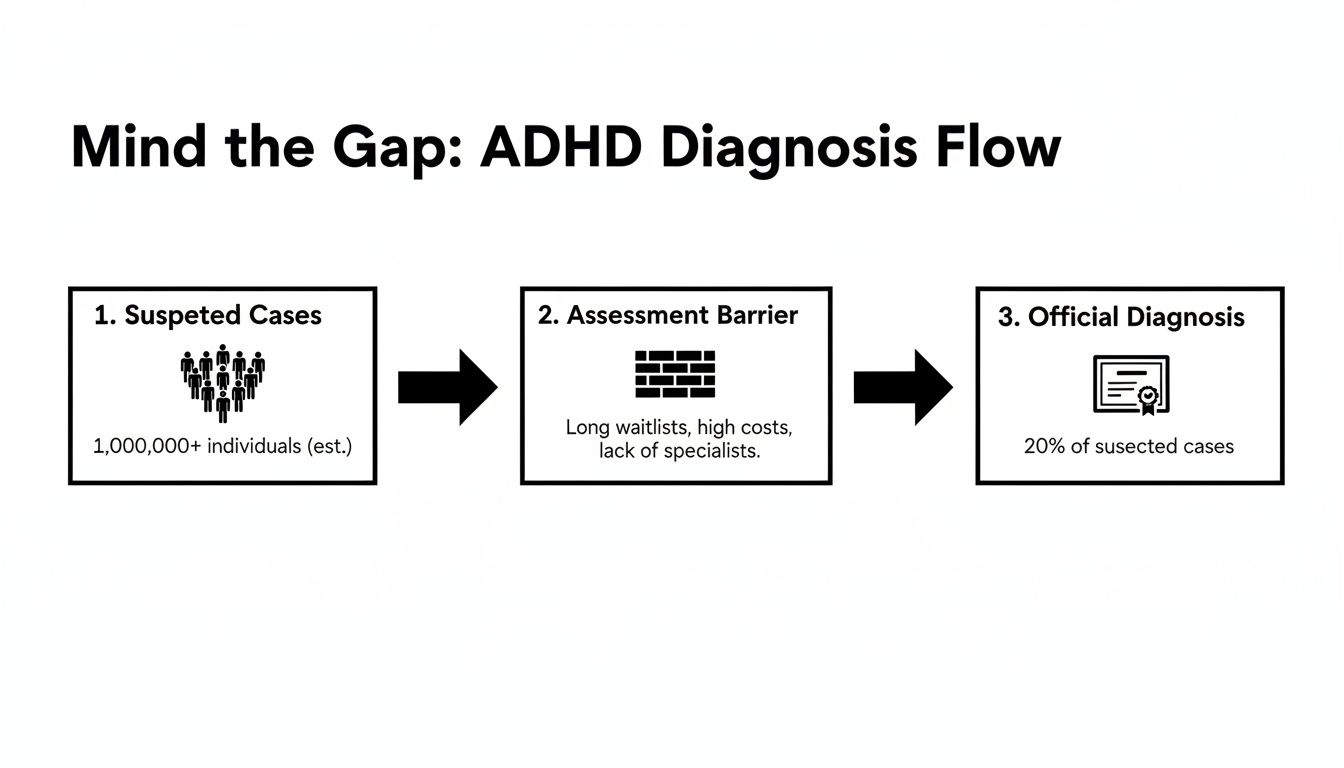
As you can see, accessible assessments are key to breaking down those barriers and creating a clear path toward official recognition and the right support.
From Interview to Actionable Report
After the interview and a careful review of all the information, the specialist puts together their findings. This isn’t about just ticking boxes to see if you meet the criteria for ADHD or another condition like autism. The real goal is to understand your mental health as a whole. In fact, lots of people who come to us for an ADHD assessment online find it useful to start with a broader mental health assessment online to get the full picture first.
Your final diagnostic report is much more than a label. It’s a detailed, personal document that summarises your history, explains the clinical findings, and gives a clear diagnosis (or rules one out). Most importantly, it provides personalised recommendations for your next steps.
This report is your roadmap. You can use it to get accommodations at work, access support at university, or start a conversation with your GP about treatment. It turns what might have been years of uncertainty into a clear, actionable plan. It's proof that a high-quality online assessment is every bit as personal and thorough as a face-to-face one, just with a lot more convenience and privacy.
Online vs In-person ADHD Assessments: A Clear Comparison

Deciding how to get an ADHD assessment is a huge step. For years, the only real option was a traditional, face-to-face appointment in a clinic. Now, with high-quality online services becoming more common, you have a genuine choice to make. Let's break down the differences so you can figure out what works best for you.
An online ADHD assessment is more than just a change of scenery; it’s a completely different way of approaching the diagnostic process. It brings the specialist care to you, fitting into your life instead of forcing you to rearrange everything for a single appointment. This alone can make a world of difference, especially if the idea of seeking a diagnosis already feels a bit daunting.
The Power of Convenience and Accessibility
The most obvious benefit of going online is pure convenience. Forget about travelling to a clinic, taking a whole day off work, or juggling childcare. You can speak with a highly qualified psychiatrist from a place where you feel completely at ease – your own home. Being in a familiar, private space often makes it much easier to open up and talk through your experiences without feeling on-the-spot.
This approach also smashes through geographical barriers. If you live somewhere with few local specialists in adult ADHD or autism, online assessments give you access to a UK-wide pool of experts. You’re no longer stuck with whoever happens to be in your postcode.
This is more crucial than ever when you look at the current strain on public services. As of March, a staggering 549,000 people in the UK were waiting for an ADHD assessment, which is a massive 32% increase in just one year. The pressure is so immense that NHS England is actively exploring different approaches, including online options, to tackle these overwhelming delays. You can find out more about the NHS response to the ADHD taskforce report here.
Ensuring Clinical Rigour and Validity
One of the biggest questions people have is whether an online assessment is as “real” or legitimate as seeing someone in person. The answer is a resounding yes, as long as you choose a reputable, fully regulated provider. The core diagnostic process is exactly the same, whether you're in an office or on a video call.
The platform may be digital, but the clinical standards are not. A properly conducted online assessment uses the same diagnostic criteria (DSM-5), follows the same NICE guidelines, and is carried out by the same qualified specialists you would see in a traditional clinic.
Regulated providers like Insight Diagnostics Global ensure every step is just as thorough as an in-person evaluation. From the initial screening forms to the deep-dive clinical interview, nothing is skipped. The comprehensive diagnostic report you get at the end holds the same medico-legal weight, meaning it’s valid for requesting workplace adjustments or discussing treatment options with your GP. The only real difference is the screen between you and the clinician.
Online vs In-Person ADHD Assessment: A Direct Comparison
Seeing a clinician in person offers a direct, face-to-face connection that some people might prefer, and that’s perfectly valid. However, it’s important to weigh that against the practical realities of convenience, cost, and waiting times.
This table puts the two methods side-by-side, helping you compare the factors that matter most when you're seeking clarity about your mental health.
| Feature | Online Assessment | In-Person Assessment |
|---|---|---|
| Accessibility | Available nationwide, breaking down geographical barriers and offering access to a wider pool of specialists. | Limited to clinicians in your local area, which can be a significant barrier in underserved regions. |
| Convenience | No travel required. Attend appointments from the comfort and privacy of your own home, saving time and money. | Requires travel to a clinic, often involving time off work, travel costs, and potential childcare arrangements. |
| Waiting Times | Significantly shorter, with assessments often available within weeks, providing faster access to diagnosis and support. | Can involve extremely long waiting lists, often stretching for many months or even years through public services. |
| Comfort Level | Being in a familiar environment can reduce anxiety and make it easier to discuss personal experiences openly. | A clinical setting can feel intimidating or stressful for some, potentially impacting the consultation. |
| Clinical Validity | Follows identical NICE guidelines and diagnostic criteria, delivered by GMC-registered psychiatrists for a fully valid diagnosis. | The long-established standard for diagnosis, following the same clinical guidelines and professional standards. |
Ultimately, both paths lead to the same destination: a clinically valid diagnosis from a qualified expert. The choice comes down to which journey best fits your life, your comfort level, and your timeline.
Understanding Clinician Credentials and Diagnostic Validity
When you start looking into an ADHD assessment online, one of the first questions that pops into your head is probably about trust. How do you know the diagnosis is real? How can you be sure the person on the other end of the screen is actually qualified?
These are completely valid concerns. In the world of mental health and neurodiversity, where conditions like ADHD and autism can often overlap, knowing who you're talking to is everything.
The reassuring part is that legitimate online services are held to the exact same professional standards as any high-street clinic. The whole process stands on the foundation of the clinician's qualifications. In the UK, this means your assessment must be carried out by a highly trained specialist who is regulated by a professional body. No exceptions.
Who Is Qualified to Diagnose ADHD?
A formal ADHD diagnosis isn't something just any mental health professional can provide. It's really important to check the credentials of the person conducting your assessment, because this is what makes your final report credible to your GP, employer, or university. For a deeper dive, this is a helpful resource explaining who evaluates, diagnoses, and treats adult ADHD.
You'll want to see specific titles and registrations. Look for:
- Consultant Psychiatrists: These are medical doctors who have gone through years of specialist training in psychiatry. Critically, they must be on the General Medical Council's (GMC) Specialist Register. This is the gold standard.
- Specialist Psychologists: Clinical or counselling psychologists who specialise in neurodevelopmental conditions are also qualified. They need to be registered with the Health and Care Professions Council (HCPC).
These governing bodies aren't just for show. They enforce strict standards for training, ethical conduct, and continuous professional development, giving you a crucial layer of protection and accountability.
The Diagnostic Rulebook Is Universal
There's a common myth that an online assessment is somehow a 'lighter' or less thorough version of the real thing. That couldn't be further from the truth. The diagnostic "rulebook" is exactly the same, whether you're sitting in a consulting room or speaking over a secure video link.
The platform changes, but the clinical standards do not. A valid ADHD assessment, whether online or in-person, must adhere to the same established diagnostic criteria and national guidelines to be considered legitimate.
This means your clinician is using the very same professional frameworks to evaluate your experiences:
- DSM-5 or ICD Criteria: These are the globally recognised diagnostic manuals that define the specific symptoms and criteria for an ADHD diagnosis.
- NICE Guidelines: In the UK, the National Institute for Health and Care Excellence sets the official guidelines for diagnosing and treating ADHD. Every reputable provider follows them to the letter.
Because these rigorous standards apply across the board, the comprehensive diagnostic report you receive from a service like Insight Diagnostics Global carries genuine medico-legal weight. It’s a document you can confidently take to your GP to discuss treatment, or use to arrange for the support and accommodations you're entitled to at work or university.
If you know you want this level of medical expertise right from the start, it's often best to see a psychiatrist for ADHD.
How to Prepare for Your Online Assessment
Heading into an online ADHD assessment is a bit like preparing to tell your own life story. The goal isn't to be "tested," but to work with the clinician to build an accurate picture of your experiences. The more detail and evidence you can bring, the clearer that picture becomes.
A little bit of prep work goes a long way. It helps take the pressure off, so you're not scrambling to remember specific examples on the spot. Instead, you can focus on having a genuine conversation with your specialist, making sure nothing important about your ADHD (or potential co-occurring autism) gets missed.

Gathering Your Personal History
Your clinician needs to see how your challenges have shown up throughout your life, not just right now. Digging up a few documents and thinking of examples ahead of time can be a game-changer.
-
Childhood Information: Old school reports are gold dust. Look for recurring comments from teachers – things like "chatty," "daydreamy," "disruptive," or the classic "not working to their potential." These provide vital clues about early ADHD traits.
-
Work and Adult Life: If you have them, past performance reviews or any work-related feedback can be useful, especially if they mention issues with time management, organisation, or hitting deadlines.
-
Real-Life Examples: This is the most crucial part. Before your adhd assessment online, make a list of specific times you've struggled. Think about work, home life, your relationships, and social events. Don't just say, "I'm disorganised." Describe what that looks like for you – for example, constantly losing your keys, missing bill payments, or feeling overwhelmed by a messy room.
The most powerful information you can bring to your assessment is your lived experience. Your personal stories and real-world examples are the threads that connect the clinical criteria to your individual situation, creating a full and accurate diagnostic picture.
Thinking about how to phrase your experiences can also be tricky. This helpful guide on how to talk to your doctor about ADHD offers some great tips.
Creating the Right Environment
The practical side of things is just as important as the information you've gathered. Setting yourself up in a comfortable, private space will help you feel relaxed enough to speak openly.
- Find a Quiet Space: Choose a room where you know you won’t be interrupted by family, pets, or flatmates for the entire appointment.
- Check Your Tech: Do a quick test run of your internet connection, camera, and microphone before the assessment starts. It’s a simple step that avoids frustrating technical hitches on the day.
- Prepare Your Questions: Remember, this is your time. Jot down any questions you have for the clinician about the process, what the outcome might mean, or what the next steps could be.
Once your assessment is done, your clinician will put together a detailed report. This document will clearly explain the findings and give you concrete recommendations, creating a clear path from diagnosis to getting the support you need to move forward.
Navigating Costs, Packages, and Your Next Steps
Let's talk about the practical side of things: the cost of a private ADHD assessment online. Getting a handle on the financial commitment is a crucial first step, and having clear, upfront information can take a lot of the stress out of the process. It allows you to plan properly, without the open-ended uncertainty that so often comes with public health waiting lists.
When you invest in a private assessment, you're paying for three key things: speed, expertise, and a predictable path forward. Instead of waiting for years, you get a structured timeline, so you know exactly when your appointments will happen and when you'll have your final report in hand. That kind of clarity is priceless when you’re looking for answers about your mental health.
What Do Assessment Packages Typically Include?
As you start exploring private options, you’ll notice that most providers offer different packages to suit different needs. It's really important to know what’s included in the price so you can make the right choice for you.
A typical standard package will almost always cover:
- The Core Diagnostic Assessment: This is the main event. It includes the initial screening questionnaires, the in-depth clinical interview with a consultant psychiatrist, and the creation of a full, detailed diagnostic report.
- Comprehensive Report: This isn't just a one-page summary. It’s a detailed document covering your developmental history, the clinical findings, a formal diagnosis (or a clear explanation if ADHD is ruled out), and personalised recommendations for what to do next.
For many people, a diagnosis is just the beginning. If you want to explore medication as a treatment option, you’ll find more comprehensive packages are available. These usually bundle the initial assessment with the necessary follow-up care.
Think of it like this: the initial assessment gives you the map (your diagnosis and recommendations). A comprehensive package also provides the fuel and a guide for the first leg of your journey (medication titration and follow-up support).
Understanding Timelines and Follow-Up Care
One of the single biggest benefits of going private for an online ADHD assessment is the clear, predictable timeline. From the moment you book to the day you receive your report, the whole process is usually wrapped up within just a few weeks. This is a world away from the long waits in the public system, giving you the clarity you need, fast.
And after the diagnosis? The journey continues. If medication is part of your recommended plan, you'll begin a process called titration. This is a carefully managed period where your psychiatrist works closely with you to find the exact right type and dose of medication. It involves regular follow-up appointments to monitor how well it's working and manage any side effects.
The Value of Timely Private Care
The sheer demand for ADHD assessments across the UK is huge. It's estimated that in England alone, 2.5 million people are living with ADHD, but only a tiny fraction of them have ever received a formal diagnosis. With treatment currently reaching only 15.6% of adults, the need for more accessible options like online services has never been clearer. You can read more about these ADHD statistics and the call for new assessment models in recent reports.
Deciding to go private is a big step, but it’s an investment in your own wellbeing. To make it easier to understand exactly what’s involved financially, we’ve put together a detailed guide. You can learn more about our private ADHD assessment cost and see precisely what our packages include. Taking this step puts you back in control, ending the waiting game and starting you on a clear path to understanding and support.
Got Questions About Online ADHD Assessments? We’ve Got Answers.
Deciding to get an ADHD assessment is a big step, and it’s completely normal to have a few questions before you dive in. Knowing what an online diagnosis actually means for your day-to-day life is just as important as understanding the clinical side of things. Let’s walk through some of the most common queries we hear.
One of the first things people ask is: “Will an online diagnosis actually be taken seriously?” The short answer is yes, absolutely. When your assessment is conducted by a CQC-regulated service and your report is signed off by a GMC-registered psychiatrist, it’s a fully valid medical document.
This is the report you’ll use to start a conversation with your GP about a shared care agreement, which allows them to take over prescribing your medication based on our specialist's advice. It’s also the official evidence you need to ask for reasonable adjustments at work or university, making sure you get the support you're entitled to.
What if the Outcome Isn't ADHD?
It’s natural to worry about what happens if the assessment finds you don’t have ADHD. But it's important to remember this isn't a pass-or-fail test. A comprehensive assessment delivers incredible insight into your mental health, no matter the final diagnosis.
If ADHD is ruled out, your report will clearly explain the reasoning. More importantly, it will often point to other potential causes for the challenges you're facing, like anxiety, depression, or other learning differences. This isn't a dead end; it's a new direction, giving you the clarity needed to find the right support and finally break the cycle of "what if?"
How Does Medication Work?
Many people wonder if they can get medication directly through an online service. The assessment itself is the first piece of the puzzle. If a diagnosis is made and medication is recommended, the next stage is a separate process called titration.
This involves a series of dedicated follow-up appointments with your psychiatrist. Together, you’ll work to carefully find the right type of medication and the optimal dose for you. It’s a very safe, personalised, and effective process. Once your dose is stable and working well, the aim is usually to transition your prescription over to your GP under a shared care agreement.
What About Co-occurring Autism and ADHD?
Neurodiversity is complex, and it's incredibly common for ADHD and autism to show up together. A good clinician knows this and is trained to spot the nuances. During your assessment, they won’t just be ticking off ADHD symptoms; they'll be looking at how your traits overlap and where they diverge.
An experienced psychiatrist doesn't just look for ADHD in isolation. They assess your complete neurodivergent profile, recognising how traits of autism and ADHD can interact and influence one another, ensuring your diagnosis and support plan are truly reflective of your unique brain.
If the specialist sees signs of both conditions, they’ll talk you through it. They might suggest a combined assessment or a separate one later on to build a complete, accurate picture of your neurotype. This holistic approach is crucial for creating a support plan that works for all of you, not just one part.
Ready to get the clarity you deserve? The team of specialist consultant psychiatrists at Insight Diagnostics Global is here to guide you through a thorough, CQC-regulated assessment for ADHD, autism, and other mental health conditions.
Book your online assessment today and take the first step towards understanding and support.