

You finally get the diagnosis after years of missed deadlines, chronic lateness, mental overload, and the sense that ordinary routines take far more effort than they should. For many adults I see in UK practice, the first feeling is relief. The second is a much harder question. What now?
Medication can be very helpful, and for some adults it remains a central part of treatment. It is not the only sensible option, and it is rarely the whole plan. NICE guidance supports a broader approach that includes environmental adjustments and psychological support, particularly when day-to-day impairment continues or medication is not wanted, not tolerated, or not yet available.
From a consultant psychiatrist's perspective, the practical question is usually which combination of supports will improve functioning in real settings. Work. Study. Home. Relationships. A good post-assessment plan should reduce friction in those areas, not only confirm the diagnosis and stop there.
That matters even more in the UK, where access often shapes treatment choices. Some adults are waiting for NHS follow-up, some are using Right to Choose pathways, and some decide to arrange private care so they can start treatment planning sooner. In that gap between diagnosis and stable support, non-medication strategies are often the first things that can be put into place. That might include ADHD-focused therapy, structured planning systems, exercise, sleep work, coaching, or changes to the physical environment. For adults looking into psychological treatment, ADHD-focused CBT support in Birmingham is one example of the kind of targeted follow-on care worth considering after assessment.
The options in this guide are the ones I would most often discuss with a newly diagnosed adult who wants a workable plan. Some have a stronger evidence base than others. Some are inexpensive but require consistency. Some help quickly but only if they are suited to the person's actual pressure points.
The trade-off is straightforward. These approaches do not remove ADHD. They can make it easier to start tasks, organise time, regulate emotion, protect sleep, and recover a sense of control. For many adults, that is exactly the difference that matters.
1. Cognitive Behavioural Therapy for ADHD
A common post-diagnosis pattern is this. Someone leaves the assessment relieved to finally have an explanation, then goes back to the same missed deadlines, avoidance, emotional flare-ups, and late-night catch-up cycles by Tuesday. CBT is often the first non-medication treatment I discuss at that point because it gives adults a way to change what happens between intention and action.
For ADHD, CBT works best as a practical treatment for repeated everyday problems. The target is not insight on its own. The target is better follow-through in situations that keep going wrong, such as starting work before the last minute, recovering after distraction, managing criticism without spiralling, or handling admin without hours of resistance.
What it helps most
In UK practice, CBT is commonly used when medication has only partly helped, when medication is not wanted, when side effects are a problem, or while someone is waiting for prescribing follow-up through the NHS, Right to Choose, or private care. The value lies in the structure. Sessions translate broad goals such as “be more organised” into specific behaviours that can be tested during the week.
I usually advise adults to judge CBT by one standard. Does it reduce impairment in real settings?
A good therapist will look closely at the chain of events around a problem. For example, a student may delay opening an assignment because the task feels vague, then avoid email, then feel ashamed, then leave it until panic creates enough urgency to begin. A professional may perform well in meetings but repeatedly miss invoicing, forms, or follow-up because low-interest tasks never reach the top of the queue. ADHD-focused CBT addresses those patterns directly.
Useful treatment usually includes:
- ADHD-specific formulation: executive dysfunction, time blindness, avoidance, and rejection sensitivity need to be recognised from the start.
- Concrete behavioural targets: “Open the report at 9am and work for 15 minutes” is far more workable than “stop procrastinating”.
- Between-session practice: progress comes from repeated experiments in daily life, not from talking well in the room.
- Review of barriers: if a strategy failed, the question is why it failed in that setting, not whether you lacked effort.
There are trade-offs. CBT is not a quick fix, and it can feel frustrating if the therapist treats ADHD as ordinary anxiety or poor motivation. It also asks for active practice between sessions, which is exactly where many adults struggle. For that reason, I often suggest starting with one or two pressure points rather than trying to overhaul work, home life, sleep, and relationships all at once.
For adults who want structured follow-on care after assessment, ADHD-focused CBT support in Birmingham is one example of the kind of targeted therapy pathway worth considering.
2. Structured Time Management and Planning Systems
Many adults with ADHD don't need more motivation. They need less reliance on memory. A planning system acts as an external executive function. It holds deadlines, prompts action, reduces transition friction, and stops important tasks disappearing the moment something more stimulating appears.
The biggest mistake is building an elaborate system you won't maintain. I'd rather see one reliable calendar and one task list than five apps, three notebooks, and a colour-coded wall planner that's abandoned within a week.
Build one visible system

Google Calendar, Apple Calendar, Microsoft To Do, Todoist, Notion, Trello, and a paper diary can all work. The right choice is the one you'll open when life gets busy.
For students, a weekly timetable with assignment deadlines visible in one place often reduces that constant low-grade dread of forgetting something. For professionals, time-blocking can be more effective than a simple to-do list because it answers the harder question, which is not “what matters?” but “when exactly am I doing it?”
Put planning at the same time every week. Sunday evening or Monday morning both work well if you keep it predictable.
Try these adjustments:
- Use alarms for transitions: ADHD often disrupts task switching, not just task initiation.
- Add buffer time: If a meeting ends at 3pm, don't schedule a demanding task at 3pm sharp.
- Create a launch pad: Keep keys, wallet, charger, work pass, and medication in one fixed spot.
- Break tasks into visible first steps: “Start tax return” is vague. “Open HMRC login and download last year's file” is usable.
A planning system won't remove ADHD, but it can stop ordinary demands turning into repeated crises.
3. Regular Physical Exercise and Movement Breaks
If I had to pick one non-medication option with the strongest general support, exercise would be very high on the list. It's one of the few alternatives that often produces a noticeable effect quickly, particularly for mental restlessness, low mood, task initiation, and concentration after movement.
The best-supported non-medication alternative in the evidence base is structured exercise. A review summarised by ADHD Evidence suggests about 30 to 60 minutes of moderate-intensity activity per day produces the strongest benefits, with 15 to 30 minutes daily as the minimum for measurable improvement. The same review found therapeutic or alternative exercise showed moderate symptom improvements, while mind-body practices such as yoga or tai chi showed smaller gains.

Make it realistic, not heroic
A common failure pattern is choosing a demanding regime that depends on perfect motivation. ADHD management works better when the plan survives bad weeks.
A practical version might be a brisk walk before work, a lunchtime gym session booked into the diary, cycling to campus, or a short bodyweight routine between meetings. Team sports can help if accountability is your main difficulty. Some people also do well with personalised workout routines because structure reduces the decision-making that often blocks exercise in the first place.
- Anchor movement to an existing routine: After coffee, before shower, after lunch, or straight after logging off.
- Pick stimulation you like: Running, boxing, dancing, climbing, swimming, and fast walking can all work.
- Use movement as a reset: A brief walk can improve the second half of the day more than forcing another unproductive hour at your desk.
Exercise isn't a cure. It is, however, one of the most reliable ways to improve function without relying on willpower alone.
4. Dietary Modifications and Nutritional Approaches
Nutrition sits in an awkward place in ADHD discussions. It matters, but it's often overstated by people selling simplistic answers. No food plan will switch ADHD off. At the same time, unstable eating patterns can make concentration, irritability, and energy regulation much worse.
The adults who benefit most are often those whose day is built around skipped meals, sugar-heavy convenience food, late caffeine, and reactive eating. That pattern can mimic or amplify core ADHD problems.
What's worth trying
Start with structure before restriction. A steady breakfast with protein, a reliable lunch, and fewer long gaps without food can reduce the classic afternoon crash that many adults mistake for laziness or lack of discipline.
A food and symptom diary can help if you suspect a specific trigger, but I'd avoid turning this into a punishment exercise. The aim is to notice patterns such as poor sleep after late caffeine, concentration dips when you skip lunch, or impulsive snacking when meals are delayed.
Don't hand this area over to unqualified wellness marketing. If diet is going to be part of your plan, use a registered dietitian where possible.
A few practical rules tend to be helpful:
- Stabilise meal timing: Irregular eating often worsens emotional volatility and focus.
- Aim for protein early: Eggs, Greek yoghurt, nuts, tofu, or a protein-rich breakfast can support a steadier start.
- Watch caffeine timing: It can help some adults in the morning and disrupt sleep if pushed too late.
- Be cautious with supplements: Some are widely discussed, but evidence and suitability vary.
Diet is best treated as a support layer. Useful, sometimes surprisingly so, but rarely strong enough on its own.
5. Mindfulness and Meditation Practices
Mindfulness can help ADHD, but expectations need adjusting. If you tell a restless adult with ADHD to sit perfectly still and empty their mind for a long session, they'll often conclude they've failed before they've begun.
Done well, mindfulness is not about becoming calm all the time. It's training attention to return. That small skill matters in ADHD because so much distress comes from being pulled off task, reacting quickly, or losing awareness of what your brain is doing in the moment.
Best ways to start
Short guided practice is usually more realistic than silent meditation. Three to five minutes is enough to begin. Walking meditation, yoga, body scans, and breathing practices with audio guidance can feel more accessible than sitting on a cushion trying not to think.
Historically, the evidence has been mixed rather than equal across non-drug options. A UK-led synthesis in The Lancet Psychiatry from Oxford researchers, published in 2018, concluded that for adults, stimulants and atomoxetine had clear proven efficacy for core ADHD symptoms, while CBT, mindfulness, psychoeducation, cognitive remediation, and transcranial direct current stimulation showed some benefit but with less substantial evidence. That's a useful reality check. Mindfulness can help functioning and self-awareness, but it isn't in the same evidence category as first-line medication.
For day-to-day use:
- Use guided apps or audio tracks: They provide structure when your mind wants to wander.
- Pair it with transition points: Before opening email, after lunch, before bed, or before studying.
- Choose movement-based versions if sitting is awful: Yoga and walking meditation are often a better fit.
Mindfulness is rarely enough by itself, but as part of a broader plan, it can reduce the sense of living permanently in reaction mode.
6. Environmental Design and Workspace Optimisation
Environment changes behaviour faster than intention does. That's especially true in ADHD. If your workspace constantly competes for your attention, you'll spend the day battling distractions instead of doing the task.
This is why environmental modification appears in UK guidance. Adults with ADHD often do better when the room, desk, screen, and routine remove choices they repeatedly struggle with.
Reduce friction and reduce temptation
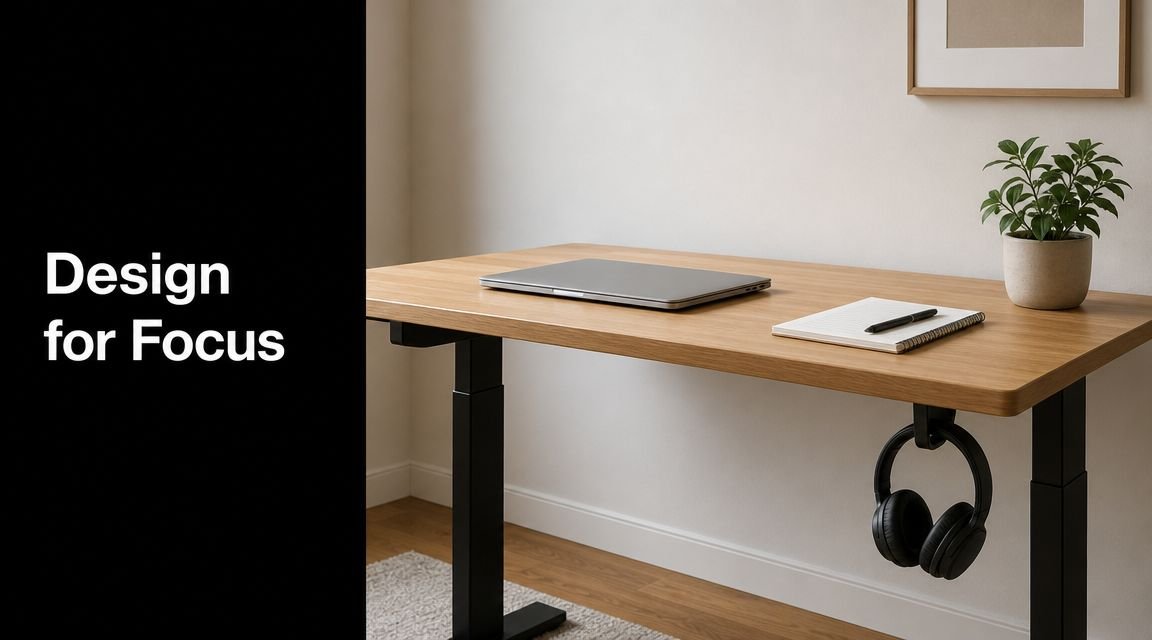
A strong setup might include noise-cancelling headphones, one active notebook, a visible timer, browser blockers such as Freedom or Cold Turkey, and a desk that only contains what the current task needs. If you work from home, separating “work zone” from “rest zone” matters even in a small flat.
For students, the right library desk can be more effective than trying to revise in bed with six tabs open. For office workers, it may mean asking for a quieter area, clearer written instructions, or permission to wear headphones where appropriate. Many adults don't realise how much practical support falls under reasonable adjustments for ADHD at work or study.
A clear desk isn't about aesthetics. It lowers the number of things your attention can latch onto.
Try these environmental shifts:
- Keep one project visible at a time: Visual clutter pulls focus.
- Use body doubling when possible: Working beside another person can improve follow-through.
- Create a “don't think” station near the door: Bag, charger, keys, ID, and paperwork all in one place.
- Block high-risk distractions in advance: Don't rely on resisting them in the moment.
This approach sounds simple. In practice, it can be one of the highest-yield changes adults make.
7. Social Support and Accountability Systems
A common post-diagnosis pattern looks like this. Someone understands their ADHD for the first time, feels relieved, then goes home to the same unpaid bills, missed emails, half-finished forms, and good intentions that still do not turn into action. Insight helps. Structure from other people often helps more.
Social support matters in ADHD because intention and follow-through are often disconnected. Many adults can meet a commitment made to another person more reliably than one made only to themselves. I see this repeatedly in clinic. A brief check-in, a shared work session, or a pre-agreed deadline can reduce avoidance, lower shame, and get stalled tasks moving again.
The key is specificity.
An accountability system works best when each person knows the task, the deadline, and the form of follow-up. “I'll do some admin tonight” is too vague. “I'll submit the PIP form by 8pm and send you a message when it's done” gives the brain something concrete to act on. That is why loosely supportive arrangements often drift, while simple behavioural agreements hold.
For newly diagnosed adults in the UK, I usually advise matching the support to the problem in front of you. Peer groups help with isolation and practical tips. Coaching can help with planning, routines, and work transitions. Family sessions can reduce repetitive arguments about lateness, clutter, and forgotten tasks. If you want peer connection after assessment, local and online ADHD support groups for adults can be a useful starting point.
Access matters here as well. Some people get this support through NHS services, university disability teams, workplace adjustments, or the voluntary sector. Others use private coaching or therapy after diagnosis, particularly if they came through an NHS Right to Choose pathway or an independent assessment service such as Insight Diagnostics and need a practical next-step plan while longer-term care is being arranged.
Support also needs boundaries. The goal is not to hand your life over to a partner, parent, or friend. The goal is to borrow structure until habits become more repeatable. In practice, that means asking someone to check completion of a task, not to nag you throughout the day.
Useful formats include:
- Body doubling: working alongside another person in person or on video
- Weekly planning calls: reviewing appointments, deadlines, meals, travel, and admin before the week starts
- Start messages and finish messages: simple prompts that create commitment at the point of action
- Shared calendars or reminder systems: helpful for couples and families where forgotten plans cause friction
- ADHD-informed coaching or therapy: better suited to recurring problems with organisation, procrastination, and self-criticism
Trade-offs are real. Group support can be validating but inconsistent. Coaching can be practical but costly. Family involvement can improve understanding but may slip into criticism if roles are not clear. Choose the format that solves the problem you have.
If evenings are where everything unravels, pair accountability with a wind-down routine and practical cues such as alarms, pre-set clothes, or even a calming drink like Jeeves & Jericho quality sleep teas. Support systems work better when they fit daily life rather than sitting beside it as another abandoned plan.
8. Sleep Optimisation and Sleep Hygiene Protocols
Poor sleep can make ADHD look worse than it is. It can also make treatment feel ineffective. When someone tells me their focus is collapsing, emotions are all over the place, and nothing seems to stick, sleep is one of the first areas I ask about in detail.
ADHD and sleep problems often travel together. Delayed sleep timing, revenge bedtime procrastination, racing thoughts at night, inconsistent wake times, and erratic caffeine use are all common patterns.
Start with wake time, not bedtime
A common approach to fixing sleep involves forcing an early night. That often fails. A more reliable anchor is consistent waking, because it steadies the body clock over time.
Simple changes often help more than people expect. Blackout curtains, a cooler room, charging your phone outside the bedroom, and a repeatable wind-down routine can all reduce the chaos around sleep onset. Some people also like ritual-based cues such as reading, stretching, or non-caffeinated drinks like Jeeves & Jericho bedtime teas, though these are support tools rather than treatment in themselves.
Useful rules include:
- Keep wake-up time stable: Even after a poor night.
- Reduce stimulation before bed: Gaming, doom-scrolling, work email, and intense exercise close to bedtime can all keep your system activated.
- Use light strategically: Bright light in the morning, lower light later in the evening.
- Track patterns without obsessing: A sleep diary can help identify what reliably disrupts rest.
If your sleep is chronically poor, I'd treat that as a clinical issue worth discussing directly, not a side note.
9. Dopamine-Enhancing Activities and Interest-Based Learning
One of the most useful shifts for adults with ADHD is moving away from the idea that success depends on becoming consistently interested in boring things. A better strategy is to design life so important tasks are easier to engage with, and strengths are used intentionally.
Many adults function far better in roles with urgency, novelty, variety, creativity, movement, or immediate feedback. That doesn't mean they can only do exciting work. It means they often need more deliberate job design and task design than people realise.
Work with motivation, not against it
If you hate starting reports but love solving live problems, build the report around a time-limited sprint, body doubling, or an immediate reward after completion. If you learn best through discussion, don't rely only on silent reading. If novelty helps, rotate work locations or switch task order to prevent complete disengagement.
This area is especially relevant when medication isn't wanted, tolerated, or available yet. A review of alternative therapies highlighted by ADHD Evidence notes that non-drug options are not equal for adults. Exercise has the strongest short-term signal, while behavioural therapy and cognitive training may have better durability, and meditation or board games do not significantly improve inhibitory control in pooled evidence. That tells us something important. “Interesting” isn't enough by itself. Activities need to support function, not just stimulation.
A few ways to use this well:
- Map genuine interests: Separate meaningful interests from distractions that consume time.
- Gamify repetitive work: Timers, point systems, and visible streaks can help.
- Use novelty carefully: Change enough to stay engaged, not so much that nothing becomes routine.
- Protect hyperfocus when it helps: If you enter deep focus on an important task, preserve that window.
Interest-based working is not indulgence. It's often smart adaptation.
10. Occupational Therapy and Executive Function Coaching
You finally have an ADHD diagnosis, but Monday morning still falls apart in exactly the same place. You miss the point where getting dressed turns into scrolling, an ordinary email becomes a half-hour avoidance loop, and by lunchtime you are already behind. This is the territory occupational therapy and executive function coaching are designed to address.
In clinical practice, this is often where adults make the biggest practical gains after assessment. The focus is daily function: starting the day on time, managing transitions, keeping paperwork from becoming a crisis, setting up routines that survive stress, and reducing sensory or organisational friction that keeps derailing the same tasks.
A good occupational therapist looks at how your life runs. Which step breaks first in the morning routine? What part of work creates the most drag? Which environments overload you? Where do tasks stall, and what happens just before that point? That functional assessment often shows that a problem described as laziness, chaos, or poor motivation is really a repeatable mismatch between demands, environment, and executive capacity.
Practical support for adult life
OT is particularly useful when ADHD sits alongside anxiety, autistic traits, burnout, chronic disorganisation, or work-related performance concerns. The aim is not insight alone. The aim is to change what happens on a Tuesday afternoon when there are six open tasks, two competing deadlines, and no obvious starting point.
Executive function coaching can help in a similar way, but quality varies. The useful version is structured, specific, and tied to measurable problems. It should produce systems, prompts, review points, and accountability. It should not rely on encouragement alone.
That matters in the UK because many adults spend months on a waiting list, are uncertain about medication, or decide medication is only part of the answer. As noted earlier, medication pathways still dominate ADHD care. Even so, tablets do not set up your inbox rules, simplify your morning routine, or redesign a job plan that is failing every week. Functional support fills that gap.
For adults asking about non-stimulant medical options, the UK picture is narrower than a lot of online content suggests. That is another reason I often discuss OT or coaching early after diagnosis. They target impairment directly and can be started whether you are pursuing NHS treatment, using Right to Choose, or arranging private follow-up.
If you want post-assessment help that is focused on daily systems rather than generic advice, ADHD coaching in London through Insight Diagnostics is one example of the kind of structured support adults often look for after diagnosis.
10 ADHD Alternatives Compared
| Intervention | 🔄 Implementation complexity | 💡 Resource requirements | ⭐ Expected effectiveness | 📊 Expected outcomes | ⚡ Ideal use cases & key advantages |
|---|---|---|---|---|---|
| Cognitive Behavioural Therapy (CBT) for ADHD, structured skill-building with a therapist | High, structured 12–20 sessions, therapist-led | Trained therapist, session time, client homework; moderate cost | ⭐⭐⭐⭐⭐ | Improved time management, emotion regulation, long-term coping skills | Adults/students seeking non‑pharmacological, evidence‑based skills; durable results |
| Structured Time Management & Planning Systems, calendars, apps, chunking | Moderate, initial setup and regular maintenance | Digital tools/apps (many free), time to configure and review | ⭐⭐⭐⭐ | Immediate organisation, fewer missed deadlines, reduced task anxiety | People needing actionable tools (students, professionals); scalable, low‑cost |
| Regular Physical Exercise & Movement Breaks, aerobic, strength, HIIT, short breaks | Low–Moderate, habit formation and scheduling | Minimal equipment, time commitment; accessible options | ⭐⭐⭐⭐ | Short‑term focus boosts, better mood and impulse control; cumulative benefits | Those wanting low‑cost adjuncts to treatment; supports medication and cognition |
| Dietary Modifications & Nutritional Approaches, omega‑3, elimination diets, timing | Moderate, tracking, possible dietitian input | Food changes, supplements, professional dietary assessment | ⭐⭐⭐ | Variable; modest improvements for some, depends on individual response | Individuals with nutritional deficiencies or sensitivities; holistic health focus |
| Mindfulness & Meditation Practices, guided apps, short/active practices | Moderate, requires consistent daily practice, ADHD adaptations | Apps/guides, small time investment; low monetary cost | ⭐⭐⭐ | Gradual gains in attention, emotional regulation and sleep | Those seeking low‑cost self‑management; best as an adjunct to other strategies |
| Environmental Design & Workspace Optimisation, declutter, lighting, noise control | Low–Moderate, one‑time setup with periodic tweaks | Possible one‑off purchases (lighting, headphones); time to organise | ⭐⭐⭐⭐ | Immediate reduction in distractions, improved task initiation and focus | Remote workers/students; fast, practical improvements with low learning curve |
| Social Support & Accountability Systems, coaching, groups, partners | Low–Moderate, ongoing engagement and vetting of quality | Peer groups (free) to paid coaches; time for meetings/check‑ins | ⭐⭐⭐⭐ | Increased motivation, adherence, reduced isolation, practical tips | People needing external accountability; combines well with other interventions |
| Sleep Optimisation & Hygiene Protocols, routines, environment, CBT‑I principles | Moderate, behavioural consistency; may need specialist input | Low‑cost environment changes, time to establish routine; apps if desired | ⭐⭐⭐⭐⭐ | Rapid improvements in daytime executive function, mood and alertness | Foundational for most clients, especially those with sleep disturbances; high impact |
| Dopamine‑Enhancing Activities & Interest‑Based Learning, gamification, novelty | Moderate, redesigning tasks and reward systems | Time to restructure work/study, apps or tools for gamification | ⭐⭐⭐⭐ | Marked increases in motivation and performance in interest‑aligned tasks | Best for creative/flexible roles or when harnessing hyperfocus; boosts engagement |
| Occupational Therapy & Executive Function Coaching, functional assessments, OT plans | High, professional assessment, multiple tailored sessions | Regulated OT/coaches, possible workplace/home visits; higher cost | ⭐⭐⭐⭐⭐ | Functional, context‑specific improvements across daily life domains | Individuals with significant functional impairment; personalised, practical outcomes |
Building Your Personalised ADHD Management Toolkit
You finish an ADHD assessment, feel relieved to have an explanation, then hit the harder question on Monday morning. What changes now?
For newly diagnosed adults, the most useful plan is rarely a single intervention. It is a workable combination of supports that fits your symptom pattern, your budget, your job, and the amount of structure you can realistically maintain. In clinic, I usually advise people to build from function first. Start with the areas causing the most damage now, such as missed deadlines, chronic lateness, poor sleep, emotional reactivity, or inability to start basic tasks.
That matters because non-medication options do different jobs. CBT can help with avoidance, self-criticism, and emotional regulation. Planning systems and environmental changes reduce friction in daily life. Exercise and sleep work often improve concentration and stamina enough to make other strategies stick. Coaching or occupational therapy can turn good intentions into routines that still work on low-focus days.
A proper assessment gives these choices context. One adult needs practical support for task initiation at work. Another needs autism-informed sensory adjustments at home and in the office. Another is dealing with burnout, anxiety, and fragmented sleep, where treating ADHD in isolation would miss the point. Without that level of formulation, people often spend money on support that sounds sensible but does not match the actual impairment.
This is also where access matters in the UK. Some adults will use NHS services, including Right to Choose where available. Others will use private assessment because waiting times are too long or because they need a report quickly for work, university, or family planning. If you are comparing service types and want to find efficient wellness centers, focus on what happens after diagnosis, not just how fast the appointment is. The useful questions are whether the report is specific, whether treatment recommendations are practical, and whether there is a clear route into therapy, coaching, medication review, or workplace adjustments.
Insight Diagnostics Global provides online and face-to-face assessments for adults aged 18 and over, with structured diagnostic reports and personalised treatment recommendations. From a clinical perspective, that kind of service is helpful when it closes the gap between diagnosis and action, whether someone is using private care, health insurance, or exploring NHS pathways.
Build your toolkit in stages. Pick one or two changes that can improve the next two weeks. A fixed wake time is often more effective than an ambitious life overhaul. A simple planning system used daily beats a colour-coded system abandoned after four days. If concentration is poor but shame and avoidance are driving the problem, ADHD-focused CBT may have more impact than another productivity app.
Good ADHD care is usually iterative. Review what helps, what creates friction, and what you avoid even when you mean well. Then adjust the plan.
One safety point remains. Insight Diagnostics is not a crisis service. If you are in crisis, call 999 or contact NHS 111 for urgent support.
If you want a clear starting point, Insight Diagnostics Global offers consultant-led adult assessments for ADHD, autism, and other mental health concerns, with personalised recommendations that can include psychological support, coaching, medication pathways, and practical next steps after diagnosis.