

If you’re searching for ADHD medication for weight loss, the most popular advice online often gets the first part of the story right and the most important part wrong. Yes, stimulant ADHD medicines can reduce appetite and lead to weight loss in some people. No, that doesn’t make them a safe, appropriate, or reliable weight management tool.
From a psychiatric practice perspective, this matters because the issue isn’t just body weight. It sits at the intersection of ADHD, autism, mental health, eating patterns, impulse control, sleep, anxiety, and clinical safety. At Insight Diagnostics, that broader picture is central to how psychological assessment should work. Adults don’t arrive with neat, single-issue problems. They often present with overlapping concerns that need careful formulation, especially when neurodevelopmental conditions and medication are involved.
That’s why this topic needs a clinically grounded answer. Leading with extensive experience, top, leading Consultant Psychiatrists in neurodevelopmental and personality disorder work, including Dr Sai Achuthan, the right approach is always assessment first, shortcut second, or preferably not at all.
The Search for a Shortcut
The attraction is obvious. A medicine that reduces appetite can look like a faster answer than changing eating habits, sleep, stress, and activity patterns that took years to drift off course.
In clinic, the problem is rarely that simple. People usually search for ADHD medication for weight loss for one of three reasons. They have heard that medicines such as methylphenidate or lisdexamfetamine can blunt hunger. They are struggling with weight and want a result that feels immediate. Or they already take ADHD medication and have noticed changes in appetite, eating patterns, or body weight.
Those situations are understandable. They still do not make ADHD medication an appropriate weight-loss strategy.
A point that often gets missed is that the weight story is rarely linear. Some people lose weight early because daytime appetite drops. Later, when the dose wears off, rebound appetite can drive evening overeating, grazing, or binge-type eating. The scales may fall at first and then stall, swing back up, or become harder to predict. That pattern can be distressing, and it can give a false sense that the medicine “worked” when the longer-term picture is much less stable.
Clinical reality: A side effect is not a treatment plan. If a medicine is prescribed for ADHD, the goal is better attention, impulse control, and day-to-day functioning.
There is also a safety issue. Using stimulants without a proper ADHD assessment means stepping around the checks built into psychiatric prescribing. Those checks cover heart rate, blood pressure, sleep, anxiety, mood, appetite, and risk history. They also help identify people for whom appetite suppression could worsen an existing problem, especially if autism, trauma, depression, or disordered eating are already part of the picture.
Careful psychological assessment plays a different role from a quick prescription request. A proper adult assessment looks at developmental history, current impairment, co-occurring symptoms, physical health, and whether another explanation fits better. That is how clinicians separate untreated ADHD from burnout, anxiety, binge eating, poor sleep, or chronic stress, all of which can affect concentration and body weight in ways that overlap but are not the same.
At Insight Diagnostics, that distinction guides safe care. The question is not whether a drug can change the number on the scales for a few weeks. The question is whether the full clinical picture supports ADHD treatment, and whether the likely benefits outweigh the risks for that individual.
How ADHD Medications Can Alter Body Weight
Weight change on ADHD medication is rarely a straight line. Early appetite suppression can produce quick loss on the scales, then evening hunger can pull intake back up. That pattern matters far more than the first week or two.
ADHD medicines can affect body weight through two broad mechanisms. Stimulants often reduce appetite for part of the day, and they can also raise physiological arousal enough to modestly increase energy expenditure. In clinic, the appetite effect is usually the one patients notice first.
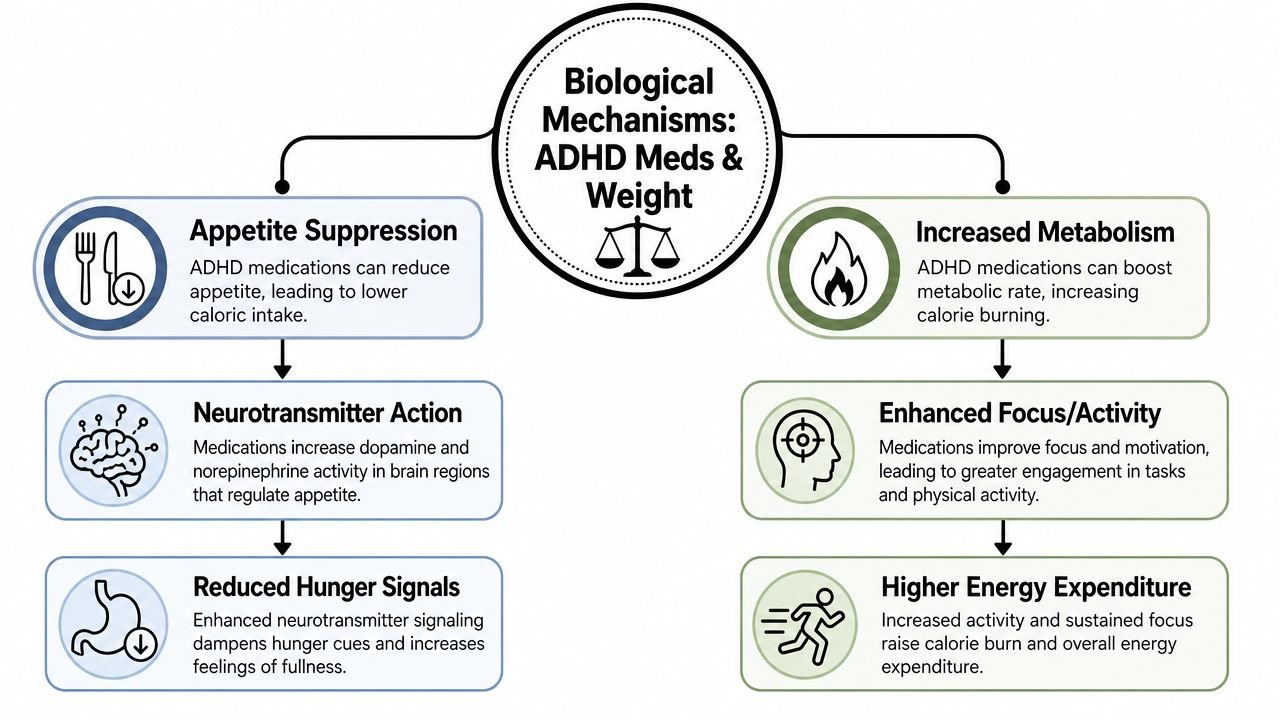
Appetite suppression during the day
During active dosing, some people feel less interested in food, forget meals, or get full unusually quickly. The result can look positive if the only measure is daytime calorie intake.
The clinical problem is what follows. Reduced hunger is not the same as stable nutrition, and it does not teach planning, portion awareness, or consistent eating patterns. A patient may under-eat for several hours, then reach late afternoon tired, under-fuelled, and much more vulnerable to impulsive eating.
Common patterns include:
- Skipped meals: breakfast or lunch drops out because hunger cues are muted
- Poor food quality: low appetite leads to convenience foods rather than balanced meals
- Erratic intake: eating becomes timed around the medication effect instead of regular structure
That last pattern is easy to miss. It can create the impression of control while subtly increasing the risk of rebound eating later in the day.
Increased energy expenditure
Stimulants can also increase calorie use to a degree by raising alertness and activating the nervous system. Some patients move more once focus improves, which can add to the effect. In practical terms, this is still an inconsistent side effect, not a dependable weight-management method.
There is another trade-off here. A medication that suppresses appetite and increases activation can also worsen sleep, anxiety, jitteriness, or cardiovascular strain in the wrong patient. Those factors can destabilise weight regulation rather than improve it. People considering other medical weight-loss options should understand that every drug class carries its own side-effect profile, whether the issue is stimulants or GLP-1s. This guide to GLP-1 medication side effects is a useful comparison point.
The rebound appetite problem
Many articles skip a critical detail: appetite can return strongly when the medication wears off. Cleveland Clinic describes this as hunger coming back hard after the stimulant effect fades (Cleveland Clinic explanation of rebound appetite with ADHD medication).
The weight story often becomes non-linear. Someone may eat very little through the day, see an early drop on the scales, then spend the evening grazing, overeating, or having binge-like episodes. In adults with ADHD, rebound appetite can combine with impulsivity, mental fatigue, emotional eating, and poor meal preparation.
Early weight loss can be misleading. If evening rebound hunger repeatedly drives overconsumption, the longer-term pattern may be plateau, regain, or repeated cycling between loss and gain.
Why the scale doesn’t tell the whole story
Body weight is shaped by more than appetite alone. Sleep loss can increase hunger. Stress can push eating toward highly palatable foods. Executive function difficulties can make shopping, cooking, and meal timing inconsistent even when someone intends to eat well. Sensory issues, anxiety, depression, and disordered eating can complicate the picture further.
That is why using ADHD medication for weight loss is poor clinical practice. The biology behind short-term weight change is real. The assumption that it will produce stable, healthy, long-term weight management is often wrong, and for some patients it can make the overall pattern harder to control.
Weight Effects of Specific ADHD Medications
Different ADHD medicines affect appetite and body weight differently, and even within the same drug class the response can vary. In UK practice, the broad divide is between stimulants and non-stimulants. Stimulants are more commonly associated with weight loss. That still doesn’t make them dependable weight-loss tools.
A large UK real-world cohort study in paediatric patients found that approximately 30% experienced a change in BMI category during treatment, with over 50% of younger children showing a decrease in weight category. At the same time, 16.5% of those with overweight and 13% of those with obesity gained weight, showing why ADHD medication isn’t a reliable obesity strategy (UK cohort study on BMI category changes during ADHD treatment).
A practical comparison
| Medication Type | Examples (UK Brand Names) | Primary Mechanism | Common Effect on Weight |
|---|---|---|---|
| Stimulant | Elvanse, Ritalin | Appetite suppression and stimulant effects on metabolism | Often linked with reduced appetite and early weight loss, but not consistently |
| Stimulant | Medikinet, Concerta | Appetite suppression and stimulant effects on metabolism | Similar pattern, with variable effects between individuals |
| Non-stimulant | Atomoxetine | Non-stimulant ADHD treatment pathway | Weight effects are less straightforward and not used as a weight strategy |
| Other non-stimulant approaches | Individual prescribing varies | Depends on the medicine and the reason for use | May be neutral, variable, or associated with weight gain depending on the medicine |
Stimulants such as methylphenidate and lisdexamfetamine
For many adults and young people, stimulants are the medicines most likely to reduce appetite early in treatment. That’s why drugs such as methylphenidate and lisdexamfetamine are often the focus of online discussions about body weight.
What gets missed is variability. One person may lose weight quickly. Another may barely notice a change. Another may lose weight at first and then start gaining after evening overeating becomes a pattern. The medicine doesn’t produce a consistent metabolic outcome in the way social media often suggests.
What works clinically: monitoring symptoms, nutrition, sleep, pulse, blood pressure, and functioning together.
What doesn’t: treating a temporary side effect as if it were a long-term obesity treatment.
Non-stimulants aren’t a workaround
Some readers assume non-stimulants might give ADHD benefits without appetite suppression, or perhaps create a gentler weight effect. That’s too simplistic. The verified evidence base here is clear that stimulants are the medicines more closely associated with weight loss, while non-stimulants and other medicines used around ADHD presentations can have different weight effects, including gain in some contexts.
Why no medication here is a magic bullet
The lesson from comparative prescribing isn’t “pick the right ADHD medicine and the weight issue solves itself”. The lesson is the opposite. Weight response is inconsistent, often temporary, and clinically secondary to ADHD treatment goals.
That’s especially important for adults with complex presentations. If someone has ADHD plus anxiety, autistic burnout, depression, binge eating symptoms, or sleep disruption, a narrow focus on appetite misses the actual treatment task. Good psychiatric care asks whether the medicine improves concentration, emotional regulation, executive functioning, and day-to-day life without creating new problems that outweigh the benefit.
The Unacceptable Risks of Off-Label Use
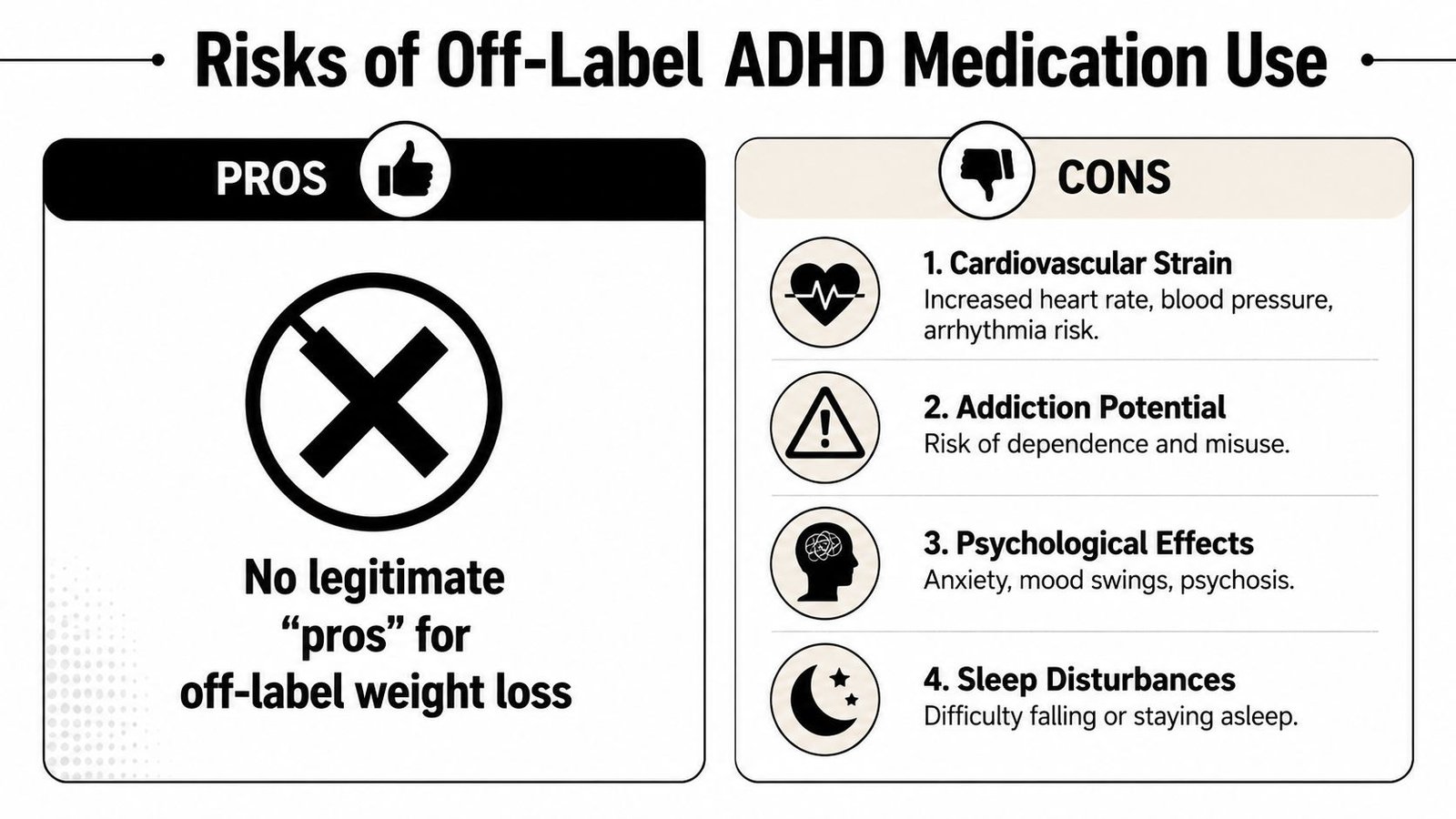
Using ADHD medication without a proper indication for the purpose of weight loss creates a bad trade. The hoped-for benefit is uncertain, often temporary, and behaviourally unstable. The risks are concrete.
Extended-release stimulants carry a formally recognised risk of clinically significant weight loss, with at least a 10% decrease in CDC weight percentile observed in short-term and long-term studies among younger patients. That risk has influenced prescribing guidance and monitoring expectations (FDA communication on expanded labelling for weight loss risk with extended-release stimulants).
Why the risks outweigh the appeal
Off-label misuse strips away the clinical context that makes prescribing safer. It removes proper assessment, cardiac risk review, nutritional follow-up, dose titration, and monitoring of side effects. When that happens, several problems tend to follow.
- Cardiovascular strain: Stimulants can affect heart rate and blood pressure. If someone has an undiagnosed cardiac issue or combines medicines unwisely, the risk picture gets worse.
- Nutritional compromise: Persistent appetite suppression can lead to inadequate intake. That doesn’t always show up as dramatic weight loss at first. It may show up as fatigue, poor concentration, low mood, sleep problems, or chaotic evening eating.
- Psychological fallout: Anxiety, insomnia, irritability, and emotional volatility can all become more difficult. In people already vulnerable to obsessive or restrictive thinking about food and body image, misuse can reinforce harmful patterns.
- Dependence and misuse: These are controlled medications. Using them for a goal they were never meant to serve increases the risk that the person starts chasing appetite suppression rather than treating an assessed condition.
For readers comparing stimulant misuse with anti-obesity drugs, a safer starting point is to understand how properly indicated weight-loss medicines have their own risk profiles and monitoring needs. This guide to GLP-1 medication side effects is useful because it frames side effects as something to manage clinically, not something to exploit.
A short video can help underline the point:
Off-label doesn’t mean harmless
People sometimes hear “off-label” and assume it means creative but acceptable. In psychiatry, that’s not a safe assumption. Some off-label prescribing is legitimate when a qualified clinician has a clear rationale, obtains informed consent, and monitors carefully. Using ADHD medication for weight loss without that framework isn’t thoughtful medicine. It’s risk without adequate justification.
A medicine can be effective for one condition and still be the wrong tool for another. That’s exactly the situation here.
The Safe Path Forward with Clinical Guidance
The only responsible route to ADHD medication is a full ADHD assessment followed by medical supervision. Medication should come after diagnosis and formulation, not before. That standard matters even more in adults where autism, anxiety, trauma, depression, burnout, substance use, sleep disorders, and eating difficulties can overlap with ADHD symptoms.

In the UK, amphetamines are the first-line pharmacological recommendation for adults under NICE-linked guidance, but they should not be prescribed for weight loss purposes and require monitoring of nutritional adequacy, heart rate, and blood pressure (clinical guidance on amphetamines, monitoring, and why they should not be used for weight loss).
What proper prescribing actually looks like
A safe prescribing pathway includes several moving parts, and each one exists for a reason.
Diagnostic assessment first
The clinician establishes whether ADHD is present and whether another condition better explains the symptoms. In adults, that often means taking a developmental history and mapping current impairment across work, home, study, and relationships.Titration rather than guesswork
If medication is appropriate, the dose is adjusted gradually. The aim is symptom benefit with tolerable side effects. “Start low and monitor” isn’t bureaucracy. It’s how clinicians reduce avoidable harm.Physical health monitoring
Weight is part of the picture, but not the whole of it. Heart rate, blood pressure, appetite, sleep, and day-to-day functioning all need review.
Weight concerns need the right conversation
If an adult has both ADHD and concerns about body weight, the answer isn’t to hide the second issue and hope the first prescription solves both. The answer is to discuss both openly. Sometimes untreated ADHD contributes to impulsive eating, erratic routines, or poor meal planning. Sometimes weight gain is linked more to sleep disruption, depression, stress, inactivity, alcohol use, or another medication.
That distinction matters because treatment goals differ. ADHD medicine may help executive function. It is not a substitute for obesity treatment, nutritional work, or mental health support where those are needed.
If someone is already using a clinically indicated weight-management medicine, exercise should also be adapted to preserve overall health rather than chasing rapid scale changes. This guide on exercise for Wegovy and Ozempic users is a sensible example of matching lifestyle support to the actual medication being used.
Practical rule: Ask your clinician two separate questions. “What’s the best treatment for my ADHD?” and “What’s the best treatment for my weight concern?” If the answer to both is somehow the same stimulant prescription, the reasoning needs close scrutiny.
Smarter Alternatives for Healthy Weight Management
The safer path is less glamorous but more effective. Use the right intervention for the right problem.
If ADHD traits are contributing to weight difficulties, the target may be the behaviour around eating rather than the appetite signal alone. Adults with ADHD often struggle with planning meals, shopping consistently, recognising hunger until it’s extreme, or managing impulsive evening eating. Those are treatment targets for behavioural work, not reasons to misuse stimulants.
What tends to help more
- Structured eating routines: NHS guidance for young people on ADHD medication recommends three small meals with regular snacks and calorie-enhancing additions when appetite is suppressed, reinforcing that weight change here is a side effect to manage rather than a goal (NHS dietary advice for young people on ADHD medication).
- CBT-informed strategies: These can help with impulsive eating, all-or-nothing thinking, and self-sabotaging routines.
- Dietetic input: Particularly useful when executive dysfunction, sensory sensitivities, or a history of restrictive dieting have made nutrition chaotic.
- Enjoyable movement: Sustainable activity beats punishment exercise every time.
ADHD-friendly systems beat willpower
Many adults need practical scaffolding more than motivation. Batch cooking, visible snack prep, simple breakfast routines, alarms for meals, and reducing food decision fatigue can all matter. If time blindness and task switching are part of the problem, this resource on how to manage time with ADHD is very helpful because it addresses one of the drivers behind irregular eating and inconsistent self-care.
Approved weight-loss medicines may also have a role for some people, but only when prescribed for the correct indication and monitored appropriately. That’s the central principle. Good medicine matches the tool to the problem.
Frequently Asked Questions
Can I ask my GP for ADHD medication to help me lose weight
You can raise any concern with your GP, but ADHD medication isn’t prescribed as a weight-loss treatment. If you think you may have ADHD, ask for an ADHD assessment. If your main concern is weight, ask for help with weight management. Those are related conversations, not identical ones.
If I already take ADHD medication and I’m losing weight, should I be pleased
Not automatically. Weight loss may reflect reduced appetite rather than improved health. If meals are being skipped, nutrition is poor, or eating rebounds heavily in the evening, the pattern needs review. Bring it up early with your prescriber.
Does the weight loss usually last
Not necessarily. Long-term data indicate that weight loss isn’t guaranteed and some people gain weight over time due to rebound appetite, particularly in the evening or at night, after initial losses (long-term overview of ADHD medication and weight change). Early change on the scales can be temporary.
What if I have both ADHD and obesity
That requires a joined-up treatment plan. ADHD may affect planning, impulsivity, and consistency. Obesity treatment may require dietary, behavioural, medical, or physical activity support. The best plan treats both problems directly rather than hoping one prescription will do everything.
Does autism change the picture
It can. Autistic adults may have sensory-based food restrictions, rigid routines, or burnout that complicates appetite, meal preparation, and medication tolerance. That’s another reason why broad psychological assessment matters. The aim is safe, individualised care, not a generic online answer.
If you’re considering assessment for ADHD, autism, or wider mental health concerns, Insight Diagnostics Global offers consultant-led assessments for adults aged 18 and over, with clear diagnostic pathways, medication titration and monitoring, and a strong focus on safe, evidence-based care. Their team includes experienced Consultant Psychiatrists, including Dr Sai Achuthan, with expertise in neurodevelopmental and personality disorders. If your symptoms, eating patterns, and weight concerns seem tangled together, a proper assessment can help separate what’s driving what and identify the safest next step.